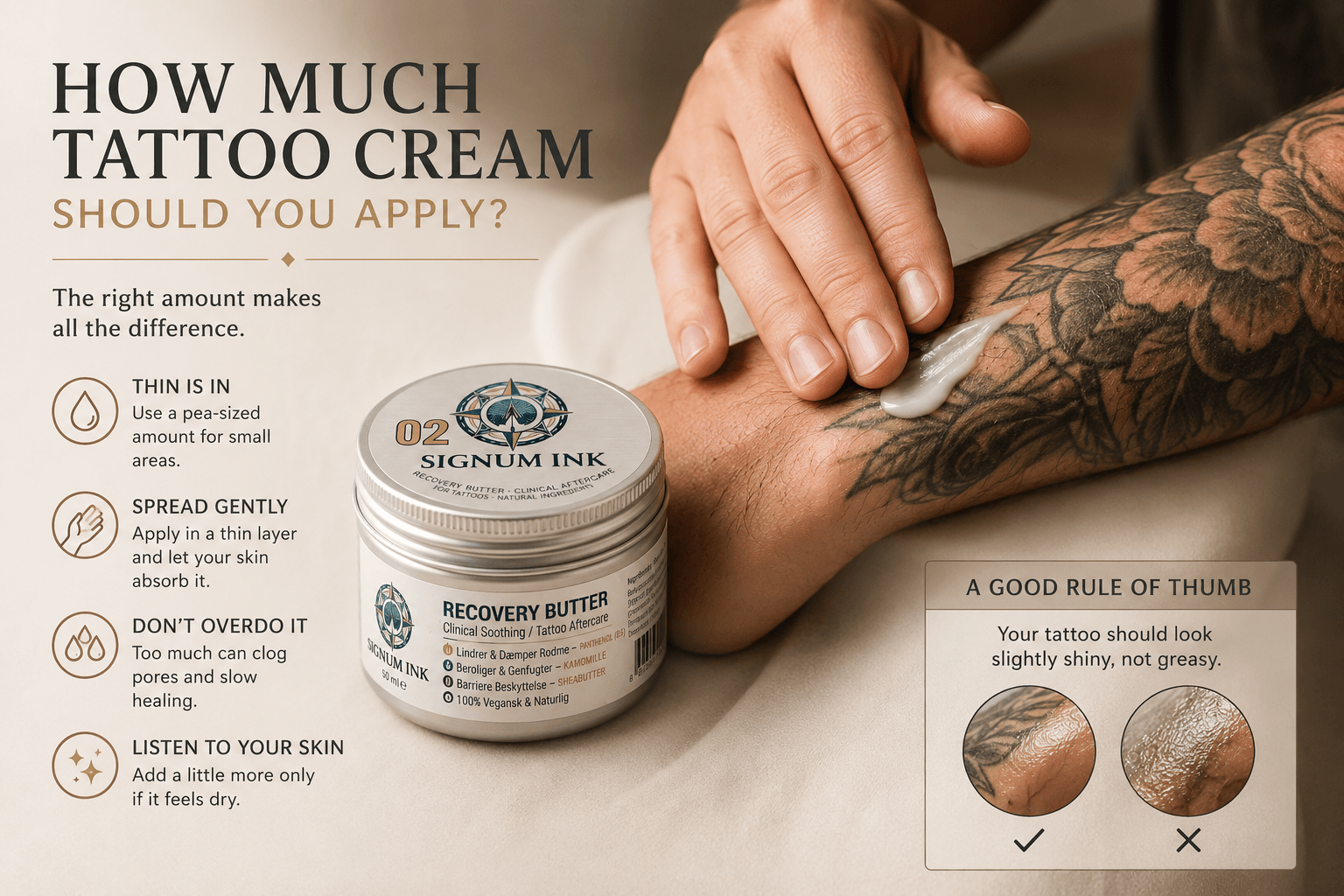
Applying tattoo cream is one of the most important parts of tattoo aftercare, but it’s also one of the most misunderstood.
Many people assume that more cream means faster healing. Others become so worried about over-moisturizing that they barely apply any at all.
The truth lies somewhere in between.
A healing tattoo needs moisture to support the skin’s natural repair process, but it also needs oxygen and a healthy environment to recover properly. Applying too much tattoo cream can leave the skin greasy and uncomfortable, while applying too little may cause excessive dryness, itching, and cracking.
Finding the right balance is the key to healthy tattoo healing.
In this guide, you’ll learn exactly how much tattoo cream to apply, how often to use it, what changes during each stage of healing, and the most common mistakes people make.
Why Tattoo Cream Matters
A fresh tattoo is much more than a piece of artwork.
It’s a controlled skin injury that triggers your body’s natural healing response.
During the first several weeks, your skin works continuously to:
- Repair damaged tissue
- Produce new skin cells
- Restore the skin barrier
- Reduce inflammation
- Protect the wound from bacteria
Tattoo cream doesn’t perform the healing itself.
Instead, it creates a healthier environment that supports your body’s own repair process.
Proper moisturizing can help:
- Reduce excessive dryness
- Improve skin comfort
- Minimize itching
- Support the skin barrier
- Keep peeling manageable
- Protect skin flexibility during healing
The goal isn’t to keep the tattoo wet—it’s to prevent it from becoming excessively dry.
The Biggest Myth About Tattoo Cream
One of the most common misconceptions is:
“The more cream I apply, the better my tattoo will heal.”
Unfortunately, that’s not true.
Applying thick layers of cream may:
- Trap heat
- Reduce airflow
- Leave the skin greasy
- Attract dirt and dust
- Make the tattoo feel uncomfortable
Healing skin needs balance.
Too much product can be just as problematic as too little.
Professional tattoo artists generally recommend using only enough cream to lightly hydrate the skin—not cover it completely.
So, How Much Tattoo Cream Should You Apply?
For most tattoos, a thin, even layer is all that’s needed.
After applying the cream, the tattoo should look:
- Soft
- Lightly moisturized
- Comfortable
—not:
- Thick
- Sticky
- Oily
- Shiny
A simple way to judge is this:
If the cream absorbs within a few minutes, you’ve likely applied the right amount.
If it remains sitting on the surface for a long time, you probably used too much.
Less Is Often More
Think of tattoo cream as skin support—not a protective coating.
The skin should still be able to breathe naturally while healing.
Rather than applying one heavy layer, it’s usually better to apply several thin layers throughout the day whenever the tattoo begins feeling dry.
This keeps the moisture level more consistent while avoiding product buildup.
How Often Should You Apply Tattoo Cream?
There isn’t one perfect schedule that works for everyone.
The ideal frequency depends on several factors:
- Your skin type
- Climate
- Humidity
- Tattoo size
- Tattoo location
- Daily activity
- How quickly your skin absorbs the product
Many people find that applying tattoo cream two to three times per day during the early stages of healing provides a good balance.
However, instead of following the clock, it’s often better to let your skin guide you.
If your tattoo begins feeling:
- Tight
- Dry
- Itchy
- Slightly uncomfortable
it’s usually time for another thin application.
How Much Cream During Each Healing Stage?
The amount your tattoo needs changes throughout the healing process.
Days 1–3
During the first few days, your tattoo may release:
- Plasma
- Small amounts of blood
- Excess ink
The skin is also more sensitive.
After gently washing and drying the tattoo, apply only a very thin layer of cream.
Avoid heavy applications that trap excess moisture against the skin.
Days 4–7
This is when many tattoos begin feeling tighter.
Peeling may start.
The skin often benefits from consistent, light moisturizing throughout the day.
The tattoo should never feel greasy.
Week Two
Most tattoos begin peeling more noticeably.
The skin underneath is still fragile.
Continue applying thin layers whenever the tattoo feels dry.
Avoid picking peeling skin, even if it becomes tempting.
Weeks Three and Four
By now the outer layer of skin has usually recovered.
The tattoo may still appear slightly dull because deeper layers continue healing.
Many people naturally reduce moisturizing frequency during this stage as the skin becomes more comfortable.
Signs You’re Applying the Right Amount
Healthy tattoo moisturization looks surprisingly simple.
Your tattoo should feel:
- Comfortable
- Flexible
- Smooth
- Lightly hydrated
The cream should disappear into the skin within several minutes.
Your clothing shouldn’t stick to the tattoo because of excess product.
If the skin remains soft without feeling greasy, you’re likely using the correct amount.
Signs You’re Using Too Much Tattoo Cream
Applying too much cream doesn’t necessarily cause an infection, but it can create an environment that isn’t ideal for healing.
Common signs include:
- Greasy appearance
- Thick shine
- Cream sitting on top of the skin
- Product transferring onto clothing
- Sticky feeling
- Skin that feels overly warm
If you notice these signs, simply reduce the amount at your next application.
Remember:
A healing tattoo needs hydration—not a thick coating of cream.
Signs You’re Not Using Enough
On the other hand, too little moisture can also create problems.
Your tattoo may be under-moisturized if you notice:
- Tight skin
- Excessive dryness
- Intense itching
- Large dry flakes
- Cracking
- Rough texture
These symptoms usually improve after returning to a balanced moisturizing routine.
Does Tattoo Size Change How Much Cream You Need?
Yes.
A small tattoo naturally requires much less product than a full sleeve or back piece.
Instead of measuring cream by the amount squeezed from the tube, think about coverage.
Use only enough product to create a thin, even layer across the tattooed skin.
If you can still clearly see the tattoo without a thick white layer sitting on top, you’re generally applying the right amount.
How to Apply Tattoo Cream Correctly
Using the right amount of tattoo cream is important, but applying it properly is just as essential.
A simple routine helps keep your tattoo comfortable while supporting the skin’s natural healing process.
Follow these steps every time you moisturize your tattoo.
Step 1: Wash Your Hands
Always wash your hands before touching your tattoo.
Throughout the day your hands collect bacteria from:
- Phones
- Door handles
- Keyboards
- Money
- Gym equipment
- Public surfaces
Clean hands help protect your healing tattoo from unnecessary bacteria.
Step 2: Clean the Tattoo First
Whenever possible, apply tattoo cream to clean skin.
If you’ve just showered or washed your tattoo:
- Pat it dry with a clean towel.
- Allow it to air dry for one or two minutes.
- Apply a thin layer of cream.
Applying cream to dirty or sweaty skin may trap dirt and bacteria against the tattoo.
Step 3: Use Only a Small Amount
Start with less cream than you think you’ll need.
You can always add a tiny bit more if necessary.
Spread the cream evenly across the tattoo using gentle circular motions.
The cream should disappear into the skin within a few minutes.
Your tattoo should never look like it’s covered with frosting.
Step 4: Let the Skin Breathe
After applying the cream, allow the skin to absorb it naturally.
Avoid immediately covering the tattoo with:
- Tight clothing
- Plastic wrap
- Thick bandages
Your skin needs oxygen as it heals.
Can You Over-Moisturize a Tattoo?
Yes.
One of the most common aftercare mistakes is using far too much tattoo cream.
While moisturizers help support healing, excessive amounts may create an environment that isn’t ideal for repairing skin.
Over-moisturizing may contribute to:
- Sticky skin
- Product buildup
- Excessive shine
- Increased irritation
- Soft, overhydrated skin
- More dirt collecting on the surface
The solution isn’t to stop moisturizing.
It’s simply to use less.
Can You Use Too Little Cream?
Absolutely.
Dry healing skin can become:
- Tight
- Itchy
- Rough
- Uncomfortable
In more severe cases, excessive dryness may lead to:
- Thick scabbing
- Small cracks
- Increased irritation
- Delayed healing
Finding the right balance is much more important than following a strict schedule.
Should the Tattoo Feel Greasy?
No.
This is one of the easiest ways to judge whether you’re applying too much product.
After moisturizing, your tattoo should feel:
- Soft
- Comfortable
- Flexible
—not:
- Sticky
- Wet
- Oily
- Heavy
If the cream transfers easily onto your clothes, you’ve probably used more than necessary.
Does Skin Type Matter?
Yes.
Everyone’s skin heals differently.
Dry Skin
People with naturally dry skin often need:
- Slightly more frequent moisturizing
- Extra attention during winter
- Gentle cleansers that don’t strip natural oils
Monitor your tattoo closely and moisturize whenever it begins feeling tight.
Oily Skin
People with oily skin often require less moisturizer.
Applying excessive cream may leave the tattoo feeling greasy without providing additional benefits.
Thin layers are usually sufficient.
Sensitive Skin
If you have sensitive skin:
Choose products that are:
- Fragrance-free
- Gentle
- Designed for sensitive skin
- Free from unnecessary irritants
Introducing multiple new skincare products during tattoo healing increases the chance of irritation.
Does Climate Affect How Much Cream You Need?
Definitely.
Environmental conditions have a major influence on healing.
Cold Weather
Winter air tends to be dry.
Indoor heating further reduces humidity.
Many people notice their tattoos becoming tighter and drier during colder months.
More frequent light applications may help.
Hot Weather
During summer you may sweat more.
Sweat combined with thick layers of cream can make the tattoo feel uncomfortable.
Instead of applying extra cream automatically, wash away sweat when needed and continue using thin applications.
Common Tattoo Cream Mistakes
Many healing problems result from simple habits that are easy to avoid.
Applying Thick Layers
More product doesn’t speed up healing.
Instead, it may:
- Trap moisture
- Make the skin greasy
- Increase discomfort
Thin layers work best.
Moisturizing Dirty Skin
Always clean the tattoo before applying cream whenever practical.
Applying moisturizer over sweat and dirt doesn’t improve healing.
Constantly Reapplying Cream
Some people apply cream every hour simply because they’re worried.
Healthy tattoos don’t need constant applications.
Instead, let your skin tell you when it needs more moisture.
Ignoring Dryness
The opposite mistake is waiting until the tattoo becomes extremely dry.
Keeping the skin consistently comfortable usually leads to the best healing experience.
Frequently Asked Questions
Should I apply cream every time I wash my tattoo?
Usually, yes.
After washing and completely drying the tattoo, apply a thin layer if your skin feels dry or tight.
Can I apply cream before going to bed?
Yes.
Many people find it beneficial to moisturize before sleeping, as the skin continues repairing itself overnight.
What if I accidentally applied too much?
Don’t panic.
Simply blot away the excess using a clean paper towel or allow the skin to absorb what it can.
Use a smaller amount during your next application.
Can I use body lotion instead?
Some fragrance-free body lotions may be suitable after the initial healing stage.
During the first few weeks, many tattoo artists recommend using a product specifically developed for tattoo aftercare.
Should my tattoo look shiny?
Only slightly, if at all.
A heavily shiny tattoo often indicates too much product.
The cream should largely absorb into the skin rather than remaining on the surface.
Is moisturizing more important than washing?
Both are equally important.
Washing removes dirt, sweat, and bacteria.
Moisturizing helps support the skin barrier and keeps the healing tattoo comfortable.
The best results come from combining both.
Final Thoughts
Knowing how much tattoo cream to apply isn’t about following an exact measurement—it’s about understanding what your skin needs.
For most tattoos, a thin, even layer provides all the moisture necessary to support healthy healing.
Remember these key principles:
- Wash your hands before touching your tattoo.
- Apply cream to clean, dry skin.
- Use less than you think you need.
- Let the product absorb naturally.
- Avoid thick, greasy layers.
- Moisturize whenever the tattoo feels dry—not simply because the clock says so.
- Adjust your routine based on your skin type, climate, and healing progress.
Healing is a gradual process that can’t be rushed.
By keeping your tattoo clean, lightly moisturized, and protected from unnecessary irritation, you’ll create the ideal environment for your skin to recover—helping your tattoo retain its sharp lines, rich color, and long-lasting appearance.
 English
  German
  Dutch
Dutch  Danish
  Swedish
  French
  Italian