Introduction
Most tattoos heal with temporary redness, peeling and mild discomfort.
However, some tattoos take much longer to recover than expected.
They may remain unusually sore, produce heavy scabbing or continue looking inflamed long after the first week.
In many cases, people assume they’ve made a mistake during aftercare.
But sometimes the issue began during the tattoo session itself.
An overworked tattoo occurs when the skin experiences more trauma than intended during the tattooing process.
Understanding the difference between normal healing and an overworked tattoo can help you care for your skin appropriately and know when professional advice may be needed.
What Is an Overworked Tattoo?
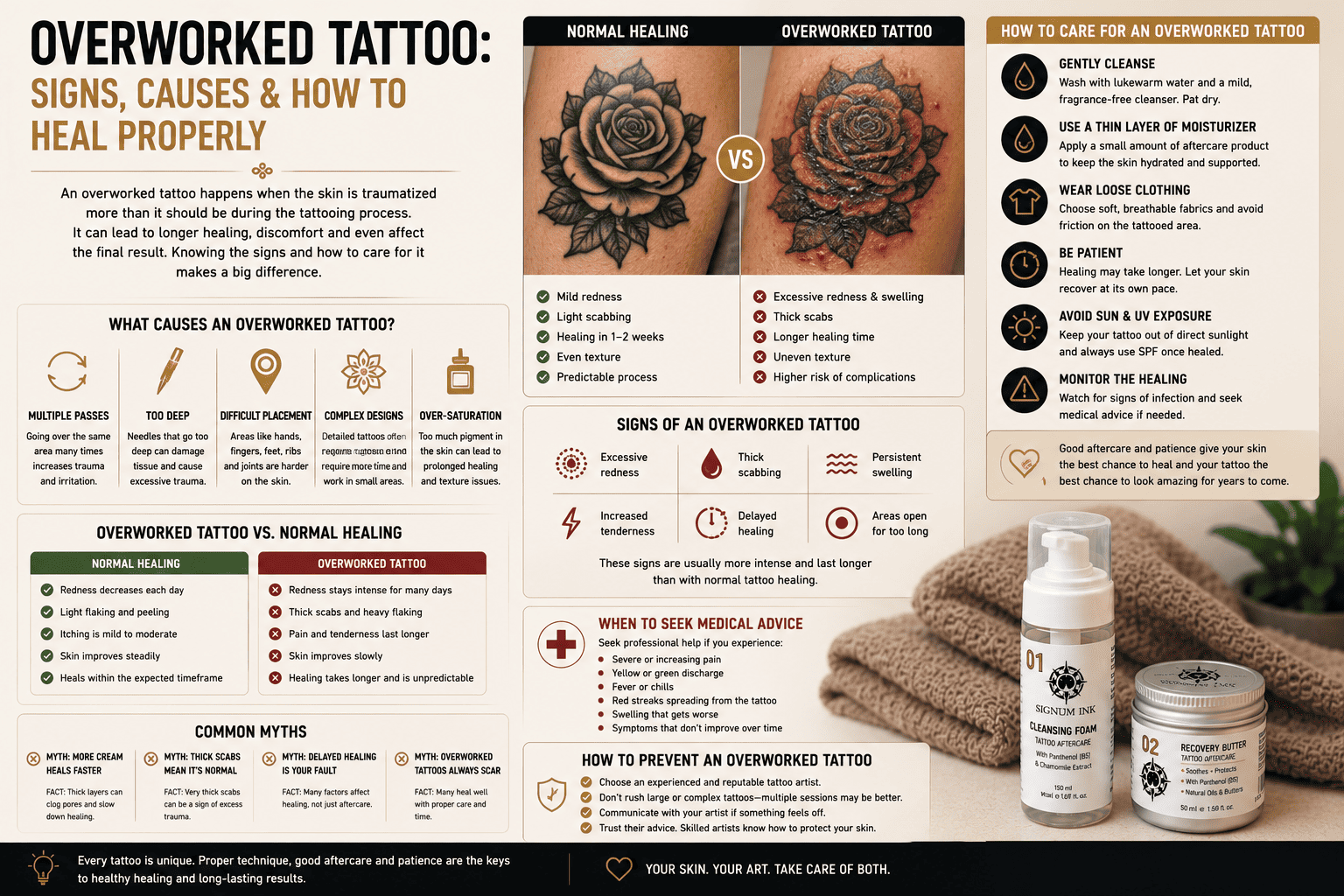
An overworked tattoo is a tattoo in which the skin has been subjected to excessive mechanical trauma during the tattooing process.
This may happen when an area is:
- Tattooed repeatedly.
- Worked for too long.
- Penetrated too deeply.
- Repeatedly re-lined.
- Over-saturated with pigment.
The additional trauma can make the skin take longer to recover than it normally would.
Why Does It Happen?
Several factors may contribute.
The most common include:
Multiple Passes
Some areas require several passes to achieve the desired result.
However, repeatedly working the same section can increase skin trauma.
Needle Depth
Tattoo needles should deposit pigment into the dermis.
If the needles penetrate too deeply, unnecessary tissue damage may occur.
Difficult Placements
Certain body areas naturally present greater challenges.
Examples include:
- Hands.
- Fingers.
- Feet.
- Ribs.
- Elbows.
- Knees.
The skin in these locations may be thinner or move more during tattooing.
Complex Designs
Highly detailed tattoos sometimes require longer sessions and more repeated work in small areas.
Experienced tattoo artists carefully balance detail with skin preservation.
What Are the Signs of an Overworked Tattoo?
Although every tattoo heals differently, common signs may include:
- Excessive redness.
- Thick scabbing.
- Persistent swelling.
- Increased tenderness.
- Delayed healing.
- Areas that remain open longer than expected.
These symptoms are generally more pronounced than those seen during routine tattoo healing.
Overworked Tattoo vs. Normal Healing
This distinction is important.
Normal healing usually follows a predictable pattern:
- Redness gradually decreases.
- Peeling begins.
- Itching develops.
- The skin steadily improves.
An overworked tattoo may instead:
- Stay inflamed longer.
- Form heavier scabs.
- Feel significantly more painful.
- Heal unevenly.
The overall trend is often slower recovery rather than steady improvement.
Can an Overworked Tattoo Heal Normally?
Yes—many do.
The skin has a remarkable ability to repair itself.
Even tattoos that have experienced more trauma than ideal often heal successfully with appropriate care and patience.
However, deeper skin injury may increase the likelihood of:
- Scar tissue.
- Uneven pigment.
- Longer healing time.
- Future touch-ups.
The outcome depends on both the degree of skin trauma and individual healing.
Don’t Assume You’ve Done Something Wrong
One of the biggest misconceptions is that delayed healing always means poor aftercare.
In reality, some tattoos simply begin with more skin trauma than others.
Continuing gentle, consistent aftercare usually gives the skin the best opportunity to recover.
How Should You Care for an Overworked Tattoo?
An overworked tattoo requires the same general principles as normal tattoo aftercare—but with extra patience.
Because the skin has experienced more trauma, healing may simply take longer.
Continue to:
- Wash the tattoo gently with lukewarm water and a mild cleanser.
- Pat the area dry with a clean towel.
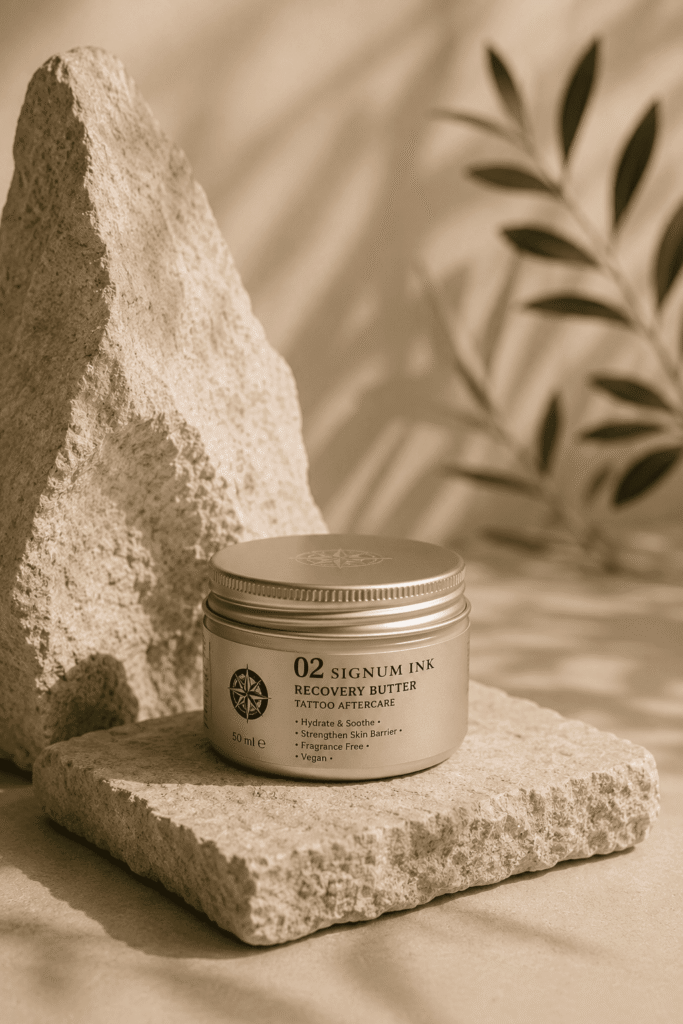
- Apply a thin layer of moisturizer when needed.
- Wear loose, breathable clothing.
- Avoid unnecessary friction.
Trying to “speed up” healing often causes more harm than good.
What Should You Avoid?
When your tattoo feels particularly sore or heavily scabbed, resist the urge to interfere with the healing process.
Avoid:
- Picking thick scabs.
- Scratching itchy areas.
- Applying excessive amounts of ointment.
- Soaking the tattoo in baths, pools or hot tubs.
- Intense friction from clothing or sports equipment.
Allow the skin to recover at its own pace.
Can an Overworked Tattoo Damage the Final Result?
Sometimes.
The more severe the skin trauma, the greater the possibility of:
- Small areas of pigment loss.
- Slightly uneven healing.
- Permanent scar tissue.
- A future touch-up.
Fortunately, many overworked tattoos heal far better than people initially expect.
It’s important not to judge the final appearance too early.
When Should You See a Healthcare Professional?
Healing may be slower with an overworked tattoo, but certain symptoms still require medical assessment.
Seek professional advice if you develop:
- Rapidly increasing redness.
- Severe swelling.
- Thick yellow or green discharge.
- Fever or chills.
- Red streaks spreading away from the tattoo.
- Pain that continues worsening instead of gradually improving.
These symptoms may indicate an infection or another complication rather than simply an overworked tattoo.
Can You Prevent an Overworked Tattoo?
Although clients have limited control during the tattooing process, there are still ways to reduce the risk.
Choose a tattoo artist who:
- Has experience with your preferred style.
- Has a strong portfolio of healed tattoos.
- Uses good hygiene practices.
- Is willing to split large projects into multiple sessions if needed.
Experienced artists understand that protecting the skin is just as important as creating beautiful artwork.
Common Myths About Overworked Tattoos
Myth 1: Every Thick Scab Means the Tattoo Is Overworked
False.
Scab thickness varies depending on the tattoo, placement and individual healing response.
An overworked tattoo usually shows several signs rather than one symptom alone.
Myth 2: More Cream Helps an Overworked Tattoo Heal Faster
False.
Applying thick layers of moisturizer cannot repair deeper skin trauma.
A thin layer is generally sufficient.
Myth 3: Overworked Tattoos Always Scar
Not necessarily.
Many heal very well with time and appropriate aftercare.
The severity of the skin trauma largely determines the outcome.
Myth 4: Delayed Healing Means You Did Something Wrong
False.
Healing depends on many factors, including skin type, tattoo placement, technique and individual biology.
Delayed healing isn’t automatically the result of poor aftercare.
Frequently Asked Questions
How do I know if my tattoo is overworked?
Signs may include unusually heavy scabbing, prolonged redness, persistent swelling and slower healing than expected.
If you’re unsure, speak with your tattoo artist or a healthcare professional.
Will an overworked tattoo scar?
Not always.
Some overworked tattoos heal without permanent texture changes, while others may develop mild scar tissue depending on the severity of the trauma.
Can an overworked tattoo lose ink?
It can.
If deeper skin damage occurs during healing, small areas of pigment may heal lighter and later benefit from a touch-up.
How long does an overworked tattoo take to heal?
Healing often takes longer than a typical tattoo, but the exact timeline varies according to the amount of skin trauma and individual healing.
Can an overworked tattoo be fixed?
In many cases, yes.
Once healing is complete, an experienced tattoo artist may recommend a touch-up if small areas require additional pigment.
Conclusion
An overworked tattoo can look worrying during the healing process, but it doesn’t automatically mean the final result will be poor.
The skin is remarkably resilient, and many tattoos recover well with gentle aftercare and patience.
The key is recognizing when healing is simply taking longer—and when symptoms suggest that professional assessment is needed.
Supporting your skin rather than rushing the healing process gives your tattoo the best opportunity to recover beautifully.
Continue Learning
Wondering whether your tattoo is healing more slowly than expected?
→ Read: The Complete Guide to Common Tattoo Problems: Causes, Symptoms & Solutions
 English
  German
  Dutch
Dutch  Danish
  Swedish
  French
  Italian