Introduction
Most tattoos heal with temporary redness, mild swelling and some itching.
These are normal parts of the body’s healing response.
Occasionally, however, the immune system reacts differently.
Instead of simply healing the tattoo, it recognizes one or more tattoo pigments as foreign substances and triggers an allergic reaction.
Although tattoo allergies are relatively uncommon, they can develop shortly after getting a tattoo—or even months or years later.
Understanding the symptoms can help you recognize when your tattoo needs more than routine aftercare.
Can You Be Allergic to a Tattoo?
Yes.
Although uncommon, some people develop allergic reactions to tattoo pigments.
Unlike ordinary healing, an allergic reaction involves the immune system responding to certain substances within the ink.
The reaction may affect:
- One specific color.
- Part of the tattoo.
- The entire tattoo.
- Occasionally, multiple tattoos containing the same pigment.
The timing varies considerably between individuals.
What Causes Tattoo Allergies?
The allergy isn’t caused by the tattoo needle itself.
Instead, it’s usually related to ingredients found within tattoo pigments.
Potential triggers include:
Certain Pigments
Historically, some pigment colors have been associated with allergic reactions more often than others.
Red pigments have traditionally been reported most frequently, although reactions can occur with many different colors.
Individual Immune Response
Every immune system responds differently.
A pigment that causes no problems for one person may trigger an allergic reaction in another.
Delayed Immune Activation
Some tattoo allergies don’t appear immediately.
Instead, the immune system may react long after the tattoo has healed.
This explains why an older tattoo can suddenly become itchy or raised.
What Are the Symptoms of a Tattoo Allergy?
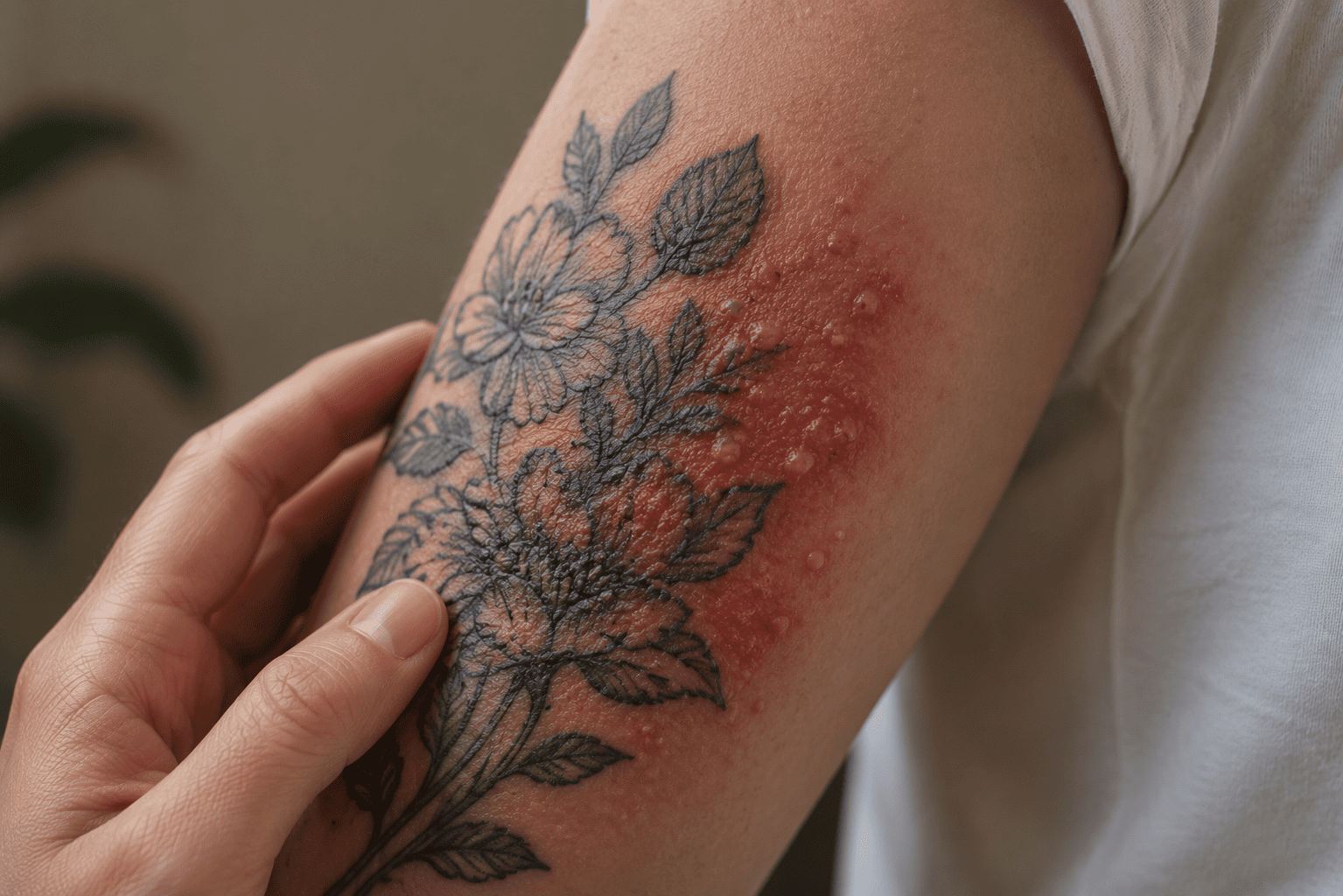
Symptoms may include:
- Persistent itching.
- Raised skin.
- Redness.
- Rash.
- Small bumps.
- Swelling.
- Ongoing irritation.
Unlike normal healing, these symptoms often persist or repeatedly return.
Tattoo Allergy vs. Normal Healing
This distinction is important.
Normal healing usually improves week by week.
Temporary itching and redness gradually disappear.
A tattoo allergy often behaves differently.
Symptoms may:
- Persist.
- Return unexpectedly.
- Affect only certain pigment colors.
- Develop long after healing.
The pattern over time often provides the biggest clue.
Which Tattoo Colors Cause Allergies Most Often?
Historically, red pigments have been reported more frequently in allergic reactions.
However, reactions have also been described with:
- Yellow.
- Green.
- Blue.
- Purple.
- Black.
Modern tattoo pigments vary considerably, making it impossible to predict exactly which inks may cause problems.
Can Tattoo Allergies Develop Years Later?
Yes.
One of the unusual features of tattoo allergies is that they may appear long after the tattoo has completely healed.
Some people experience symptoms months or even years later.
The exact reason for delayed reactions isn’t always fully understood, but immune system changes may play a role.
Not Every Itchy Tattoo Is an Allergy
Fortunately, most itchy tattoos are simply experiencing normal healing or temporary skin irritation.
Dry skin, weather changes and healing itself are much more common causes of itching than true allergic reactions.
Looking at the overall pattern of symptoms is often more informative than focusing on itching alone.
How Are Tattoo Allergic Reactions Treated?
The appropriate treatment depends on the severity of the reaction.
For mild symptoms, a healthcare professional may recommend:
- Monitoring the affected area.
- Avoiding unnecessary irritation.
- Keeping the skin clean and moisturized.
For more significant reactions, a doctor or dermatologist may prescribe medication to reduce inflammation or itching.
Because treatment varies between individuals, it’s important to seek professional advice rather than attempting to self-treat persistent symptoms.
Should You Continue Normal Aftercare?
Yes.
If your tattoo is still healing, continue following your normal aftercare routine unless your healthcare professional advises otherwise.
This includes:
- Washing gently with lukewarm water and a mild cleanser.
- Patting the skin dry.
- Applying a thin layer of moisturizer when needed.
- Avoiding scratching.
- Wearing loose clothing over the tattoo.
Routine aftercare supports skin healing, even if an allergic reaction is being evaluated.
Can Tattoo Allergies Be Prevented?
Unfortunately, not always.
Because allergies depend on an individual’s immune system, they cannot be predicted with certainty.
However, you can reduce uncertainty by:
- Choosing an experienced tattoo artist.
- Discussing any previous allergic reactions before tattooing.
- Following appropriate aftercare.
- Seeking medical advice promptly if unusual symptoms develop.
If you’ve previously reacted to a specific tattoo pigment, tell your tattoo artist before receiving additional tattoos.
When Should You See a Healthcare Professional?
You should seek medical advice if you develop:
- Persistent itching that doesn’t improve.
- Increasing swelling.
- Blistering.
- A widespread rash.
- Thickened raised skin.
- Severe redness.
- Symptoms that continue returning after healing.
- Fever or signs of infection.
Persistent or worsening symptoms should never be ignored.
Common Myths About Tattoo Allergies
Myth 1: Every Itchy Tattoo Is an Allergy
False.
Most itching during the first weeks is a normal part of healing.
Myth 2: Tattoo Allergies Always Appear Immediately
False.
Some allergic reactions develop months or even years after the tattoo was created.
Myth 3: Only Red Ink Causes Allergies
False.
Although red pigments have historically been associated with allergic reactions more often, reactions have also been reported with other colors.
Myth 4: Tattoo Cream Can Cure an Allergy
False.
Moisturizers help support healthy skin but cannot eliminate an immune system reaction.
Medical treatment may be required.
Frequently Asked Questions
Can you suddenly become allergic to an old tattoo?
Yes.
Tattoo allergies can occasionally develop long after the tattoo has healed.
Which tattoo color causes allergies most often?
Historically, allergic reactions have been reported more frequently with certain red pigments, although reactions may occur with many different colors.
Is itching always a sign of allergy?
No.
Itching is one of the most common symptoms of normal tattoo healing.
Persistent or recurring itching outside the normal healing period deserves further evaluation.
Can tattoo allergies be cured?
Treatment often focuses on controlling symptoms rather than permanently eliminating the allergy.
Your healthcare professional can recommend the most appropriate approach.
Should I remove my tattoo if I have an allergy?
Not necessarily.
Management depends on the severity of the reaction.
A dermatologist can discuss treatment options and determine whether tattoo removal is appropriate in your specific situation.
Conclusion
Tattoo allergies are uncommon, but they can occur both shortly after tattooing and many years later.
The most important difference between normal healing and an allergic reaction is the pattern of symptoms over time.
Most tattoos heal with temporary itching and redness that gradually improve.
Persistent itching, recurrent swelling, rashes or raised skin deserve professional evaluation.
Recognizing these signs early helps ensure appropriate treatment while protecting both your skin and your tattoo.
 English
  German
  Dutch
Dutch  Danish
  Swedish
  French
  Italian