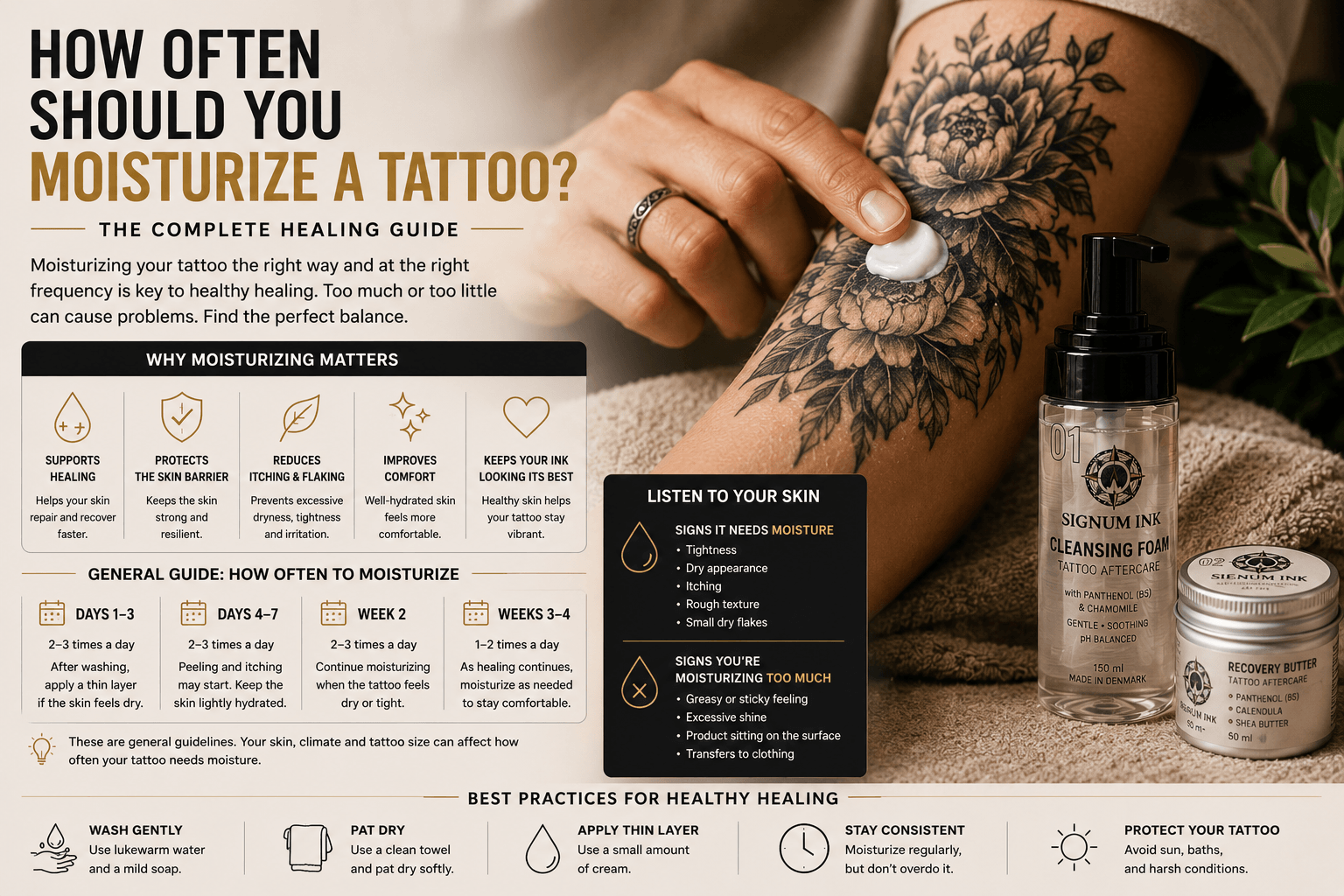
Moisturizing your tattoo is one of the most important parts of the healing process, but it’s also one of the areas where people receive the most conflicting advice.
Some people are told to apply tattoo cream every few hours, while others are advised to let the tattoo dry out completely. The truth is that neither extreme provides the ideal healing environment.
A fresh tattoo needs moisture to help support the skin’s natural repair process, but it also needs oxygen and a healthy skin barrier. Applying too much cream can leave the skin greasy and uncomfortable, while not applying enough can cause excessive dryness, itching, cracking, and heavier scabbing.
The goal isn’t to keep your tattoo constantly covered in cream.
The goal is to maintain a healthy balance.
In this guide, you’ll learn how often to moisturize your tattoo during each stage of healing, how to recognize when your skin needs more moisture, and the biggest mistakes to avoid.
Why Moisturizing Matters
When you get a tattoo, thousands of microscopic punctures are created in your skin.
Your body immediately begins repairing this controlled injury by:
- Producing new skin cells
- Restoring the skin barrier
- Reducing inflammation
- Repairing damaged tissue
- Protecting the wound from bacteria
During this process, the skin naturally loses moisture.
Tattoo cream doesn’t speed up healing by itself.
Instead, it supports the skin by reducing excessive moisture loss and helping the damaged skin remain flexible and comfortable while it heals.
Proper moisturizing may help:
- Reduce tightness
- Minimize itching
- Support skin barrier recovery
- Reduce excessive flaking
- Improve comfort throughout healing
- Keep peeling more manageable
So, How Often Should You Moisturize a Tattoo?
There isn’t one perfect schedule for everyone.
The right frequency depends on:
- Your skin type
- The climate
- Humidity
- Tattoo location
- Activity level
- The aftercare product you’re using
For most people, applying a thin layer of tattoo cream two to three times per day during the first week provides a healthy balance.
However, instead of watching the clock, it’s often better to pay attention to how your tattoo feels.
Moisturize whenever your tattoo begins to feel:
- Tight
- Dry
- Slightly itchy
- Less comfortable
Your skin is usually a better guide than any timetable.
When Should You Start Moisturizing?
Most tattoo artists recommend waiting until you’ve removed the initial bandage and gently cleaned the tattoo for the first time.
After washing:
- Pat the tattoo dry.
- Allow it to air dry for a minute or two.
- Apply a very thin layer of tattoo cream.
Avoid applying cream immediately over excess plasma, blood, or moisture.
Clean skin provides the best environment for moisturizer to work effectively.
How Often Should You Moisturize During Each Healing Stage?
The amount of moisture your tattoo needs changes as healing progresses.
Days 1–3
During the first few days, your tattoo may release:
- Plasma
- Small amounts of blood
- Excess ink
The skin is often tender and slightly swollen.
After each gentle wash, apply a thin layer of moisturizer if the skin feels dry.
Avoid thick layers that leave the tattoo shiny or greasy.
Days 4–7
This is when many tattoos begin feeling tighter.
You may notice:
- Peeling
- Flaking
- Mild itching
Moisturizing two or three times daily often keeps the skin comfortable during this stage.
The tattoo should remain lightly hydrated—not heavily coated.
Week Two
Peeling becomes more noticeable.
The temptation to scratch also increases.
Continue moisturizing whenever the tattoo begins feeling dry.
Keeping the skin comfortable often helps reduce the urge to scratch.
Weeks Three and Four
Most of the visible healing is complete.
The deeper layers of skin continue recovering beneath the surface.
Many people naturally reduce moisturizing frequency as the tattoo begins feeling more like normal skin again.
Signs Your Tattoo Needs Moisture
Rather than following a strict schedule, learn to recognize your skin’s signals.
Your tattoo may need another light application if you notice:
- Tightness
- Dry appearance
- Mild itching
- Rough texture
- Small dry flakes
These are normal signs that the skin is losing moisture.
A thin layer of tattoo cream usually restores comfort quickly.
Signs You’re Moisturizing Too Often
Applying tattoo cream too frequently isn’t usually dangerous, but it may create an environment that isn’t ideal for healing.
Signs include:
- Greasy skin
- Sticky feeling
- Product sitting on the surface
- Cream transferring onto clothing
- Excessive shine
- Skin feeling overly soft
If you notice these symptoms, simply reduce the amount or wait longer between applications.
The skin should absorb the cream—not wear it like a thick coating.
Does Skin Type Affect Moisturizing?
Absolutely.
Every person’s skin heals differently.
Dry Skin
People with naturally dry skin often benefit from:
- More frequent light applications
- Extra care during cold weather
- Gentle cleansers that don’t strip natural oils
Monitor your skin carefully and moisturize when it begins feeling tight.
Oily Skin
People with oily skin usually require less moisturizer.
Applying too much product may leave the tattoo greasy without providing additional benefits.
Thin applications remain the best approach.
Sensitive Skin
If you have sensitive skin, choose products that are:
- Fragrance-free
- Gentle
- Suitable for sensitive skin
- Free from unnecessary irritants
Introducing multiple new skincare products while your tattoo heals increases the chance of irritation.
Does Weather Change How Often You Should Moisturize?
Yes.
Environmental conditions can make a noticeable difference.
Cold Weather
Winter air and indoor heating often dry the skin.
Many tattoos require slightly more frequent moisturizing during colder months.
Warm Weather
In hot climates, sweat becomes a bigger factor.
Instead of automatically applying more cream, wash away sweat when needed and continue using thin applications.
The goal remains balanced hydration—not excessive moisture.
Common Moisturizing Mistakes
Many people unintentionally slow healing through simple aftercare mistakes.
Some of the most common include:
- Applying thick layers of cream
- Moisturizing dirty skin
- Waiting until the tattoo becomes extremely dry
- Constantly reapplying cream without checking the skin
- Using heavily fragranced lotions
Simple, consistent care almost always produces better results than overcomplicating your routine.
How to Moisturize a Tattoo Correctly
Knowing when to moisturize your tattoo is only part of the equation.
Applying tattoo cream correctly helps create the ideal environment for healthy healing while avoiding common problems caused by using too much product.
A simple routine is usually all your tattoo needs.
Step 1: Wash Your Hands
Before touching your tattoo, always wash your hands thoroughly.
Throughout the day your hands come into contact with:
- Mobile phones
- Door handles
- Keyboards
- Money
- Gym equipment
- Public surfaces
Clean hands reduce the risk of transferring bacteria to your healing tattoo.
Step 2: Clean the Tattoo First
Whenever possible, apply moisturizer to clean skin.
If you’ve just showered or washed your tattoo:
- Pat it dry with a clean towel or paper towel.
- Let it air dry for one to two minutes.
- Apply a thin layer of tattoo cream.
Avoid applying moisturizer over sweat, dirt, or excess plasma.
Step 3: Apply a Thin, Even Layer
Less is usually more.
Place a small amount of tattoo cream on your fingertips and gently spread it across the tattoo until the entire area has a light, even coating.
The cream should absorb within a few minutes.
Your tattoo should look:
- Soft
- Comfortable
- Lightly hydrated
—not greasy or overly shiny.
Step 4: Let the Skin Breathe
After applying tattoo cream, allow it to absorb naturally.
Avoid wrapping the tattoo in plastic or covering it with tight clothing unless specifically instructed by your tattoo artist.
Healthy healing skin benefits from both moisture and airflow.
Can You Over-Moisturize a Tattoo?
Yes.
Although moisturizing supports healing, applying excessive amounts of cream may slow the skin’s natural recovery.
Too much product can:
- Trap heat
- Leave the skin greasy
- Increase product buildup
- Collect dirt more easily
- Make the tattoo feel uncomfortable
The solution isn’t to stop moisturizing.
It’s simply to use smaller amounts.
Can You Moisturize Too Little?
Absolutely.
Dry healing skin often becomes:
- Tight
- Rough
- Itchy
- Uncomfortable
If the skin becomes excessively dry, it may also develop:
- Larger flakes
- Small cracks
- Heavy scabbing
- Increased irritation
A balanced moisturizing routine helps reduce these problems while supporting the skin barrier.
Should Your Tattoo Feel Greasy?
No.
This is one of the easiest ways to tell whether you’re using too much cream.
A properly moisturized tattoo should feel:
- Smooth
- Flexible
- Comfortable
It should not feel:
- Sticky
- Wet
- Oily
- Heavy
If your clothes stick to the tattoo because of leftover cream, you’re probably applying more than necessary.
Does Climate Affect Moisturizing?
Definitely.
Your environment plays an important role in how quickly your tattoo loses moisture.
Cold Weather
During winter:
- Indoor heating lowers humidity.
- Skin loses moisture faster.
- Tattoos often feel tighter.
Many people need slightly more frequent moisturizing during colder months.
Warm Weather
Summer introduces different challenges.
Higher temperatures often mean:
- More sweating
- More outdoor activity
- More friction from clothing
Instead of automatically applying extra cream, gently clean away sweat when necessary and continue using thin applications.
Does Tattoo Size Matter?
Yes.
A small wrist tattoo naturally needs much less moisturizer than a full sleeve or back piece.
Rather than thinking about how much cream comes out of the tube, focus on applying just enough to lightly cover the tattoo.
The cream should disappear into the skin—not remain visible on top.
Common Moisturizing Mistakes
Even experienced tattoo collectors occasionally make simple aftercare mistakes.
Applying Thick Layers
More cream doesn’t mean faster healing.
Heavy applications may:
- Trap moisture
- Make the tattoo greasy
- Reduce comfort
Thin layers work best.
Moisturizing Dirty Skin
Applying cream over sweat or dirt doesn’t benefit healing.
Whenever practical, clean the tattoo first.
Moisturizing Every Hour
Some people worry so much about dryness that they apply cream constantly.
Healthy tattoos rarely need continuous applications.
Instead, pay attention to how your skin feels.
Ignoring Dryness
The opposite mistake is waiting until the tattoo becomes extremely dry before moisturizing.
Maintaining a consistent level of hydration generally provides the most comfortable healing experience.
Frequently Asked Questions
Should I moisturize every time I wash my tattoo?
Usually, yes.
After washing and drying the tattoo, apply a thin layer of moisturizer if the skin feels dry or tight.
Can I moisturize before bed?
Absolutely.
Many people find that applying a light layer before sleeping helps keep the tattoo comfortable overnight.
What if I accidentally used too much cream?
Don’t worry.
Gently blot away any obvious excess using a clean paper towel.
Next time, simply apply a smaller amount.
Can I use regular body lotion?
Some fragrance-free lotions may be suitable later in the healing process.
During the first few weeks, many tattoo artists recommend using a tattoo aftercare product specifically formulated for healing skin.
Should my tattoo always look shiny?
No.
A slight sheen immediately after application is normal.
If the tattoo stays very shiny for an extended period, you’ve probably used too much product.
Can I stop moisturizing once peeling ends?
Although the outer layer may appear healed, the deeper layers of skin continue recovering for several weeks.
Many people gradually reduce moisturizing after peeling finishes, but keeping the skin hydrated can continue supporting its overall health and help maintain the tattoo’s appearance.
Final Thoughts
Moisturizing your tattoo isn’t about applying as much cream as possible—it’s about giving your skin exactly what it needs.
For most people, two to three light applications per day during the first week, followed by moisturizing whenever the tattoo feels dry, provides an excellent balance.
Remember these key principles:
- Wash your hands before touching your tattoo.
- Apply moisturizer to clean, dry skin.
- Use only a thin layer.
- Allow the cream to absorb naturally.
- Let your skin—not the clock—guide your routine.
- Avoid both excessive dryness and excessive moisture.
Healthy tattoo healing is all about balance.
With gentle cleansing, consistent moisturizing, and a little patience, you’ll create the ideal environment for your tattoo to heal beautifully while preserving its sharp lines, vibrant color, and long-term appearance.
 English
  German
  Dutch
Dutch  Danish
  Swedish
  French
  Italian