
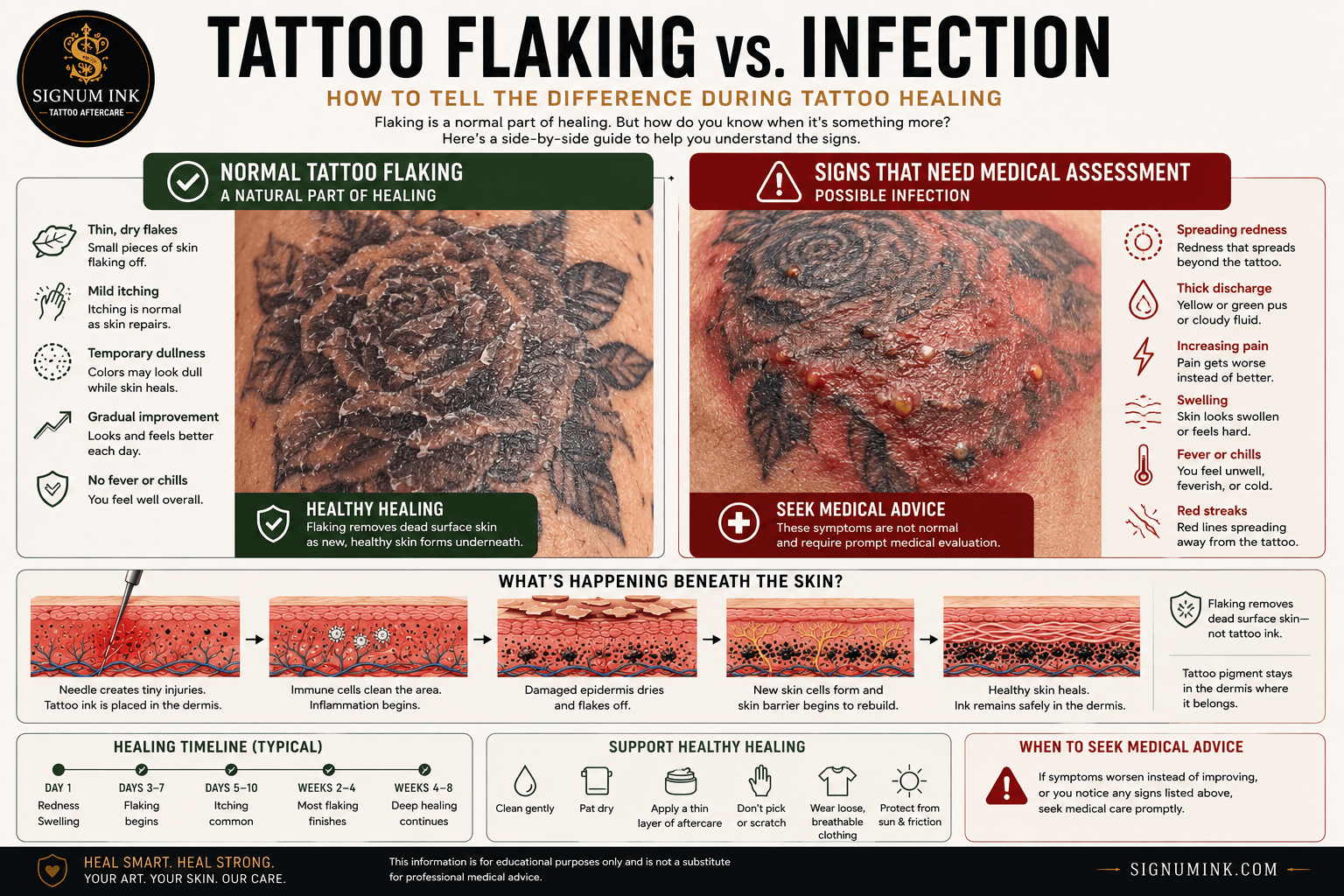
A few days after getting a tattoo, the excitement of fresh ink is often replaced by something unexpected.
Your tattoo starts to look dry.
Tiny flakes of skin begin lifting from the surface.
The colours may appear dull, and the skin may feel tight or itchy.
For many people—especially those getting their first tattoo—this is the moment when concern sets in.
“Is my tattoo supposed to peel like this?”
“Could this be an infection?”
“How do I know the difference?”
The reassuring news is that flaking is one of the most common and expected stages of tattoo healing.
As the outer layer of damaged skin is replaced with healthy new cells, small flakes naturally separate from the surface. This process is part of normal skin renewal and does not mean your tattoo is failing to heal.
However, not every change during healing should be ignored.
Symptoms such as rapidly spreading redness, increasing pain, thick yellow or green discharge, fever, or swelling that worsens instead of improving are not typical of uncomplicated healing and should be assessed promptly by a healthcare professional.
Learning how to recognize the difference between normal flaking and warning signs that deserve medical attention can help you care for your tattoo with greater confidence.
Quick Answer
Is tattoo flaking normal?
Yes.
Most tattoos begin flaking between Days 3 and 7 after tattooing.
The peeling usually lasts 4–10 days and is a normal part of epidermal renewal.
Flaking alone is not considered a sign of infection.
Quick Facts
Normal Flaking
✅ Thin flakes of dry skin
✅ Mild itching
✅ Temporary dull appearance
✅ Gradual improvement
Symptoms That Need Medical Assessment
⚠️ Rapidly spreading redness
⚠️ Increasing pain
⚠️ Thick yellow or green discharge
⚠️ Fever or chills
⚠️ Significant swelling
⚠️ Red streaks extending away from the tattoo
Why Does Tattoo Flaking Happen?
Tattooing creates thousands of microscopic injuries in the skin.
Although the tattoo pigment is placed within the dermis, the epidermis is temporarily damaged by the tattoo needles.
As healing progresses, your body replaces these damaged surface cells with healthy new ones.
The old cells gradually separate from the surface.
This process is what we call flaking.
Rather than indicating a problem, flaking usually shows that your skin is moving into the next stage of healing.
What Does Normal Tattoo Flaking Look Like?
Healthy tattoo flaking usually has several recognizable features.
It often appears as:
- Thin, dry flakes.
- Small pieces of peeling skin.
- Mild itching.
- Slight tightness.
- Temporary dullness.
The skin beneath the flakes typically looks healthy and gradually becomes smoother as healing progresses.
Most importantly, the tattoo should slowly improve rather than become more irritated.
Why Flaking Is Often Mistaken for Infection
Many of the normal changes that occur during tattoo healing can look alarming if you are not expecting them.
For example:
- Dry skin may look cracked.
- Peeling may make colours appear faded.
- Mild redness can remain for several days.
- Itching often increases as peeling begins.
Because these changes happen at the same time, many people mistakenly assume that the tattoo is becoming infected.
In reality, timing is one of the most helpful clues.
Normal healing tends to improve gradually.
Infections often become progressively worse rather than better.
What Happens Beneath the Skin?
Although flaking is visible on the surface, the real healing happens below.
Several important biological processes continue simultaneously.
New Epidermal Cells Replace Damaged Skin
Fresh skin cells migrate toward the surface, gradually replacing the damaged outer layer.
The Skin Barrier Continues Rebuilding
The barrier is still incomplete during the flaking stage.
This explains why the tattoo may feel dry, tight, or slightly itchy.
Collagen Production Continues
Within the dermis, fibroblasts continue producing collagen to strengthen healing tissue.
Tattoo Pigment Remains Stable
Tattoo ink remains within the dermis while only the superficial epidermal cells are shed.
This is why flaking skin does not normally remove the tattoo.
Supporting Healthy Healing
The goal during flaking is not to stop the peeling process.
Instead, support your skin while it heals naturally.
Helpful habits include:
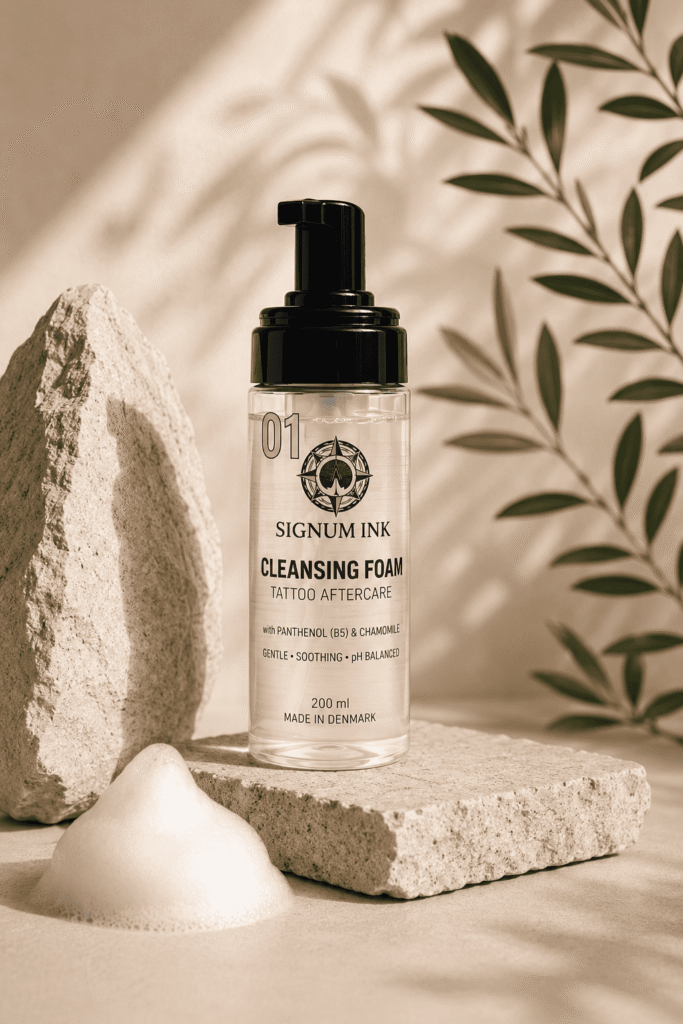
- Washing gently with a mild cleanser.
- Patting the tattoo dry.
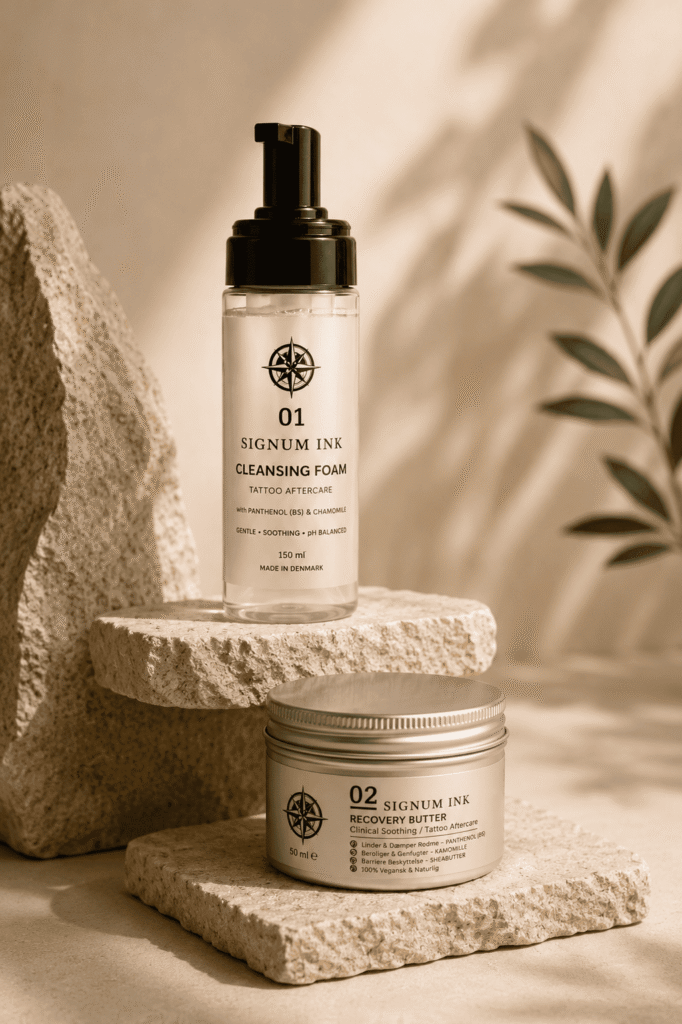
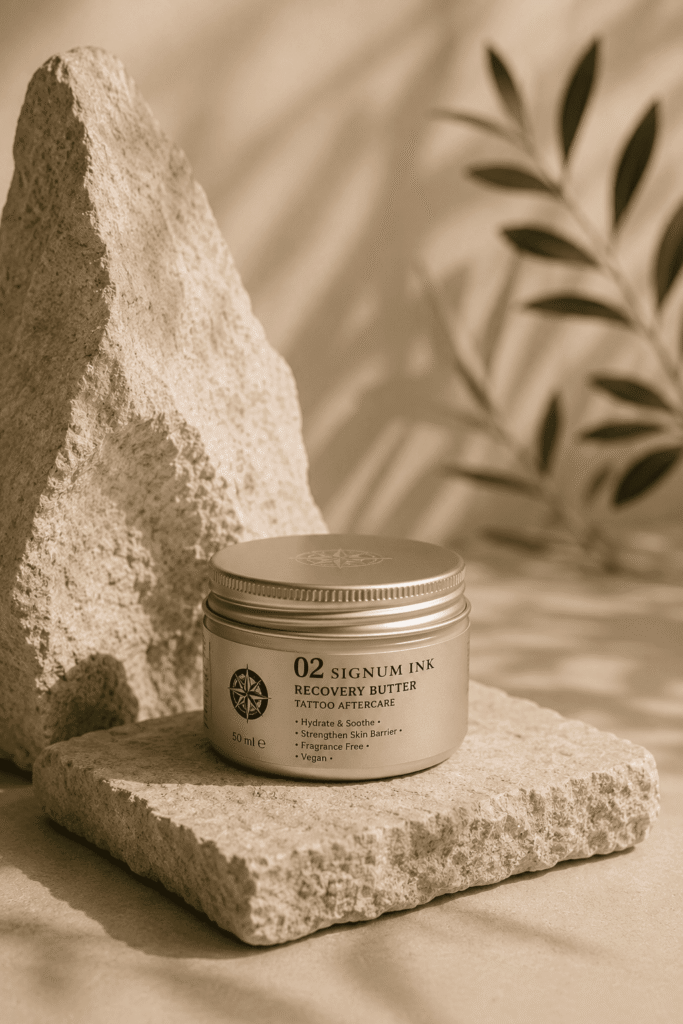
- Applying a thin layer of recovery cream.
- Avoiding scratching or picking peeling skin.
- Wearing loose, breathable clothing.
Supporting the skin barrier helps maintain comfort while allowing natural healing to continue.
Normal Tattoo Flaking vs. Possible Infection
At first glance, normal flaking and an infection may seem difficult to distinguish.
Both can involve redness, tenderness, and changes in the appearance of the tattoo.
The key difference is usually how the tattoo changes over time.
A normally healing tattoo tends to become a little better each day.
An infection often becomes progressively worse.
Normal Tattoo Flaking
Healthy flaking typically includes:
- Thin, dry flakes.
- Mild itching.
- Temporary dullness.
- Slight skin tightness.
- Mild redness that gradually fades.
- Skin that looks healthier as peeling continues.
These changes usually occur between Days 3 and 10 and improve steadily.
Symptoms That Need Medical Assessment
Prompt medical evaluation is appropriate if you notice:
- Redness spreading well beyond the tattoo.
- Increasing pain instead of gradual improvement.
- Thick yellow or green discharge.
- Fever or chills.
- Significant swelling that worsens.
- Red streaks extending away from the tattoo.
- A foul odor from the wound.
These findings do not automatically confirm an infection, but they are not typical of uncomplicated tattoo healing and should be assessed by a healthcare professional.
Tattoo Flaking vs. Scabbing
Many people confuse flaking with scabbing.
Although both occur during healing, they are different biological processes.
Flaking
Flaking happens when damaged surface skin naturally sheds.
It usually appears as:
- Thin flakes.
- Dry skin.
- Mild itching.
- Flexible peeling skin.
This stage is part of normal epidermal renewal.
Scabbing
Scabs are protective crusts formed from dried plasma, blood, and proteins.
Small, thin scabs can be normal on some tattoos.
Heavy, thick scabs are less common and may indicate that the skin experienced more trauma during tattooing or that healing has been disrupted.
Allow both flakes and scabs to detach naturally.
When Is Redness Still Normal?
Redness often worries people more than flaking itself.
Fortunately, mild redness is expected during the first several days after tattooing.
Healthy redness usually:
- Remains close to the tattoo.
- Gradually fades.
- Is accompanied by improving tenderness.
- Does not continue spreading.
The direction of change is more important than the exact shade of red.
What Does the Research Say?
Tattoo healing follows the same biological principles as other superficial skin wounds.
Scientific research describes three overlapping phases:
Inflammation
Immune cells remove damaged tissue and coordinate repair.
Proliferation
Fresh epidermal cells replace damaged skin while fibroblasts increase collagen production.
Remodeling
The skin gradually regains strength, flexibility, and barrier function.
Flaking occurs during the transition between inflammation and proliferation, when damaged surface cells are replaced with healthy new epidermis.
Why the Skin Barrier Matters
The skin barrier is temporarily weakened after tattooing.
During the flaking phase:
- Water escapes more easily.
- The skin feels tighter.
- Dryness increases.
- Itching becomes more noticeable.
Supporting the barrier with appropriate hydration helps improve comfort while allowing natural healing to continue.
Recovery Tips During the Flaking Stage
Healthy healing is usually supported by simple, consistent care.
Helpful habits include:
✔ Wash the tattoo gently with a mild cleanser.
✔ Pat the skin dry with a clean towel.
✔ Apply a thin layer of recovery cream if the skin feels dry.
✔ Wear loose, breathable clothing.
✔ Avoid scratching or picking peeling skin.
✔ Protect the tattoo from unnecessary friction.
The goal is to support the skin—not to interrupt the body’s natural healing process.
Common Mistakes During Flaking
Many people accidentally prolong irritation.
Common mistakes include:
Pulling Off Peeling Skin
Removing flakes before they separate naturally may expose delicate new skin.
Scratching
Scratching increases irritation and may delay healing.
Overwashing
Excessive cleansing may dry the recovering skin barrier.
Applying Excessive Ointment
Very thick layers of product may leave the skin feeling overly occluded.
A thin, even application is generally sufficient.
Wearing Tight Clothing
Repeated rubbing may increase irritation and slow comfortable healing.
Ignoring Sun Protection
Healing skin is particularly sensitive to ultraviolet radiation.
Once fully healed, regular sunscreen use helps protect both the skin and tattoo colours.
Research Snapshot
| Research Area | Evidence |
|---|---|
| Epidermal Regeneration | ★★★★★ |
| Wound Healing Biology | ★★★★★ |
| Skin Barrier Recovery | ★★★★★ |
| Moisture Balance | ★★★★★ |
| Tattoo Aftercare | ★★★★☆ |
| Tattoo Flaking Research | ★★★★☆ |
Frequently Asked Questions About Tattoo Flaking vs. Infection
Is tattoo flaking always normal?
In most cases, yes.
Flaking is one of the expected stages of tattoo healing and usually begins between Days 3 and 7. It happens because the outer layer of damaged skin is naturally replaced with healthy new skin.
What matters most is whether your tattoo continues to improve over time.
Can flaking remove tattoo ink?
No.
This is one of the most common concerns among people with new tattoos.
The flakes consist of dead epidermal cells.
Tattoo pigment is stored much deeper within the dermis, so normal flaking does not remove the tattoo itself.
Why does my tattoo look faded while flaking?
Dry, peeling skin temporarily changes the way light reflects from the tattoo.
The artwork may appear cloudy or less vibrant until the peeling phase has finished.
As the skin barrier recovers, colours usually become clearer again.
Is it normal for my tattoo to be slightly red while peeling?
Yes.
A small amount of redness can remain during the early stages of peeling.
Healthy redness usually:
- Stays close to the tattoo.
- Gradually fades.
- Is accompanied by improving comfort.
Redness that spreads, becomes increasingly painful, or is associated with fever or discharge should be assessed by a healthcare professional.
Can itching occur during flaking?
Absolutely.
Peeling and itching often occur together.
As the skin barrier rebuilds, moisture levels fluctuate and tiny nerve endings continue recovering, making mild itching a normal part of healing.
Should I remove loose flakes?
No.
Allow peeling skin to detach naturally.
Pulling away flakes too early may irritate the skin and interfere with normal healing.
How long does tattoo flaking last?
For most people, flaking lasts between 4 and 10 days.
Larger tattoos or naturally dry skin may continue producing small flakes for a little longer.
The overall trend should be gradual improvement.
Does flaking mean my tattoo is infected?
No.
Flaking by itself is not considered a sign of infection.
More concerning symptoms include:
- Increasing pain.
- Thick yellow or green discharge.
- Fever.
- Rapidly spreading redness.
- Worsening swelling.
These symptoms deserve prompt medical evaluation.
Can I shower while my tattoo is flaking?
Yes.
Normal showers with lukewarm water are generally fine.
Avoid:
- Very hot water.
- Long soaking sessions.
- Scrubbing the tattoo.
- Pulling softened flakes away after showering.
Pat the area dry gently with a clean towel.
When should I seek medical advice?
Arrange prompt medical assessment if you notice:
- Redness spreading beyond the tattoo.
- Increasing pain after the first few days.
- Thick yellow or green discharge.
- Fever or chills.
- Significant swelling.
- Red streaks extending away from the tattoo.
- Any symptom that continues worsening rather than improving.
Common Myths About Tattoo Flaking
Myth 1: Every peeling tattoo is infected.
Reality:
Peeling is one of the most common signs of normal tattoo healing.
Most tattoos flake without developing an infection.
Myth 2: The tattoo ink is peeling off.
Reality:
Only dead surface skin is shed.
The pigment remains safely stored within the dermis.
Myth 3: Peeling should stop after three days.
Reality:
Healing varies between individuals.
Some tattoos continue producing fine flakes for more than a week.
Myth 4: Letting the tattoo become completely dry helps it heal.
Reality:
Excessive dryness can increase tightness, discomfort, and itching.
Supporting the skin barrier with appropriate hydration generally promotes greater comfort during healing.
Healing Timeline
| Time After Tattoo | What Is Usually Normal |
|---|---|
| Day 1 | Redness, swelling, tenderness |
| Days 2–3 | Skin begins drying |
| Days 3–7 | Flaking begins |
| Days 5–10 | Peeling and itching overlap |
| Week 2 | Most visible flaking complete |
| Weeks 3–4 | Surface healing complete |
| Weeks 6–8 | Deep skin remodeling continues |
Research Snapshot
| Research Area | Evidence |
|---|---|
| Epidermal Renewal | ★★★★★ |
| Skin Barrier Recovery | ★★★★★ |
| Wound Healing Biology | ★★★★★ |
| Moisture Balance | ★★★★★ |
| Tattoo Aftercare | ★★★★☆ |
| Tattoo Healing Research | ★★★★☆ |
Expert Tip
The most important sign of healthy healing is progress.
A normally healing tattoo gradually becomes less red, less swollen, less itchy, and more comfortable. Temporary peeling and flaking are expected, but symptoms that become progressively worse rather than better deserve medical assessment.
Signs of Normal Tattoo Flaking
✅ Thin flakes of dry skin.
✅ Mild itching.
✅ Slight tightness.
✅ Healthy skin visible beneath the flakes.
✅ Tattoo gradually becomes clearer.
✅ Symptoms improve over time.
Signs That Need Medical Assessment
⚠️ Rapidly spreading redness.
⚠️ Increasing pain.
⚠️ Thick yellow or green discharge.
⚠️ Fever or chills.
⚠️ Significant swelling.
⚠️ Red streaks extending away from the tattoo.
⚠️ Symptoms that worsen instead of improving.
These signs do not necessarily mean an infection is present, but they are not typical of uncomplicated healing and should be evaluated by a healthcare professional.
Why Supporting the Skin Barrier Matters
During the flaking stage, the skin’s protective barrier is still rebuilding.
Modern tattoo aftercare focuses on supporting this process with ingredients that help maintain hydration and reinforce the skin’s natural defenses.
| Function | Example Ingredient |
|---|---|
| Attracts moisture | Glycerin |
| Supports hydration | Betaine |
| Reinforces the barrier | Ceramides |
| Supports barrier function | Niacinamide |
| Skin conditioning | Panthenol |
| Lightweight emollient | Squalane |
| Improves texture | Caprylic/Capric Triglyceride |
| Skin-soothing support | Allantoin |
| Botanical support | Madecassoside |
| Antioxidant protection | Vitamin E |
Together, these ingredients help maintain a comfortable healing environment while allowing the skin’s natural repair processes to continue.
Final Thoughts
Flaking is one of the most visible—and often misunderstood—stages of tattoo healing. While it can look dramatic, it usually reflects the skin’s normal process of replacing damaged surface cells with healthy new tissue.
The most reliable way to distinguish normal healing from a potential problem is to look at the overall direction of recovery. Healthy tattoos generally become more comfortable and less inflamed over time, even if peeling and itching temporarily make the skin look worse before it looks better.
By understanding what normal flaking looks like, supporting your skin with gentle aftercare, and recognizing symptoms that deserve medical attention, you can navigate the healing process with confidence while giving your tattoo the best opportunity to heal beautifully.
Related Articles
For readers who want to learn more about specific stages of healing, add internal links to:
- Tattoo Healing Timeline
- The Complete Science of Tattoo Healing
- Tattoo Peeling Explained
- Why Is My Tattoo Red?
- Why Is My Tattoo Itchy?
- Is Tattoo Scabbing Normal?
- Tattoo Pimples After Healing
- Over-Moisturized Tattoo: Can You Use Too Much Tattoo Cream?
 English
  German
  Dutch
Dutch  Danish
  Swedish
  French
  Italian