Introduction
One of the first questions many people ask after leaving the tattoo studio is:
“Can I shower tonight?”
Fortunately, the answer is usually yes.
A short, gentle shower is generally safe and is an important part of keeping your tattoo clean during healing.
However, there’s a big difference between showering and soaking.
Understanding that difference helps protect your healing skin while avoiding unnecessary irritation.
This guide explains when you can shower, how to do it safely and which common mistakes to avoid during tattoo healing.
Can You Shower After Getting a Tattoo?
In most cases, yes.
Many tattoo artists recommend waiting until it’s time to remove the initial dressing or protective film before showering.
After that, gentle cleansing becomes part of your daily aftercare routine.
Always follow your tattoo artist’s specific instructions regarding:
- Protective dressings.
- Healing films.
- Bandages.
- Timing for the first wash.
Different healing methods may require slightly different routines.
Why Showering Is Important
A shower helps remove:
- Sweat.
- Excess ink.
- Plasma.
- Everyday dirt.
- Surface bacteria.
Regular gentle washing helps create a clean environment that supports the skin’s natural healing process.
Keeping the tattoo clean is far more important than trying to keep it completely dry.
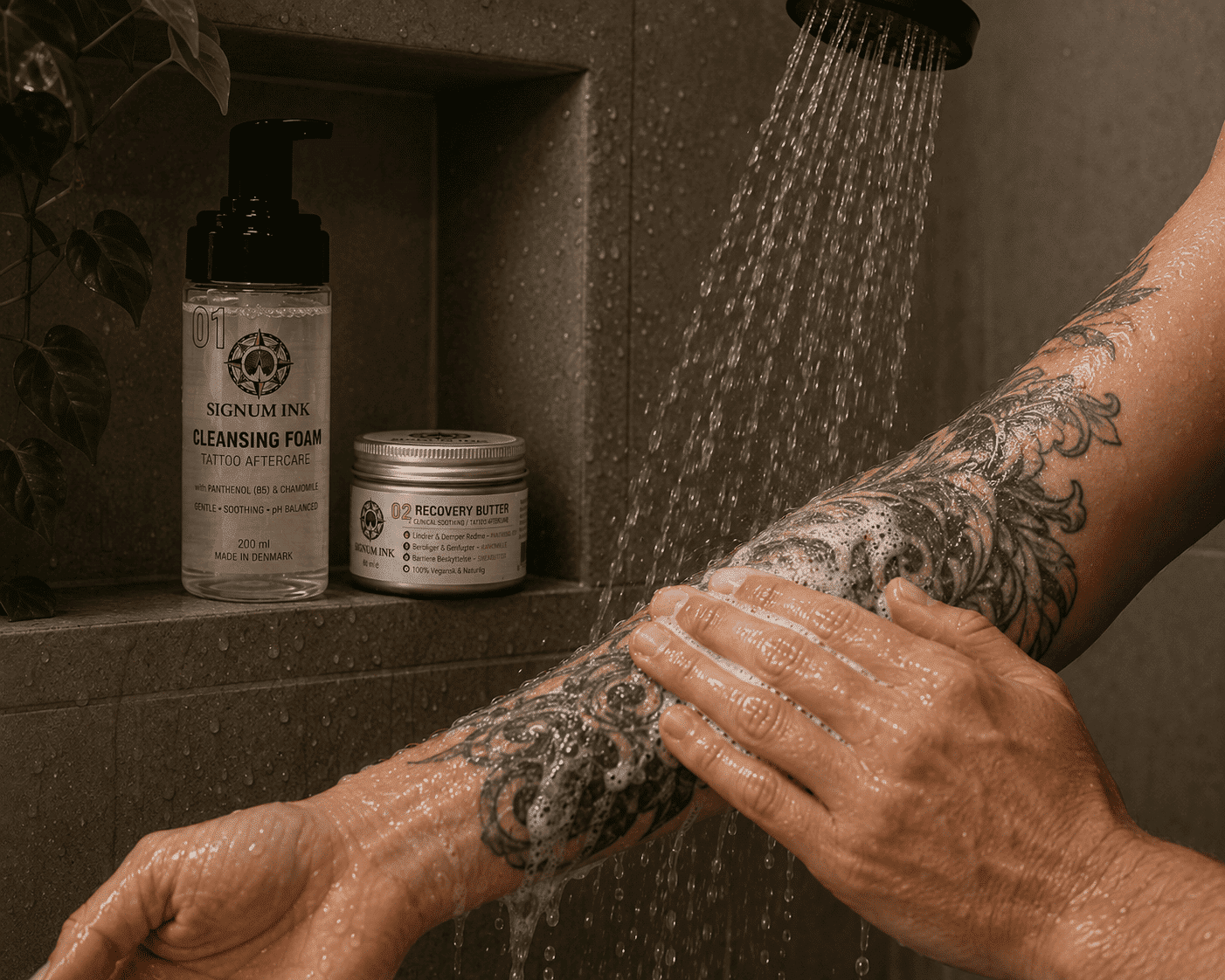
How Should You Shower With a New Tattoo?
The simplest approach is also the safest.
Use:
- Lukewarm water.
- A mild cleanser.
- Gentle hand washing.
- A clean towel afterward.
Allow the water to flow over the tattoo naturally.
Avoid directing a strong shower stream straight onto freshly tattooed skin.
How Long Should Your Shower Be?
Short showers are generally best during the first weeks.
Long exposure to water may soften healing skin more than necessary.
Many tattoo artists recommend keeping showers brief until the tattoo has finished peeling.
Water Temperature Matters
Very hot water can increase skin sensitivity and may make the tattoo feel more uncomfortable.
Instead, choose:
- Lukewarm water.
- Comfortable temperature.
- Gentle water pressure.
Comfort is a good guide.
If the water feels too hot for sensitive skin, it’s probably too hot for your healing tattoo.
Should You Cover Your Tattoo in the Shower?
Usually not.
Once your tattoo artist has instructed you to remove the initial dressing, the tattoo normally doesn’t need to be covered during a shower.
Clean water and gentle cleansing are generally preferred over trapping moisture beneath waterproof coverings.
Always follow your tattoo artist’s instructions if a specialized healing film remains in place.
Showering Helps—It Doesn’t Speed Up Healing
Showering keeps the tattoo clean.
It doesn’t make the tattoo heal faster.
Healthy healing depends on:
- Time.
- Consistent aftercare.
- Gentle cleansing.
- Appropriate moisturizing.
- Protecting the tattoo from unnecessary irritation.
A Clean Tattoo Is a Comfortable Tattoo
Many people worry that getting their tattoo wet will damage it.
Fortunately, that’s rarely the case.
The problem isn’t clean running water.
The real concern is prolonged soaking, excessive heat and harsh treatment of healing skin.
Can You Take a Bath Instead?
No—not while your tattoo is healing.
Unlike a shower, a bath keeps your tattoo submerged in water for an extended period.
This prolonged soaking may:
- Soften healing skin.
- Increase irritation.
- Delay the natural recovery process.
- Expose the tattoo to bacteria that may be present in the water.
Wait until the tattoo has fully healed before taking long baths.

What About Swimming?
Swimming should also wait until your tattoo has completely healed.
Avoid:
- Swimming pools.
- Lakes.
- Rivers.
- The ocean.
- Hot tubs.
These environments expose healing skin to microorganisms and prolonged moisture, both of which may increase the risk of irritation or complications.
Should You Moisturize After Showering?
Usually, yes.
After showering:
- Pat the tattoo dry with a clean towel.
- Allow any remaining surface moisture to evaporate.
- Apply a thin layer of moisturizer if the tattoo feels dry.
This simple routine helps maintain the skin’s natural moisture balance while supporting the healing process.
Common Shower Mistakes
Many tattoo aftercare problems are caused by unnecessary irritation rather than the shower itself.
Common mistakes include:
- Taking very long showers.
- Using extremely hot water.
- Scrubbing the tattoo.
- Using heavily scented soaps.
- Drying the tattoo by rubbing.
- Applying thick layers of moisturizer immediately afterward.
Gentle handling is always the safest approach.
Can Water Damage a Tattoo?
Clean running water does not damage tattoo ink.
The pigment sits beneath the outer layer of skin, where it isn’t washed away during normal showering.
The concern is not the water itself.
Instead, problems are more likely to result from:
- Excessive soaking.
- Harsh scrubbing.
- High water temperatures.
- Poor aftercare habits.
When Can You Return to Normal Showers?
As your tattoo heals, you can gradually return to your usual shower routine.
Once the skin has:
- Finished peeling.
- Recovered its barrier.
- No longer feels tender.
…normal shower duration and temperature are generally appropriate again.
Healing time varies from person to person.
Frequently Asked Questions
Can I shower the same day I get tattooed?
In many cases, yes.
Follow your tattoo artist’s instructions regarding when to remove the dressing before washing the tattoo.
Is hot water bad for a new tattoo?
Very hot water may increase skin sensitivity and irritation.
Lukewarm water is usually the better choice during healing.

Can shampoo or conditioner touch my tattoo?
Brief contact is usually not a problem, but it’s best to rinse these products away promptly and avoid leaving them on the tattoo.
Can I let the shower spray directly onto my tattoo?
A gentle flow of water is fine.
Avoid directing a powerful shower stream onto a fresh tattoo.
Should I moisturize immediately after showering?
Pat the tattoo dry first, allow the surface moisture to disappear, then apply a thin layer of moisturizer if needed.
Conclusion
Showering is not only safe for most new tattoos—it is an essential part of proper tattoo aftercare.
The key is to keep showers short, use lukewarm water, wash gently with a mild cleanser and avoid unnecessary irritation.
Remember the simple rule:
Running water is helpful. Prolonged soaking is not.
Combined with gentle moisturizing and consistent daily care, safe showering helps create the ideal environment for healthy tattoo healing.
 English
 German
 Dutch
 Danish
 Swedish
 French
 Italian