
Introduction
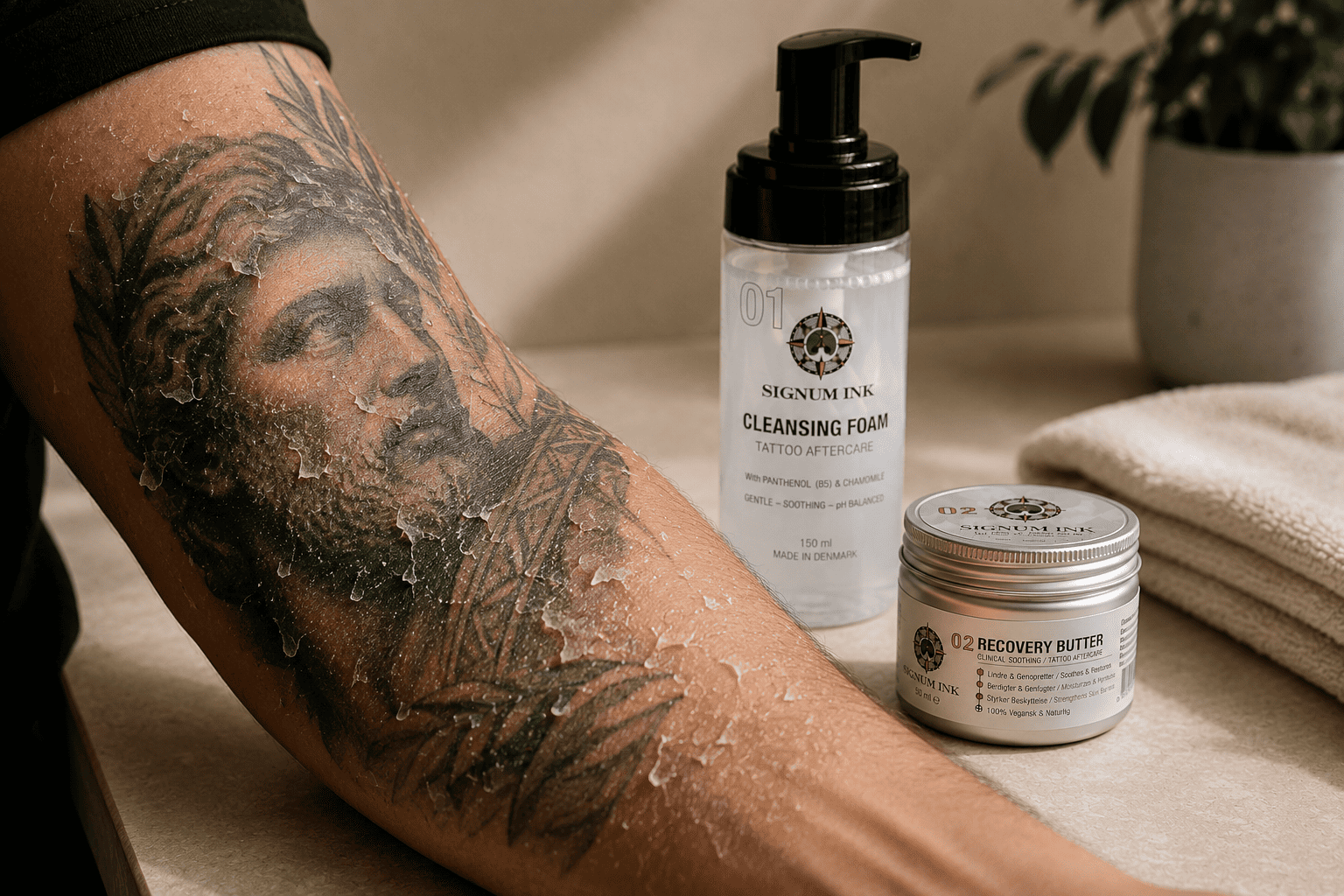
One of the most common concerns after getting a tattoo is watching the skin begin to peel.
For many people, it can be alarming.
Small flakes of skin start coming away, the tattoo may appear dull, and it can even look as though the ink is peeling off with the skin.
Fortunately, this is usually a completely normal part of the healing process.
Tattoo peeling is a natural consequence of how your skin repairs itself after the tiny injuries created during tattooing.
Understanding why peeling happens—and what is actually peeling away—can help you care for your tattoo with greater confidence.
Peeling Is Part of Skin Renewal
Your skin is constantly renewing itself.
Every day, millions of skin cells are naturally replaced.
A fresh tattoo temporarily speeds up this process because the epidermis has been disrupted by thousands of tiny needle punctures.
As your body repairs the damaged outer skin, old cells are gradually shed and replaced with new ones.
This is the peeling you see.
The Epidermis Is Designed to Shed
Tattoo pigment is not placed in the epidermis.
Instead, professional tattoo artists deposit ink into the dermis beneath it.
The epidermis has one important job:
To protect the body.
As part of that role, it constantly renews itself by:
- Producing new skin cells.
- Moving older cells toward the surface.
- Shedding dead cells.
This continuous cycle occurs throughout your life—not just after getting a tattoo.
Tattooing Accelerates the Process
During tattooing, the outer skin experiences controlled micro-injuries.
Your body immediately begins repairing these tiny wounds.
One part of this repair process involves replacing damaged epidermal cells with healthy new ones.
As these damaged cells reach the surface, they naturally detach.
This creates the familiar peeling that most people notice several days after getting a tattoo.
Why the Tattoo Looks Dull
Many people become concerned because their tattoo temporarily loses its bright appearance during peeling.
This happens because:
- Dry skin covers the tattoo.
- Loose flakes scatter light.
- The outer skin hasn’t fully regenerated yet.
The tattoo itself has not faded.
The pigment remains safely within the dermis beneath the healing epidermis.
Once the outer skin has recovered, the tattoo usually regains much of its clarity.
You’re Not Peeling Off the Ink
One of the biggest misconceptions about tattoo healing is that peeling skin contains tattoo pigment.
While you may notice tiny traces of color in dried skin or old plasma, the permanent tattoo ink is not being removed.
The pigment that creates your tattoo is located much deeper within the dermis.
The peeling skin consists primarily of:
- Dead epidermal cells.
- Dried plasma.
- Small amounts of dried lymphatic fluid.
- Surface debris created during healing.
This is why normal peeling does not remove a professionally applied tattoo.
Every Tattoo Peels Differently
Not all tattoos peel in exactly the same way.
Several factors influence the amount of visible peeling, including:
- Skin type.
- Tattoo size.
- Tattoo location.
- Individual healing response.
- Climate.
- Daily skincare routine.
Some tattoos produce large, visible flakes.
Others only develop fine, dry scaling that is barely noticeable.
Both can be completely normal.
Peeling Is Closely Linked to the Skin Barrier
As the skin barrier repairs itself, damaged outer cells are gradually replaced.
During this period, the tattoo may also feel:
- Tight.
- Dry.
- Slightly itchy.
- Less flexible.
These sensations reflect the skin’s natural healing process rather than a problem with the tattoo itself.
When Does Tattoo Peeling Start?
For most people, peeling begins between days 3 and 7 after getting a tattoo.
However, every tattoo heals differently.
The exact timing depends on factors such as:
- Your skin type.
- The size of the tattoo.
- The tattoo’s location.
- Your overall health.
- How well you follow your aftercare routine.
Some people notice only very fine flakes, while others experience more visible peeling over a larger area.
Both can be part of normal healing.

How Long Does Peeling Last?
The visible peeling stage usually lasts about one week, although this varies from person to person.
As new skin replaces the damaged outer layer:
- Flakes become smaller.
- Dryness gradually improves.
- The skin begins to feel smoother.
- The tattoo regains its normal appearance.
Even after peeling ends, deeper healing continues beneath the surface for several more weeks.
Why You Should Never Pick the Peeling Skin
It can be tempting to pull away loose flakes.
However, peeling skin is part of your body’s natural healing process.
Picking at it may:
- Remove skin before it is ready.
- Increase irritation.
- Delay normal healing.
- Increase the risk of scarring.
- Affect the appearance of the healed tattoo.
Instead, allow the skin to separate naturally.
Supporting the healing process with gentle cleansing and appropriate moisturization is usually the best approach.
Moisture Helps the Skin Heal Comfortably
Peeling often makes the skin feel tight and dry.
Maintaining comfortable hydration helps support the skin barrier while new cells mature.
A balanced aftercare routine typically includes:
- Gentle cleansing.
- Regular moisturization.
- Avoiding unnecessary irritation.
- Protecting the healing skin from excessive friction.
The goal isn’t to stop peeling.
The goal is to support healthy skin while peeling occurs naturally.
Common Myths
Myth 1: Peeling Means the Tattoo Is Fading
False.
The pigment remains safely within the dermis.
The peeling involves the outer epidermis, not the permanent tattoo ink.
Myth 2: Bigger Flakes Mean Better Healing
False.
Some people produce large flakes.
Others develop only fine scaling.
Both can be completely normal.
Myth 3: Moisturizer Stops Peeling
False.
Moisturizer doesn’t prevent peeling.
Instead, it helps improve skin comfort while the natural peeling process continues.
Myth 4: I Should Remove Loose Skin
False.
Allow peeling skin to detach naturally.
Picking at healing skin may interfere with normal recovery.
Frequently Asked Questions
Why is my tattoo peeling?
Peeling is a normal part of skin renewal after tattooing. Your body replaces the damaged outer skin with new epidermal cells as part of the healing process.
Is it normal for tattoo ink to appear in peeling skin?
You may notice tiny traces of pigment in dried plasma or surface debris.
The permanent tattoo pigment, however, remains in the dermis and is not being peeled away.
How long does tattoo peeling last?
Visible peeling usually lasts about one week, although healing varies between individuals and tattoos.
Can I pull off loose tattoo skin?
No.
It’s best to allow peeling skin to separate naturally while continuing your recommended aftercare routine.
Should I moisturize a peeling tattoo?
Yes.
Maintaining comfortable hydration helps support the skin barrier and may reduce feelings of dryness and tightness during healing.
Conclusion
Tattoo peeling is one of the clearest signs that your skin is actively repairing itself.
Although it may look dramatic, the process is usually a normal part of healing—not a sign that your tattoo is being damaged.
The epidermis naturally sheds while the tattoo pigment remains safely within the dermis below.
By understanding the biology behind peeling, you can approach the healing process with greater confidence and avoid common mistakes that may interfere with recovery.
 English
 German
 Dutch
 Danish
 Swedish
 French
 Italian