Introduction
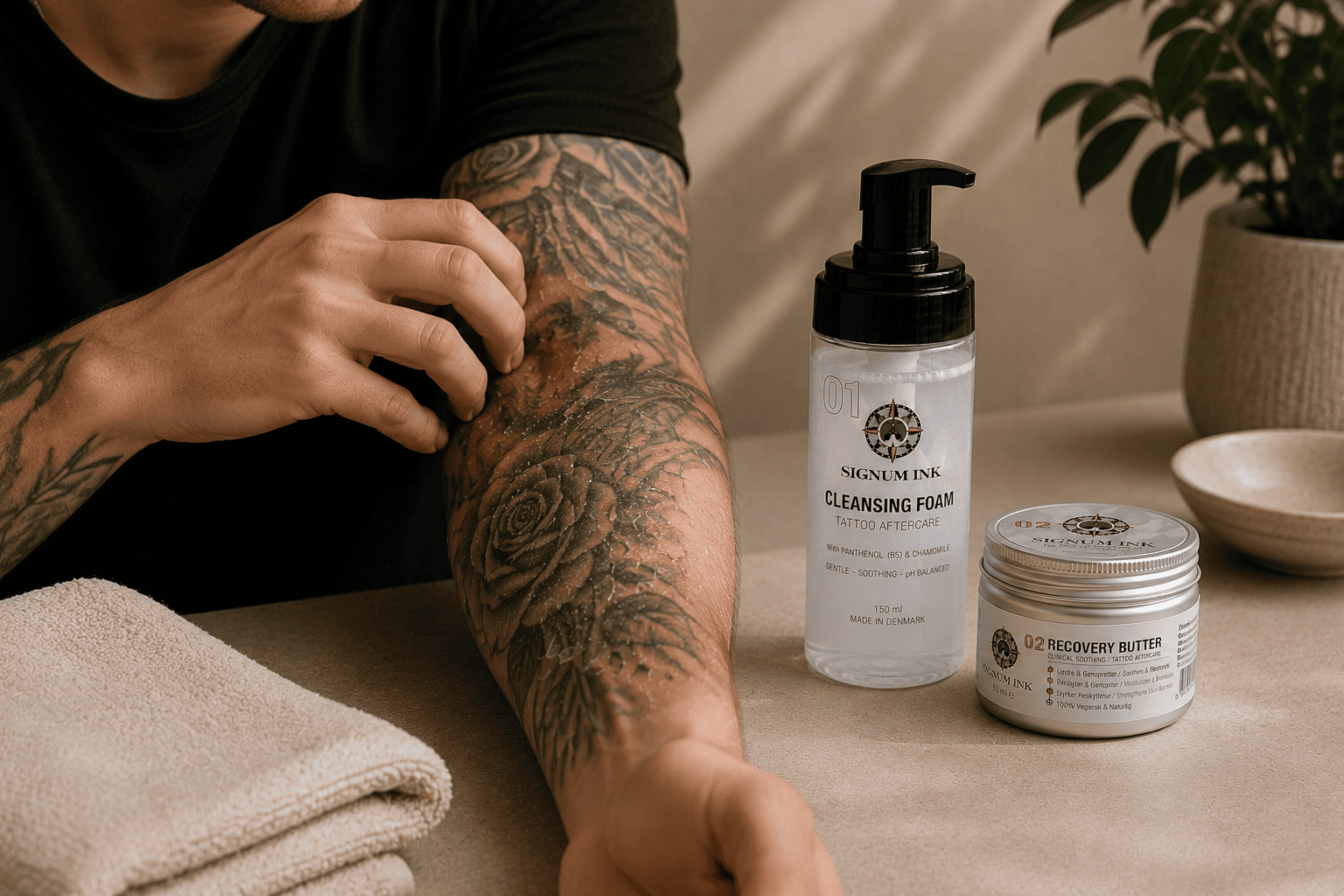
Almost everyone who gets a tattoo experiences itching at some point during healing.
For some, it’s only a mild annoyance.
For others, it can become one of the most frustrating parts of the entire healing process.
The good news is that itching is usually a normal sign that your skin is repairing itself.
Rather than indicating a problem, it often reflects the complex biological processes taking place beneath the surface.
Understanding why tattoos itch—and why scratching isn’t the answer—can help you manage healing more comfortably.
Itching Is Part of the Healing Process
Tattooing creates thousands of tiny controlled injuries in the skin.
As your body repairs this tissue, numerous biological processes occur simultaneously:
- Inflammation.
- Cell regeneration.
- Skin barrier repair.
- Nerve recovery.
- Collagen production.
Many of these processes contribute directly or indirectly to the sensation of itching.
Your Nerves Become More Sensitive
The skin contains millions of tiny sensory nerve endings.
Some of these are temporarily affected during tattooing.
As healing progresses, these nerve endings begin recovering and re-establishing normal function.
During this process, they may become temporarily more sensitive to:
- Touch.
- Temperature.
- Clothing.
- Dryness.
- Normal skin movement.
This increased sensitivity can contribute to itching.
The Role of Inflammation
Inflammation is one of the earliest stages of tattoo healing.
Although inflammation often sounds negative, it’s an essential part of tissue repair.
During this phase, your body releases chemical signaling molecules that help coordinate healing.
Some of these molecules also stimulate nerve endings, contributing to itching as the inflammatory response gradually changes over time.
Histamine and Other Chemical Signals
One substance often associated with itching is histamine.
Histamine plays an important role in many normal biological processes, including wound healing and immune responses.
Although tattoo itching isn’t caused by histamine alone, histamine and other signaling molecules may contribute to the itching sensation during different stages of healing.
The exact balance varies between individuals.
Dry Skin Makes Itching Worse
One of the biggest contributors to tattoo itching is simple skin dryness.
As the skin barrier repairs itself:
- Water is lost more easily.
- The skin feels tight.
- Surface cells become dry.
- The tattoo may begin peeling.
Dry skin stimulates nerve endings more easily, making itching feel more noticeable.
This is one reason why maintaining comfortable hydration is an important part of tattoo aftercare.
The Skin Barrier Is Still Recovering
A healing tattoo doesn’t immediately regain its normal protective function.
For several weeks, the skin barrier continues rebuilding.
During this time, the tattoo may be more sensitive to:
- Dry air.
- Friction.
- Soap.
- Clothing.
- Environmental irritants.
These factors can all increase feelings of itching without indicating that anything is wrong.
Itching Doesn’t Mean the Tattoo Is Healing Faster
Some people believe severe itching means their tattoo is healing especially well.
Others worry that itching means something has gone wrong.
Neither assumption is necessarily true.
The intensity of itching varies widely between individuals and depends on many biological factors.
Mild to moderate itching is simply one common part of normal healing.
Why You Shouldn’t Scratch a Healing Tattoo
As tempting as it may be, scratching a healing tattoo is one of the worst ways to relieve itching.
When you scratch, you risk:
- Damaging fragile new skin.
- Removing peeling skin too early.
- Increasing irritation.
- Introducing bacteria from your fingernails.
- Delaying the healing process.
Instead, allow the skin to recover naturally while supporting it with proper aftercare.
Keeping the Skin Comfortable
Although itching is normal, there are several ways to make healing more comfortable.
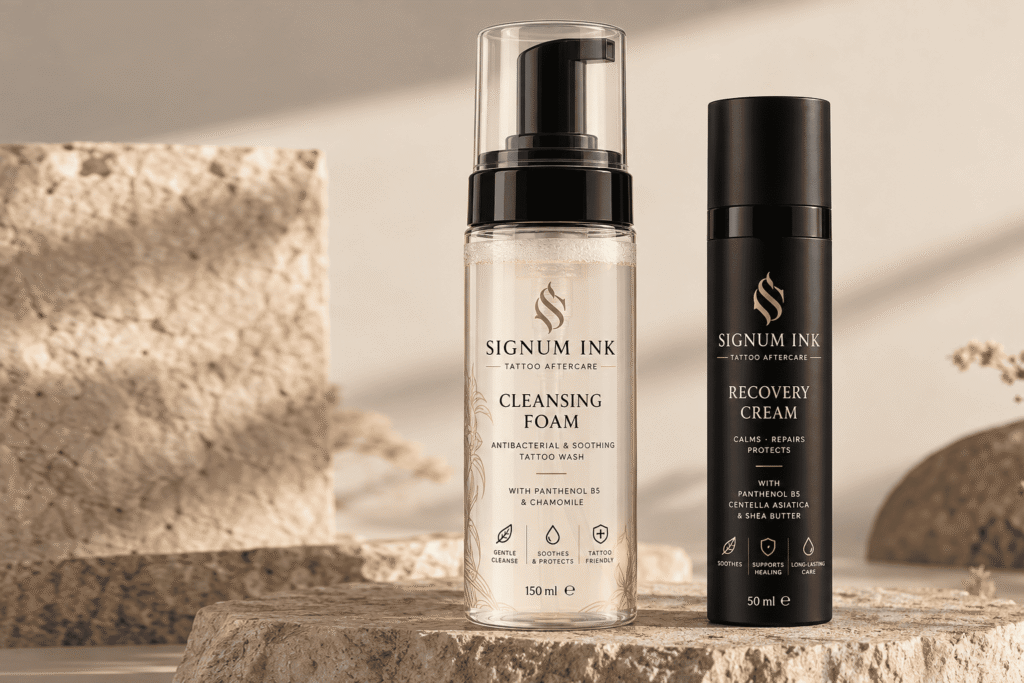
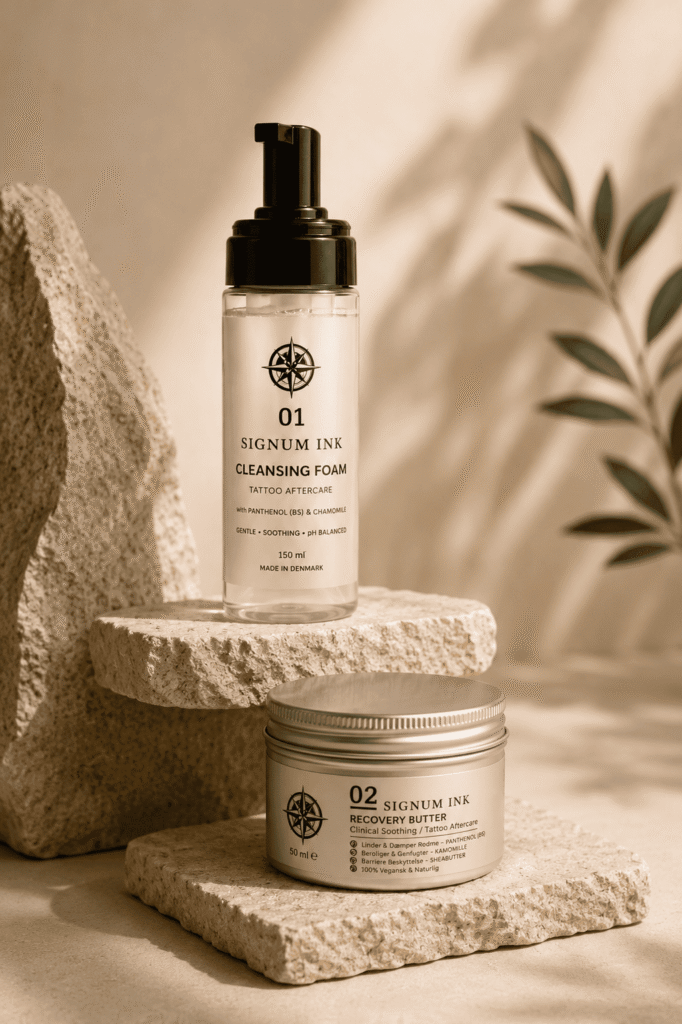
A healthy tattoo aftercare routine includes:
- Gently cleansing the tattoo.
- Applying a thin layer of moisturizer or tattoo butter.
- Avoiding excessive friction from clothing.
- Staying well hydrated.
- Protecting the tattoo from unnecessary irritation.
The goal isn’t to eliminate every sensation—it’s to support the skin while it heals naturally.
When Is Itching Not Normal?
Most tattoo itching is harmless.
However, itching accompanied by other unusual symptoms may require attention.
Contact your tattoo artist or a healthcare professional if itching is associated with:
- Rapidly increasing redness.
- Significant swelling.
- Pus or unusual discharge.
- Severe pain.
- Fever.
- A rash spreading beyond the tattoo.
These symptoms are not typical of normal healing and should be evaluated promptly.
Why Some People Itch More Than Others
Not everyone experiences tattoo healing in the same way.
The intensity of itching can be influenced by factors such as:
- Individual skin sensitivity.
- Tattoo size.
- Tattoo location.
- Climate and humidity.
- Skin dryness.
- Personal healing response.
This is why two people with similar tattoos may have very different healing experiences.
Common Myths
Myth 1: Itching Means Something Is Wrong
False.
Mild to moderate itching is one of the most common signs of normal tattoo healing.
Myth 2: Scratching Helps the Tattoo Heal
False.
Scratching may damage delicate healing skin and interfere with the recovery process.
Myth 3: More Moisturizer Stops All Itching
False.
Moisturizer supports skin comfort, but applying excessive amounts won’t eliminate itching and may leave the skin feeling greasy.
A thin, even layer is generally sufficient.
Myth 4: Every Healing Tattoo Itches the Same
False.
The intensity and duration of itching vary considerably from person to person.
Frequently Asked Questions
Why does my tattoo itch so much?
Healing tattoos often itch because of nerve recovery, inflammation, skin barrier repair and temporary dryness.
Is itching a sign that my tattoo is healing?
In most cases, yes.
Itching is commonly associated with normal skin repair during the healing process.
Can I scratch a healing tattoo?
It’s best not to.
Instead, support the skin with gentle cleansing and appropriate moisturization while allowing the itch to pass naturally.
How long does tattoo itching last?
Itching is usually most noticeable during the first couple of weeks of healing, although the exact duration varies between individuals.
Should I worry if my tattoo doesn’t itch?
No.
Not everyone experiences noticeable itching.
The absence of itching doesn’t necessarily indicate a problem with healing.
Conclusion
Tattoo itching is a normal part of one of the body’s most remarkable biological processes.
As inflammation settles, nerves recover and the skin barrier rebuilds, temporary itching often develops as a natural consequence of healing.
Although it can be frustrating, understanding the science behind itching makes it easier to resist scratching and instead support the skin with proper aftercare.
Patience, gentle cleansing and consistent moisturization are usually all your skin needs while the healing process continues beneath the surface.

 English
 German
 Dutch
 Danish
 Swedish
 French
 Italian