Why your tattoo soap matters more than you think
Why your tattoo soap matters more than you think
A new tattoo is an investment of time, money and trust. You spent hours choosing the design, found the right artist and sat through the session. Once you leave the studio, though, the result is in your hands. One of the most important everyday decisions in tattoo aftercare is also one of the most overlooked: which soap you wash your tattoo with.
Most people grab whatever is next to the sink. That might be a scented hand wash, a shower gel with glitter or an old bar of soap. These products are made for normal, healthy skin that needs a quick clean. Freshly tattooed skin is different. It is sensitive, often tender and needs to be treated gently for the first weeks.
The right soap for tattoos cleans away sweat, excess plasma, ointment residue and everyday dirt without stripping the skin. The wrong one can leave the skin tight, dry and irritated. That makes the whole aftercare period more uncomfortable than it needs to be.
In this guide we explain what tattoo soap actually is, why a pH-neutral tattoo soap is worth looking for, which ingredients to look for and avoid, and how to wash a new tattoo step by step. We also cover the most common mistakes and answer the questions tattoo artists hear most often from their clients.
What is tattoo soap?
Tattoo soap is a gentle cleanser made for tattooed skin. It is not a medicine. It simply cleans the skin in a milder way than most everyday soaps. The difference lies in the formula: what cleans, how strongly it cleans and what is added to keep the skin comfortable.
How tattoo soap differs from ordinary soap
A classic bar of soap is made by saponification, where fats react with a strong alkali such as sodium hydroxide. The result cleans well, but it is alkaline, typically around pH 9 to 10. Skin, on the other hand, is naturally slightly acidic. Washing with a strongly alkaline soap temporarily disrupts that balance, which many people feel as tightness and dryness.
Many shower gels and hand washes are milder than bar soap, but they often contain perfume, colourants and strong cleansing agents designed to produce lots of lather. That is pleasant in the shower, but not ideal for skin that needs to be treated with care.
A good tattoo soap typically:
- has a pH close to that of the skin
- uses mild cleansing agents rather than harsh ones
- is free from perfume and unnecessary colourants
- contains skin-conditioning ingredients such as panthenol or chamomile
- rinses off easily without leaving a film
Do you really need a special soap for tattoos?
Strictly speaking, you do not need a product with “tattoo” on the label. What you need is a mild, fragrance-free, skin-friendly cleanser. A dedicated tattoo soap simply makes the choice easier, because it is formulated with tattooed skin in mind and you do not have to read every label in the supermarket. Always follow the aftercare advice from your tattoo artist. They know your skin, your tattoo and the products they trust.
Why choose a pH-neutral tattoo soap?
The term pH-neutral tattoo soap comes up again and again in tattoo aftercare, and for good reason. To understand why, it helps to know a little about the skin’s own pH.
The skin’s natural pH
The pH scale runs from 0 to 14. A value of 7 is neutral, lower values are acidic and higher values are alkaline. The surface of healthy skin is slightly acidic, usually somewhere around pH 4.5 to 5.5. This thin, slightly acidic layer is often called the acid mantle. It is part of what keeps the skin feeling balanced, supple and comfortable.
When you wash with a strongly alkaline product, the skin’s surface pH rises for a while. Healthy skin usually brings it back down by itself, but repeated washing with alkaline soap can leave skin feeling dry and tight. On freshly tattooed skin, which is already sensitive, that discomfort is something you want to avoid.
What “pH-neutral” really means
Here is a detail many people miss. In skincare, “pH-neutral” rarely means exactly pH 7. It usually means neutral for the skin, so the product’s pH is close to the skin’s own, often around 5.5. That is why you will also see terms like “skin-neutral” or “pH-balanced” on labels.
A pH-neutral tattoo soap therefore cleans without pushing the skin far away from its natural level. In practice, that means:
- less tightness and dryness after washing
- a gentler feel on tender, newly tattooed skin
- a better starting point for the moisturiser or aftercare cream you apply afterwards
How to check the pH
Most products do not print the exact pH on the bottle. Look for wording such as “pH-neutral”, “pH-balanced” or “pH 5.5”. If you are unsure, ask the brand or your tattoo artist. A reputable brand should be able to tell you the pH of its product, because it is measured as part of the product’s documentation.
What to look for in a soap for tattoos
The ingredient list tells you more than the front of the bottle. Here is what to look for, and what to avoid, when you choose a soap for tattoos.
Ingredients worth looking for
| Ingredient | What it does for the skin |
|---|---|
| Panthenol (pro-vitamin B5) | Binds moisture and helps the skin feel soft and comfortable |
| Chamomile extract | A classic soothing plant extract, widely used in products for sensitive skin |
| Glycerin | A humectant that draws water into the skin and reduces the dry feeling after washing |
| Aloe vera | Light and cooling, often used to calm the feel of the skin |
| Mild surfactants (e.g. coco-glucoside, decyl glucoside) | Clean gently and are generally considered milder than harsh sulfates |
Ingredients to avoid or be careful with
Perfume and fragrance. Fragrance is one of the most common causes of skin reactions from cosmetics. On a new tattoo there is no reason to take that risk. Choose a fragrance-free tattoo soap, and check the ingredient list for “Parfum” or “Fragrance”. Note that “unscented” is not always the same as fragrance-free, since some unscented products contain masking fragrance.
Harsh sulfates. Sodium lauryl sulfate (SLS) in particular is an effective but strong cleansing agent. It creates a lot of foam, but can leave sensitive skin dry.
Alcohol high on the list. Drying alcohols such as alcohol denat. can make the skin feel tight. Fatty alcohols such as cetyl alcohol are different and are generally fine.
Colourants and glitter. They add nothing to the cleaning and only add more ingredients for sensitive skin to deal with.
Exfoliating particles and acids. Scrubs, AHA or BHA have no place on a new tattoo. Save them for later, and keep them away from the tattoo until your artist says the skin is ready.
Short ingredient lists are a good sign
As a rule of thumb, the shorter and simpler the ingredient list, the better for tattooed skin. Fewer ingredients means fewer potential irritants. A good tattoo soap does one thing: it cleans gently. It does not need to smell like a holiday or turn the water pink.
A note on claims
Be sceptical of soaps that promise to “heal” a tattoo or “kill bacteria”. In the EU, a cosmetic product may clean, care for and protect the skin. Claims about healing wounds or fighting infection belong to medicines and biocides, which are regulated differently. A trustworthy tattoo soap describes what it actually does: cleans gently, without drying out the skin.
Foam, liquid or bar: which tattoo soap format is best?
Tattoo soap comes in three main formats. All three can work well, as long as the formula is mild. The differences lie in hygiene, ease of use and how much you need to touch the tattoo.
| Format | Strengths | Things to consider |
|---|---|---|
| Foam (pump) | Comes out ready-lathered, so you barely need to rub. The pump keeps the product clean. Easy to dose. | Usually a little more expensive per ml. |
| Liquid / gel | Widely available and easy to dose. Hygienic in a pump bottle. | Must be lathered in the hands first, which means more friction if you apply it directly. |
| Bar soap | Cheap, long-lasting and low-waste. | Often alkaline. A shared, wet bar can collect bacteria and dirt between uses. Rubbing a bar on the skin creates friction. |
Why many artists recommend foam
A foaming tattoo soap has one clear advantage: the soap is already a soft lather when it leaves the pump. You place the foam on the tattoo with clean fingertips and spread it gently. There is no need to rub a bar against tender skin or work a gel into a lather on top of the tattoo. Less friction means a more comfortable wash.
The pump bottle also helps with hygiene. The product inside is not touched by hands or exposed to water between uses, unlike a bar of soap sitting in a wet dish.
If you prefer bar soap
If you prefer bar soap for environmental reasons, choose a syndet bar, which is a “synthetic detergent” bar made to be pH-balanced, rather than a traditional alkaline soap. Use a bar only you use, let it dry between washes, and lather it in your hands rather than rubbing it directly on the tattoo.
How to wash a new tattoo, step by step
The right tattoo soap only does its job if you use it the right way. Below is a simple routine that suits most people. Your tattoo artist’s instructions always come first. If they tell you something different, follow their advice.
- Wash your hands first. Use ordinary soap and water and clean thoroughly, including under the nails. Your hands are the main thing that will touch the tattoo.
- Remove the wrap or film as instructed. Your artist will tell you when to remove the first covering. Some second-skin films stay on for several days.
- Rinse with lukewarm water. Not hot, not cold. Hot water can make the skin feel irritated and dry. Let the water run gently over the area. Avoid holding the tattoo directly under a hard shower jet.
- Apply the tattoo soap. Use a small amount, for example one or two pumps of foam. Spread it lightly over the tattoo with clean fingertips in soft, circular movements. Never use a washcloth, sponge or brush.
- Rinse thoroughly. Make sure all soap is gone. Soap residue left on the skin can make it feel dry and itchy.
- Pat dry. Use a clean paper towel or a fresh, clean towel used only for this purpose. Pat gently, never rub. Then let the skin air-dry for a few minutes.
- Apply aftercare cream. Once the skin is completely dry, apply a thin layer of the aftercare cream your artist recommends. A thin layer is enough. Too much product can keep the skin overly moist.
How often should you wash a new tattoo?
Most artists recommend washing the tattoo two to three times a day during the first one to two weeks. Morning and evening are a natural rhythm, plus an extra wash if you have been sweating or the area has become dirty. Washing more often than that rarely helps and can dry out the skin.
Common mistakes when washing a tattoo
Even with the right soap for tattoos, a few habits can make aftercare harder than it needs to be. These are the mistakes tattoo artists see most often.
Using scented shower gel. It is convenient to use whatever is already in the shower, but perfume and colourants are unnecessary on sensitive skin. Keep a separate, fragrance-free tattoo soap for the tattoo.
Scrubbing. Washcloths, loofahs and sponges are too rough for a new tattoo. Fingertips are all you need.
Water that is too hot. A long, hot shower feels good, but heat and steam can leave the skin dry and uncomfortable. Keep showers short and lukewarm in the first weeks.
Soaking the tattoo. Baths, swimming pools, saunas and the sea should be avoided until your artist says the skin is ready. A quick shower is fine. Soaking is not.
Not rinsing properly. Soap left on the skin can cause dryness and itching. Rinse until the skin no longer feels slippery.
Rubbing it dry with a shared towel. Bath towels are used by many and can hold lint and dirt. Pat the tattoo dry with paper towel or a clean towel kept for this purpose only.
Using too much cream. After washing, a thin layer of aftercare cream is enough. A thick layer can keep the skin too moist.
Picking or scratching. It is normal for a tattoo to flake and itch as the skin settles. Let flakes come off by themselves during washing. Never pick at them.
Beyond the first weeks: tattoo soap for the long run
Tattoo aftercare does not end when the flaking stops. A tattoo is part of your skin for life, and how you care for that skin affects how the tattoo looks over the years.
Many people keep using a mild, pH-neutral tattoo soap long after the tattoo has settled. There are good reasons for this:
- Well-cared-for skin shows tattoos better. Dry, flaky skin can make even a sharp tattoo look dull. Skin that is cleaned gently and kept moisturised tends to show lines and colours more clearly.
- Gentle cleansing suits everyday life. A fragrance-free, skin-friendly cleanser is a good habit for all skin, not just tattooed skin.
- It is ready for the next one. Most people with one tattoo end up with more. Having a tattoo soap at home means you are prepared when you leave the studio next time.
Do not forget sun protection
Soap is only part of the picture. UV light is one of the main reasons tattoos fade over time. Once your artist says the tattoo has settled, protect it with a high-SPF sunscreen whenever it is exposed to the sun. Clean, moisturised and sun-protected skin is the best way to keep a tattoo looking fresh.
Frequently asked questions about tattoo soap
Can I use normal soap on my tattoo?
You can, but it is not ideal. Many ordinary soaps are alkaline or contain perfume, which can leave sensitive skin dry and irritated. A mild, fragrance-free, pH-neutral tattoo soap is the safer choice during the first weeks.
What is the best soap for tattoos?
The best soap for tattoos is mild, fragrance-free and has a pH close to the skin’s own. It should rinse off easily and contain few, simple ingredients. Skin-conditioning ingredients such as panthenol or chamomile are a bonus. The format matters less than the formula, but foam is especially easy to use gently.
Is antibacterial soap better for a new tattoo?
Not necessarily. Strong antibacterial products can be harsh on the skin, and a cosmetic soap is not meant to treat or prevent infection. Gentle, regular cleaning with clean hands is what matters. If you are worried that your tattoo looks infected, with increasing redness, swelling, heat, pus or fever, contact a doctor.
How long should I use tattoo soap?
Use it at least until the tattoo has stopped flaking and the skin feels normal again, typically two to four weeks. Many people keep using it afterwards, simply because it is a gentle everyday cleanser.
Does the soap affect the colours in my tattoo?
A mild soap will not wash out ink that has been placed correctly in the skin. Harsh products and scrubbing, however, make the skin dry and uncomfortable, and well-cared-for skin generally shows a tattoo better.
Can I use tattoo soap on the rest of my body?
Yes. A good tattoo soap is simply a mild, skin-friendly cleanser. It is suitable for sensitive skin in general, and many people use it on their face, hands or whole body.
What does “savon pH neutre tatouage” mean?
It is French for pH-neutral tattoo soap. The search term is common in France and Belgium and refers to exactly what this guide recommends: a gentle soap with a skin-friendly pH for tattooed skin.
Conclusion: choose a gentle, pH-neutral tattoo soap
The soap you use is a small detail with a big impact on how comfortable your tattoo aftercare is. The ideal tattoo soap is mild, fragrance-free and pH-neutral for the skin. It cleans away what needs to go without stripping the skin, rinses off easily and keeps the ingredient list short. Combine it with clean hands, lukewarm water, gentle patting and a thin layer of aftercare cream, and you have a simple routine that respects your skin and your new tattoo.
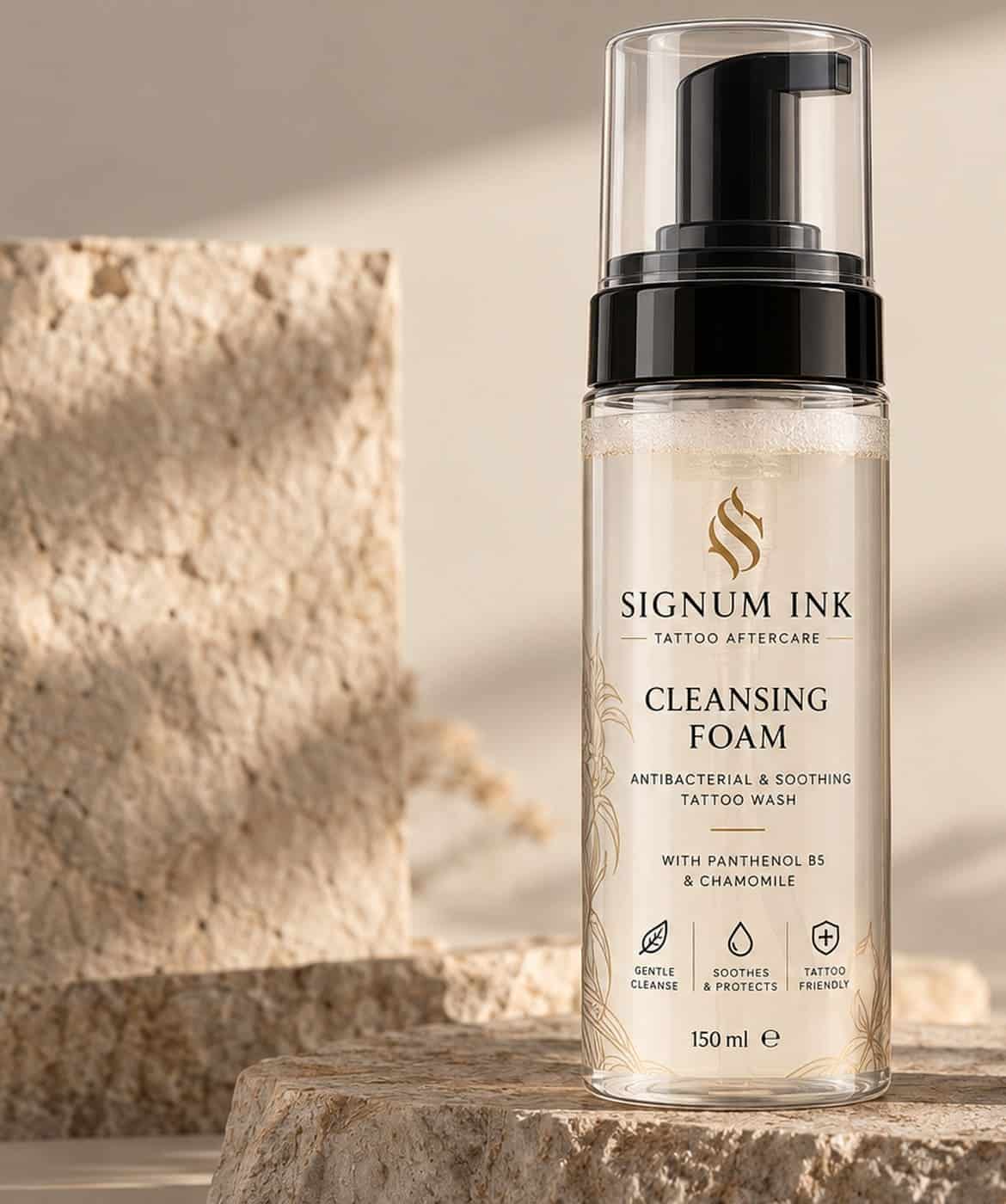
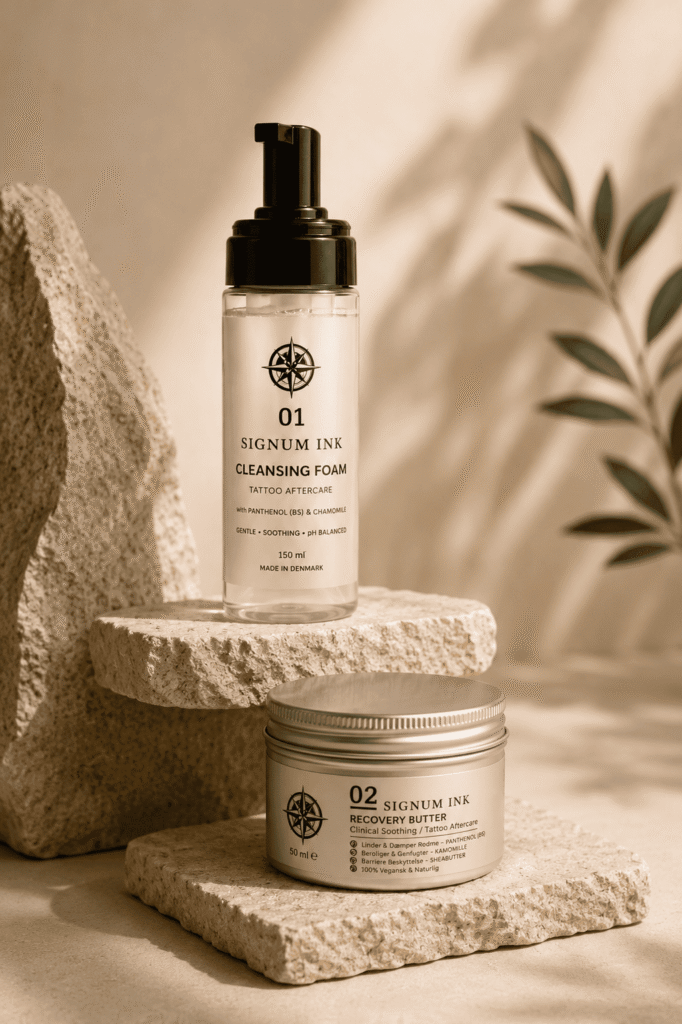
At Signum Ink we made our Cleansing Foam for exactly this routine. It is a soft foaming tattoo soap with panthenol (pro-vitamin B5) and chamomile, made to clean tattooed skin gently without drying it out. The pump delivers a ready-made lather, so you can wash your tattoo with your fingertips and minimal friction.
Whatever product you choose, ask your tattoo artist for advice and follow their aftercare instructions. They know your skin and your tattoo best.
 English
 German
 Dutch
 Danish
 Swedish
 French
 Italian