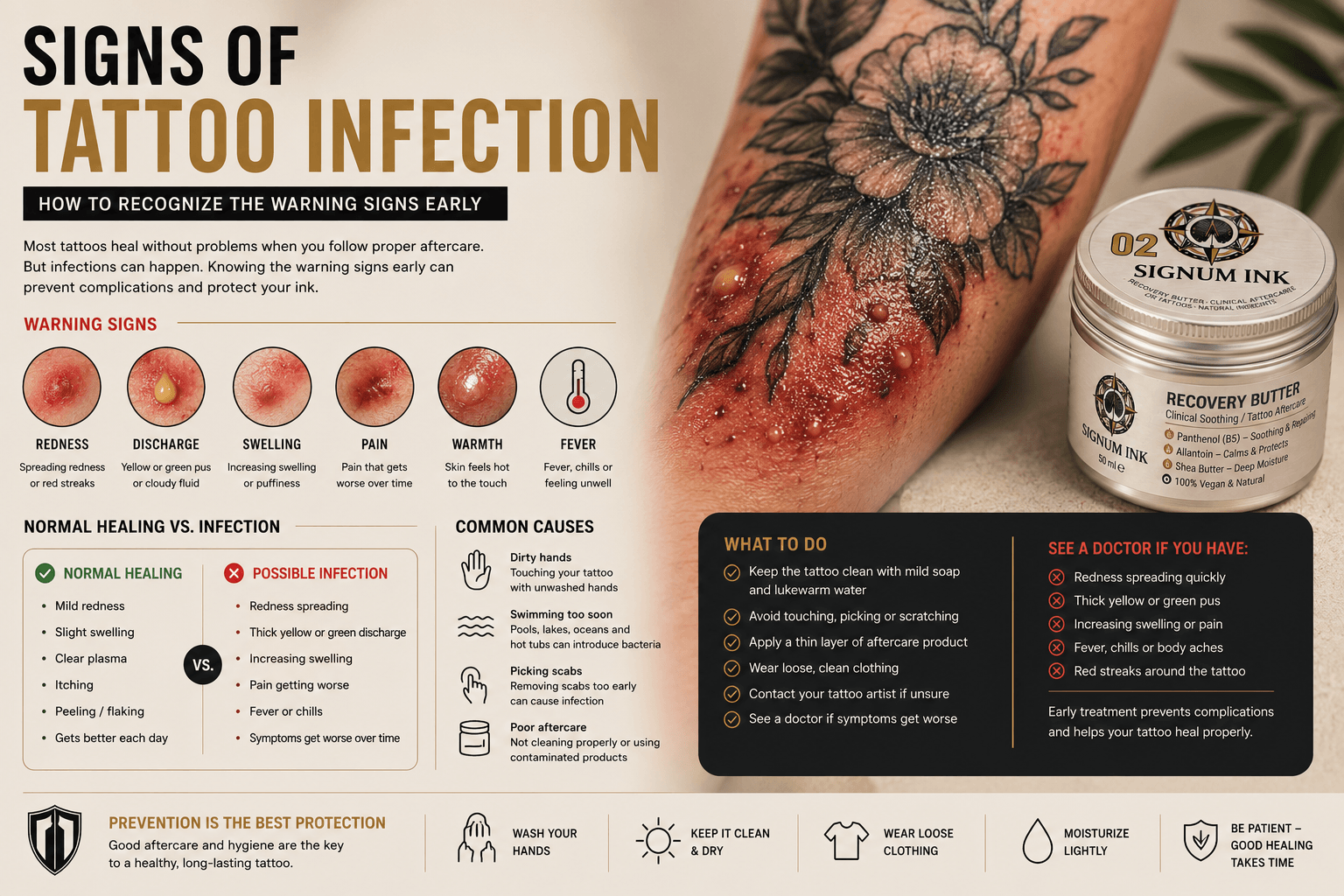
A new tattoo naturally goes through several stages of healing. During the first few days, it’s completely normal to experience redness, tenderness, slight swelling, and peeling as your skin begins repairing itself.
Because many of these symptoms are also associated with infections, it can be difficult to know whether your tattoo is healing normally or whether something is wrong.
Fortunately, tattoo infections rarely happen when your tattoo is performed by a professional artist and you follow proper aftercare instructions. However, recognizing the warning signs early is essential because prompt treatment can prevent more serious complications and help preserve your tattoo’s appearance.
In this guide, we’ll explain how to identify the signs of a tattoo infection, what causes infections, how to tell the difference between normal healing and a medical problem, and when you should contact a healthcare professional.
What Is a Tattoo Infection?
A tattoo infection occurs when harmful microorganisms—most commonly bacteria—enter the skin before the tattoo has fully healed.
A fresh tattoo consists of thousands of microscopic punctures created by tattoo needles.
Your immune system immediately starts repairing these tiny wounds, but until the skin barrier has fully recovered, bacteria can potentially enter the damaged tissue.
Most infections develop during the first one to two weeks after getting tattooed, although delayed infections can occasionally occur.
The good news is that most infections are preventable with proper hygiene and aftercare.
Why It’s Important to Recognize the Signs Early
The earlier an infection is identified, the easier it usually is to treat.
Ignoring early symptoms may allow bacteria to spread deeper into the skin, increasing the risk of:
- Delayed healing
- Ink loss
- Scarring
- Skin damage
- More serious medical complications
Early treatment often allows tattoos to heal with little or no permanent effect on the finished artwork.
The Most Common Signs of a Tattoo Infection
Although every infection develops differently, several symptoms appear much more frequently than others.
1. Redness That Gets Worse Instead of Better
Redness is one of the most misunderstood parts of tattoo healing.
A healthy tattoo usually appears red for the first few days before the redness gradually fades.
An infected tattoo often behaves differently.
Warning signs include:
- Redness spreading beyond the tattoo
- Darkening redness
- Increasing inflammation
- Skin that looks more irritated every day
If the redness continues expanding after several days rather than improving, it deserves attention.
2. Increasing Swelling
Mild swelling during the first 24 to 72 hours is completely normal.
However, swelling should gradually decrease.
A possible infection may cause swelling that:
- Continues increasing
- Returns after initially improving
- Extends beyond the tattooed area
- Feels firm and painful
Persistent swelling should not be ignored.
3. Pain That Becomes Worse
Fresh tattoos naturally feel sore.
Most people notice steady improvement every day.
Pain associated with infection usually behaves differently.
Instead of fading, it becomes:
- More intense
- Throbbing
- Constant
- Increasingly sensitive to touch
Pain that suddenly worsens after several days of healing is often more concerning than pain immediately after the tattoo session.
4. Skin That Feels Hot
A healing tattoo may feel slightly warm.
This is part of the body’s normal inflammatory response.
An infected tattoo often feels noticeably hotter than the surrounding skin.
Warmth combined with increasing redness and swelling can indicate that the immune system is actively fighting an infection.
5. Yellow or Green Discharge
This is one of the clearest warning signs.
A normal tattoo may release:
- Small amounts of clear plasma
- Tiny traces of blood
during the first day.
An infected tattoo may produce:
- Thick yellow discharge
- Green pus
- Cloudy fluid
- Sticky drainage
Any pus should be taken seriously.
6. Bad Odor
Healthy tattoos should not develop a strong smell.
A foul or unpleasant odor coming from the tattoo can indicate bacterial growth and should be assessed by a healthcare professional.
7. Fever and Chills
Although uncommon, more serious infections may affect the entire body.
Seek medical attention immediately if you experience:
- Fever
- Chills
- Body aches
- Feeling generally unwell
These symptoms suggest the infection may be spreading beyond the skin.
Normal Healing vs. Infection
Many people mistake healthy healing for infection.
Understanding the difference helps avoid unnecessary worry while ensuring genuine infections aren’t ignored.
| Normal Healing | Possible Infection |
|---|---|
| Mild redness | Redness spreading outward |
| Light swelling | Swelling increasing after several days |
| Mild soreness | Pain becoming more severe |
| Clear plasma | Yellow or green pus |
| Mild warmth | Significant heat around the tattoo |
| Peeling | Thick discharge or foul odor |
| Gradual improvement | Symptoms becoming progressively worse |
A simple rule is this:
Healthy tattoos improve with time. Infected tattoos usually become worse.
What Causes Tattoo Infections?
Most tattoo infections are caused by bacteria entering the healing skin.
Common causes include:
Poor Hand Hygiene
Your hands collect bacteria throughout the day.
Touching your tattoo without washing your hands first is one of the easiest ways to introduce bacteria into healing skin.
Always wash your hands thoroughly before:
- Cleaning the tattoo
- Applying moisturizer
- Checking the healing process
Swimming Too Soon
Fresh tattoos should never be submerged in:
- Swimming pools
- Lakes
- Rivers
- Oceans
- Hot tubs
These environments contain bacteria that may enter the healing skin.
Wait until your tattoo has fully healed before swimming.
Picking Scabs
Scabs protect the healing tissue underneath.
Removing them too early creates fresh openings where bacteria can enter.
Picking also increases the risk of:
- Scarring
- Ink loss
- Delayed healing
Allow peeling skin and scabs to come off naturally.
Poor Aftercare
A simple aftercare routine dramatically reduces infection risk.
Common mistakes include:
- Not washing the tattoo properly
- Using dirty towels
- Applying contaminated products
- Wearing dirty clothing against the tattoo
- Ignoring basic hygiene
Consistent care is far more effective than using large amounts of aftercare products.
Who Has a Higher Risk of Developing an Infection?
Although anyone can develop an infection, some people face a higher risk.
This includes individuals with:
- Diabetes
- Weakened immune systems
- Poor circulation
- Autoimmune disorders
- Smoking habits
- Poor nutrition
People with chronic health conditions should discuss any concerns with their healthcare provider before getting tattooed.
Does Tattoo Placement Matter?
Yes.
Certain body areas are naturally exposed to more bacteria, movement, and friction.
Examples include:
- Feet
- Hands
- Fingers
- Toes
- Underarms
- Groin
- Areas that rub against tight clothing
These locations require extra attention throughout the healing process.
Can Most Tattoo Infections Be Prevented?
Absolutely.
The vast majority of tattoo infections can be avoided by:
- Choosing a reputable tattoo studio.
- Following professional aftercare instructions.
- Washing your hands before touching the tattoo.
- Keeping the tattoo clean.
- Avoiding swimming during healing.
- Allowing the skin to heal naturally.
What Should You Do If You Notice Signs of a Tattoo Infection?
If you notice symptoms that suggest your tattoo may be infected, don’t panic. While infections should always be taken seriously, many are successfully treated when recognized early.
The most important thing is to avoid self-diagnosing based solely on photos found online. Every person’s skin heals differently, and only a healthcare professional can diagnose an infection with certainty.
If your symptoms continue to worsen rather than improve, seek medical advice promptly.
Step 1: Keep the Tattoo Clean
The first priority is maintaining good hygiene.
Wash the tattoo gently using:
- Lukewarm water
- A mild, fragrance-free cleanser
- Clean hands
Avoid:
- Scrubbing
- Washcloths
- Exfoliating products
- Alcohol-based products
- Hydrogen peroxide
These can further irritate healing skin and delay recovery.
After washing, gently pat the tattoo dry with a clean towel or disposable paper towel.
Step 2: Avoid Touching the Tattoo
A healing tattoo naturally attracts attention, but excessive touching introduces unnecessary bacteria.
Do not:
- Scratch
- Pick scabs
- Pop blisters
- Squeeze bumps
- Peel loose skin
Every time you touch the tattoo, you increase the risk of introducing additional bacteria.
Step 3: Continue Proper Moisturizing
Many people stop moisturizing completely when they suspect an infection.
Unless your healthcare provider advises otherwise, continue applying a thin layer of your tattoo aftercare product to keep the skin comfortable and prevent excessive dryness.
Avoid thick layers that leave the skin greasy or prevent it from breathing naturally.
The goal is balanced hydration—not excessive moisture.
Step 4: Contact Your Tattoo Artist
Experienced tattoo artists have seen thousands of tattoos heal.
Although they cannot diagnose infections or prescribe treatment, they may be able to tell whether your tattoo appears to be healing normally or whether your symptoms look unusual.
If your artist recommends seeking medical attention, don’t delay.
When Should You See a Doctor?
Some symptoms require prompt medical evaluation.
Contact a healthcare professional immediately if you notice:
- Redness spreading beyond the tattoo
- Thick yellow or green pus
- Increasing swelling after several days
- Severe or worsening pain
- Fever
- Chills
- Red streaks extending away from the tattoo
- A foul-smelling discharge
These signs may indicate a bacterial infection that requires prescription treatment.
The earlier treatment begins, the lower the risk of complications.
How Are Tattoo Infections Treated?
Treatment depends on the severity and cause of the infection.
Mild Infections
A healthcare provider may recommend:
- Prescription antibiotic cream
- Careful wound cleaning
- Monitoring the tattoo over several days
Many mild infections improve quickly when treated early.
Moderate to Severe Infections
More serious infections often require oral antibiotics.
Your doctor may prescribe medication for one to two weeks depending on the severity.
Always complete the full course, even if the tattoo begins looking better after only a few days.
Stopping antibiotics too early may allow the infection to return.
Rare Complications
Severe infections occasionally require additional treatment.
Although uncommon, untreated infections may lead to:
- Deep skin infections
- Abscess formation
- Significant scarring
- Permanent pigment loss
- Hospital treatment
Fortunately, these complications are rare when infections are identified early.
Can an Infected Tattoo Heal Normally?
Yes.
Most tattoo infections heal successfully when treated promptly.
Some tattoos may require a small touch-up if minor pigment loss occurs, but many heal with little or no noticeable difference.
The key factor is early intervention.
How to Prevent Tattoo Infections
Preventing infection is much easier than treating one.
Choose a Professional Tattoo Studio
Select an experienced artist who follows strict hygiene procedures.
Look for:
- Licensed studios
- Sterile single-use needles
- Fresh gloves
- Clean workstations
- Professional aftercare advice
Never compromise on hygiene to save money.
Wash Your Hands
This simple habit is often overlooked.
Always wash your hands before:
- Cleaning your tattoo
- Applying moisturizer
- Examining the healing skin
It takes less than a minute but significantly reduces the transfer of bacteria.
Follow a Consistent Aftercare Routine
Healing skin benefits from consistency.
Clean your tattoo as recommended by your artist and apply a light layer of moisturizer whenever the skin feels dry or tight.
Avoid switching between multiple products during the healing process.
Avoid Swimming Until Fully Healed
Pools, lakes, rivers, hot tubs, and the ocean all expose your tattoo to microorganisms.
Wait until the outer layer of skin has completely healed before swimming.
Patience during these first weeks greatly reduces infection risk.
Wear Loose, Breathable Clothing
Tight clothing creates:
- Friction
- Sweat buildup
- Skin irritation
Loose fabrics allow better airflow while reducing unnecessary rubbing against the tattoo.
Support Your Immune System
Your body performs the actual healing.
Healthy habits such as:
- Getting enough sleep
- Drinking plenty of water
- Eating a balanced diet
- Managing stress
all contribute to healthy skin repair.
Frequently Asked Questions
Is every red tattoo infected?
No.
Mild redness during the first few days is completely normal.
The concern begins when redness continues spreading or becomes more intense instead of gradually fading.
Can itching mean infection?
Usually not.
Itching is one of the most common parts of normal tattoo healing.
If itching is accompanied by severe redness, swelling, pus, increasing pain, or fever, medical evaluation is recommended.
Can over-moisturizing cause infection?
Applying excessive amounts of aftercare doesn’t directly cause infection, but skin that stays constantly greasy or excessively moist may create conditions that allow bacteria to multiply more easily if hygiene is poor.
A thin layer is usually all that’s needed.
Can under-moisturized skin become infected?
Dry skin alone doesn’t cause infection.
However, deep cracks in excessively dry skin may create additional entry points for bacteria.
Maintaining a healthy moisture balance supports the skin’s natural protective barrier.
Can I exercise with a healing tattoo?
Light activity is usually acceptable.
Heavy workouts that produce excessive sweating or repeated friction against the tattoo should be limited during the early healing period.
Will antibiotics ruin my tattoo?
No.
Proper medical treatment protects your health and often helps preserve the tattoo.
Delaying treatment poses a much greater risk to the final appearance than taking prescribed antibiotics.
Final Thoughts
Knowing the signs of a tattoo infection allows you to respond quickly and confidently if something doesn’t seem right.
While mild redness, tenderness, peeling, and itching are all normal parts of healing, symptoms that become progressively worse deserve attention.
Remember these key warning signs:
- Spreading redness
- Increasing pain
- Persistent swelling
- Yellow or green pus
- Foul odor
- Fever or chills
- Red streaks extending away from the tattoo
Most importantly, trust the healing process—but don’t ignore changes that seem unusual.
A clean tattoo, proper aftercare, and early medical attention when necessary provide the best chance for a healthy recovery and a tattoo that remains vibrant for years to come.
Does Every Tattoo Infection Look the Same?
No.
Tattoo infections can vary significantly depending on the type of bacteria involved, the location of the tattoo, your immune system, and how quickly treatment begins.
Some infections develop slowly over several days, while others may worsen within 24 to 48 hours.
This is why comparing your tattoo to photos online isn’t always helpful. Two infections can look completely different while still requiring medical attention.
Instead of focusing on appearance alone, pay attention to how your symptoms change over time.
Healthy tattoos improve.
Infections usually become progressively worse.
Signs That Your Tattoo Is Healing Normally
Many people become anxious because normal healing can look dramatic.
The following symptoms are generally considered part of the natural healing process:
- Mild redness during the first few days
- Slight swelling
- Mild warmth
- Clear plasma during the first 24 hours
- Light scabbing
- Thin peeling
- Mild to moderate itching
- Slight tightness
These symptoms should gradually become less noticeable each day.
If your tattoo looks a little better every morning, you’re almost certainly healing normally.
Signs That Should Never Be Ignored
Although mild irritation is common, certain symptoms should always be taken seriously.
Contact a healthcare professional if you notice:
- Rapidly spreading redness
- Thick yellow or green discharge
- Severe swelling
- Increasing pain after several days
- Fever
- Chills
- Red streaks moving away from the tattoo
- Swollen lymph nodes
- A foul smell
- Skin turning dark purple, grey, or black
These symptoms may indicate a more serious infection that requires prompt treatment.
Can Tattoo Infections Damage the Artwork?
Unfortunately, they can.
When inflammation becomes severe, the healing process may be disrupted.
Possible cosmetic effects include:
- Patchy colour
- Ink loss
- Blurred fine lines
- Uneven healing
- Raised scars
The risk depends largely on how quickly treatment begins.
Most people who receive early medical care experience little or no permanent damage.
How Long Should You Monitor Your Tattoo?
Your tattoo deserves close attention throughout the first month.
A simple daily check only takes a few seconds.
Ask yourself:
- Is the redness improving?
- Is the swelling decreasing?
- Is the pain becoming milder?
- Does the tattoo look cleaner today than yesterday?
If the answer is yes, your tattoo is likely healing exactly as expected.
Daily Tattoo Infection Checklist
During healing, look for these healthy signs:
✔ The redness becomes lighter.
✔ Swelling gradually decreases.
✔ Peeling occurs naturally.
✔ Itching becomes manageable.
✔ No unpleasant odor develops.
✔ No yellow or green discharge appears.
✔ The tattoo feels more comfortable each day.
If several of these improvements stop—or begin moving in the opposite direction—it may be time to seek medical advice.
Common Myths About Tattoo Infections
Myth: Every Red Tattoo Is Infected
False.
Redness is completely normal after getting tattooed.
Only redness that spreads or becomes progressively worse is concerning.
Myth: More Tattoo Cream Prevents Infection
False.
Excessive amounts of aftercare products don’t prevent infections.
A thin, even layer is usually all that’s needed to support healthy healing.
Myth: Peeling Means Something Is Wrong
False.
Nearly every tattoo peels.
Peeling is one of the body’s natural ways of replacing damaged skin with healthy new skin.
Myth: You Can Diagnose an Infection From a Photo
Not reliably.
Lighting, skin tone, camera quality, and the stage of healing can all change how a tattoo appears.
A medical examination is always more reliable than comparing online images.
Expert Tips for Healthy Tattoo Healing
Professional tattoo artists generally agree on a few key principles.
✔ Wash your hands before touching the tattoo.
✔ Clean the tattoo gently.
✔ Moisturize lightly.
✔ Avoid scratching.
✔ Avoid swimming.
✔ Protect the tattoo from excessive friction.
✔ Stay patient.
Healing takes time.
There are no shortcuts.
Final Thoughts
A tattoo infection is something every tattoo owner should understand—but not fear.
The overwhelming majority of tattoos heal without complications when they are performed by experienced artists and cared for correctly.
Knowing the warning signs simply allows you to react quickly if something doesn’t seem right.
If your tattoo continues improving each day, you’re almost certainly on the right track.
If symptoms begin getting worse instead of better, don’t ignore them.
Early treatment protects both your health and your tattoo.
With good hygiene, proper aftercare, and a little patience, your tattoo has every opportunity to heal beautifully and remain vibrant for many years to come.
Frequently Asked Questions
How soon can a tattoo infection start?
Most infections appear within 3 to 14 days, although some may develop earlier or later depending on the cause.
Can a healed tattoo become infected?
Yes, although it’s uncommon. Injuries, allergic reactions, or certain skin conditions can occasionally lead to problems in older tattoos.
Should I stop moisturizing if I think my tattoo is infected?
No—not unless a healthcare professional advises otherwise. Continue following your aftercare routine with a thin layer of moisturizer while seeking medical advice if symptoms worsen.
Can I cover an infected tattoo?
Only if instructed by a healthcare professional. In most cases, the tattoo should be kept clean and allowed to breathe.
Will I need a tattoo touch-up after an infection?
Not always. Many tattoos heal without noticeable changes. If some pigment is lost, your tattoo artist can often perform a touch-up after the skin has fully healed.
Is itching alone a sign of infection?
No. Itching is one of the most common and normal stages of tattoo healing. It becomes more concerning only when combined with symptoms such as spreading redness, pus, fever, or increasing pain.
 English
  German
  Dutch
Dutch  Danish
  Swedish
  French
  Italian