Introduction
You’ve been taking care of your new tattoo when you suddenly notice something unusual.
Instead of looking dry and slightly flaky, the skin appears soft, swollen and almost waterlogged.
The tattoo may feel sticky, shiny or unusually raised.
This condition is commonly known as tattoo bubbling.
Although it can look alarming, tattoo bubbling is often reversible when recognized early.
In this guide, you’ll learn what tattoo bubbling is, why it happens, how to treat it safely and how to reduce the risk of it happening in the first place.
What Is Tattoo Bubbling?
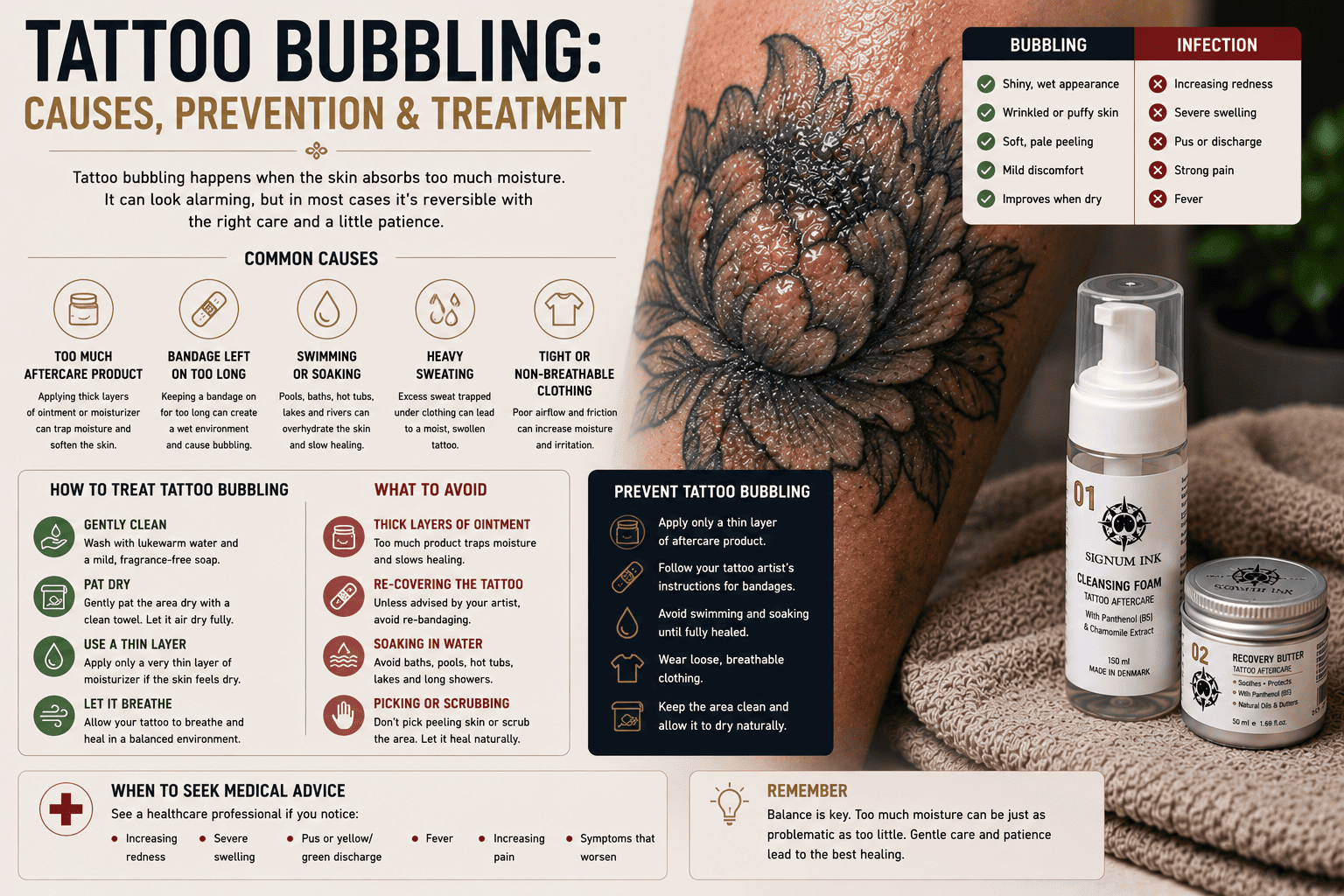
Tattoo bubbling occurs when healing skin absorbs too much moisture.
Instead of drying and repairing normally, the outer layer becomes overly hydrated.
As a result, the tattoo may appear:
- Soft.
- Puffy.
- Wrinkled.
- Shiny.
- Wet-looking.
- Slightly raised.
The skin often feels fragile because the outer layer has become oversaturated with moisture.
Why Does Tattoo Bubbling Happen?
The most common reason is prolonged exposure to moisture.
Healing skin needs a balanced environment.
Too little moisture can make the tattoo dry and uncomfortable.
Too much moisture can interfere with the normal repair process.
Common Causes of Tattoo Bubbling
Applying Too Much Aftercare Product
One of the most frequent causes is applying thick layers of ointment or moisturizer.
Instead of absorbing into the skin, excess product can trap moisture against the tattoo.
Leaving a Bandage on Too Long
Protective dressings are useful immediately after tattooing.
However, leaving them on longer than recommended may create an overly moist environment.
Always follow your tattoo artist’s instructions regarding bandage removal.
Swimming or Soaking
Submerging a healing tattoo in water can soften the outer layer of skin.
This includes:
- Swimming pools.
- Hot tubs.
- Baths.
- Lakes.
- Rivers.
Short showers are generally a safer choice during healing.
Heavy Sweating
Excessive sweating beneath tight clothing may also contribute to bubbling.
This is especially common after intense exercise or in hot weather.
What Does Tattoo Bubbling Look Like?
Tattoo bubbling often has a distinctive appearance.
Common signs include:
- Glossy skin.
- Wrinkled texture.
- Puffy areas.
- Soft peeling skin.
- A wet appearance.
- Raised outer skin.
Unlike infection, bubbling doesn’t automatically mean bacteria are present.
Tattoo Bubbling vs. Infection
These two conditions can sometimes look similar.
Tattoo bubbling usually involves:
- Moist skin.
- Wrinkling.
- Soft peeling.
- Minimal pain.
Infections are more likely to involve:
- Increasing redness.
- Significant swelling.
- Thick yellow or green discharge.
- Fever.
- Increasing pain.
Looking at the overall pattern of symptoms helps distinguish between the two.
Is Tattoo Bubbling Dangerous?
Usually not.
Most cases improve once the excess moisture is removed and the skin is allowed to continue healing naturally.
The key is recognizing the condition early before prolonged moisture begins irritating the healing skin.
Early Action Makes a Big Difference
Tattoo bubbling is one of the few tattoo healing problems that often improves quickly once the underlying cause is corrected.
Simple changes to your aftercare routine are often enough to allow the skin to recover normally.
How Should You Treat Tattoo Bubbling?
If you notice tattoo bubbling, the goal is to allow the skin to return to its normal healing process.
In most cases, this means reducing excess moisture rather than adding more.
Continue to:
- Wash the tattoo gently with lukewarm water.
- Pat the area dry with a clean towel.
- Allow the skin to air dry before applying any aftercare product.
- Apply only a very thin layer of moisturizer if the skin feels dry.
The skin often begins improving once it’s no longer constantly saturated with moisture.
What Should You Avoid?
When dealing with tattoo bubbling, it’s important not to overcorrect.
Avoid:
- Applying thick layers of ointment.
- Re-covering the tattoo unless advised by your tattoo artist.
- Soaking the tattoo in water.
- Picking loose skin.
- Scrubbing the affected area.
Gentle care gives the skin the best opportunity to recover.
Can Tattoo Bubbling Damage a Tattoo?
Sometimes—but not always.
If bubbling is recognized early and managed appropriately, many tattoos heal without any lasting problems.
However, prolonged moisture may increase the risk of:
- Delayed healing.
- Loss of small flakes of skin before they’re ready.
- Increased irritation.
- Minor pigment loss in some areas.
The sooner the skin returns to a balanced environment, the better.
Can You Prevent Tattoo Bubbling?
Yes, in many cases.
Simple habits greatly reduce the likelihood of bubbling.
These include:
- Applying only a thin layer of moisturizer.
- Following your tattoo artist’s instructions for bandages.
- Avoiding swimming until the tattoo has healed.
- Wearing breathable clothing.
- Allowing the tattoo to dry naturally after washing.
Tattoo aftercare is all about balance—not too dry and not too wet.
When Should You See a Healthcare Professional?
Tattoo bubbling itself isn’t usually an emergency.
However, seek medical advice if you notice:
- Increasing pain.
- Rapidly spreading redness.
- Thick yellow or green discharge.
- Fever.
- A foul odor.
- Symptoms that continue worsening despite correcting your aftercare routine.
These signs may indicate an infection rather than simple overhydration.
Common Myths About Tattoo Bubbling
Myth 1: Bubbling Means Your Tattoo Is Infected
False.
Tattoo bubbling is most commonly caused by excessive moisture rather than bacteria.
The two conditions can look similar, but infections usually involve worsening pain, redness and discharge.
Myth 2: More Ointment Will Fix Bubbling
False.
Applying additional product often traps even more moisture against the skin.
A thin layer is usually all that’s needed.
Myth 3: Bubbling Always Ruins a Tattoo
Not true.
Many tattoos recover completely if bubbling is recognized early and managed appropriately.
Myth 4: You Should Peel Away the Soft Skin
No.
Allow the skin to heal naturally.
Removing softened skin prematurely can interfere with healing and increase irritation.
Frequently Asked Questions
Is tattoo bubbling normal?
It isn’t considered part of ideal healing, but it is a relatively common aftercare issue and is often reversible when managed early.
How long does tattoo bubbling last?
Many cases begin improving within a few days after the excess moisture is removed and normal healing conditions are restored.
Should I stop moisturizing if my tattoo is bubbling?
You don’t necessarily need to stop completely, but you should avoid applying thick layers.
If moisturizer is needed, use only a very thin layer after the skin has dried completely.
Can sweating cause tattoo bubbling?
Yes.
Heavy sweating, particularly beneath tight clothing, can contribute to prolonged moisture around a healing tattoo.
Will tattoo bubbling affect the final result?
Usually not, provided it’s recognized early and managed appropriately.
Most tattoos continue healing normally once the skin returns to a balanced moisture level.
Conclusion
Tattoo bubbling may look alarming, but it’s usually a temporary healing issue rather than a serious complication.
In most cases, it results from too much moisture—not too little.
By reducing excess moisture, keeping the tattoo clean and avoiding unnecessary irritation, you give your skin the best opportunity to recover naturally.
Balanced aftercare—not overcare—is the key to healthy tattoo healing.
Continue Learning
Wondering whether your tattoo is simply bubbling or showing signs of something more serious?
→ Read: The Complete Guide to Common Tattoo Problems: Causes, Symptoms & Solutions
 English
  German
  Dutch
Dutch  Danish
  Swedish
  French
  Italian