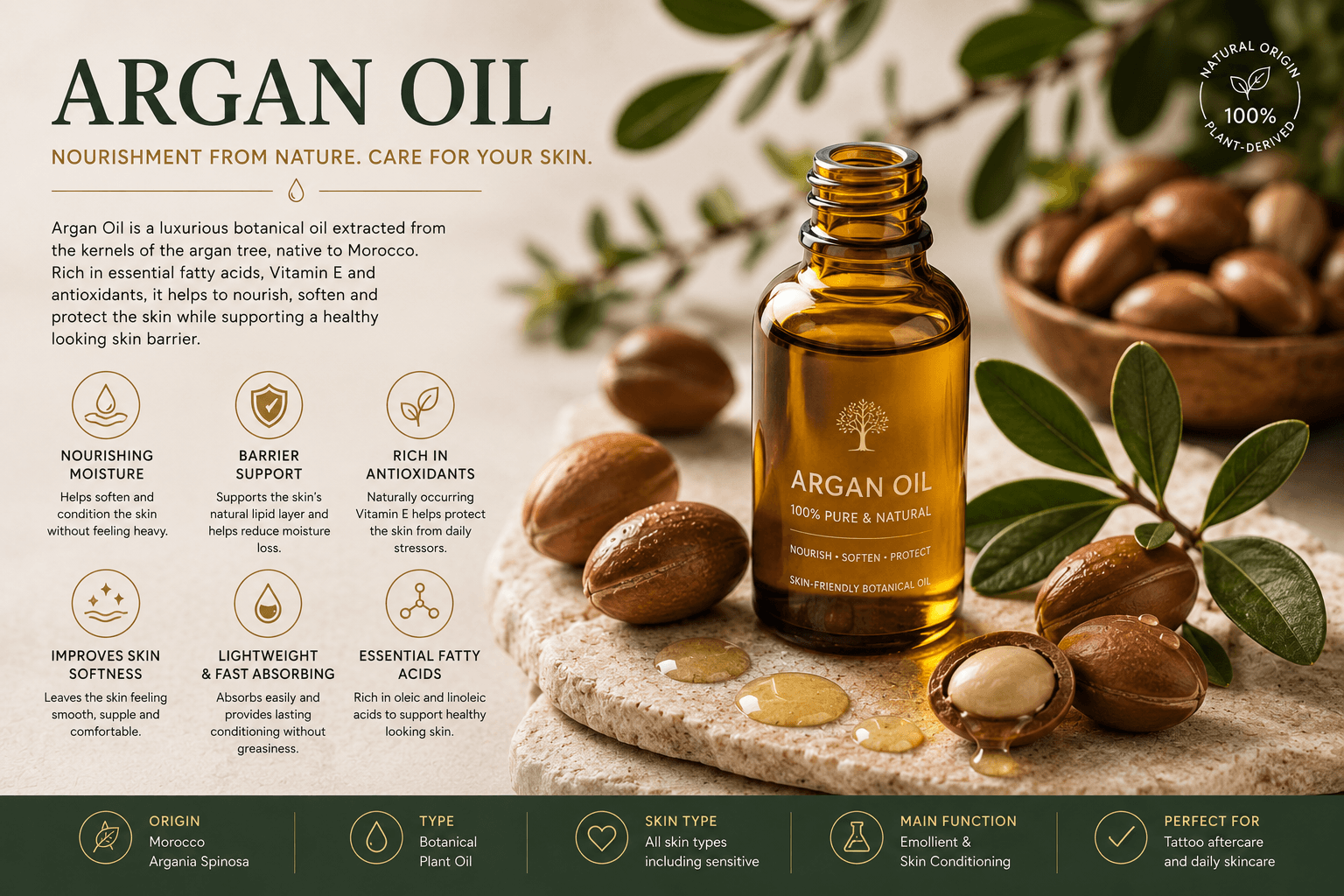
Nur wenige natürliche Öle haben sich den Ruf erworben, Arganöl.
Oftmals bezeichnet als “Flüssiges Gold” Dieses luxuriöse botanische Öl ist dank seines reichen Gehalts an essentiellen Fettsäuren, natürlich vorkommenden Antioxidantien und seiner hervorragenden Hautverträglichkeit zu einem Eckpfeiler der Premium-Hautpflege geworden.
Im Gegensatz zu schwereren Pflanzenölen, die einen fettigen Rückstand hinterlassen können, Arganöl liefert reichhaltige Nährstoffe und sorgt gleichzeitig für ein elegantes, leichtes Hautgefühl.
Für die Tattoo-Nachsorge ist dieses Gleichgewicht besonders wertvoll.
Frisch tätowierte Haut verliert vorübergehend Feuchtigkeit, während ihre Schutzbarriere sich zu erholen beginnt. In dieser Zeit sollten Hautpflegeprodukte dazu beitragen, die Feuchtigkeit zu erhalten, die Hautbarriere zu unterstützen und ein angenehmes Hautgefühl zu bewahren, ohne zu beschweren.
Anstatt als eigenständige Lösung zu fungieren, Arganöl trägt zu einer sorgfältig ausbalancierten Formulierung bei, die Feuchthaltemittel, Emollients, barriereunterstützende Inhaltsstoffe und pflanzliche Lipide kombiniert.
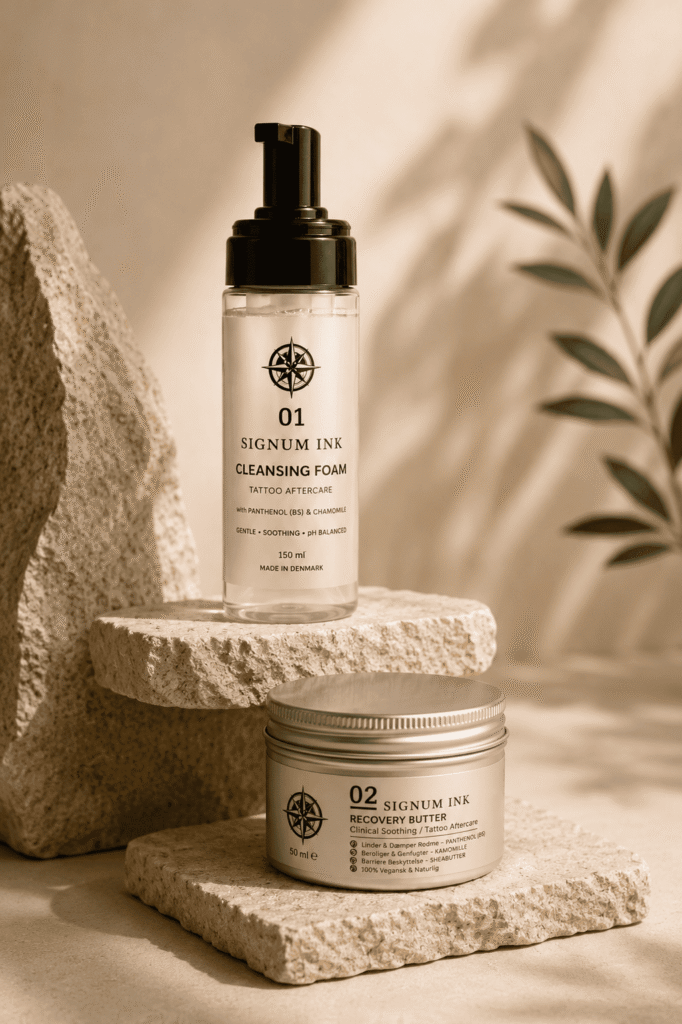
In Kombination mit Zutaten wie Glycerin, Panthenol, Ceramide, Sheabutter, und Jojobaöl, Arganöl hilft bei der Herstellung von Produkten, die die Haut weich, genährt und gut gepflegt hinterlassen.
Die Kombination aus natürlich vorkommenden Lipiden und Antioxidantien erklärt, warum es nach wie vor eines der angesehensten Pflanzenöle in der modernen Hautpflege ist.
Kurz & Bündig
Zutatenart
Pflanzenöl aus botanischen Inhaltsstoffen
Primäre Vorteile
Hautpflege • Feuchtigkeitserhalt • Antioxidative Unterstützung
Am besten für
Frische Tattoos • Trockene Haut • Empfindliche Haut • Tägliche Feuchtigkeitspflege
Gefunden in
Regenerationscremes • Gesichtsöle • Körperlotionen • Tattoo-Pflege • Premium-Feuchtigkeitscremes
Geeignet für
Die meisten Hauttypen
Typische kosmetische Konzentration
2–10%
Passt gut zu
Jojobaöl • Glycerin • Panthenol • Ceramide • Sheabutter • Squalan
Wissenschaftliche Unterstützung
Ausgezeichnet
Wussten Sie schon?
Arganöl wird aus den Kernen des Arganbaums gewonnenArgania spinosa), einer Spezies, die fast ausschließlich in Marokko wächst. Die UNESCO hat den Arganwald aufgrund seiner ökologischen und kulturellen Bedeutung als Biosphärenreservat anerkannt.
Was ist Arganöl?
Arganöl ist ein Pflanzenöl, das aus den Kernen gewonnen wird, die im Inneren der Frucht des Arganbaums zu finden sindArgania spinosa).
Seit Generationen verwenden Gemeinschaften in Marokko Arganöl sowohl für kulinarische Zwecke als auch für die Hautpflege. Heute wird Arganöl in kosmetischer Qualität unter sorgfältig kontrollierten Bedingungen hergestellt, um Reinheit, Stabilität und gleichbleibende Qualität zu gewährleisten.
Seine Beliebtheit in der Hautpflege beruht auf seiner natürlich ausgewogenen Zusammensetzung.
Arganöl enthält:
- Ölsäure (Omega-9)
- Linolsäure (Omega-6)
- Palmitinsäure
- Stearinsäure
- Natürlich vorkommende Tocopherole (Vitamin E)
- Pflanzensterine
Zusammen erklären diese Verbindungen, warum Arganöl zu einem der angesehensten Pflanzenöle in der Premium-Hautpflege geworden ist.
Im Gegensatz zu Mineralölen oder synthetischen Weichmachern versorgt Arganöl die Haut durch natürlich vorkommende, hautverträgliche Lipide mit Nährstoffen und hinterlässt dabei ein leichtes Gefühl.
Wie wirkt Arganöl?
Gesunde Haut ist abhängig von Wasser und Lipiden.
Während Zutaten wie Glycerin Botanische Öle helfen, Feuchtigkeit in die äußeren Hautschichten zu ziehen, machen die Haut weicher und reduzieren den Feuchtigkeitsverlust.
Arganöl fungiert primär als ein Emolliens.
Es füllt mikroskopisch kleine Lücken zwischen den Hautzellen und verbessert so die Glätte und Geschmeidigkeit der Haut, während es gleichzeitig zu einem angenehmen Hautgefühl beiträgt.
Seine natürlich vorkommenden Fettsäuren tragen ebenfalls zur Unterstützung der schützenden Lipidbarriere der Haut bei.
Im Gegensatz zu schwereren Pflanzenölen lässt sich Arganöl leicht verteilen und zieht relativ schnell ein, was es besonders für moderne Hautpflegeprodukte zur täglichen Anwendung geeignet macht.
Professionelle Formulierer schätzen dieses elegante Hautgefühl, da es ermöglicht, Produkte mit Nährstoffen zu versorgen, ohne dass sie sich übermäßig fettig anfühlen.
Warum frische Tattoos von Arganöl profitieren
Um die Haut zu regenerieren, reicht Feuchtigkeitsversorgung allein nicht aus.
Während sich die Hautbarriere allmählich wieder aufbaut, werden die Aufrechterhaltung der Flexibilität und die Reduzierung des Feuchtigkeitsverlusts zu wesentlichen Bestandteilen des Erholungsprozesses.
Arganöl trägt zur Hautglättung bei und ergänzt Inhaltsstoffe, die für die Hydratation und den Erhalt der Hautbarriere verantwortlich sind.
Seine leichte Textur ermöglicht es Regenerationscremes, nährend zu wirken, ohne übermäßig reichhaltig zu sein.
Aus diesem Grund wird Arganöl häufig mit folgenden kombiniert:
- Glycerin – um Feuchtigkeit anzuziehen.
- Panthenol – zur Unterstützung der Hydration und der Hautbarriere.
- Ceramide – zur Stärkung der natürlichen Lipidstruktur der Haut.
- Jojobaöl – zur Unterstützung der hauteigenen Oberflächenlipide.
- Sheabutter – um den Feuchtigkeitsverlust zu reduzieren.
- Beta-Glucan – zur Ergänzung der Hydration und Unterstützung der Hautbarriere.
Zusammen ergeben diese Inhaltsstoffe ein umfassendes Feuchtigkeitssystem, das die Heilung der Haut in jeder Phase der Tattoo-Genesung unterstützt.
Warum Arganöl zu einem beliebten Premium-Hautpflegeprodukt geworden ist
Obwohl heute unzählige Pflanzenöle erhältlich sind, Arganöl hat weiterhin einen besonderen Stellenwert in der professionellen Hautpflege.
Sein einzigartiges Gleichgewicht von Fettsäuren, Antioxidantien und seinem eleganten Hautgefühl macht es zu einem der vielseitigsten Pflanzenöle, die erhältlich sind.
Reich an essenziellen Fettsäuren
Arganöl enthält eine ausgewogene Mischung aus Öl- und Linolsäure, die zur Verbesserung der Hautweichheit beitragen und die Lipidschicht der Haut unterstützen.
Enthält natürlich vorkommendes Vitamin E
Die natürlich vorkommenden Tocopherole im Arganöl tragen antioxidative Eigenschaften bei, die helfen, das Öl selbst vor Oxidation zu schützen und gleichzeitig die Gesamtqualität von Hautpflegeformulierungen unterstützen.
Leicht und dennoch nahrhaft
Im Gegensatz zu schwereren Ölen zieht Arganöl relativ schnell ein, während sich die Haut gepflegt und nicht fettig anfühlt.
Dies macht es besonders gut für moderne Regenerationscremes geeignet.
Funktioniert wunderbar mit modernen Wirkstoffen
Professionelle Formulierer kombinieren Arganöl häufig mit:
- Glycerin
- Jojobaöl
- Ceramide
- Panthenol
- Sheabutter
- Beta-Glucan
- Squalane
- Tigerkraut
Jede Zutat erfüllt eine einzigartige Funktion und schafft Formulierungen, die Feuchtigkeit, Nährstoffe, Stärkung der Hautbarriere und lang anhaltenden Hautkomfort bieten.
Warum professionelle Formulierer weiterhin Arganöl wählen
Moderne Hautpflegeformulierungen setzen auf Inhaltsstoffe, die sich gegenseitig ergänzen.
Arganöl zeigt dieses Prinzip perfekt.
Anstatt als Wundermittel zu fungieren, liefert er leichte Nährstoffe, unterstützt die natürliche Lipidbarriere der Haut und verbessert das sensorische Gesamterlebnis einer Formulierung.
Seine hervorragende Hautverträglichkeit, natürlich vorkommenden Antioxidantien und ein ausgewogenes Fettsäureprofil erklären, warum Arganöl nach wie vor eines der angesehensten pflanzlichen Öle der Welt ist.
Für die Tattoo-Nachsorge bietet es einen luxuriösen und zugleich praktischen Beitrag zu Formulierungen, die darauf ausgelegt sind, eine gesund aussehende Haut während des gesamten Heilungsprozesses zu unterstützen.
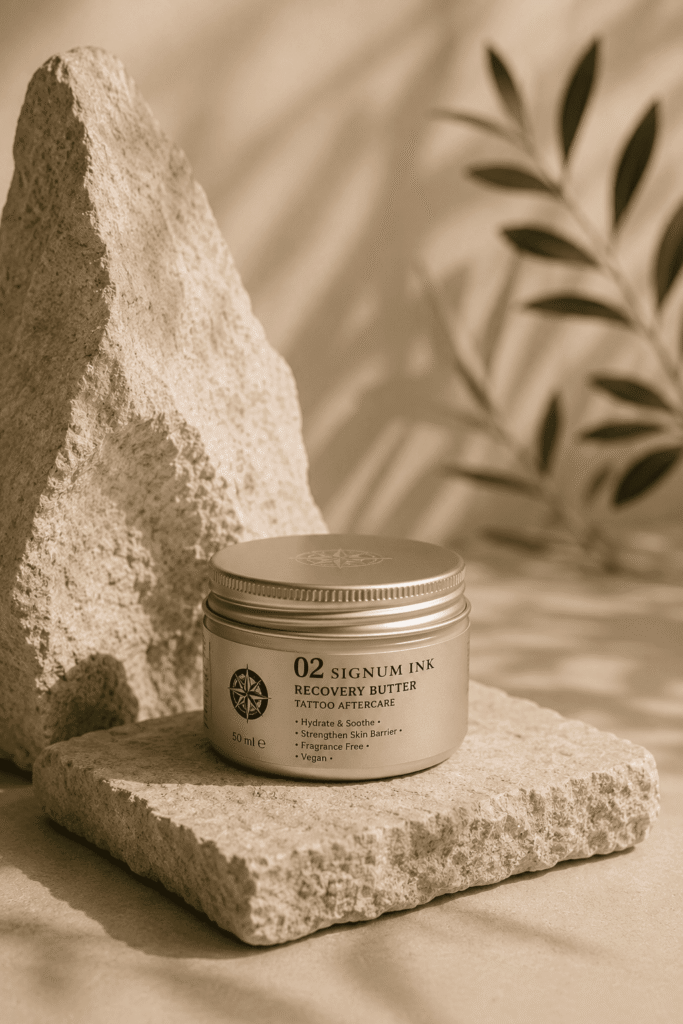
Arganöl in der Regenerationscreme: Nährt die Haut und unterstützt gleichzeitig ihre natürliche Barriere
Eine gut formulierte Erholungscreme kann mehr als nur Feuchtigkeit spenden.
Frisch tätowierte Haut verliert leichter Feuchtigkeit, da ihre Schutzbarriere vorübergehend gestört ist. In dieser Zeit sollte die Hautpflege darauf abzielen, die Feuchtigkeit zu erhalten, die Hautbarriere zu unterstützen und den allgemeinen Hautkomfort zu verbessern.
Arganöl trägt zu diesem Prozess bei, indem es leichte, hautfreundliche Lipide liefert, die helfen, die Haut weich zu machen und den Feuchtigkeitsverlust zu reduzieren.
Im Gegensatz zu schwereren Pflanzenölen zieht Arganöl relativ schnell ein und hinterlässt ein glattes, nicht fettendes Finish.
Diese elegante Textur ist einer der Gründe, warum sie häufig in luxuriösen Hautpflegeprodukten für die tägliche Anwendung verwendet wird.
Professionelle Formulierer enthalten oft Arganöl neben Inhaltsstoffen, die komplementäre Funktionen erfüllen.
Zum Beispiel:
- Glycerin zieht Wasser in die äußeren Hautschichten.
- Panthenol unterstützt die Hydratation und die natürliche Hautbarriere.
- Ceramide die Lipidmatrix zwischen den Hautzellen stärken.
- Sheabutter hilft, den transepidermalen Wasserverlust (TEWL) zu reduzieren.
- Jojobaöl unterstützt die hauteigenen Oberflächenlipide.
- Arganöl pflegt und konditioniert die Haut und verbessert gleichzeitig Geschmeidigkeit und Flexibilität.
Zusammen erzeugen diese Inhaltsstoffe eine ausgewogene Formulierung, die darauf ausgelegt ist, die Haut bei der Tattoo-Heilung in jeder Phase gesund aussehen zu lassen.
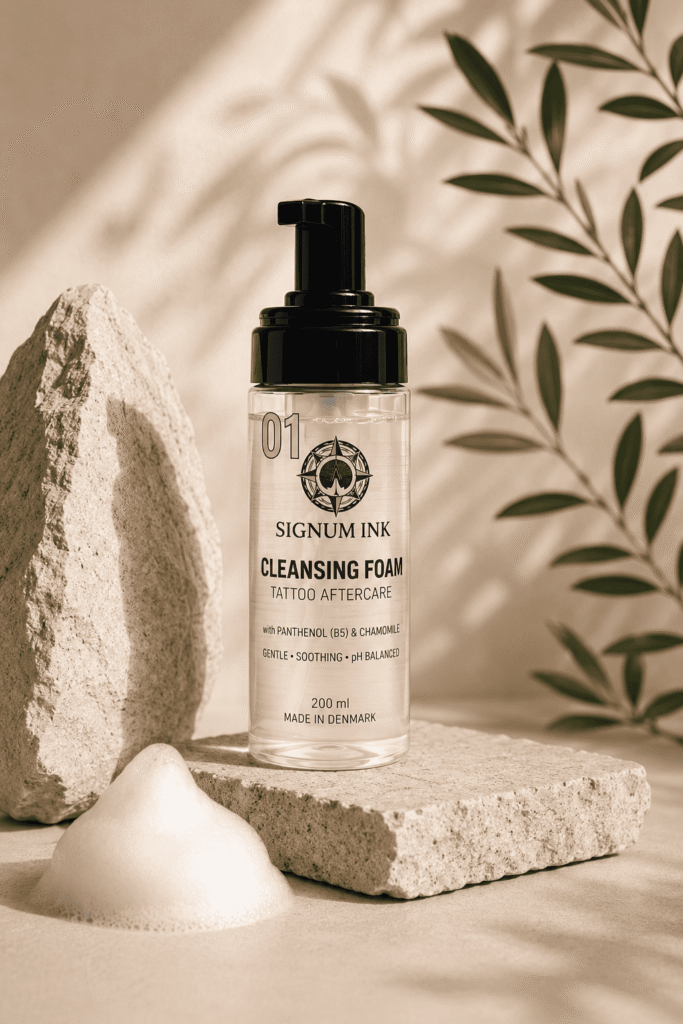
Arganöl in Tattoo-Schaumseife
Im Gegensatz zu regenerierenden Cremes sind Schaumreiniger abwaschbare Produkte.
Da sie nur kurze Zeit auf der Haut verbleiben, haben reichhaltige Pflanzenöle nur begrenzte Möglichkeiten, ihre volle pflegende Wirkung zu entfalten.
Aus diesem Grund, Arganöl ist in Leave-on-Produkten weit verbreiteter als in Tattoo-Schaumseifen.
Allerdings enthalten hochwertige Schaumreiniger manchmal geringe Mengen Arganöl oder aus Argan gewonnene Inhaltsstoffe, um das gesamte Reinigungserlebnis zu verbessern.
Diese Inhaltsstoffe helfen, ein Reinigungsmittel zu kreieren, das sich sanfter anfühlt und die Haut nach dem Abspülen weicher hinterlässt.
Bei der Tattoo-Nachsorge sind die Hauptziele eines Schaumreinigers:
- Überschüssige Tinte und Plasma entfernen.
- Schweiß und Unreinheiten wegwischen.
- Hilft, den natürlichen Feuchtigkeitshaushalt der Haut zu bewahren.
- Bereiten Sie die Haut auf die Anwendung einer Recovery-Creme vor.
Innerhalb dieser Art von Formulierung, Arganöl fungiert als unterstützender Inhaltsstoff und nicht als primärer Wirkstoff.
Was sagt die Forschung?
Arganöl wurde wegen seiner einzigartigen Zusammensetzung aus Fettsäuren, Tocopherolen, Sterolen und anderen natürlich vorkommenden bioaktiven Verbindungen eingehend untersucht.
Die Forschung legt nahe, dass topische Arganöl kann
- Hilft, die Hautfeuchtigkeit zu verbessern, indem der Feuchtigkeitsverlust reduziert wird.
- Unterstützt die natürliche Lipidbarriere der Haut.
- Verbessern Sie die Hautweichheit und Elastizität.
- Bietet antioxidativen Schutz durch natürlich vorkommendes Vitamin E.
- Verbessern Sie die sensorischen Eigenschaften kosmetischer Formulierungen.
Studien deuten auch darauf hin, dass die Kombination aus Öl- und Linolsäure zur Erhaltung einer gesund aussehenden Haut und zur Verbesserung des Hautkomforts bei regelmäßiger Anwendung beiträgt.
Anstatt als intensiver Behandlungsinhaltsstoff zu fungieren, Arganöl wird am besten als hochwirksames Konditionierungsöl betrachtet, das die Gesamtleistung einer Hautpflegeformulierung verbessert.
Wichtigste Forschungsergebnisse
Aktuelle kosmetische Forschung deutet darauf hin, dass Arganöl:
- Unterstützt die Lipidbarriere der Haut.
- Hilft, den transepidermalen Wasserverlust (TEWL) zu reduzieren.
- Verbessert die Hautweichheit.
- Liefert natürlich vorkommende Antioxidantien.
- Ist für die meisten Hauttypen geeignet.
- Integriert sich gut in moderne Emulsionen und Cremes.
Diese Eigenschaften erklären, warum Arganöl zu den weltweit am meisten geschätzten pflanzlichen Inhaltsstoffen für die Hautpflege zählt.
Forschungsbericht
| Forschungsbereich | Beweis |
|---|---|
| Hautpflege | ★★★★★ |
| Feuchtigkeitsspeicherung | ★★★★☆ |
| Barriereunterstützung | ★★★★☆ |
| Antioxidative Aktivität | ★★★★★ |
| Empfindliche Haut | ★★★★☆ |
| Tattoo-Nachsorge | ★★★☆☆ |
Direkte klinische Studien, die Arganöl speziell für die Tattoo-Nachsorge untersuchen, sind weiterhin begrenzt. Die meisten verfügbaren Erkenntnisse beziehen sich auf Hautpflege, Feuchtigkeitsunterstützung und die Aufrechterhaltung der Hautbarriere in der kosmetischen Hautpflege.
Arganöl im Vergleich mit anderen beliebten pflanzlichen Lipiden
Obwohl viele Pflanzenöle ähnliche Ursprünge haben, verhalten sie sich auf der Haut und in kosmetischen Formulierungen unterschiedlich.
Professionelle Formulierer wählen Öle aufgrund ihrer Chemie aus – nicht einfach aufgrund ihrer Beliebtheit.
Arganöl vs. Jojobaöl
Diese beiden Zutaten werden oft zusammen gefunden, weil sie sich außergewöhnlich gut ergänzen.
Jojobaöl ist ein flüssiges Wachsester, das den hauteigenen Oberflächenlipiden sehr ähnlich ist.
Arganöl ist ein echtes botanisches Öl, das reich an essenziellen Fettsäuren und natürlich vorkommenden Antioxidantien ist.
Gemeinsam sorgen sie für leichte Pflege, verbessertes Hautgefühl und exzellente Barriereunterstützung.
Arganöl vs. Sheabutter
Beide Inhaltsstoffe nähren die Haut, haben aber unterschiedliche Texturen und Funktionen.
Sheabutter bildet eine reichhaltigere Schutzschicht, die hilft, Feuchtigkeitsverlust zu reduzieren.
Arganöl liefert leichtere Pflege mit schnellerer Absorption.
Viele Premium-Tattoo-Aftercare-Cremes kombinieren beide Inhaltsstoffe, um eine luxuriöse Textur ohne übermäßige Schwere zu erzielen.
Arganöl vs. Squalan
Beide Inhaltsstoffe sind für ihr elegantes Hautgefühl bekannt.
Squalane ist sehr stabil und imitiert eines der natürlichen Lipide der Haut.
Arganöl liefert zusätzliche Fettsäuren und natürlich vorkommende Tocopherole.
Zusammen ergeben sie leichte Formulierungen mit ausgezeichneter Verteilbarkeit und langanhaltendem Tragekomfort.
Arganöl vs. Kokosöl
Obwohl beide pflanzlich sind, verhalten sie sich ganz unterschiedlich.
Kokosöl bildet eine schwerere Schicht auf der Haut und hat einen höheren Anteil an gesättigten Fettsäuren.
Arganöl zieht schneller ein, fühlt sich leichter an und wird generell in hochwertigen Leave-on-Hautpflegeprodukten bevorzugt, bei denen ein elegantes Finish wichtig ist.
Warum Arganöl zu einem der vertrauenswürdigsten pflanzlichen Öle der Welt geworden ist
In den letzten zwei Jahrzehnten, Arganöl ist zum Synonym für hochwertige Hautpflege geworden.
Seine Popularität basiert auf einer Kombination aus traditioneller Anwendung und moderner kosmetischer Wissenschaft.
Professionelle Formulierer wählen Arganöl weiterhin, weil es bietet:
- Ein ausgewogenes Fettsäureprofil.
- Natürlich vorkommendes Vitamin E.
- Ausgezeichnete Hautverträglichkeit.
- Leichte Pflege.
- Starke Synergie mit modernen Hautpflegeinhaltsstoffen.
- Ein luxuriöses Hautgefühl ohne übermäßige Fettigkeit.
Diese Eigenschaften machen Arganöl zu einem idealen Inhaltsstoff in regenerierenden Cremes für empfindliche, trockene und heilende Haut.
Wichtigstes Fettsäurenprofil
| Komponente | Typischer Inhalt |
|---|---|
| Ölsäure (Omega-9) | 43–49% |
| Linolsäure (Omega-6) | 29–37% |
| Palmitinsäure | 11–15% |
| Stearinsäure | 4–7% |
| Natürlich vorkommende Tocopherole | Geschenk |
| Pflanzensterine | Geschenk |
Warum das wichtig ist:
Diese Balance von Fettsäuren trägt dazu bei zu erklären, warum Arganöl sich gleichzeitig nährend und leicht anfühlt. Ölsäure trägt zu Geschmeidigkeit und Flexibilität bei, während Linolsäure die natürliche Lipidbarriere der Haut unterstützt. Zusammen mit natürlich vorkommenden Tocopherolen (Vitamin E) machen diese Bestandteile Arganöl besonders gut geeignet für moderne Hautpflegeformulierungen.
Häufig gestellte Fragen zu Arganöl
Was ist Arganöl?
Arganöl ist ein pflanzliches Öl, das aus den Kernen der/des Argania spinosa Baum, der hauptsächlich in Marokko wächst. Reich an essentiellen Fettsäuren, natürlich vorkommenden Tocopherolen (Vitamin E) und Phytosterinen, wird er wegen seiner nährenden und hautpflegenden Eigenschaften häufig in der hochwertigen Hautpflege eingesetzt.
Warum wird Arganöl in der Tattoo-Nachsorge verwendet?
Frische Tätowierungen schwächen vorübergehend die Schutzbarriere der Haut, wodurch Feuchtigkeit leichter entweichen kann.
Arganöl hilft, die Haut weicher zu machen, die Elastizität zu verbessern und die natürliche Lipidschicht der Haut zu unterstützen, während es Inhaltsstoffe ergänzt, die Feuchtigkeit spenden und die Hautbarriere unterstützen.
Ist Arganöl für empfindliche Haut geeignet?
Im Allgemeinen, ja.
Arganöl wird von den meisten Hauttypen gut vertragen und ist häufig in Hautpflegeprodukten für trockene und empfindliche Haut enthalten.
Wie bei jedem kosmetischen Inhaltsstoff sollten Personen mit Nussallergien oder bestimmten Unverträglichkeiten vor der regelmäßigen Anwendung einen Patch-Test durchführen.
Spendet Arganöl der Haut Feuchtigkeit?
Nicht direkt.
Im Gegensatz zu Glycerin, das Wasser in die Haut zieht, Arganöl dient in erster Linie als Emolliens.
Es macht die Haut geschmeidig und verringert den Feuchtigkeitsverlust, sodass die Haut länger mit Feuchtigkeit versorgt bleibt.
Warum wird Arganöl oft als “flüssiges Gold” bezeichnet?
Der Spitzname stammt von seiner satten goldenen Farbe, seiner traditionellen Bedeutung in Marokko und seinem Ruf als eines der wertvollsten Pflanzenöle der Welt.
Dank seiner ausgewogenen Zusammensetzung und des luxuriösen Hautgefühls gehört es zu den geschätztesten Inhaltsstoffen der modernen Hautpflege.
Kann Arganöl die Poren verstopfen?
Arganöl gilt allgemein als geringes komedogenes Potenzial, wodurch es für viele Hauttypen geeignet ist.
Jedoch ist die Haut jedes Menschen einzigartig, und die individuellen Reaktionen können je nach Formulierung und Hautzustand variieren.
Ist Arganöl besser als Jojobaöl?
Nicht unbedingt.
Diese Zutaten erfüllen unterschiedliche Funktionen.
Jojobaöl entspricht weitgehend den natürlichen Wachsestern der Haut.
Arganöl liefert essentielle Fettsäuren und natürlich vorkommende Antioxidantien.
Professionelle Rezepturen kombinieren häufig beide, weil sie sich gegenseitig ergänzen.
Enthält Arganöl Vitamin E?
Ja.
Einer der Gründe, warum Arganöl so hoch geschätzt wird, ist sein natürlich vorkommender Tocopherol (Vitamin E) Inhalt, der antioxidantische Eigenschaften beiträgt und dazu beiträgt, die Stabilität des Öls zu unterstützen.
Warum verwenden Produktentwickler weiterhin Arganöl?
Professionelle Formulierer schätzen Arganöl weil es kombiniert:
- Leichte Kost.
- Hervorragendes Tragegefühl.
- Natürlich vorkommende Antioxidantien.
- Hohe Verträglichkeit mit anderen Hautpflegeinhaltsstoffen.
- Hohe Konsumentenbekanntheit.
Diese Eigenschaften machen es zu einem hervorragenden pflanzlichen Öl für hochwertige Hautpflege.
Verbreitete Mythen über Arganöl
Mythos 1: Arganöl ist zu reichhaltig für die tägliche Hautpflege.
Realität
Obwohl es sehr nahrhaft ist, Arganöl Zieht relativ schnell ein und hinterlässt bei richtiger Zusammensetzung ein leichtes Finish.
Dies macht es für den täglichen Gebrauch in Regenerationscremes und Feuchtigkeitscremes geeignet.
Mythos 2: Arganöl ersetzt Feuchtigkeitscremes.
Realität
Arganöl entfaltet seine beste Wirkung in Kombination mit Feuchthaltemitteln und Inhaltsstoffen, die die Hautbarriere stärken.
Es versorgt die Haut mit Nährstoffen und hilft, Feuchtigkeit zu speichern, ersetzt jedoch keine Inhaltsstoffe wie Glycerin oder Panthenol.
Mythos 3: Alle Arganöle sind gleich.
Realität
Die Qualität von Arganöl hängt ab von:
- Erntemethoden.
- Extraktionsverfahren.
- Verfeinerung.
- Lagerung.
- Gesamtformulierung.
Hochwertiges Arganöl in kosmetischer Qualität wird sorgfältig verarbeitet, um gleichbleibende Qualität und Stabilität zu gewährleisten.
Mythos 4: Mehr Arganöl bedeutet nicht automatisch bessere Hautpflege.
Realität
Professionelle Rezepturen basieren auf Ausgewogenheit.
Die Wirksamkeit einer Regenerationscreme hängt davon ab, wie alle Inhaltsstoffe zusammenwirken – nicht von der Konzentration eines einzelnen pflanzlichen Öls.
Forschungsbericht
| Forschungsbereich | Beweis |
|---|---|
| Hautpflege | ★★★★★ |
| Antioxidative Aktivität | ★★★★★ |
| Feuchtigkeitsspeicherung | ★★★★☆ |
| Barriereunterstützung | ★★★★☆ |
| Empfindliche Haut | ★★★★☆ |
| Tattoo-Nachsorge | ★★★☆☆ |
*Die meiste aktuelle Forschung bezieht sich eher auf kosmetische Hautpflege, Barriereunterstützung und Hautkonditionierung als auf tattoospezifische klinische Studien.
Evidenzniveau
| Beweisquelle | Stärke |
|---|---|
| Traditionelle Verwendung | ★★★★★ |
| Moderne Kosmetikwissenschaft | ★★★★☆ |
| Klinische Dermatologie | ★★★★☆ |
| Tattoo-spezifische Studien | ★★☆☆☆ |
Warum das wichtig ist:
Arganöl verbindet jahrhundertelange traditionelle Anwendung mit einer wachsenden Zahl moderner kosmetischer Forschung. Zwar gibt es nach wie vor nur begrenzte direkte Studien zur Tattoo-Nachsorge, doch seine dokumentierte Rolle bei der Hautpflege, der Unterstützung durch Antioxidantien und der Erhaltung der Hautbarriere macht es für Regenerationsformulierungen äußerst relevant.
Zutatenklassifizierung
| Eigentum | Klassifizierung |
|---|---|
| Ursprung | Pflanzlich |
| Chemische Familie | Triglycerid-Pflanzenöl |
| Hauptfunktion | Emollient |
| Wasserlöslich | ❌ Nein |
| Öllöslich | ✅ Ja |
| Barrierefunktion | Unterstützt die Lipidschicht der Haut |
| Oxidative Stabilität | ★★★★☆ Sehr gut |
Wie es in einer Formel funktioniert
| Rolle | Funktion |
|---|---|
| Feuchthaltemittel | ❌ |
| Emollient | ✅ Primär |
| Okklusiv | ⚪ Mäßig |
| Barriereunterstützung | ✅ Ergänzend |
| Hautpflege | ✅ Stark |
| Antioxidativer Schutz | ✅ Natürlich vorkommende Tocopherole |
Formulierungseinblick
Arganöl reichert eine Formulierung mit hautfreundlichen Fettsäuren und Antioxidantien an und verbessert gleichzeitig die Textur und die Streichfähigkeit. Es trägt dazu bei, Cremes zu kreieren, die sich luxuriös anfühlen, gut einziehen und die Haut weich hinterlassen, ohne übermäßig zu fetten.
Leistungsübersicht der Inhaltsstoffe
| Kategorie | Bewertung |
|---|---|
| Hautpflege | ⭐⭐⭐⭐⭐ |
| Leichte Nährstoffe | ⭐⭐⭐⭐⭐ |
| Barriereunterstützung | ⭐⭐⭐⭐☆ |
| Feuchtigkeitsspeicherung | ⭐⭐⭐⭐☆ |
| Antioxidativer Schutz | ⭐⭐⭐⭐⭐ |
| Empfindliche Haut | ⭐⭐⭐⭐☆ |
| Wissenschaftliche Beweise | ⭐⭐⭐⭐☆ |
Warum Formulierer es wählen
| Formulierungsnutzen | Warum es wichtig ist |
|---|---|
| Elegantes Hautgefühl | Spendet Nährstoffe ohne ein schweres Gefühl zu hinterlassen. |
| Natürlich vorkommende Antioxidantien | Fügt Tocopherole hinzu, die zur Öl-Stabilität und Produktqualität beitragen. |
| Hervorragende Kompatibilität | Lässt sich wunderbar mit Feuchthaltemitteln, Ceramiden und Pflanzenextrakten kombinieren. |
| Ausgewogenes Fettsäurenprofil | Unterstützt die Hautpflege und Geschmeidigkeit. |
| Verbrauchererkennung | Eines der weltweit vertrauenswürdigsten Premium-Pflanzenöle. |
Perspektive des Formulierers
Arganöl ist ein perfektes Beispiel dafür, wie hochwertige Hautpflege Natur und Formulierungswissenschaft verbindet.
Sein ausgewogenes Fettsäurenprofil, das natürlich vorkommende Vitamin E und das elegante Hautgefühl machen es zu einem der vielseitigsten Pflanzenöle auf dem Markt. Anstatt als “Star-Inhaltsstoff” zu wirken, ergänzt Arganöl Glycerin, Panthenol, Ceramide, Jojobaöl, und Sheabutter Formulierungen zu entwickeln, die die Haut nähren und gleichzeitig die Feuchtigkeitsversorgung und die Barrierefunktion unterstützen.
Dieser ausgewogene Ansatz unterscheidet professionelle Hautpflege von Produkten, die auf einen einzelnen Marketing-Wirkstoff setzen.
Experten-Tipp
Gesunde Haut braucht sowohl Wasser als auch Lipide.
Feuchthaltemittel wie Glycerin Feuchtigkeit in die Haut ziehen, während botanische Öle wie Arganöl tragen dazu bei, die Haut geschmeidig zu machen und den Feuchtigkeitsverlust zu verringern. In Kombination mit Inhaltsstoffen, die die Hautbarriere stärken, wie beispielsweise Ceramide und Panthenol, bilden sie ein vollständiges Feuchtigkeitssystem, das die Heilung der Haut während des gesamten Tattoo-Heilungsprozesses unterstützt.
Zutaten-Synergie
| Passt besonders gut zu | Warum |
|---|---|
| Jojobaöl | Bietet eine leichte Pflege, während Arganöl essentielle Fettsäuren liefert. |
| Glycerin | Zieht Feuchtigkeit in die Haut, während Arganöl hilft, Weichheit und Elastizität zu bewahren. |
| Panthenol | Unterstützt die Feuchtigkeitsversorgung und die Barrierefunktion, während Arganöl die Haut nährt. |
| Ceramide | Stärken Sie die Hautbarriere, während Arganöl die Lipidschicht pflegt. |
| Sheabutter | Es schafft eine ausgewogene Kombination aus Feuchtigkeitsspeicherung und reichhaltiger Hautpflege. |
| Squalane | Gemeinsam sorgen sie für eine leichte, elegante Pflege mit ausgezeichneter Hautverträglichkeit. |
Zutatenurteil
| Kategorie | Bewertung |
|---|---|
| Gesamtbewertung | ⭐⭐⭐⭐⭐ |
| Am besten für | Trockene Haut, frische Tattoos, tägliche Feuchtigkeitsversorgung |
| Wissenschaftliche Zuversicht | Hoch |
| Formulator-Empfehlung | Erstes pflanzliches Öl mit ausgezeichneter Formulierungsvielfalt |
| Funktioniert am besten mit | Jojobaöl, Glycerin, Panthenol, Ceramide, Sheabutter |
Abschließende Gedanken
Arganöl hat sich durch eine Kombination aus Tradition, Wissenschaft und hervorragender Formulierungsleistung den Ruf als eines der weltweit angesehensten pflanzlichen Öle erworben.
Sein reichhaltiges Angebot an essentiellen Fettsäuren und natürlich vorkommenden Antioxidantien pflegt die Haut, verbessert die Weichheit und unterstützt die natürliche Lipidschicht der Haut, ohne ein schweres oder fettiges Gefühl zu hinterlassen.
Für die Tattoo-Nachsorge ist Arganöl am effektivsten als Teil einer durchdacht ausbalancierten Rezeptur. In Kombination mit Feuchthaltemitteln, die Hautbarriere unterstützenden Lipiden und anderen sich ergänzenden Inhaltsstoffen trägt es zu Produkten bei, die helfen, die Feuchtigkeitsversorgung aufrechtzuerhalten, das Wohlbefinden zu verbessern und eine gesund aussehende Haut während des gesamten Heilungsprozesses zu unterstützen.
Anstatt auf einen einzigen “Wunderwirkstoff” zu setzen, basiert die hochwertige Tattoo-Nachsorge auf einer intelligenten Formulierung – und Arganöl bleibt eines der besten pflanzlichen Öle, die zur Unterstützung dieser Philosophie zur Verfügung stehen.
 English
  German
  Dutch
Dutch  Danish
  Swedish
  French
  Italian