Introduction
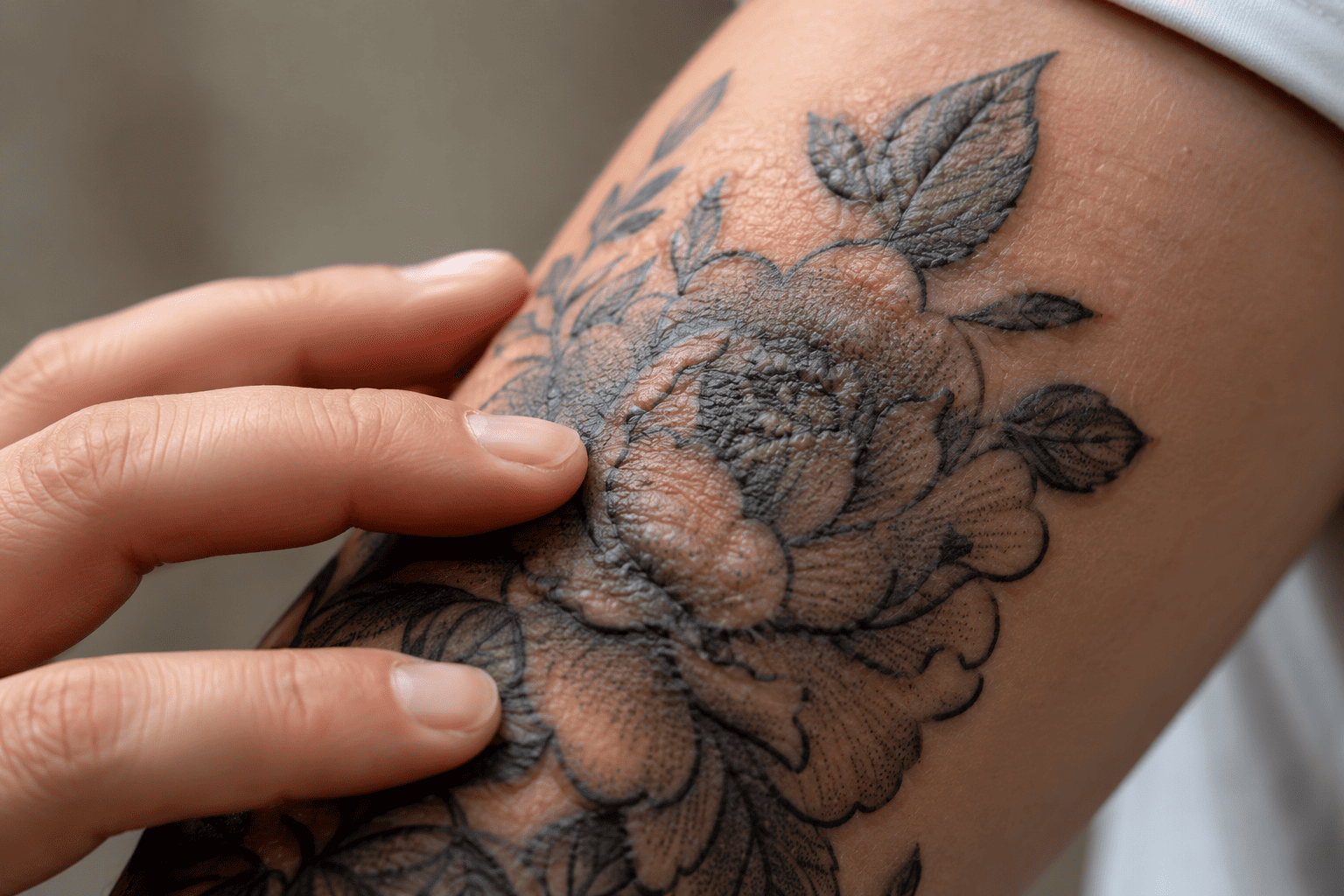
You run your fingers across your tattoo and notice something unexpected.
Instead of feeling completely smooth, parts of the design seem slightly raised.
Perhaps the lines feel thicker than before.
Maybe the tattoo becomes raised only on certain days or during certain seasons.
Should you be worried?
In many cases, raised tattoos are completely normal.
Both new and older tattoos can occasionally become raised for reasons that aren’t dangerous.
The key is understanding when raised skin is simply part of the body’s normal response—and when it may indicate a healing complication.
This guide explains why tattoos become raised, how long it usually lasts and when professional advice is appropriate.
Is It Normal for a Tattoo to Be Raised?
Yes.
Many tattoos become temporarily raised during healing.
The skin has experienced thousands of tiny needle punctures and is actively repairing itself.
Temporary swelling, inflammation and new collagen formation can all make the tattoo feel slightly elevated.
For most people, this gradually improves as healing progresses.
Why Does a Tattoo Become Raised?
There are several possible explanations.
Some are completely harmless, while others may require further evaluation.
Normal Healing
During the first weeks, mild swelling is expected.
The tattoo may feel:
- Slightly raised.
- Tight.
- Dry.
- Itchy.
These changes are usually temporary.
Scar Tissue
If the skin experienced more trauma than expected, scar tissue may develop.
Unlike temporary swelling, scar tissue tends to remain long after healing is complete.
Allergic Reactions
Although uncommon, allergic reactions to tattoo pigments may cause:
- Persistent raised skin.
- Itching.
- Redness.
- Localized swelling.
These symptoms may appear weeks, months or even years after the tattoo was created.
Weather Changes
Many people notice that older tattoos become raised during:
- Hot weather.
- Cold weather.
- High humidity.
- Sudden temperature changes.
The exact reason isn’t fully understood, but mild changes in skin hydration and blood flow may contribute.
Dry Skin
Dry skin can make tattoo lines feel more noticeable.
Moisturizing often improves comfort when dryness is the primary cause.
What Does a Raised Tattoo Feel Like?
Raised tattoos may feel:
- Slightly firm.
- Thickened.
- Textured.
- Smooth but elevated.
- Occasionally itchy.
The exact sensation depends on the underlying cause.
Raised Tattoo vs. Scar Tissue
This is one of the most common questions.
Temporary raised tattoos:
- Improve over time.
- Often appear during healing.
- May come and go.
Scar tissue:
- Persists long-term.
- Feels firmer.
- Alters skin texture permanently.
Time is often one of the most helpful clues.
Can Older Tattoos Become Raised?
Yes.
Even tattoos that healed years ago can occasionally become slightly raised.
This often happens temporarily and isn’t necessarily a sign that something is wrong.
Many people notice the change during allergy season, after sun exposure or when weather conditions change.
Most Raised Tattoos Aren’t Dangerous
Fortunately, most raised tattoos don’t require medical treatment.
They often represent a normal skin response rather than a serious complication.
Understanding the context—whether the tattoo is new, healing or many years old—helps determine the most likely explanation.
How Should You Care for a Raised Tattoo?
The best approach depends on why the tattoo is raised.
If the tattoo is still healing, continue following your normal aftercare routine.
This includes:
- Washing the tattoo gently with lukewarm water and a mild cleanser.
- Patting the skin dry with a clean towel.
- Applying a thin layer of moisturizer when the skin feels dry.
- Avoiding scratching or rubbing the tattoo.
- Wearing loose, breathable clothing if the tattoo is covered.
For older tattoos that occasionally become raised, keeping the skin moisturized and avoiding unnecessary irritation may help improve comfort.
Can a Raised Tattoo Become Flat Again?
In many cases, yes.
If the raised appearance is caused by:
- Normal healing
- Temporary inflammation
- Dry skin
- Weather changes
the tattoo often returns to its usual appearance without treatment.
If the raised texture is caused by scar tissue, the skin may remain permanently elevated, although scars often soften and flatten gradually over time.
Can You Prevent Raised Tattoos?
Some causes cannot be prevented completely.
However, you can reduce the risk of unnecessary irritation by:
- Choosing an experienced tattoo artist.
- Following proper aftercare instructions.
- Avoiding picking scabs.
- Keeping the skin moisturized.
- Protecting the tattoo from excessive friction.
- Allowing the tattoo to heal at its own pace.
Healthy healing reduces the likelihood of unnecessary complications.
When Should You See a Healthcare Professional?
Although most raised tattoos aren’t dangerous, seek medical advice if you notice:
- Persistent swelling that doesn’t improve.
- Increasing redness.
- Severe itching.
- Blistering.
- Thick yellow or green discharge.
- Fever.
- Raised areas that continue enlarging.
These symptoms may indicate an infection, allergic reaction or another condition requiring professional assessment.
Common Myths About Raised Tattoos
Myth 1: Every Raised Tattoo Is Scar Tissue
False.
Many tattoos become temporarily raised during normal healing or due to temporary skin irritation.
Myth 2: Raised Tattoos Always Mean Infection
False.
Infections usually involve several symptoms together, including worsening redness, pain and discharge.
Raised skin alone doesn’t automatically indicate infection.
Myth 3: Older Tattoos Should Never Become Raised
False.
Many older tattoos occasionally become raised because of weather changes, allergies or temporary skin inflammation.
Myth 4: Moisturizer Removes Scar Tissue
False.
Moisturizer helps maintain healthy skin but cannot eliminate existing scar tissue.
Frequently Asked Questions
Is it normal for a healing tattoo to be raised?
Yes.
Temporary swelling and inflammation commonly make new tattoos feel slightly raised during the first weeks.
Why does my old tattoo suddenly become raised?
Temporary skin irritation, allergies, weather changes or dry skin are all possible explanations.
Many older tattoos occasionally become raised without indicating a serious problem.
Can raised tattoos be permanent?
Sometimes.
If scar tissue develops, the raised texture may remain long-term, although it often becomes softer with time.
Should I moisturize a raised tattoo?
Yes.
If dryness is contributing to the discomfort, a thin layer of moisturizer may help keep the skin comfortable.
When should I worry about a raised tattoo?
Seek professional advice if the raised skin is accompanied by severe itching, blistering, increasing redness, discharge, fever or progressive swelling.
Conclusion
Raised tattoos are extremely common and, in most cases, are simply part of the body’s normal response to tattooing or temporary changes in the skin.
The key is observing how the tattoo changes over time.
Temporary swelling, dryness or weather-related changes often resolve on their own, while persistent thickening or symptoms such as pain, discharge or blistering deserve professional evaluation.
With proper aftercare and a little patience, most raised tattoos settle naturally and continue healing without long-term problems.
 English
  German
  Dutch
Dutch  Danish
  Swedish
  French
  Italian