A science-backed guide to dry healing vs. moisturizing your tattoo for faster recovery, better ink retention, and healthier skin.
One of the biggest debates in tattoo aftercare is surprisingly simple:
Should you let your tattoo dry out?
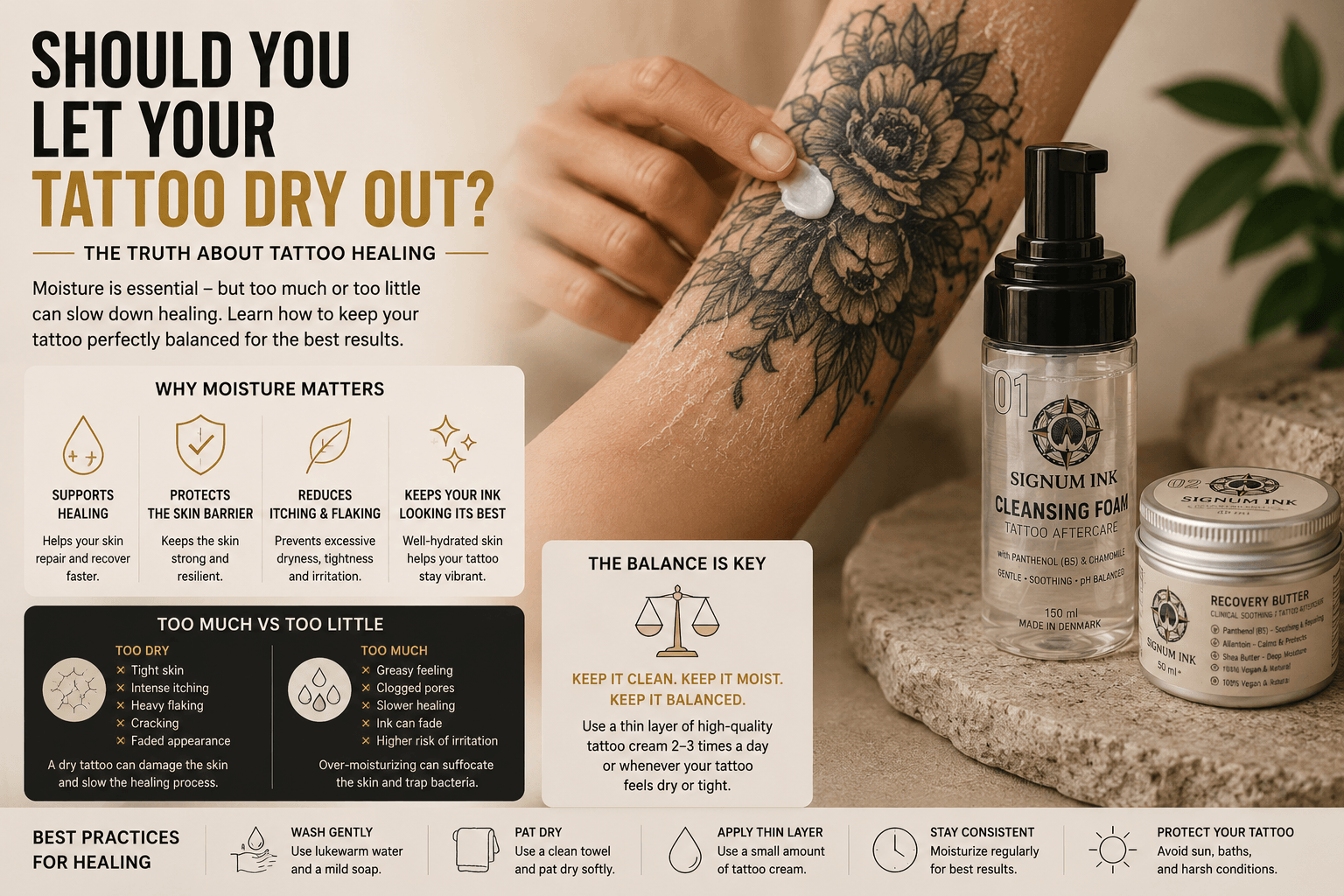
Some tattoo enthusiasts swear by “dry healing,” believing that avoiding moisturizer allows the skin to heal naturally. Others recommend applying tattoo cream several times a day to keep the skin hydrated throughout the healing process.
So who’s right?
The answer is more nuanced than either approach suggests.
A fresh tattoo is an open wound, and like any wound, it needs the right balance of moisture and oxygen to heal properly. Allowing your tattoo to become excessively dry can lead to discomfort, cracking, and increased itching. On the other hand, applying too much cream can trap moisture, clog pores, and slow the skin’s natural repair process.
The goal isn’t to keep your tattoo completely dry—or constantly wet.
The goal is balanced healing.
In this guide, we’ll explain the science behind tattoo healing, compare dry healing with modern aftercare methods, and show you how to keep your tattoo healthy from day one until it’s fully healed.
What Happens When a Tattoo Begins to Heal?
Every tattoo creates thousands of microscopic punctures in your skin.
Although tattooing is an artistic process, your body treats it as a controlled injury.
Immediately after getting tattooed, your immune system begins repairing the damaged tissue by:
- Stopping minor bleeding
- Reducing inflammation
- Producing new skin cells
- Protecting the area from bacteria
- Restoring the skin barrier
During this process, it’s completely normal to experience:
- Redness
- Mild swelling
- Tightness
- Dryness
- Flaking
- Itching
These are all signs that your body is healing.
The challenge is creating the ideal environment for your skin to recover without unnecessary irritation.
What Does “Dry Healing” Actually Mean?
Dry healing is exactly what it sounds like.
Instead of applying moisturizer after washing the tattoo, you simply allow the skin to heal naturally.
Typically, the routine involves:
- Washing the tattoo with mild soap
- Letting it air dry
- Avoiding all lotions and creams
- Allowing the skin to peel naturally
Some tattoo artists still recommend this approach, particularly for clients with very oily skin or those who have previously reacted to certain skincare products.
However, modern dermatological research suggests that wounds generally heal more efficiently when they’re kept in a balanced, lightly moisturized environment rather than being allowed to dry out completely.
Why Tattoos Naturally Become Dry
Your tattoo loses moisture for several reasons during the first week.
The outer skin barrier has been disrupted, allowing water to escape more easily.
At the same time, your body is directing resources toward rebuilding damaged tissue instead of maintaining normal skin hydration.
This combination often leaves the tattoo feeling:
- Tight
- Rough
- Dry
- Sensitive
Without additional moisture, the skin may become increasingly uncomfortable.
Is Letting a Tattoo Dry Out Bad?
Not necessarily.
Allowing the tattoo to breathe is beneficial.
Allowing it to become overly dry is not.
These two concepts are often confused.
Your tattoo needs oxygen.
Your tattoo also needs moisture.
Finding the balance between the two is what promotes healthy healing.
Think of it like watering a plant.
Too little water causes it to dry out.
Too much water can drown the roots.
Your healing tattoo behaves in much the same way.
What Happens If Your Tattoo Gets Too Dry?
Excessive dryness can cause several common problems during healing.
Increased Itching
Dry skin becomes irritated more easily.
The tighter your skin feels, the stronger the urge to scratch.
Scratching a healing tattoo can damage fragile new skin and increase the risk of infection or uneven healing.
Cracking
Very dry skin may develop tiny surface cracks.
Although these are usually superficial, they can become uncomfortable and delay the healing process if the skin continues drying out.
Excessive Peeling
Some peeling is completely normal.
However, overly dry tattoos often produce larger, thicker flakes that can feel tight and uncomfortable.
Natural peeling should occur gradually without forcing the skin to crack or split.
Skin Barrier Damage
Healthy skin acts as a protective barrier against bacteria, dirt, and environmental irritation.
If the skin becomes too dry, that barrier is temporarily weakened, making the tattoo more vulnerable while it heals.
Can Moisturizer Speed Up Healing?
Moisturizer doesn’t make your skin heal faster in the sense of accelerating your body’s biology.
What it does is create conditions that support normal healing.
A quality tattoo recovery cream can help:
- Reduce moisture loss
- Improve skin comfort
- Minimize tightness
- Reduce itching
- Support the skin barrier
- Keep peeling more manageable
The result is often a smoother, more comfortable healing experience.
The important detail is that more isn’t better.
A thin layer is almost always enough.
The Ideal Tattoo Healing Environment
Professional tattoo artists and skincare experts increasingly recommend creating a balanced healing environment.
That means keeping the tattoo:
✔ Clean
✔ Lightly moisturized
✔ Protected from friction
✔ Out of direct sunlight
✔ Free from unnecessary irritation
Rather than choosing between “dry healing” and “constant moisturizing,” the most effective approach is usually somewhere in the middle.
A gentle cleansing routine followed by a thin application of recovery cream allows the skin to breathe while preventing excessive dryness.
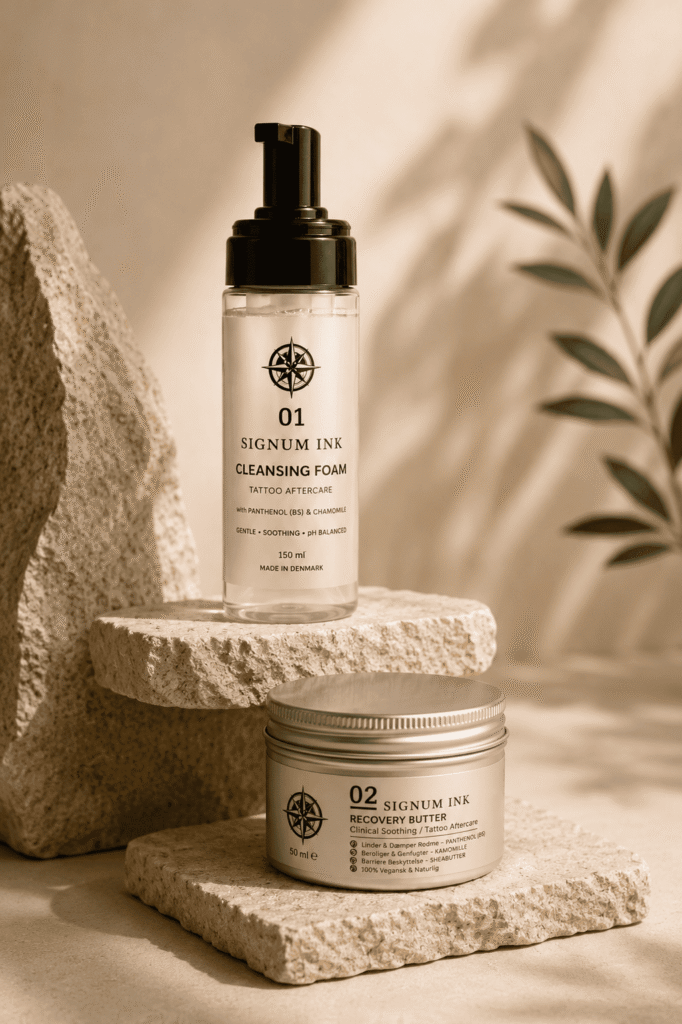
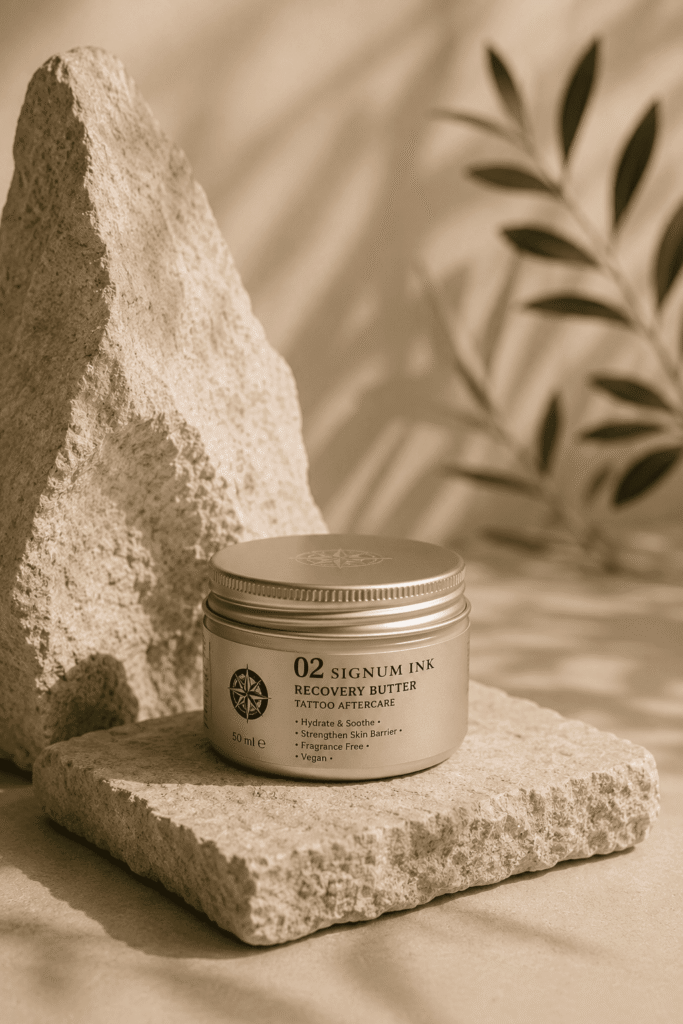
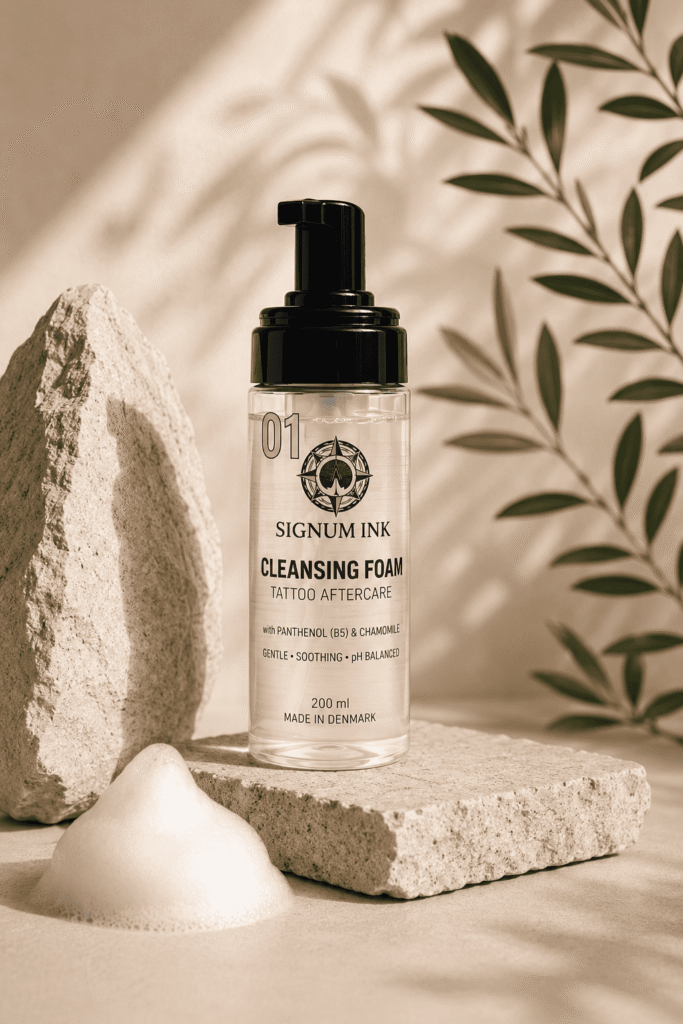
For example, washing the tattoo with a mild cleansing foam before applying a lightweight recovery butter helps remove sweat, bacteria, and impurities while maintaining a comfortable level of hydration throughout the healing process.
Dry Healing vs. Moist Healing: Which Is Better?
For years, tattoo enthusiasts have debated whether a tattoo should heal completely dry or with regular moisturizing. While both methods can result in a healed tattoo, modern wound-care research generally supports maintaining a lightly moisturized healing environment.
The key phrase here is lightly moisturized.
This doesn’t mean covering your tattoo in thick layers of cream. Instead, it means preventing the skin from becoming excessively dry while still allowing it to breathe.
A balanced aftercare routine typically provides several advantages:
- Less tightness and discomfort
- Reduced itching
- A healthier skin barrier
- More comfortable peeling
- Better overall healing conditions
Dry healing isn’t necessarily “wrong,” but for many people it can lead to unnecessary dryness, irritation, and discomfort—especially during the first two weeks.
What Do Professional Tattoo Artists Recommend?
Although every artist has their own preferences, most experienced tattoo professionals agree on a few core principles:
- Wash your tattoo gently.
- Keep it clean.
- Avoid soaking it.
- Moisturize with a thin layer when needed.
- Don’t overdo the cream.
Today’s aftercare recommendations are far more refined than they were 20 years ago. Instead of choosing between dry or wet healing, many artists now recommend what could be called balanced healing—keeping the tattoo clean, protected, and comfortably hydrated.
Can You Over-Moisturize a Tattoo?
Yes.
One of the biggest misconceptions is that applying more cream will help the tattoo heal faster.
It won’t.
Too much moisturizer can:
- Trap excess heat
- Prevent proper airflow
- Leave the skin overly saturated
- Clog pores
- Increase irritation
- Cause small bumps or pimples around the tattoo
If your tattoo looks greasy hours after applying cream, you’ve probably used too much.
A healing tattoo should appear soft and slightly hydrated—not shiny or oily.
Signs Your Tattoo Needs More Moisture
Instead of applying cream on a strict schedule, learn to listen to your skin.
Your tattoo may benefit from another light application if it feels:
- Tight
- Dry
- Rough
- Uncomfortable
- Itchy
Healthy healing skin shouldn’t feel painfully stretched.
Apply a thin layer, allow it to absorb, and avoid adding more unless your skin genuinely needs it.
Signs You’re Using Too Much Cream
Watch for these common warning signs:
- Thick white residue on the skin
- Excessive shine
- Sticky surface
- Cream sitting on top instead of absorbing
- Small clogged pores or bumps
If this happens, simply reduce the amount during your next application.
Remember:
Thin layers work better than thick ones.
A Simple Daily Tattoo Aftercare Routine
Healing your tattoo doesn’t need to be complicated.
Following a consistent routine often produces the best results.
Morning
Wash your tattoo gently with a mild tattoo cleansing foam to remove sweat, bacteria, and overnight oil buildup.
Pat the skin dry with a clean towel.
Apply a thin layer of tattoo recovery cream if the skin feels dry.
During the Day
Keep the tattoo clean and protected.
Avoid:
- Dirty environments
- Tight clothing
- Excessive sweating
- Direct sunlight
If the tattoo begins feeling tight or itchy, apply another light layer of recovery cream.
Evening
Clean the tattoo again if you’ve been active during the day.
Once the skin is dry, apply another thin layer of moisturizer before bed if needed.
Consistency is far more important than using large amounts of product.
Why Cleansing Is Just as Important as Moisturizing
Many people focus entirely on tattoo cream while overlooking proper cleansing.
Throughout the day, your healing tattoo collects:
- Sweat
- Dirt
- Dead skin cells
- Excess oil
- Environmental bacteria
Cleaning the tattoo before moisturizing helps remove these impurities and creates a healthier environment for your skin to recover.
A gentle cleansing foam designed specifically for tattoo aftercare cleans the skin without stripping away its natural moisture.
Following cleansing with a lightweight recovery butter helps restore comfort while supporting the skin barrier.
Together, these two simple steps form the foundation of an effective tattoo aftercare routine.
Common Tattoo Healing Mistakes
Even with the best intentions, many people accidentally slow their healing process.
Here are the most common mistakes to avoid.
Letting the Tattoo Become Extremely Dry
Some dryness is normal.
Excessive dryness is not.
Skin that becomes too dry is more likely to crack, itch, and become uncomfortable.
Applying Too Much Cream
More product doesn’t equal faster healing.
A thin layer is almost always enough.
Picking at Peeling Skin
Never pull off flakes or scabs.
Allow them to fall away naturally.
Removing them prematurely can damage healing skin and affect the final appearance of the tattoo.
Scratching the Tattoo
Itching is completely normal.
Scratching isn’t.
Instead, gently moisturize the area or lightly tap the skin if the itching becomes uncomfortable.
Using Harsh Soap
Avoid heavily fragranced soaps and products containing strong detergents.
Choose a gentle cleanser formulated for sensitive or healing skin.
Ignoring Sun Protection
Even after your tattoo has healed, UV exposure remains one of the biggest causes of fading.
Protect your tattoo with clothing or sunscreen once the skin has fully recovered.
Frequently Asked Questions
Should you let your tattoo dry out?
No. While your tattoo should be allowed to breathe, it shouldn’t become excessively dry. Keeping the skin lightly moisturized helps maintain comfort and supports healthy healing.
Is dry healing better for tattoos?
Not for most people. Dry healing can work, but many people experience more itching, tightness, and discomfort compared to a balanced moisturizing routine.
How often should I moisturize my tattoo?
Apply a thin layer whenever your tattoo feels dry, tight, or itchy. For most people, this is around two to four times per day, depending on skin type and climate.
Can too much tattoo cream slow healing?
Yes. Excessive cream can trap moisture, reduce airflow, clog pores, and make healing more difficult.
Should my tattoo look shiny after applying cream?
A slight healthy glow is perfectly normal.
A greasy, wet-looking surface usually means you’ve applied too much.
When should I stop using tattoo cream?
Continue moisturizing until the skin has completely recovered and no longer feels dry or tight. For many people, this takes two to four weeks, although larger tattoos may take longer.
Final Thoughts
So, should you let your tattoo dry out?
In most cases, no.
A healing tattoo benefits from balance—not extremes.
Allowing your tattoo to become excessively dry can increase itching, tightness, and discomfort, while applying too much cream may interfere with the skin’s natural healing process.
The best approach is simple:
- Keep your tattoo clean.
- Wash it gently.
- Apply only a thin layer of moisturizer when needed.
- Let the skin breathe.
- Be patient.
A straightforward routine built around gentle cleansing and lightweight hydration gives your skin the conditions it needs to recover comfortably while helping your tattoo look its best for years to come.
For those looking to simplify their aftercare routine, using a gentle tattoo cleansing foam followed by a lightweight recovery butter provides a practical two-step approach. The cleansing foam helps remove sweat, dirt, and impurities without disrupting the skin’s natural barrier, while the recovery butter restores moisture and comfort without leaving a heavy, greasy layer when applied correctly.
Ultimately, the healthiest tattoos don’t heal completely dry or completely wet—they heal in a clean, balanced environment where the skin receives exactly what it needs, when it needs it.
 English
  German
  Dutch
Dutch  Danish
  Swedish
  French
  Italian