Introduction
Getting a tattoo doesn’t just affect your skin—it also puts your body’s natural healing process to work.
While washing and moisturizing your tattoo are essential parts of aftercare, what you eat can also play a supporting role.
Your body needs energy and nutrients to repair damaged skin, reduce inflammation and build healthy new tissue.
No single food can make a tattoo heal overnight.
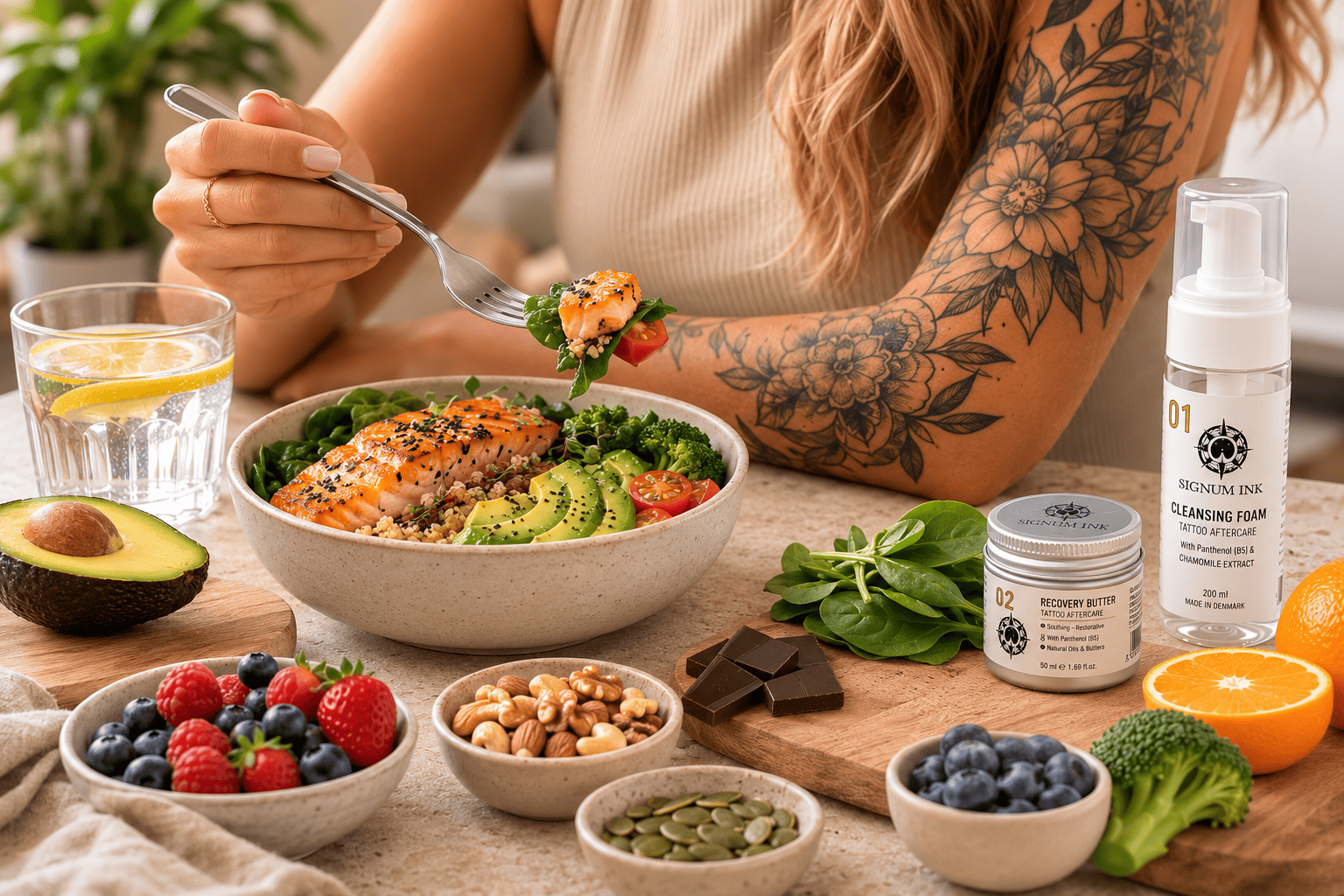
However, a balanced diet rich in protein, vitamins and minerals can help your body recover more efficiently.
In this guide, we’ll look at the nutrients that matter most, which foods are worth including and whether there are any foods you should avoid while your tattoo heals.
Why Nutrition Matters for Tattoo Healing
A tattoo creates thousands of tiny punctures in the skin.
As soon as the session ends, your immune system begins repairing the affected area.
During healing, your body must:
- Build new skin cells.
- Produce collagen.
- Restore the skin barrier.
- Control inflammation.
- Fight unwanted bacteria.
All of these processes rely on nutrients obtained through your daily diet.
Eating well won’t replace good tattoo aftercare—but it can help provide your body with the resources it needs to heal.
Prioritize Protein
Protein is one of the most important nutrients during wound healing.
It provides the building blocks needed to repair skin and produce new tissue.
Good sources include:
- Chicken
- Turkey
- Fish
- Eggs
- Greek yogurt
- Cottage cheese
- Beans
- Lentils
- Tofu
Aim to include a source of protein with each meal during the first weeks after getting your tattoo.
Vitamin C Supports Skin Repair
Vitamin C plays an important role in collagen production.
Collagen helps strengthen newly repaired skin and supports the normal healing process.
Foods naturally rich in vitamin C include:
- Oranges
- Kiwi
- Strawberries
- Bell peppers
- Broccoli
- Brussels sprouts
Eating a variety of fruits and vegetables makes it easier to meet your daily vitamin C needs.
Zinc Helps the Healing Process
Zinc is involved in many aspects of tissue repair and immune function.
Most people get enough zinc through a varied diet.
Foods containing zinc include:
- Beef
- Shellfish
- Pumpkin seeds
- Chickpeas
- Nuts
- Whole grains
Unless advised by a healthcare professional, supplements are usually unnecessary if your diet is already balanced.
Healthy Fats Support Skin Health
Healthy fats contribute to normal skin function and help maintain the skin barrier.
Good choices include:
- Salmon
- Mackerel
- Sardines
- Avocados
- Olive oil
- Walnuts
- Chia seeds
- Flaxseed
Including these foods regularly may support overall skin health during recovery.
Stay Hydrated
Water is often overlooked when people think about tattoo aftercare.
Hydration supports normal skin function throughout the healing process.
Try to:
- Drink water consistently throughout the day.
- Increase fluids during hot weather.
- Drink more after exercise.
Well-hydrated skin often feels more comfortable than skin that is dehydrated.
Can Certain Vitamins Speed Up Healing?
Many supplements claim to accelerate healing.
For most healthy adults, there is little evidence that taking large doses of vitamins speeds up tattoo recovery if nutritional needs are already being met.
Instead of focusing on individual supplements, aim for:
- Plenty of vegetables.
- Fruit every day.
- Lean protein.
- Whole grains.
- Healthy fats.
- Adequate hydration.
A varied diet is generally more beneficial than relying on supplements alone.
Food Supports Healing—It Doesn’t Replace Aftercare
Nutrition is only one piece of the puzzle.
Even the healthiest diet cannot compensate for poor tattoo aftercare.
The best results come from combining healthy eating with:
- Gentle washing.
- Appropriate moisturizing.
- Avoiding unnecessary irritation.
- Protecting the tattoo while it heals.
Think of good nutrition as supporting your body’s natural repair process—not replacing the basics.
Are There Foods You Should Avoid?
There’s no evidence that one specific food will ruin a healing tattoo.
However, some eating habits may make it harder for your body to recover at its best.
Instead of focusing on “forbidden” foods, it’s more helpful to think about moderation and maintaining a balanced diet while your skin heals.
Limit Alcohol During the Early Healing Period
If you’ve just had a tattoo, it may be sensible to avoid drinking alcohol for at least the first day or two, or follow the advice given by your tattoo artist.
Alcohol can:
- Contribute to dehydration.
- Affect sleep quality.
- Make it harder to maintain healthy habits during recovery.
Staying well hydrated and giving your body the opportunity to recover is generally the better choice during the first stage of healing.
Don’t Rely on Fast Food Alone
An occasional takeaway meal won’t ruin your tattoo.
However, a diet consisting mainly of highly processed foods may provide fewer nutrients that support tissue repair.
Whenever possible, try to build meals around:
- Lean protein
- Vegetables
- Fruit
- Whole grains
- Healthy fats
The overall pattern of your diet matters far more than a single meal.
Should You Take Supplements?
For most healthy adults, supplements aren’t necessary if they already eat a varied, balanced diet.
Certain vitamins and minerals—such as vitamin C and zinc—are important for normal wound healing, but taking more than your body needs is unlikely to speed up recovery.
If you have a diagnosed deficiency or a medical condition that affects nutrition, follow the advice of your healthcare professional.
Don’t Forget Sleep
Nutrition and sleep work together.
During sleep, your body performs many of the processes involved in tissue repair.
Aim for:
- Consistent sleep each night.
- Enough rest to feel recovered.
- A regular sleep schedule where possible.
Good sleep supports overall healing—not just your tattoo.
Common Myths About Food and Tattoo Healing
Myth 1: Eating Pineapple Makes Tattoos Heal Faster
There’s no strong scientific evidence that eating pineapple significantly speeds tattoo healing.
While pineapple contains vitamin C and bromelain, a healthy overall diet is far more important than any single food.
Myth 2: You Need Expensive Supplements
False.
Most people can meet their nutritional needs through ordinary foods.
Supplements should complement a balanced diet—not replace one.
Myth 3: Sugar Completely Stops Tattoo Healing
Not true.
Having dessert or a sweet snack occasionally won’t prevent your tattoo from healing.
The key is maintaining a balanced diet rather than worrying about individual foods.
Myth 4: Drinking More Water Alone Heals Tattoos Faster
Hydration is important for normal skin function, but water alone cannot accelerate healing.
Proper tattoo care, balanced nutrition and time all work together to support recovery.
Frequently Asked Questions
What is the best food to eat after getting a tattoo?
There isn’t one “best” food.
A balanced diet that includes protein, fruit, vegetables, healthy fats and whole grains provides the nutrients your body needs for normal healing.
Should I eat more protein after getting a tattoo?
Protein supports tissue repair, so including a good source of protein with each meal can be beneficial while your tattoo heals.
Can I drink coffee after getting a tattoo?
For most people, moderate coffee consumption is fine.
Just remember that coffee shouldn’t replace drinking enough water throughout the day.
Is fruit good for tattoo healing?
Yes.
Many fruits provide vitamin C, antioxidants and water, all of which support overall health and normal skin function.
Can food prevent a tattoo from becoming infected?
No.
Infection prevention depends primarily on good hygiene and proper aftercare.
A nutritious diet supports your immune system but cannot replace keeping your tattoo clean.
Conclusion
Your tattoo heals from the outside and the inside.
Washing, moisturizing and protecting the skin are essential, but your body also depends on good nutrition to rebuild healthy tissue.
You don’t need a special “tattoo diet.”
Instead, focus on eating balanced meals, drinking enough water, getting adequate sleep and giving your body the time it needs to recover.
Healthy habits support healthy healing.
Continue Learning
Want to understand exactly what happens beneath your skin after getting a tattoo?
→ Read: The Complete Science of Tattoo Healing: What Happens to Your Skin from Day 1 to Day 60
 English
  German
  Dutch
Dutch  Danish
  Swedish
  French
  Italian