Introduction
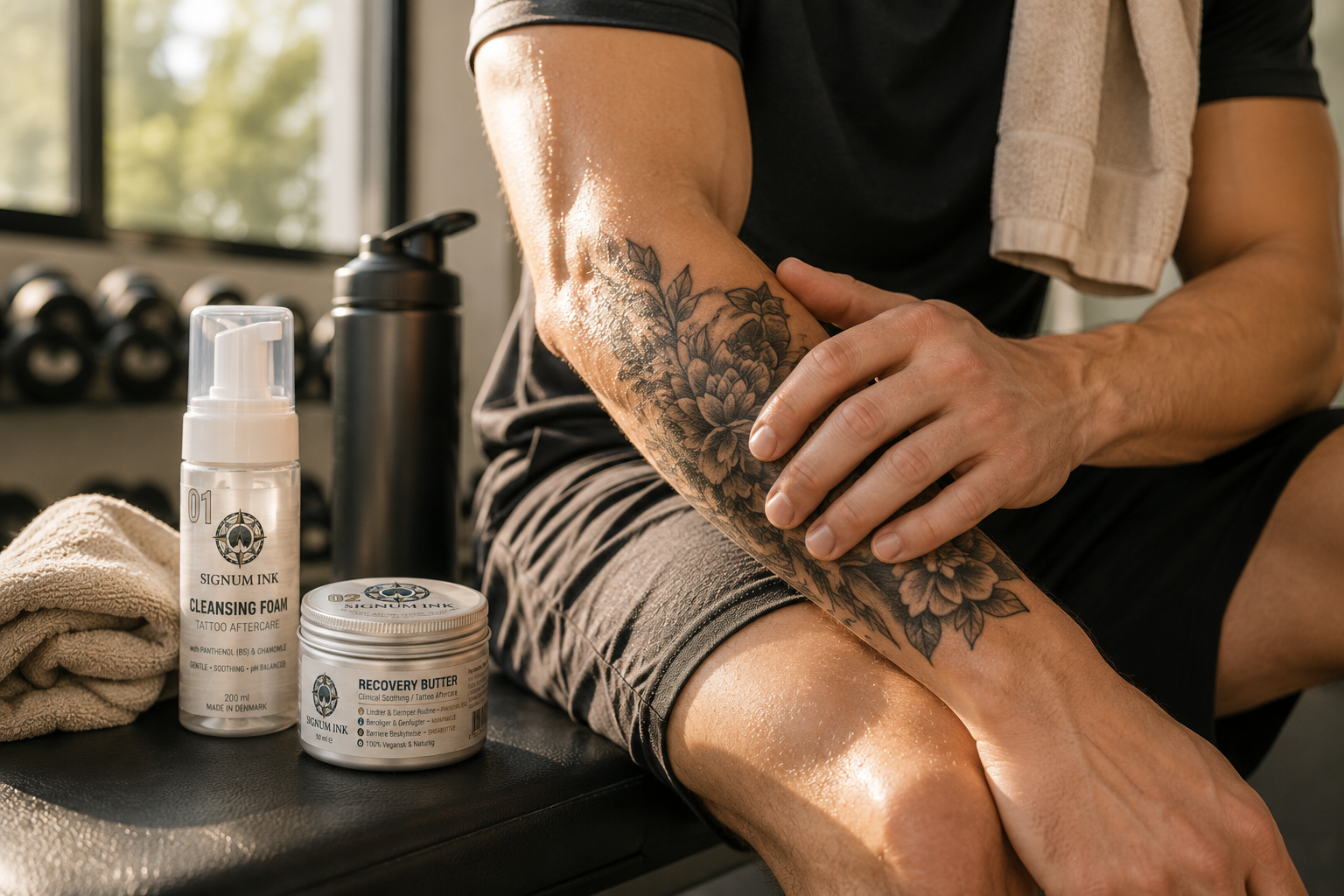
Getting a new tattoo doesn’t mean putting your entire life on hold—but it does require making a few temporary adjustments to your routine.
One of the most common questions people ask after leaving the tattoo studio is:
“When can I work out again?”
The answer depends on several factors, including the size and placement of your tattoo, the type of exercise you do, and how your skin is healing.
Exercise itself isn’t harmful to tattoos, but certain activities can place unnecessary stress on healing skin during the first days and weeks.
In this guide, we’ll explain how physical activity affects tattoo healing, which workouts are safest, what to avoid, and when it’s generally appropriate to return to your normal training routine.
Why Exercise Can Affect Tattoo Healing
A fresh tattoo is an open wound.
Your body immediately begins repairing the skin by reducing inflammation, rebuilding damaged tissue and restoring the protective skin barrier.
Intense exercise can interfere with this process in several ways.
Common factors include:
- Increased sweating
- Friction from clothing
- Stretching of the tattooed skin
- Pressure from gym equipment
- Exposure to bacteria on shared equipment
None of these automatically damage your tattoo, but they can make healing less comfortable and may increase irritation if you’re not careful.
Is Sweat Bad for a New Tattoo?
Sweat itself is not harmful.
Your body naturally sweats during physical activity to regulate temperature.
The issue is what happens when sweat remains trapped against healing skin.
Excess moisture combined with tight clothing can:
- Increase irritation
- Cause rubbing
- Make itching worse
- Encourage bacteria to multiply if the area isn’t cleaned afterwards
This doesn’t mean you must avoid sweating completely.
It simply means keeping your tattoo clean and dry after exercise is especially important during the healing period.
Does the Type of Workout Matter?
Yes.
Not all exercise affects a healing tattoo in the same way.
Some activities place very little stress on the skin, while others involve heavy stretching, repeated friction or close contact with shared equipment.
Generally speaking:
Lower impact activities
- Walking
- Gentle cycling
- Easy mobility exercises
These are often easier on healing skin.
Higher impact activities
- Heavy weightlifting
- CrossFit
- Martial arts
- Contact sports
- Long-distance running
- Swimming
These activities may increase irritation, friction or contamination during the first stage of healing.
Tattoo Placement Makes a Big Difference
Where your tattoo is located has a major influence on how comfortable exercise feels.
For example:
A small tattoo on your forearm may cause very little restriction.
A large tattoo across your ribs, shoulder or thigh is much more likely to stretch during movement.
Areas over joints—including elbows, knees and ankles—also move constantly during exercise.
The more movement the tattoo experiences, the greater the chance of irritation during the first days.
The First 48 Hours
The first two days are when your skin is at its most vulnerable.
During this period, it’s generally wise to avoid intense training altogether.
This allows your body to begin rebuilding the damaged skin without additional stress from:
- Heavy sweating
- Repeated stretching
- Tight clothing
- Contact with gym equipment
Giving your tattoo a short period of rest early on can make the remainder of the healing process more comfortable.
Can You Go to the Gym?
Many people return to the gym within the first week.
Whether that’s appropriate depends on your tattoo and the type of workout you plan to do.
If you choose to exercise:
- Wear clean, loose-fitting clothing.
- Avoid direct rubbing against the tattoo.
- Don’t allow shared gym equipment to press against the area.
- Wash the tattoo gently after your workout.
- Avoid touching the tattoo with unwashed hands.
Being cautious during the first week is often more important than avoiding exercise altogether.
Listen to Your Body
Your skin provides useful feedback during healing.
If an activity causes:
- Pain
- Excessive stretching
- Increased redness
- Bleeding
- Persistent irritation
it’s a sign that your tattoo may need more time before returning to that level of activity.
Healing is rarely a race.
Allowing your skin to recover properly helps preserve both comfort and the long-term appearance of your tattoo.
Running After Getting a Tattoo
Running is often less of a problem than people expect.
The biggest concerns are:
- Sweat
- Repetitive movement
- Tight sportswear
- Friction
A short, easy run may be comfortable for someone with a small forearm tattoo.
However, running with a fresh tattoo on the thighs, calves or feet may create repeated rubbing that delays comfort during healing.
If your tattoo becomes painful while running, it’s usually a sign to give your skin more time.
Weightlifting and Strength Training
Strength training places different demands on the body.
Heavy lifting increases blood flow, stretches muscles and often causes the skin to tighten.
Large tattoos over the shoulders, chest, back or arms may experience significant stretching during exercises such as:
- Bench press
- Pull-ups
- Shoulder press
- Deadlifts
- Squats
You don’t necessarily need to avoid strength training completely, but reducing intensity during the first week can help minimise unnecessary irritation.
Swimming Should Wait
Swimming is one activity that should be postponed until your tattoo has fully healed.
Whether it’s a:
- Swimming pool
- Lake
- Ocean
- Hot tub
all contain microorganisms that may increase the risk of irritation or infection while your skin barrier is still repairing itself.
Prolonged soaking also softens healing skin and may interfere with the natural healing process.
Wait until your tattoo is completely healed before returning to regular swimming.
Yoga and Stretching
Yoga may appear gentle, but many poses place significant tension on the skin.
Deep stretches can pull on healing tattoos, especially when they’re located on:
- The ribs
- The hips
- The shoulders
- The thighs
- The lower back
If a movement causes discomfort around your tattoo, modify the pose or skip it temporarily.
Listening to your body is more important than sticking rigidly to your usual routine.
Contact Sports
Sports involving physical contact deserve extra caution.
Examples include:
- Football
- Rugby
- Martial arts
- Wrestling
- Basketball
Repeated impacts, skin-to-skin contact and shared equipment increase the chances of irritation or accidental damage while your tattoo is still healing.
Most tattoo artists recommend waiting until the skin has fully recovered before returning to full-contact sports.
A General Timeline for Returning to Exercise
Everyone heals differently, but this general timeline can help guide your decisions.
First 48 hours
Avoid intense exercise whenever possible.
Focus on allowing your body to begin repairing the skin.
Days 3–7
Light activities such as walking or gentle cycling are often well tolerated if they don’t irritate the tattoo.
Continue avoiding swimming and activities that cause excessive friction.
Weeks 2–3
Many people can gradually return to more demanding workouts as long as their tattoo is healing normally.
Continue paying attention to rubbing, stretching and excessive discomfort.
After Full Healing
Once the skin has completely healed, you can safely return to your normal exercise routine without special restrictions.
Frequently Asked Questions
Can sweat ruin a tattoo?
No.
Sweat itself does not damage tattoo ink.
The main concern is prolonged moisture and friction against healing skin.
Can I go to the gym the day after getting tattooed?
It’s generally better to wait at least the first 24–48 hours before returning to intense training.
This gives your skin time to begin repairing itself.
Can I wear compression clothing?
Compression garments may increase friction and trap sweat against healing skin.
Loose, breathable clothing is usually the more comfortable choice during the early stages of healing.
Will exercise affect the final appearance of my tattoo?
Normal exercise does not affect healed tattoo ink.
However, excessive stretching, rubbing or picking during healing could increase irritation and potentially affect how comfortably the tattoo heals.
Can I shower after working out?
Yes.
In fact, gently washing your tattoo after exercise helps remove sweat and keeps the area clean.
Use lukewarm water and a mild, fragrance-free cleanser.
Conclusion
Exercise doesn’t have to stop completely after getting a tattoo.
The key is understanding how different activities affect healing skin.
During the first days, reducing friction, avoiding excessive sweating and giving your tattoo time to recover can make the healing process more comfortable.
As your skin repairs itself, you can gradually return to your normal routine while continuing to keep the tattoo clean and protected.
Patience during the first couple of weeks is a small investment that helps your tattoo look its best for years to come.
Continue Learning
Want to understand exactly how your skin heals after getting tattooed?
→ Read: The Complete Science of Tattoo Healing: What Happens to Your Skin from Day 1 to Day 60
 English
  German
  Dutch
Dutch  Danish
  Swedish
  French
  Italian