
Introduction
Months—or even years—after getting a tattoo, you notice something unusual.
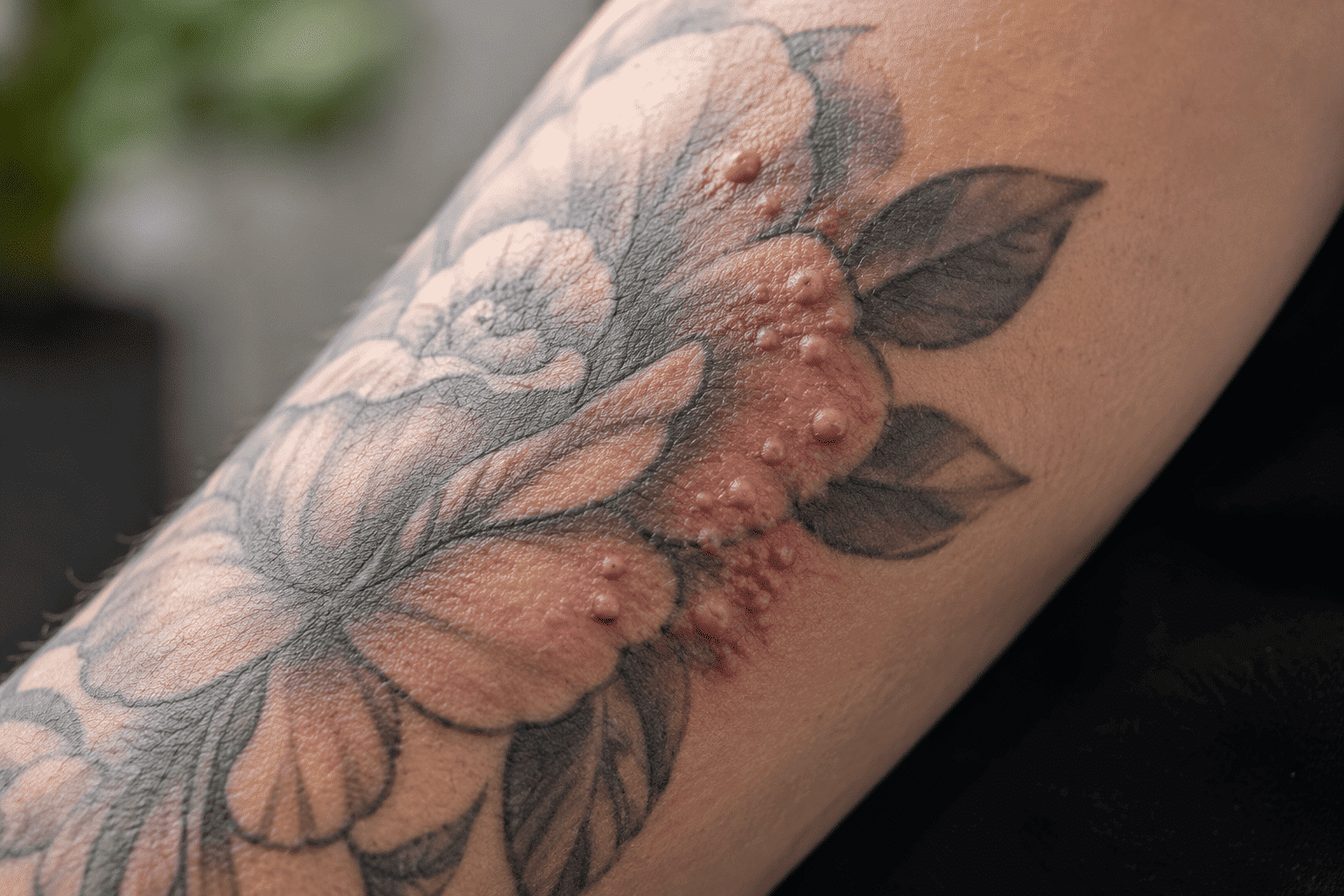
Small firm bumps begin appearing within parts of the tattoo.
The area may feel raised, itchy or slightly tender.
Because the tattoo healed perfectly long ago, many people assume the bumps must be an infection.
In many cases, however, they are not.
One possible explanation is a tattoo granuloma.
A granuloma is an immune response in which the body surrounds a substance it cannot easily remove—in this case, tattoo pigment.
Although tattoo granulomas are uncommon, understanding them helps you recognize when a tattoo needs medical evaluation rather than routine aftercare.

What Is a Tattoo Granuloma?
A tattoo granuloma is a small collection of immune cells that forms around tattoo pigment.
Instead of ignoring the pigment after healing, the immune system continues reacting to it.
This reaction creates:
- Small firm bumps.
- Raised areas.
- Localized swelling.
- Thickened skin.
Granulomas usually remain limited to the affected tattoo.
Why Do Tattoo Granulomas Develop?
Tattoo pigments are designed to remain inside the skin permanently.
In most people, the immune system accepts them without major problems.
Occasionally, however, immune cells continue trying to isolate certain pigment particles.
This ongoing immune response may eventually lead to granuloma formation.
Possible Risk Factors
Several factors may contribute, although the exact cause isn’t always clear.
These include:
Individual Immune Response
Every immune system behaves differently.
Some people are naturally more prone to inflammatory reactions.
Certain Tattoo Pigments
Granulomas have been reported with various tattoo pigments.
No single color guarantees a reaction, although some pigments have historically been associated with immune responses more often than others.
Delayed Immune Activation
Granulomas don’t necessarily appear during healing.
Many develop months or years after the tattoo was completed.
What Do Tattoo Granulomas Look Like?
Common features include:
- Small firm bumps.
- Rounded nodules.
- Raised areas within the tattoo.
- Mild redness.
- Localized itching.
The bumps often follow specific parts of the tattoo rather than spreading randomly.
Tattoo Granulomas vs. Infection
These conditions can sometimes appear similar.
However, tattoo granulomas usually develop slowly.
They often:
- Persist for weeks or months.
- Remain localized.
- Aren’t associated with pus.
- Don’t typically cause fever.
Tattoo infections usually develop much sooner and are more likely to involve worsening pain, discharge and increasing redness.
Tattoo Granulomas vs. Allergic Reactions
Granulomas and allergic reactions both involve the immune system, but they aren’t identical.
Allergic reactions often produce:
- Diffuse itching.
- Widespread redness.
- Rash.
- Swelling.
Granulomas are more likely to produce firm, localized nodules within the tattoo itself.
Sometimes both conditions may occur together, making medical assessment important.
Are Tattoo Granulomas Dangerous?
Usually not.
Most tattoo granulomas aren’t dangerous, but they shouldn’t be ignored.
Because other medical conditions can produce similar bumps, a healthcare professional should evaluate persistent changes that develop after a tattoo has healed.
Most Tattoo Bumps Aren’t Granulomas
Fortunately, granulomas are relatively uncommon.
Many small bumps that appear during healing are simply related to temporary irritation, ingrown hairs or normal healing changes.
Persistent nodules that develop long after healing deserve closer attention.
How Are Tattoo Granulomas Treated?
Treatment depends on:
- The size of the granuloma.
- The severity of symptoms.
- Whether the diagnosis has been confirmed.
- Your overall health.
Because granulomas are caused by an immune response rather than an infection, treatment differs from routine tattoo aftercare.
A healthcare professional or dermatologist will recommend the most appropriate approach.
Common Treatment Options
Depending on the individual case, treatment may include:
- Careful observation if symptoms are mild.
- Prescription anti-inflammatory medication.
- Corticosteroid creams or injections.
- Other medications that regulate the immune response.
- Partial or complete tattoo removal in selected cases.
The best treatment varies from person to person.
Can Tattoo Granulomas Go Away on Their Own?
Sometimes.
Small granulomas may remain stable for years without causing significant problems.
Others may gradually improve or become less noticeable.
Persistent, enlarging or symptomatic granulomas should always be assessed by a healthcare professional.
How Are Tattoo Granulomas Diagnosed?
Diagnosis usually begins with a physical examination.
Depending on the appearance and your medical history, a healthcare professional may recommend:
- A skin examination.
- Dermoscopic evaluation.
- A skin biopsy.
- Additional tests if another skin condition is suspected.
Because several conditions can resemble granulomas, an accurate diagnosis is important before treatment begins.
When Should You See a Healthcare Professional?
You should arrange a medical evaluation if you notice:
- Firm bumps that persist for weeks or months.
- New nodules developing years after tattooing.
- Increasing swelling.
- Ongoing itching.
- Pain that doesn’t improve.
- Skin breakdown.
- Unexplained changes affecting only one pigment color.
Although granulomas are usually benign, they should always be properly assessed.
Common Myths About Tattoo Granulomas
Myth 1: Every Tattoo Bump Is a Granuloma
False.
Most small bumps during tattoo healing are caused by temporary irritation, clogged pores or normal skin recovery.
Granulomas are much less common.
Myth 2: Granulomas Are Always Infections
False.
Granulomas result from an immune response—not from bacteria.
Treatment is therefore very different from treating an infection.
Myth 3: Tattoo Cream Can Remove Granulomas
False.
Moisturizers support healthy skin but cannot eliminate an immune-cell nodule beneath the skin.
Medical treatment may be necessary.
Myth 4: Granulomas Always Require Tattoo Removal
False.
Many granulomas can be managed without removing the tattoo.
Treatment depends on the severity of symptoms and the individual’s response.
Frequently Asked Questions
Can tattoo granulomas appear years later?
Yes.
Granulomas may develop months or even years after the tattoo has completely healed.
Are tattoo granulomas dangerous?
Most granulomas aren’t dangerous, but they should be evaluated because other skin conditions can look similar.
Can granulomas disappear without treatment?
Some remain stable or improve over time, while others require medical treatment.
Every case is different.
Are granulomas the same as an allergic reaction?
No.
Although both involve the immune system, granulomas are localized collections of immune cells, whereas allergic reactions usually produce more widespread inflammation.
Should I keep moisturizing a tattoo with granulomas?
Keeping the skin moisturized may improve comfort, but moisturizer won’t treat the granuloma itself.
Follow the advice of your healthcare professional regarding treatment.
Conclusion
Tattoo granulomas are an uncommon immune reaction that can appear long after a tattoo has healed.
Unlike infections, they usually develop gradually and present as firm, localized nodules within the tattoo.
Because several skin conditions can produce similar symptoms, persistent bumps should always be evaluated by a healthcare professional.
Early diagnosis helps ensure appropriate treatment while avoiding unnecessary concern.
 English
  German
  Dutch
Dutch  Danish
  Swedish
  French
  Italian