Introduction
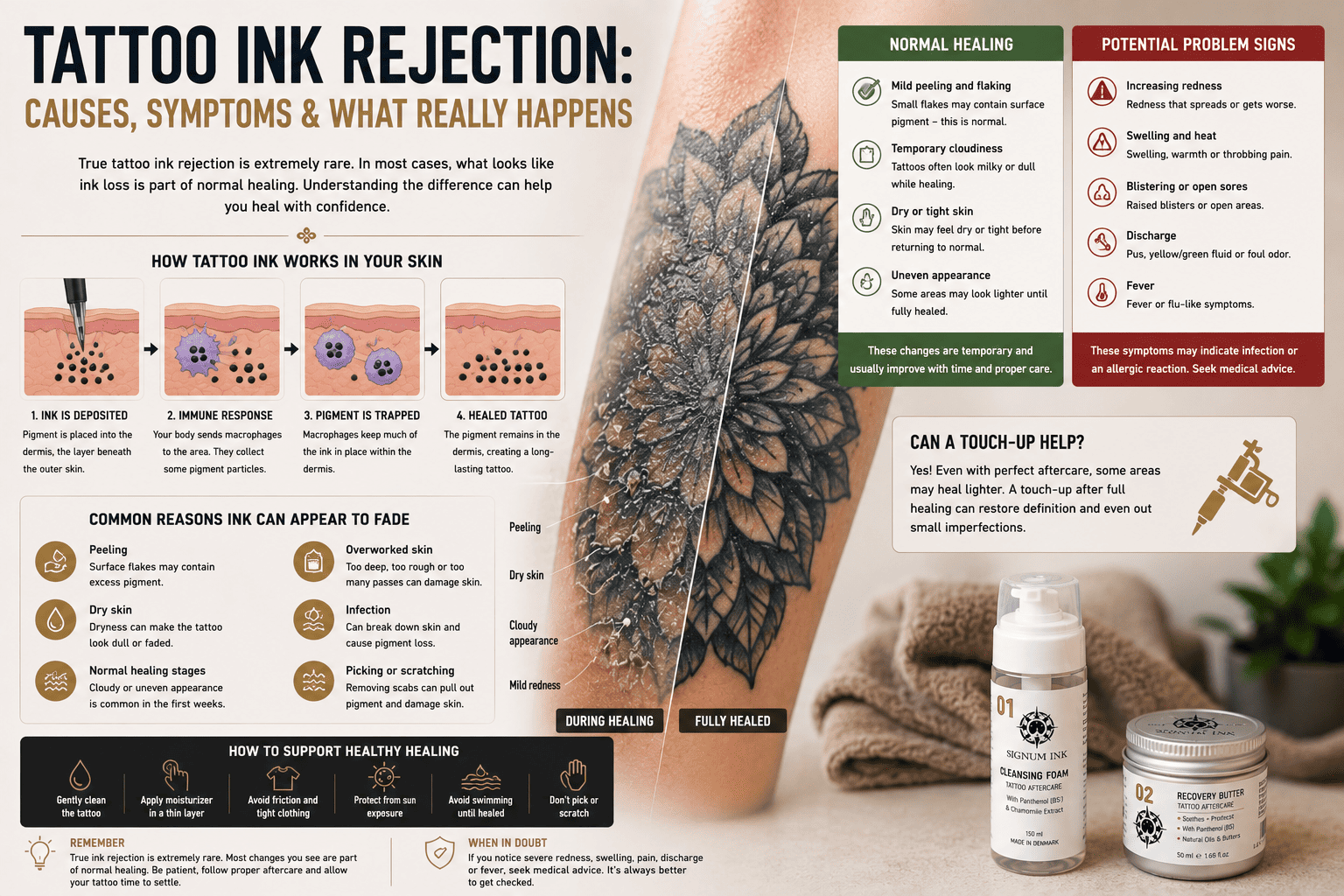
One of the most common concerns after getting a tattoo is the fear that your body is “rejecting” the ink.
Perhaps parts of the tattoo appear lighter than expected.
Maybe small flakes of skin contain traces of pigment.
Or perhaps the tattoo simply doesn’t look as vibrant as it did on the day you left the studio.
These changes often lead people to wonder whether their immune system is pushing the ink back out of the skin.
Fortunately, true tattoo ink rejection is extremely uncommon.
In most cases, what people describe as ink rejection is actually a normal part of the healing process.
This guide explains what tattoo ink rejection really means, why it happens, how to recognize the difference between normal healing and genuine complications, and when it’s appropriate to seek professional advice.
What Is Tattoo Ink Rejection?
The term “tattoo ink rejection” isn’t an official medical diagnosis.
Instead, it’s commonly used to describe situations where tattoo pigment appears to disappear or heal unevenly.
In reality, several different processes can create this impression.
These include:
- Normal peeling.
- Surface pigment loss.
- Uneven healing.
- Inflammation.
- Allergic reactions.
- Rare immune responses.
Understanding which process is occurring is the first step toward knowing whether there’s actually a problem.
How Does Tattoo Ink Stay in the Skin?
During tattooing, pigment is deposited into the dermis—the layer of skin beneath the epidermis.
Shortly after the procedure, your immune system responds to the tiny needle injuries.
Specialized immune cells called macrophages engulf many of the pigment particles.
Instead of removing all of the ink, these cells help trap much of the pigment within the dermis, which is one reason tattoos can remain visible for decades.
This is a normal and expected part of tattoo healing.
Why Does It Sometimes Look Like Ink Is Falling Out?
Several completely normal healing stages can make it appear as though ink is disappearing.
These include:
Peeling Skin
As damaged outer skin naturally sheds, tiny amounts of excess pigment may come away with the flakes.
This doesn’t usually represent the permanent tattoo pigment itself.
Milky Healing
Many tattoos enter a temporary cloudy or milky stage during healing.
At this point, the tattoo may appear dull or faded even though the pigment remains beneath the surface.
Dry Skin
Healing skin often becomes dry.
This can reduce the tattoo’s apparent sharpness until the skin barrier has recovered.
Swelling
Temporary inflammation may distort how the tattoo looks during the first days after tattooing.
When Can Ink Actually Be Lost?
Although complete ink rejection is rare, pigment can sometimes be lost for other reasons.
Possible causes include:
- Overworked skin.
- Infection.
- Picking scabs.
- Severe irritation.
- Certain inflammatory skin reactions.
In these situations, the issue isn’t usually that the body is rejecting the ink—it is that the healing process has been disrupted.
Is the Immune System Removing the Tattoo?
This is one of the biggest misconceptions.
Yes, the immune system interacts with tattoo pigment from the moment the tattoo is created.
However, it doesn’t simply “push the ink back out.”
Instead, the immune system helps stabilize the pigment within the skin.
Over many years, very small amounts of pigment may gradually be carried away by immune cells, contributing to the slow fading that occurs naturally with aging.
This process is completely different from the dramatic “ink rejection” many people imagine.
Most Uneven Healing Isn’t Ink Rejection
During the first few weeks, it’s completely normal for tattoos to look:
- Patchy.
- Dull.
- Cloudy.
- Dry.
- Slightly uneven.
For this reason, tattoo artists generally recommend waiting until healing is complete before judging the final appearance of the tattoo.
Patience often answers questions that seem worrying during the early healing stages.
Can Tattoo Ink Rejection Be Treated?
The right approach depends on the underlying cause.
Since true tattoo ink rejection is extremely rare, treatment usually focuses on addressing the condition that is actually affecting the tattoo.
For example:
- Normal healing simply requires time.
- Dry skin may benefit from appropriate moisturizing.
- An infection requires medical assessment.
- An allergic reaction may need professional treatment.
- Uneven healing may eventually be corrected with a touch-up if recommended by your tattoo artist.
Identifying the cause is more important than assuming the ink itself is being rejected.
Can a Tattoo Need a Touch-Up?
Yes.
Touch-ups are a normal part of tattooing.
Even tattoos that heal perfectly may develop small areas where pigment heals lighter than expected.
A touch-up may be recommended if:
- Small sections heal unevenly.
- Fine lines become lighter.
- Certain areas lose definition.
- Minor pigment gaps remain after complete healing.
Most tattoo artists recommend waiting until the tattoo has fully healed before considering a touch-up.
When Should You See a Healthcare Professional?
Although true ink rejection is uncommon, some symptoms should always be evaluated.
Seek medical advice if you notice:
- Persistent swelling.
- Increasing redness.
- Severe itching.
- Blistering.
- Open sores.
- Thick yellow or green discharge.
- Fever.
These symptoms may indicate an infection or an allergic reaction rather than pigment loss.
Can You Prevent Tattoo Ink Loss?
While you cannot completely control how every tattoo heals, good aftercare helps support healthy pigment retention.
Helpful habits include:
- Following your tattoo artist’s instructions.
- Washing the tattoo gently.
- Applying moisturizer in a thin layer.
- Avoiding scratching or picking.
- Protecting the tattoo from unnecessary friction.
- Staying out of swimming pools until healing is complete.
Healthy skin provides the best environment for stable tattoo pigment.
Common Myths About Tattoo Ink Rejection
Myth 1: My Body Is Pushing the Ink Out
False.
Most apparent ink loss is actually caused by normal peeling or temporary healing changes rather than the immune system forcing pigment out of the skin.
Myth 2: Every Flake Contains Permanent Tattoo Ink
No.
During healing, small amounts of excess surface pigment may appear in peeling skin.
This doesn’t usually represent the settled pigment stored within the dermis.
Myth 3: Moisturizer Makes Ink Fall Out
False.
Appropriate moisturizing supports healthy healing and does not remove tattoo pigment from the skin.
Myth 4: If My Tattoo Looks Patchy, It Has Failed
Not necessarily.
Many tattoos appear cloudy or uneven while healing before becoming sharper once the skin barrier has recovered.
Frequently Asked Questions
Can your body reject tattoo ink?
True tattoo ink rejection is considered very rare.
Most uneven healing or temporary pigment changes are part of the normal healing process or relate to another underlying issue.
Why does my tattoo look like it’s losing ink?
Peeling, dry skin, temporary cloudiness and mild inflammation commonly make tattoos appear lighter during healing.
Does peeling remove tattoo ink?
Normal peeling primarily removes damaged outer skin.
The permanent tattoo pigment remains much deeper within the dermis.
Will a touch-up fix missing ink?
In many cases, yes.
If small areas heal lighter than expected after complete healing, a touch-up may improve the appearance.
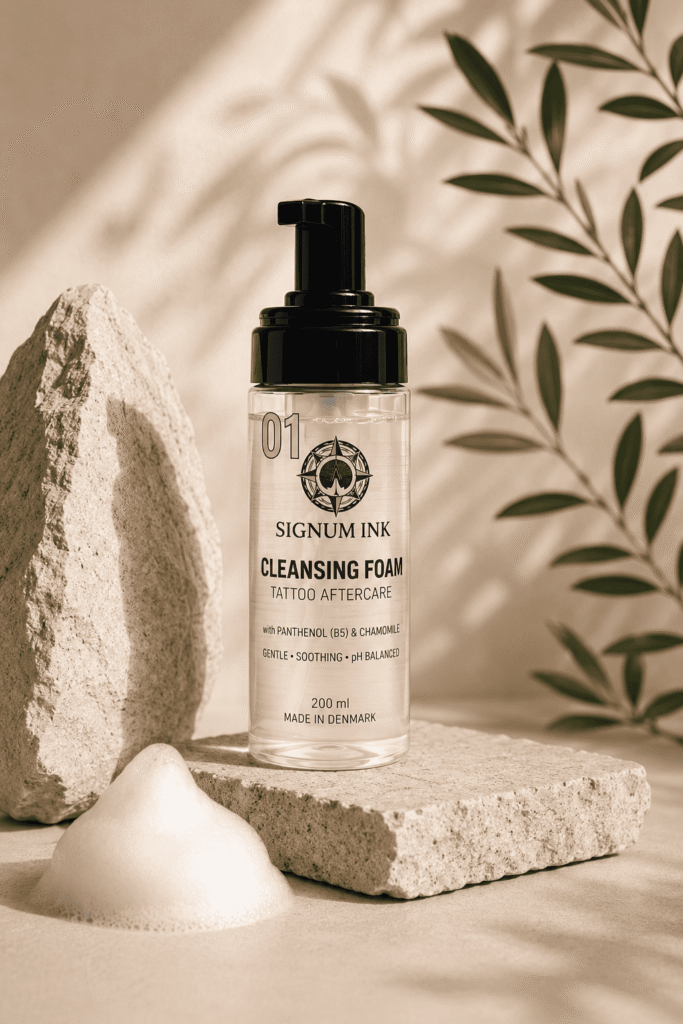
Can aftercare prevent ink rejection?
Good aftercare supports healthy healing and pigment retention, but it cannot completely prevent rare immune-related reactions.
Conclusion
The idea that the body routinely rejects tattoo ink is one of the most common misconceptions in tattoo aftercare.
In reality, most tattoos that appear patchy, cloudy or slightly faded are simply progressing through normal stages of healing.
Understanding how tattoo pigment interacts with your immune system helps separate myths from reality.
With proper aftercare, patience and realistic expectations, most tattoos heal beautifully and retain their appearance for many years.
Continue Learning
Wondering whether your tattoo is healing normally or whether something else is affecting the pigment?
→ Read: The Complete Guide to Common Tattoo Problems: Causes, Symptoms & Solutions
 English
  German
  Dutch
Dutch  Danish
  Swedish
  French
  Italian