
Introduction
You leave the tattoo studio expecting some redness and tenderness.
The next day, however, you notice something unexpected.
The skin around your tattoo has developed a blue, purple or yellow discoloration that looks very much like a bruise.
Has something gone wrong?
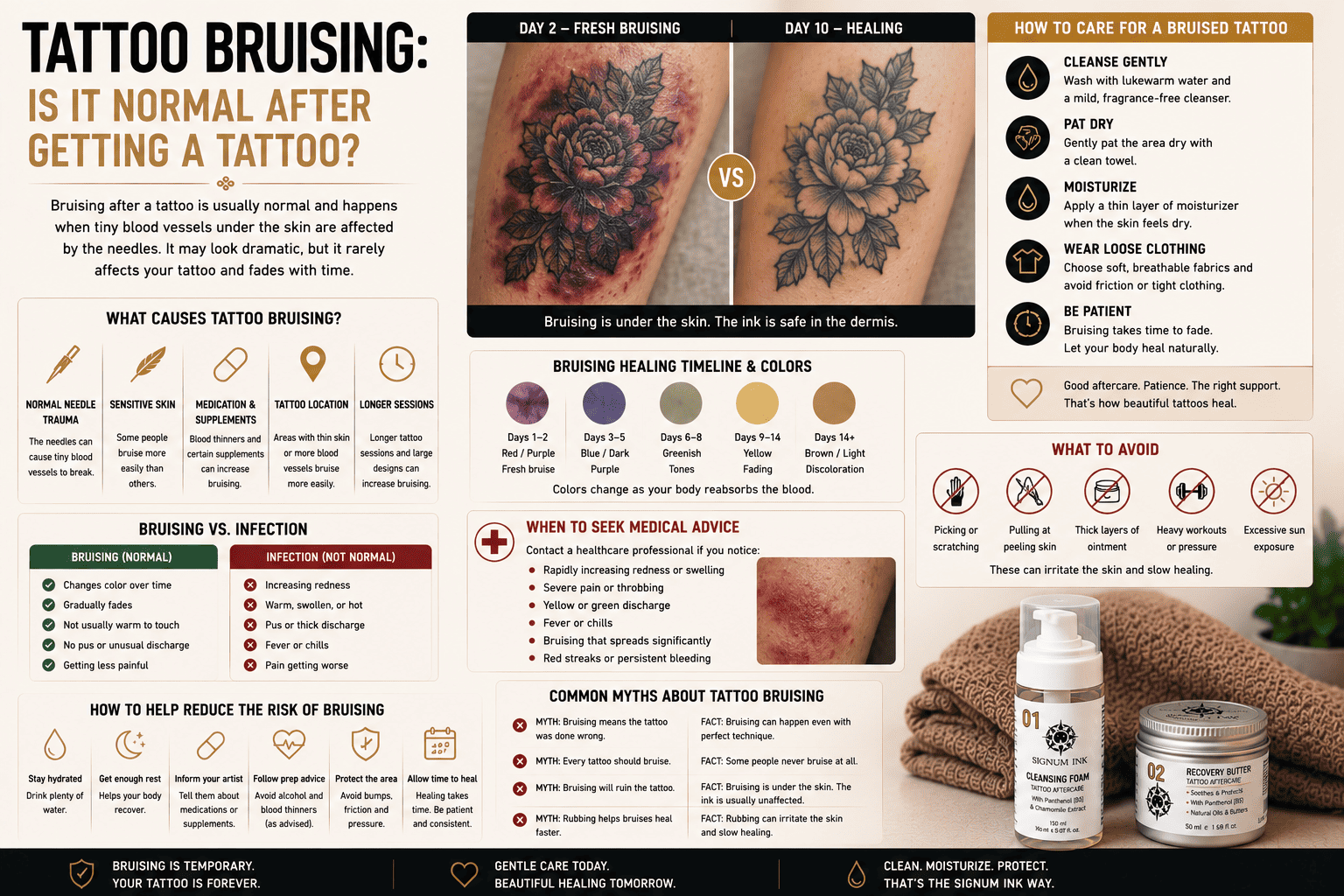
Fortunately, bruising after a tattoo is usually harmless.
Like any procedure that repeatedly punctures the skin, tattooing can occasionally damage tiny blood vessels beneath the surface, allowing a small amount of blood to collect in the surrounding tissue.
For most people, this bruising fades naturally over the following days or weeks.
In this guide, you’ll learn why tattoo bruising happens, how to tell the difference between normal bruising and something more serious, and how to support healthy healing.
Is Bruising After a Tattoo Normal?
Yes.
Mild bruising is a normal response for some people after getting a tattoo.
Not everyone experiences it, but when it does occur, it’s usually temporary.
Bruising is more likely after:
- Longer tattoo sessions.
- Large tattoos.
- Areas with thinner skin.
- Tattooing over prominent blood vessels.
- Individual differences in how easily someone bruises.
The bruise itself doesn’t usually affect the tattoo pigment.
What Causes Tattoo Bruising?
Bruising develops when tiny blood vessels called capillaries are damaged.
A small amount of blood leaks into the surrounding tissue before the body gradually breaks it down.
During tattooing, this may happen because of:
Normal Needle Trauma
Thousands of tiny needle punctures naturally stress the skin.
Occasionally, a few capillaries are affected.
Sensitive Skin
Some people bruise much more easily than others.
Age, genetics and skin characteristics all influence this.
Certain Medications
Blood-thinning medications and some supplements may increase the likelihood of bruising.
Always inform your tattoo artist if you’re taking medication that affects bleeding.
Tattoo Placement
Bruising is often more noticeable on areas with thinner skin or more visible blood vessels, including:
- Inner arms.
- Ribs.
- Ankles.
- Feet.
- Hands.
What Does Tattoo Bruising Look Like?
Tattoo bruises often resemble bruises from other minor skin injuries.
Common colors include:
- Blue.
- Purple.
- Green.
- Yellow.
- Brown as healing progresses.
The discoloration often spreads slightly beyond the tattoo itself before gradually fading.
How Long Does Tattoo Bruising Last?
Every person’s body heals differently.
For many people, bruising gradually improves within one to two weeks.
Larger bruises may take longer to disappear completely.
Like ordinary bruises elsewhere on the body, tattoo bruises typically change color as they heal.
Bruising vs. Infection
Many people confuse bruising with infection.
Fortunately, the two usually look quite different.
Bruising typically:
- Changes color over time.
- Becomes less noticeable.
- Isn’t associated with pus.
- Doesn’t steadily become more painful.
An infection is more likely to involve:
- Increasing redness.
- Significant swelling.
- Thick yellow or green discharge.
- Fever.
- Pain that continues worsening.
Looking at how symptoms change over time is often the best clue.
Should You Be Concerned?
Usually not.
A simple bruise is one of the body’s normal responses to minor blood vessel injury.
As long as the tattoo continues healing normally and the bruise gradually fades, there’s usually little cause for concern.
Patience is often all that’s required.
Most Bruises Heal Without Affecting the Tattoo
The reassuring news is that bruising itself rarely damages tattoo pigment.
The blood sits beneath the skin while the tattoo pigment remains in the dermis.
Once the bruise resolves, the tattoo usually looks exactly as expected.
How Should You Care for a Bruised Tattoo?
In most cases, tattoo bruising doesn’t require special treatment.
The best approach is to continue following your normal tattoo aftercare routine while allowing your body time to heal.
Continue to:
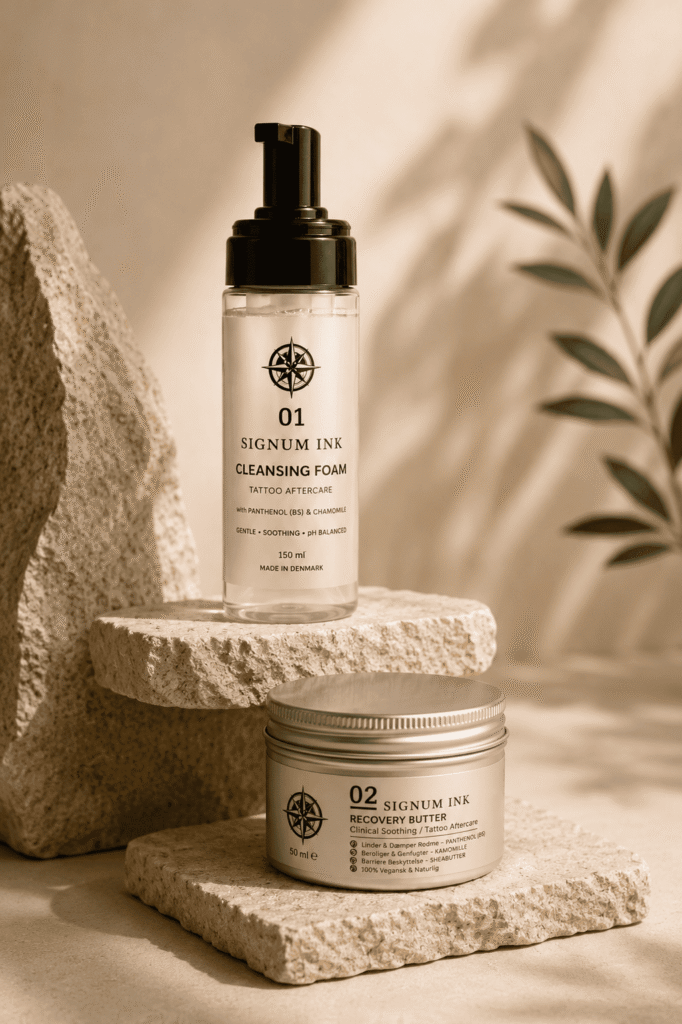
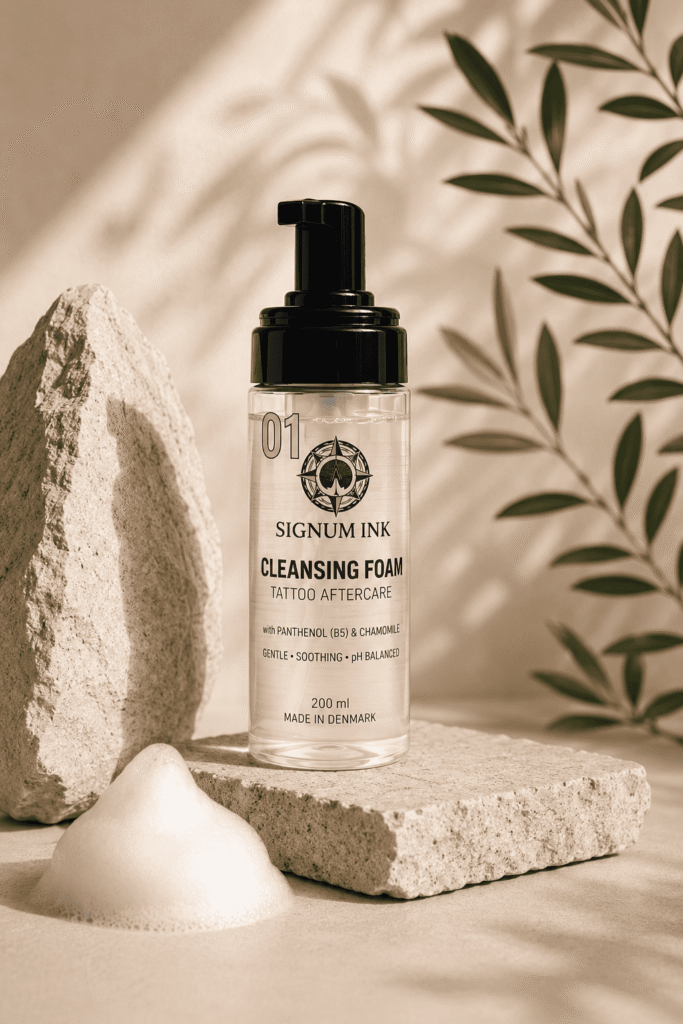
- Wash the tattoo gently with lukewarm water and a mild cleanser.
- Pat the area dry with a clean towel.
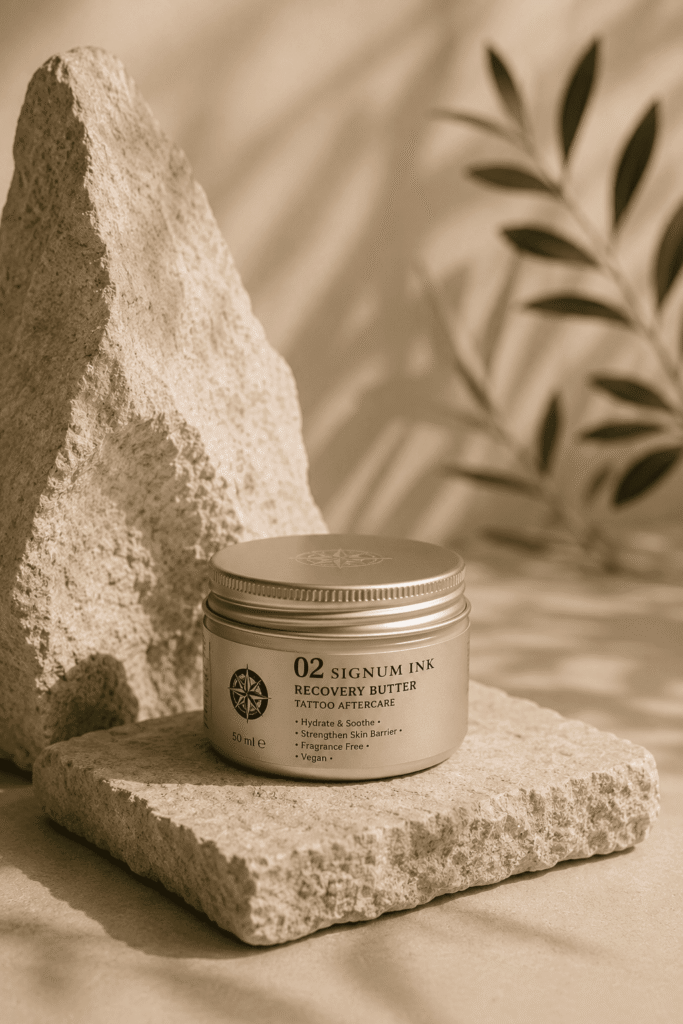
- Apply a thin layer of moisturizer when needed.
- Wear loose clothing that won’t rub against the tattoo.
- Avoid unnecessary pressure on the bruised area.
Your body will gradually reabsorb the blood beneath the skin as part of the natural healing process.
What Should You Avoid?
If your tattoo is bruised, try not to irritate the area further.
Avoid:
- Scratching the skin.
- Picking at scabs.
- Massaging a fresh tattoo.
- Wearing tight clothing over the bruise.
- Participating in activities that repeatedly bump or press against the tattoo.
Giving the area time to recover is usually the most effective treatment.
Can Bruising Affect the Tattoo?
Usually not.
Bruising occurs beneath the skin, while the tattoo pigment remains within the dermis.
As the bruise heals, the tattoo itself is generally unaffected.
Temporary discoloration from the bruise may make the tattoo appear different for a short time, but this usually resolves completely.
Can You Prevent Tattoo Bruising?
Not entirely.
However, you may reduce the likelihood by:
- Staying well hydrated before your appointment.
- Following your tattoo artist’s preparation advice.
- Informing your artist about any blood-thinning medications or supplements.
- Avoiding unnecessary trauma to the area after tattooing.
Some people simply bruise more easily than others, regardless of the precautions they take.
When Should You See a Healthcare Professional?
Although bruising is usually harmless, medical assessment is appropriate if you experience:
- Rapidly increasing swelling.
- Severe pain.
- Bruising that continues spreading significantly after the first few days.
- Thick yellow or green discharge.
- Fever.
- Persistent bleeding.
- Red streaks extending away from the tattoo.
These symptoms may indicate a complication that requires professional evaluation.
Common Myths About Tattoo Bruising
Myth 1: Bruising Means the Tattoo Was Done Incorrectly
False.
Bruising can occur even after excellent tattoo work.
Individual skin characteristics play a major role.
Myth 2: Every Tattoo Should Bruise
False.
Many people experience little or no bruising at all.
Both experiences can be completely normal.
Myth 3: Bruising Damages the Tattoo Ink
False.
Bruising affects blood beneath the skin—not the settled tattoo pigment.
Myth 4: Bruises Heal Faster If You Rub Them
No.
Fresh tattooed skin should not be massaged or aggressively rubbed.
Allow the body to heal naturally.
Frequently Asked Questions
Is bruising after a tattoo normal?
Yes.
Some people develop mild bruising after tattooing, especially following larger sessions or tattoos in sensitive areas.
How long does tattoo bruising last?
Many bruises improve within one to two weeks, although larger bruises may take longer to disappear completely.
Can bruising ruin my tattoo?
No.
Bruising itself rarely affects the final appearance of a tattoo.
Should I ice a bruised tattoo?
If your tattoo artist or healthcare professional recommends it, a cool compress wrapped in a clean cloth may help reduce discomfort during the first day. Avoid placing ice directly on the tattooed skin or applying prolonged cold.
When should I worry about bruising?
Seek medical advice if bruising is accompanied by severe pain, fever, spreading redness, persistent bleeding or signs of infection.
Conclusion
Bruising after a tattoo can look dramatic, but it’s often a normal response to minor injury of tiny blood vessels beneath the skin.
In most cases, the discoloration gradually fades without affecting the tattoo itself.
By following good aftercare, protecting the area from unnecessary irritation and giving your body time to heal, you support a smooth recovery.
If bruising is severe, continues worsening or is accompanied by signs of infection, it’s important to seek professional medical advice.
Continue Learning
Not sure whether your tattoo is bruised, swollen or showing signs of another healing issue?
→ Read: The Complete Guide to Common Tattoo Problems: Causes, Symptoms & Solutions
 English
  German
  Dutch
Dutch  Danish
  Swedish
  French
  Italian