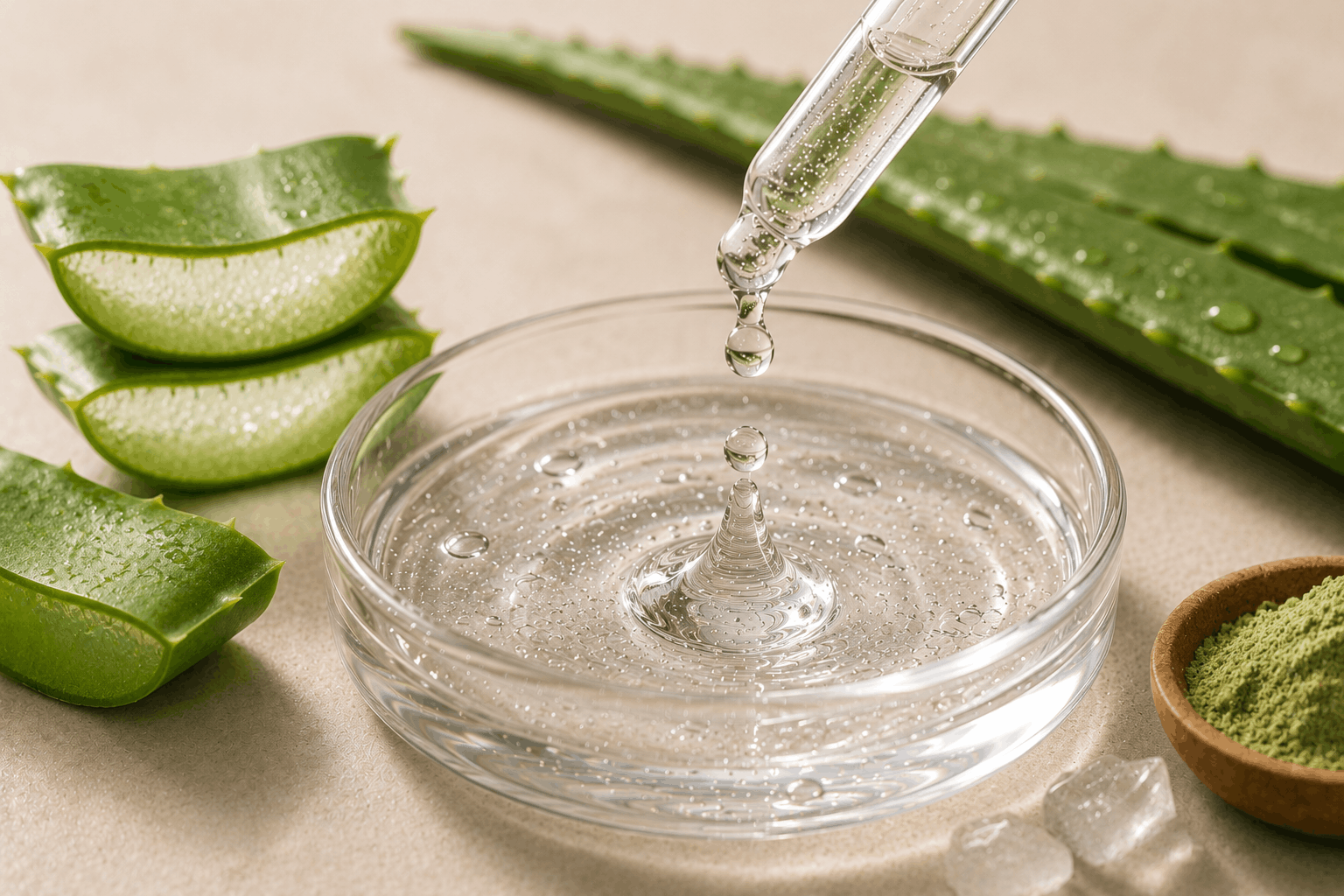
For centuries, Aloe Vera has been recognised as one of nature’s most widely used skincare ingredients. From ancient civilizations to modern dermatological formulations, it has earned a reputation for helping skin feel hydrated, refreshed, and comfortable.
Today, Aloe Vera is found in everything from facial moisturizers and body lotions to after-sun products and advanced tattoo aftercare formulations.
But what makes this remarkable plant so popular?
Freshly tattooed skin undergoes a natural healing process that temporarily affects the skin’s protective barrier. During this period, maintaining hydration and supporting overall skin comfort are essential parts of an effective aftercare routine.
While ingredients such as Glycerin, Panthenol, and Beta-Glucan are known for their scientifically documented roles in hydration and barrier support, Aloe Vera offers complementary benefits that make it a valuable addition to well-balanced skincare formulations.
Rather than acting as a stand-alone solution, Aloe Vera works best when combined with other carefully selected ingredients that support healthy-looking skin throughout the tattoo healing journey.
Formulator’s Perspective
Although Aloe Vera is one of the world’s best-known botanical skincare ingredients, experienced formulators rarely rely on it alone. Its greatest strength lies in how it complements scientifically established ingredients such as Glycerin, Panthenol, Beta-Glucan, Ceramides, and Allantoin to create balanced, high-performance skincare.
Quick Facts
Ingredient Type
Botanical Skin-Conditioning Ingredient
Primary Benefits
Hydration Support • Skin Comfort • Lightweight Moisturisation
Best For
Fresh Tattoos • Sensitive Skin • Dry Skin • Daily Skincare
Found In
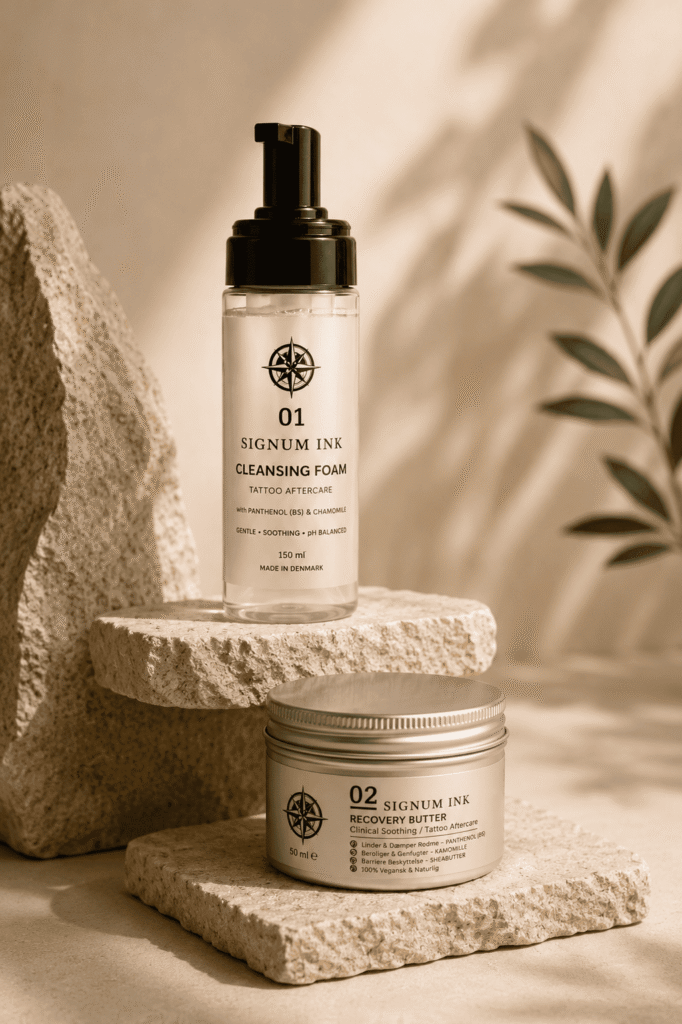
Recovery Creams • Tattoo Foam Soap • Moisturisers • After-Sun Products • Facial Skincare
Suitable For
All Skin Types
Typical Cosmetic Concentration
0.1–10% (depending on extract type and formulation)
Pairs Well With
Panthenol • Glycerin • Beta-Glucan • Allantoin • Ceramides
Scientific Support
★★★★☆
Did You Know?
The Aloe Vera plant is made up of more than 99% water, yet it naturally contains hundreds of compounds, including polysaccharides, amino acids, vitamins, minerals, and antioxidants that contribute to its popularity in skincare.
What Is Aloe Vera?
Aloe Vera is a succulent plant belonging to the Aloe genus, with Aloe barbadensis Miller being the species most commonly used in cosmetic formulations.
The clear gel found inside the plant’s thick leaves has been used in skincare traditions around the world for thousands of years.
Today, cosmetic-grade Aloe Vera is carefully processed to preserve its beneficial components while ensuring product stability and safety.
Depending on the formulation, manufacturers may use:
- Fresh Aloe Vera gel
- Aloe Vera juice
- Concentrated Aloe Vera extract
- Aloe Vera powder
Because these ingredients differ significantly in concentration and processing, two products labelled “with Aloe Vera” may contain very different amounts of active plant material.
This is one reason why the overall formulation is often more important than the ingredient list alone.
How Does Aloe Vera Work?
Unlike traditional moisturizers that rely primarily on oils or waxes, Aloe Vera provides lightweight hydration through its naturally water-rich composition.
Its gel contains naturally occurring polysaccharides that help retain moisture on the skin’s surface while contributing to a pleasant skin feel.
Because Aloe Vera absorbs quickly, it leaves very little residue, making it popular in products designed for daily use.
Fresh tattoos often feel:
- Tight
- Dry
- Warm
- Sensitive
A lightweight ingredient such as Aloe Vera can contribute to a refreshing skincare experience without leaving the skin feeling heavy.
This elegant skin feel explains why Aloe Vera remains one of the most frequently used botanical ingredients in modern skincare.
Why Fresh Tattoos Benefit from Aloe Vera
Freshly tattooed skin benefits from products that help maintain a balanced level of hydration while respecting the skin’s natural recovery process.
Aloe Vera contributes to this goal by providing lightweight moisture and helping improve overall skin comfort.
Its botanical origin also makes it a popular choice among consumers looking for plant-based skincare ingredients.
However, it is important to understand that Aloe Vera performs best as part of a complete formulation.
Professional tattoo aftercare products typically combine Aloe Vera with scientifically established ingredients such as:
- Glycerin
- Panthenol
- Beta-Glucan
- Allantoin
- Ceramides
Together, these ingredients create a more comprehensive approach to hydration and skin barrier support than any individual ingredient could provide on its own.
Why Aloe Vera Remains One of the World’s Most Popular Skincare Ingredients
Despite the introduction of countless new cosmetic ingredients, Aloe Vera has never lost its popularity.
Its success is built on several qualities that continue to appeal to both consumers and formulators.
Lightweight Hydration
Unlike richer emollients, Aloe Vera delivers moisture without leaving a heavy or greasy finish.
Excellent Skin Feel
Products containing Aloe Vera are often described as refreshing, light, and comfortable on the skin.
Botanical Appeal
Many people actively seek skincare products containing plant-derived ingredients.
Aloe Vera has become one of the best-known botanical ingredients in the world.
Works Well Alongside Modern Actives
Although Aloe Vera has a long history, it fits perfectly into modern formulations.
It combines exceptionally well with:
- Panthenol
- Glycerin
- Beta-Glucan
- Allantoin
- Ceramides
- Vitamin E
Rather than replacing these ingredients, Aloe Vera complements them by contributing hydration and an elegant skin feel.
Why Professional Formulators Still Choose Aloe Vera
Modern skincare is increasingly based on combining ingredients that work together rather than relying on a single “hero ingredient.”
Aloe Vera remains an important part of this philosophy.
Its ability to provide lightweight hydration, pleasant skin feel, and excellent compatibility with other skincare ingredients has secured its place in premium formulations for decades.
For tattoo aftercare, Aloe Vera contributes to creating products that feel refreshing, balanced, and comfortable throughout the healing process.
Rather than making unrealistic claims, professional formulators value Aloe Vera because it consistently supports well-designed skincare formulations with gentle, dependable performance.
Aloe Vera in Recovery Cream: Lightweight Hydration for Healing Skin
The days following a new tattoo place unique demands on the skin.
As the skin begins repairing itself, it temporarily becomes more vulnerable to moisture loss while rebuilding its protective barrier. During this period, skincare products should aim to support hydration without overwhelming the skin.
This is one reason why Aloe Vera continues to be included in modern recovery creams.
Unlike richer botanical oils or heavier occlusive ingredients, Aloe Vera provides lightweight hydration while contributing to a refreshing skin feel.
Its water-rich composition allows it to blend naturally into modern skincare formulations that are designed to absorb quickly without leaving a greasy residue.
When combined with ingredients such as Panthenol, Glycerin, Beta-Glucan, and Ceramides, Aloe Vera contributes to a balanced formulation that supports overall skin comfort throughout the tattoo healing process.
Rather than acting as the primary active ingredient, Aloe Vera functions as part of a carefully designed skincare system where multiple ingredients complement one another.
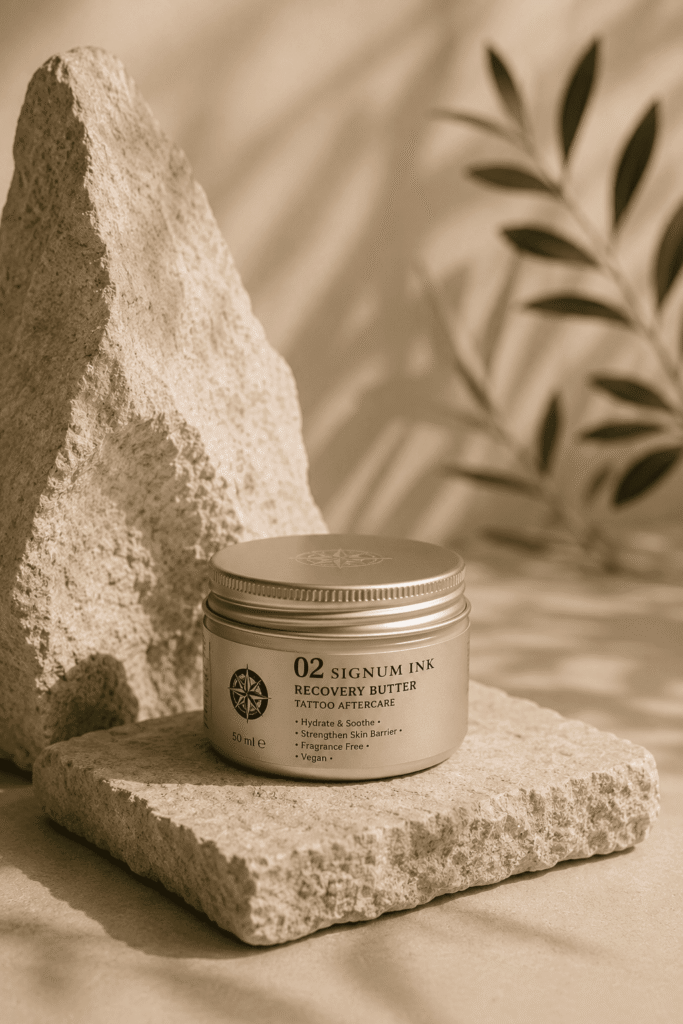
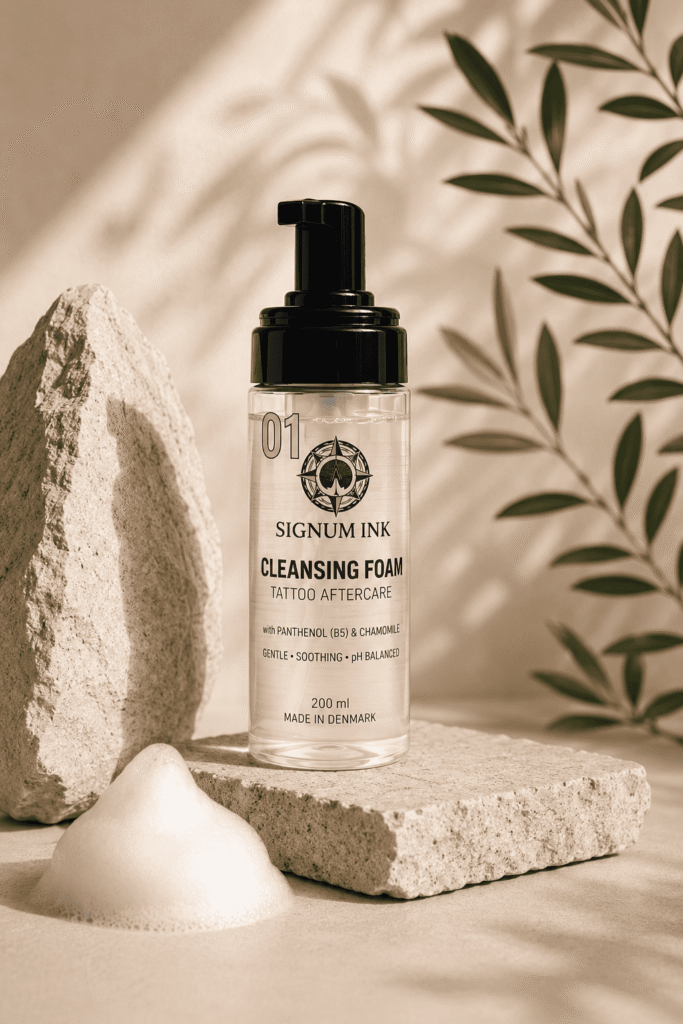
Aloe Vera in Tattoo Foam Soap
Cleansing is one of the first and most important steps in tattoo aftercare.
Fresh tattoos should be washed gently to remove plasma, excess ink, sweat, and everyday impurities while respecting the skin’s natural protective barrier.
This is where Aloe Vera offers additional value.
Although a cleanser remains on the skin for only a short period, Aloe Vera contributes to a pleasant and refreshing cleansing experience.
Its lightweight nature helps create foam cleansers that feel gentle on the skin while working alongside hydrating ingredients that help reduce the feeling of dryness after washing.
Modern tattoo cleansers focus on maintaining skin comfort rather than simply removing impurities.
Aloe Vera supports this philosophy by complementing moisturizing ingredients that help the skin feel balanced after cleansing.
What Does the Research Say?
Few botanical skincare ingredients have been studied as extensively as Aloe Vera.
Scientific research suggests that Aloe Vera contains naturally occurring polysaccharides, amino acids, vitamins, minerals, enzymes, and antioxidants that contribute to its popularity in cosmetic formulations.
Studies investigating topical Aloe Vera suggest that it may:
- Support skin hydration.
- Improve overall skin comfort.
- Help maintain the skin’s natural barrier.
- Contribute to smoother-feeling skin.
- Complement moisturizing skincare formulations.
Researchers generally agree that the effectiveness of Aloe Vera depends on several important factors, including the quality of the extract, the concentration used, and the overall formulation.
For this reason, professional formulators typically view Aloe Vera as a valuable supporting ingredient rather than a stand-alone solution.
Within tattoo aftercare, these characteristics make Aloe Vera particularly useful when combined with scientifically established ingredients that support hydration and barrier function.
Research Snapshot
| Research Area | Evidence |
|---|---|
| Skin Hydration | ★★★★☆ |
| Skin Comfort | ★★★★★ |
| Sensitive Skin | ★★★★☆ |
| Barrier Support | ★★★☆☆ |
| Botanical Skin Care | ★★★★★ |
| Tattoo Aftercare | ★★★☆☆* |
*Note: Direct clinical studies evaluating Aloe Vera specifically in tattoo aftercare remain limited. Most available evidence relates to hydration, skin comfort, and general skincare applications rather than tattoo healing itself.
Aloe Vera Compared with Other Popular Skincare Ingredients
Every skincare ingredient offers unique strengths.
Professional formulations combine ingredients that complement one another instead of relying on a single active ingredient.
Aloe Vera vs. Panthenol
Both ingredients are popular choices for sensitive skin.
Panthenol is supported by extensive research for hydration and skin barrier support.
Aloe Vera contributes lightweight hydration and a refreshing skin feel.
Together they create a balanced skincare experience.
Aloe Vera vs. Allantoin
Allantoin focuses primarily on skin conditioning and maintaining soft, comfortable skin.
Aloe Vera provides lightweight botanical hydration.
Many formulations combine both ingredients because they complement one another naturally.
Aloe Vera vs. Beta-Glucan
Beta-Glucan is increasingly recognised for supporting the skin barrier and long-lasting hydration.
Aloe Vera contributes a lighter, refreshing layer of hydration while enhancing the overall sensory experience of the formulation.
Rather than replacing one another, these ingredients work exceptionally well together.
Aloe Vera vs. Glycerin
Although both ingredients support hydration, they work differently.
Glycerin functions primarily as a humectant that attracts moisture into the outer layers of the skin.
Aloe Vera provides water-rich botanical hydration while contributing a cooling, lightweight skin feel.
Professional formulations frequently combine both ingredients to achieve immediate comfort together with longer-lasting moisture support.
Why Professional Skincare Brands Continue to Use Aloe Vera
The skincare industry continues to introduce new botanical extracts every year.
Despite this, Aloe Vera remains one of the most widely used plant-derived ingredients in the world.
Professional formulators continue choosing Aloe Vera because it offers:
- Lightweight hydration.
- Excellent formulation compatibility.
- Pleasant sensory characteristics.
- Strong consumer recognition.
- Good compatibility with modern active ingredients.
Perhaps most importantly, Aloe Vera integrates naturally into sophisticated skincare formulations without competing with more technically focused ingredients.
Instead, it enhances the overall user experience while supporting balanced hydration and skin comfort.
For tattoo aftercare, this combination makes Aloe Vera a valuable supporting ingredient within well-designed recovery creams and gentle tattoo cleansers.
Frequently Asked Questions About Aloe Vera
What is Aloe Vera?
Aloe Vera is a succulent plant whose clear inner leaf gel has been used in skincare for thousands of years. Today, cosmetic-grade Aloe Vera is carefully processed and incorporated into a wide range of skincare products because of its lightweight hydrating and skin-conditioning properties.
Why is Aloe Vera used in tattoo aftercare?
Fresh tattoos benefit from products that help maintain hydration while keeping the skin feeling comfortable.
Aloe Vera is commonly included in tattoo aftercare because it contributes lightweight hydration and works well alongside other ingredients that support the skin barrier.
Is Aloe Vera suitable for sensitive skin?
Generally, yes.
Aloe Vera is widely used in products developed for sensitive skin because it is typically well tolerated.
However, as with all botanical ingredients, individual sensitivities are possible. Anyone with known plant allergies should patch-test new skincare products before regular use.
Does Aloe Vera moisturize the skin?
Yes, but in a different way than oils or rich creams.
Aloe Vera is primarily water-based and helps provide lightweight hydration while contributing to a refreshing skin feel.
It works particularly well when combined with humectants such as Glycerin.
Can Aloe Vera replace a moisturizer?
Not entirely.
Although Aloe Vera contributes hydration, it performs best as part of a complete skincare formulation that also contains humectants, emollients, and barrier-supporting ingredients.
Is Aloe Vera enough for tattoo aftercare?
Professional tattoo aftercare products rarely rely on a single ingredient.
Instead, Aloe Vera is combined with ingredients such as Panthenol, Beta-Glucan, Allantoin, and Ceramides to create balanced formulations that support different aspects of skin health.
Is fresh Aloe Vera gel better than cosmetic Aloe Vera?
Not necessarily.
Fresh Aloe Vera gel may contain naturally occurring compounds, but professionally manufactured cosmetic ingredients offer greater consistency, stability, and safety.
The effectiveness of a skincare product depends on the entire formulation—not simply whether the Aloe Vera comes directly from a plant.
Can Aloe Vera be used every day?
Yes.
Because of its lightweight nature and excellent compatibility with most skin types, Aloe Vera is commonly used in products designed for everyday skincare.
Why is Aloe Vera often combined with Glycerin?
These ingredients complement each other beautifully.
Glycerin attracts and retains moisture within the skin, while Aloe Vera provides lightweight hydration and improves the sensory feel of the formulation.
Together they create products that feel refreshing while helping maintain moisture balance.
Why do formulators continue using Aloe Vera?
Despite the availability of hundreds of botanical extracts, Aloe Vera remains one of the world’s most trusted skincare ingredients because it combines:
- Excellent consumer recognition.
- Pleasant skin feel.
- Lightweight hydration.
- Compatibility with modern active ingredients.
- Long history of cosmetic use.
Common Myths About Aloe Vera
Myth 1: Aloe Vera is a miracle ingredient.
Reality:
Although Aloe Vera has many valuable properties, no single skincare ingredient can do everything.
Its greatest strength is how well it complements other scientifically supported ingredients within a balanced formulation.
Myth 2: Fresh Aloe Vera from a plant is always better.
Reality:
Professionally formulated cosmetic Aloe Vera is standardized for quality and stability.
Fresh plant gel varies considerably depending on growing conditions, storage, and processing.
Myth 3: Aloe Vera replaces moisturizers.
Reality:
While Aloe Vera contributes hydration, professional skincare products combine it with humectants, emollients, and barrier-supporting ingredients for more complete skin support.
Myth 4: All Aloe Vera products are the same.
Reality:
The quality of an Aloe Vera product depends on many factors, including:
- The species used.
- Processing method.
- Concentration.
- Preservation.
- Overall formulation.
Two products labelled “with Aloe Vera” may perform very differently.
Ingredient Performance Snapshot
| Category | Rating |
|---|---|
| Lightweight Hydration | ⭐⭐⭐⭐☆ |
| Skin Comfort | ⭐⭐⭐⭐⭐ |
| Sensitive Skin | ⭐⭐⭐⭐☆ |
| Barrier Support | ⭐⭐⭐☆☆ |
| Daily Use | ⭐⭐⭐⭐⭐ |
| Botanical Appeal | ⭐⭐⭐⭐⭐ |
| Scientific Evidence | ⭐⭐⭐⭐☆ |
Formulator’s Perspective
Experienced skincare formulators rarely rely on Aloe Vera as a stand-alone ingredient.
Instead, Aloe Vera is used to enhance the overall sensory experience of a formulation while supporting lightweight hydration. Its greatest strength lies in how naturally it complements scientifically established ingredients such as Glycerin, Panthenol, Beta-Glucan, Allantoin, and Ceramides.
This formulation-first approach is what separates high-performance skincare from products built around marketing claims.
Expert Tip
Choosing tattoo aftercare based on one “hero ingredient” can be misleading.
The best formulations combine ingredients with different functions—humectants to attract moisture, emollients to soften the skin, barrier-supporting ingredients to reinforce the skin’s natural defenses, and skin-conditioning ingredients to improve overall comfort.
Aloe Vera plays an important role in this system, but it performs best as part of a thoughtfully balanced formula.
Final Thoughts
Few botanical ingredients have earned the worldwide recognition of Aloe Vera.
Its history stretches back thousands of years, yet it continues to hold a respected place in modern skincare because of its lightweight hydration, pleasant skin feel, and compatibility with advanced formulations.
For tattoo aftercare, Aloe Vera offers more than tradition.
It contributes to products designed to keep healing skin feeling fresh, hydrated, and comfortable while working alongside ingredients that support the skin barrier and moisture balance.
Rather than relying on myths or exaggerated claims, modern tattoo aftercare is built on carefully selected ingredients that complement one another.
Within this approach, Aloe Vera remains one of the most versatile botanical ingredients available—trusted not because it promises everything, but because it consistently enhances well-designed skincare formulations.
Continue Exploring Tattoo Aftercare Science
Expand your knowledge with more ingredient guides from the Signum Ink Journal:
- Glycerin – Nature’s Moisture Magnet
- Panthenol (Vitamin B5) – Supporting the Skin Barrier
- Beta-Glucan – Advanced Barrier Support
- Allantoin – Gentle Care for Sensitive Skin
- Ceramides – Strengthening the Skin Barrier
- Centella Asiatica – Botanical Recovery Support
- Why Skin Hydration Matters During Tattoo Healing
- How to Build the Perfect Tattoo Aftercare Routine
 English
  German
  Dutch
Dutch  Danish
  Swedish
  French
  Italian