Introduction
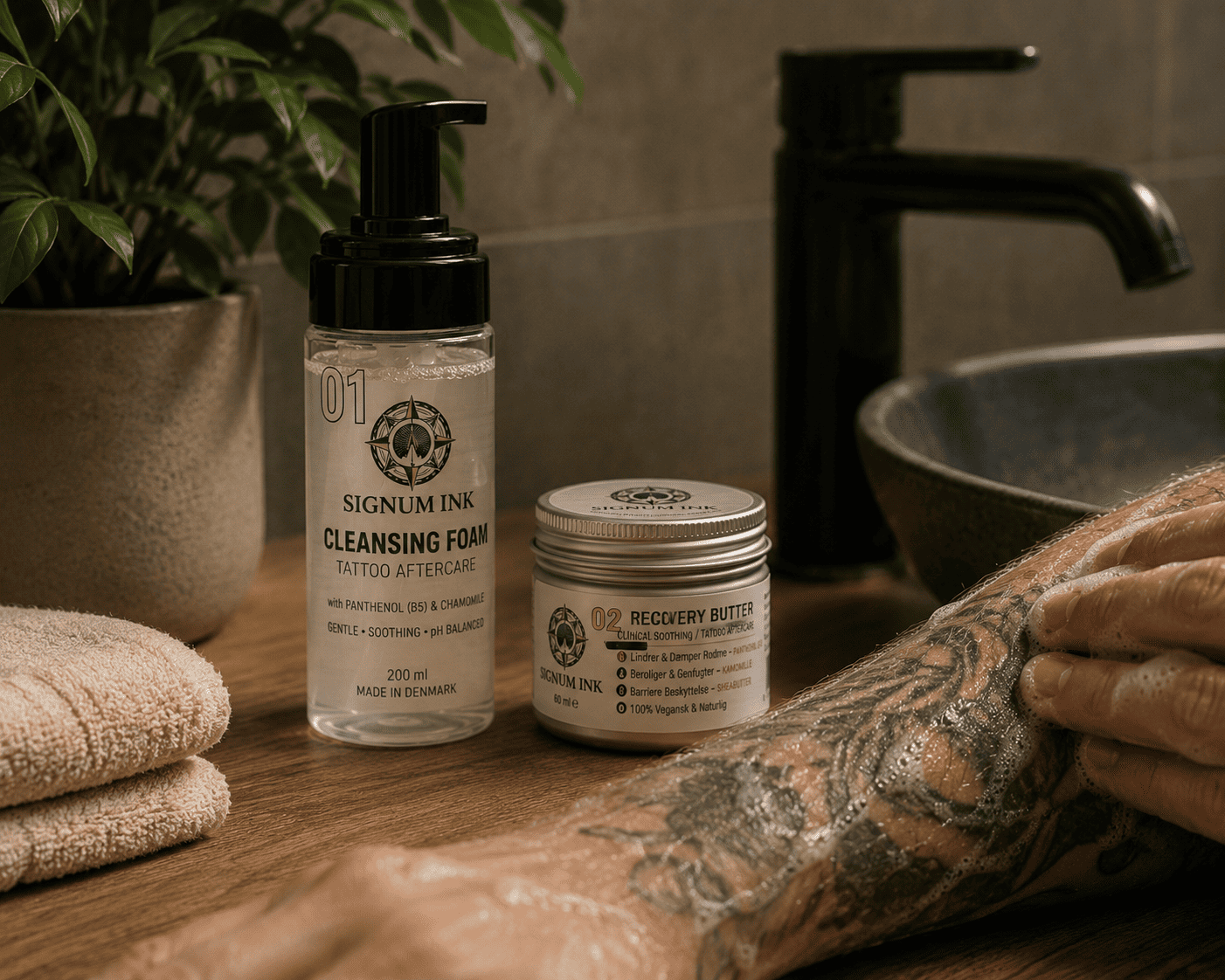
Choosing the right soap for your new tattoo may seem like a small decision, but it plays an important role in your aftercare routine.
A fresh tattoo is healing skin.
During this time, your goal isn’t to make the tattoo “extra clean”—it’s to gently remove sweat, excess ink, plasma and everyday bacteria without disrupting the skin’s natural recovery.
Many people assume any soap will work.
Others believe antibacterial soap is always the safest option.
The truth is that the best tattoo cleanser is usually one that cleans effectively while remaining as gentle as possible on healing skin.
In this guide, you’ll learn which types of cleansers are suitable, which ingredients to avoid and how to choose a product that supports healthy tattoo healing.
Why Soap Matters During Tattoo Healing
A healing tattoo is temporarily more vulnerable than normal skin.
Every time you wash it, you’re trying to achieve two goals:
- Remove impurities from the skin.
- Avoid unnecessary irritation.
The right cleanser helps maintain this balance.
An overly harsh product may leave the skin feeling:
- Dry.
- Tight.
- Sensitive.
- Irritated.
A gentle cleanser removes dirt while helping preserve the skin’s natural protective barrier.
What Makes a Good Tattoo Soap?
The best cleansers for tattoo aftercare generally share several characteristics.
Look for products that are:
- Mild.
- Gentle on sensitive skin.
- Easy to rinse away.
- Designed for frequent use.
- Non-abrasive.
A cleanser shouldn’t leave heavy residue on the tattoo.
Instead, it should rinse away cleanly while leaving the skin feeling comfortable.
Fragrance-Free Is Often the Best Choice
Many skincare professionals recommend fragrance-free cleansers during tattoo healing.
Fragrances aren’t necessarily harmful for everyone, but they may increase the likelihood of irritation in sensitive skin.
Because a fresh tattoo is already healing, reducing unnecessary exposure to potential irritants is often beneficial.
Should You Use Antibacterial Soap?
This is one of the most common questions.
In many situations, a mild cleanser is sufficient for routine tattoo aftercare.
Very strong antibacterial products aren’t automatically better.
In fact, some may leave healing skin feeling excessively dry if used too frequently.
Good washing technique is often more important than using an aggressive cleanser.
Ingredients to Look For
Some gentle cleansers include ingredients that help support comfortable skin during healing.
Examples include:
- Glycerin.
- Panthenol (Vitamin B5).
- Chamomile extract.
- Mild plant-derived cleansing agents.
These ingredients are commonly used in products formulated for sensitive skin.
Ingredients You May Want to Avoid
During healing, many people choose to avoid cleansers containing:
- Strong perfumes.
- Harsh exfoliating particles.
- High concentrations of alcohol.
- Strong degreasers.
- Ingredients that leave the skin feeling stripped.
The goal is to cleanse the tattoo—not overwhelm it.
Foam, Gel or Bar Soap?
Several formats can work.
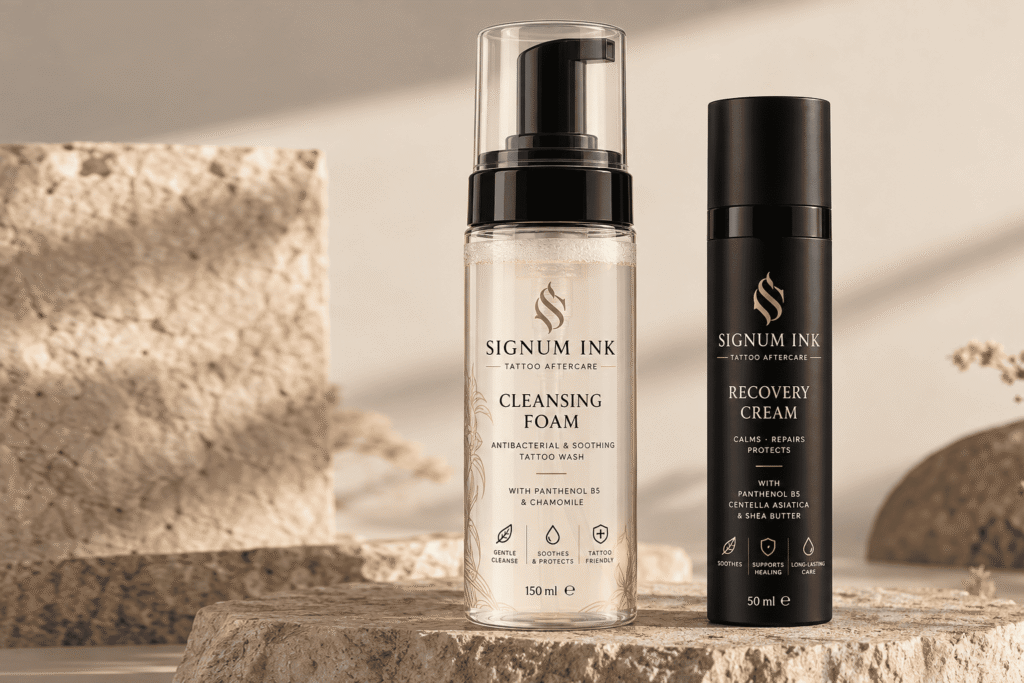
Foaming cleansers are often popular because they:
- Spread easily.
- Require minimal rubbing.
- Rinse away quickly.
- Help encourage gentle application.
The specific format is usually less important than how mild the cleanser is.
A Gentle Cleanser Supports—It Doesn’t Accelerate—Healing
No cleanser can make a tattoo heal dramatically faster.
Healing follows the body’s own biological timeline.
The purpose of washing is simply to provide a clean environment that supports healthy skin recovery.
How to Wash a Tattoo With Soap
Using the right cleanser is only part of the equation.
How you wash your tattoo is just as important.
Follow these simple steps:
- Wash your hands thoroughly.
- Wet the tattoo with lukewarm water.
- Dispense a small amount of cleanser into your hands.
- Gently massage the cleanser over the tattoo using only your fingertips.
- Rinse away all residue with lukewarm water.
- Pat the tattoo dry with a clean towel or disposable paper towel.
- Allow the skin to air dry for a minute before applying moisturizer if needed.
Avoid rubbing or scrubbing the tattoo during any stage of healing.
How Often Should You Use Soap?
For most people, washing the tattoo 2–3 times daily during the first week provides an appropriate balance.
You may also wish to wash the tattoo after:
- Heavy sweating.
- Exercise.
- Dirty working conditions.
- Accidental contamination.
More washing isn’t necessarily better.
The goal is to keep the tattoo clean without over-cleansing the skin.

Can You Use Body Wash?
Sometimes—but not all body washes are ideal.
Many conventional body washes contain:
- Strong fragrances.
- Heavy perfumes.
- Harsh detergents.
- Exfoliating ingredients.
These products may be perfectly suitable for healthy skin but are not always the best choice for a healing tattoo.
A cleanser specifically formulated for sensitive skin is often the safer option during the healing period.
Should You Use Bar Soap?
Bar soap can work if it’s mild and hygienically stored.
However, liquid or foaming cleansers are often preferred because they:
- Are easier to dispense hygienically.
- Minimize unnecessary handling.
- Spread evenly across the tattoo.
- Rinse away easily.
Ultimately, the gentleness of the cleanser matters more than its format.
Common Soap Mistakes
Many tattoo aftercare problems aren’t caused by the tattoo itself—but by the products used on it.
Common mistakes include:
- Using heavily scented soaps.
- Scrubbing with excessive pressure.
- Washing with very hot water.
- Using exfoliating cleansers.
- Leaving soap residue on the tattoo.
- Drying the tattoo by rubbing instead of patting.
A gentle routine is almost always the better choice.
Does Expensive Soap Heal Tattoos Faster?
No.
Price doesn’t determine how well a tattoo heals.
The skin heals according to its own biological process.
A suitable cleanser simply helps keep the tattoo clean while minimizing unnecessary irritation.
Consistency matters far more than buying the most expensive product available.
Frequently Asked Questions
Can I use regular hand soap?
Only if it’s mild and suitable for sensitive skin.
Many regular hand soaps contain fragrances or ingredients that may be too harsh for healing tattoos.
Is antibacterial soap necessary?
Not usually.
For routine tattoo aftercare, a gentle cleanser is often sufficient.
Follow the advice of your tattoo artist if they recommend a specific product.
Should my tattoo sting when I wash it?
Mild sensitivity during the first few days can be normal.
However, intense burning or worsening pain deserves attention and may indicate irritation or another problem.

Can I use baby soap?
Some fragrance-free baby cleansers may be suitable because they are designed for delicate skin.
Always check the ingredient list and choose a product that is mild and easy to rinse away.
Can I use my facial cleanser?
If it’s a gentle, fragrance-free cleanser formulated for sensitive skin, it may be suitable.
The important factor is how gentle the product is—not whether it’s marketed for the face or body.
Conclusion
The best soap for tattoo aftercare isn’t the strongest cleanser—it’s the one that effectively removes dirt, sweat and excess residue while respecting your skin’s natural healing process.
For most people, a mild, fragrance-free cleanser used 2–3 times a day provides everything needed to keep a tattoo clean and comfortable during healing.
Combined with gentle washing, proper moisturizing and a little patience, the right cleanser helps create the ideal environment for healthy tattoo recovery.
 English
 German
 Dutch
 Danish
 Swedish
 French
 Italian