Modern skincare is built around more than simply adding moisture to the skin.
Today, formulators increasingly focus on helping the skin maintain its own natural balance. One ingredient that quietly plays an important role in this approach is Betaine.
Although it receives far less attention than ingredients such as Ceramides, Niacinamide, or Panthenol, Betaine has become a trusted component of many premium skincare formulations.
Its strength lies in its ability to help skin cells maintain a healthy water balance.
This makes Betaine an example of an osmolyte—a naturally occurring molecule that helps cells regulate water movement and remain hydrated during periods of environmental stress.
For freshly tattooed skin, where the barrier is temporarily compromised and moisture loss increases, this function is especially valuable.
Rather than acting alone, Betaine complements humectants, barrier-supporting lipids, and skin-conditioning ingredients to create a more resilient and comfortable healing environment.
Quick Facts
Ingredient Type
Natural Osmolyte
Primary Benefits
Hydration Support • Moisture Balance • Skin Comfort
Best For
Fresh Tattoos • Sensitive Skin • Dry Skin • Daily Moisturising
Found In
Recovery Creams • Gentle Cleansers • Moisturisers • Barrier Creams • Tattoo Aftercare
Suitable For
All Skin Types
Typical Cosmetic Concentration
1–5%
Pairs Well With
Glycerin • Panthenol • Ceramides • Beta-Glucan • Niacinamide • Allantoin
Scientific Support
★★★★★ Excellent
Did You Know?
Betaine is naturally found in sugar beets, which is where it gets its name. It is also present in many living organisms, where it helps cells maintain their water balance under environmental stress.
What Is Betaine?
Betaine, also known as Trimethylglycine (TMG), is a naturally occurring compound found in plants, animals, and the human body.
In cosmetic skincare, Betaine is primarily valued for its role as an osmolyte.
An osmolyte helps cells regulate their internal water balance without disrupting normal cellular function.
This differs from a humectant.
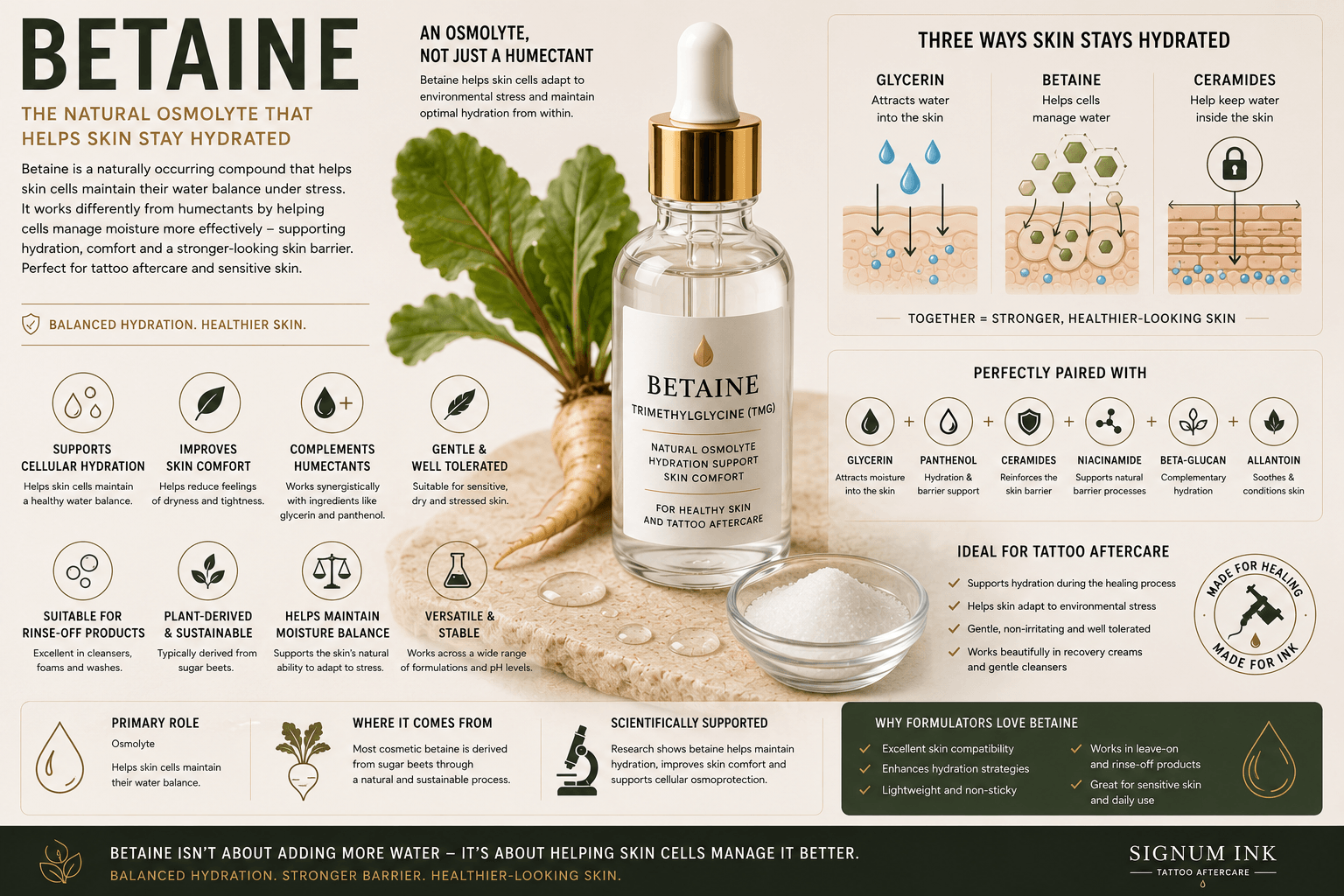
While Glycerin attracts water into the skin, Betaine helps skin cells manage and retain that water more effectively.
Because of this complementary mechanism, the two ingredients are frequently used together in premium moisturizers and recovery creams.
Modern cosmetic Betaine is usually derived from sustainably sourced sugar beets, making it both highly pure and suitable for a wide range of skincare formulations.
How Does Betaine Work?
Healthy skin depends on maintaining a stable balance of water inside and between skin cells.
Environmental stress, cleansing, low humidity, and temporary barrier disruption can all disturb this balance.
Betaine helps support the skin by acting as an osmoprotective molecule.
Rather than drawing water into the skin directly, it helps skin cells adapt to changes in their surrounding environment.
Research suggests that topical Betaine may help:
- Maintain cellular water balance.
- Improve skin hydration.
- Reduce the feeling of dryness.
- Support overall skin comfort.
- Complement other moisturizing ingredients.
This unique mechanism explains why Betaine has become increasingly popular in formulations designed for sensitive and stressed skin.
Why Fresh Tattoos Benefit from Betaine
Healing skin experiences increased moisture loss while rebuilding its protective barrier.
Maintaining hydration during this period is important for overall skin comfort.
Betaine contributes by helping skin cells maintain their internal water balance while complementing ingredients responsible for hydration and barrier support.
Professional tattoo aftercare formulations often combine Betaine with:
- Glycerin — to attract moisture into the skin.
- Panthenol — to support hydration and barrier function.
- Ceramides — to reinforce the lipid barrier.
- Niacinamide — to support natural barrier processes.
- Beta-Glucan — to complement hydration and skin comfort.
- Allantoin — to condition sensitive skin.
Each ingredient contributes a different function, creating a balanced formulation designed to support healthy-looking skin during tattoo healing.
Why Betaine Has Become a Favourite in Modern Skincare
One reason professional formulators appreciate Betaine is that it improves hydration without making products feel heavy or sticky.
Unlike some traditional humectants, Betaine contributes to a lightweight and elegant skin feel.
Supports Cellular Water Balance
Betaine helps skin cells maintain hydration during changing environmental conditions.
Excellent Skin Compatibility
It is well tolerated by virtually all skin types, including sensitive skin.
Complements Humectants
Rather than replacing ingredients such as Glycerin, Betaine enhances the overall hydration system of a formulation.
Suitable for Leave-On and Rinse-Off Products
Because of its mild nature, Betaine is widely used in both recovery creams and gentle foam cleansers.
Why Professional Formulators Continue Choosing Betaine
Betaine demonstrates an important principle in modern cosmetic science:
Healthy skin depends not only on adding moisture but also on helping skin cells manage that moisture effectively.
Its role as an osmolyte gives it a unique place among skincare ingredients.
Rather than competing with humectants or barrier lipids, Betaine complements them by helping maintain a balanced cellular environment.
For tattoo aftercare, this makes Betaine an excellent supporting ingredient in formulations designed to provide hydration, barrier support, and long-lasting skin comfort.
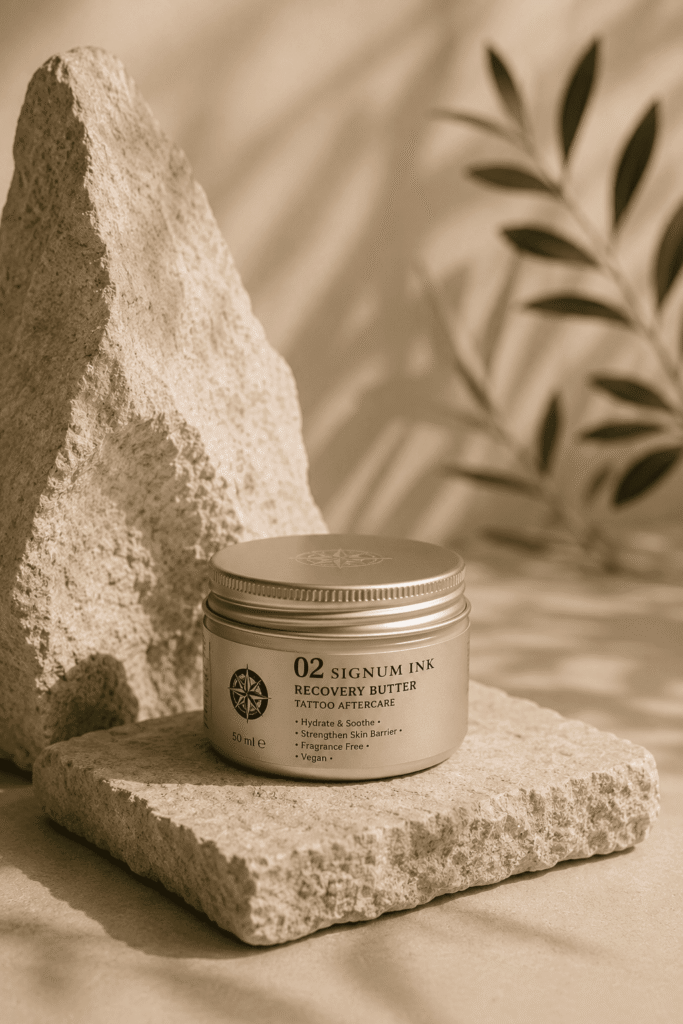
Betaine in Recovery Cream: Helping Skin Maintain Its Natural Moisture Balance
A well-designed recovery cream should do more than simply add moisture to the skin.
Freshly tattooed skin experiences increased water loss while its protective barrier gradually recovers. During this period, maintaining hydration requires several different mechanisms working together.
This is where Betaine offers a unique advantage.
Unlike humectants, which draw water into the outer layers of the skin, Betaine helps skin cells maintain their own internal water balance.
Because of this, Betaine is often described as an osmoprotective ingredient.
Rather than simply increasing hydration, it helps the skin respond more effectively to changes in its environment.
For healing skin, this contributes to improved comfort and better moisture balance throughout the recovery process.
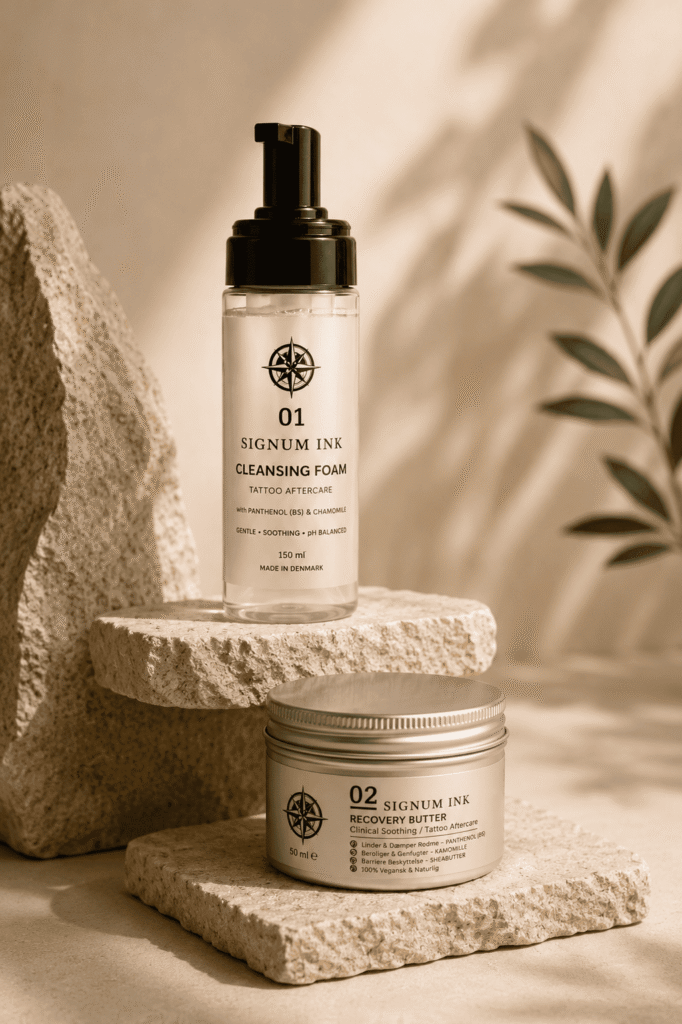
Professional tattoo aftercare creams frequently combine Betaine with:
- Glycerin to attract moisture.
- Panthenol to support hydration and barrier function.
- Ceramides to reinforce the skin’s lipid barrier.
- Niacinamide to support natural barrier processes.
- Beta-Glucan to complement hydration.
- Allantoin to improve skin comfort.
Each ingredient performs a different role, creating a balanced formulation designed to support healthy-looking skin rather than relying on a single moisturizing ingredient.
Betaine in Tattoo Foam Soap
Gentle cleansing is an essential part of tattoo aftercare.
A tattoo foam soap should remove excess ink, sweat, plasma, and impurities without unnecessarily disturbing the skin’s natural barrier.
Because Betaine is exceptionally mild and highly compatible with the skin, it has become a popular ingredient in premium cleansers.
Unlike richer emollients that primarily benefit leave-on products, Betaine performs well even in rinse-off formulations.
Its presence helps support skin comfort during cleansing while complementing mild surfactants and humectants.
After cleansing, the skin is better prepared for the application of a recovery cream.
What Does the Research Say?
Although Betaine receives less public attention than ingredients such as Niacinamide or Ceramides, cosmetic research has consistently demonstrated its value in hydration-focused skincare.
Studies suggest that topical Betaine may:
- Help maintain skin hydration.
- Improve the skin’s moisture balance.
- Reduce the feeling of tightness associated with dry skin.
- Support overall skin comfort.
- Improve the sensory feel of cosmetic formulations.
- Help protect skin cells against osmotic stress.
One of Betaine’s most interesting characteristics is its role as an osmolyte.
Living cells naturally accumulate osmolytes to help regulate water movement under changing environmental conditions.
This biological role explains why Betaine has become increasingly important in formulations developed for dry, sensitive, and environmentally stressed skin.
Why Osmolytes Matter in Skincare
Modern skincare increasingly recognizes that hydration involves more than simply adding water.
Healthy skin depends on three complementary systems:
- Humectants attract moisture.
- Osmolytes help cells maintain water balance.
- Barrier lipids reduce moisture loss.
Betaine belongs to the second category.
This makes it an ideal companion to ingredients such as Glycerin and Ceramides.
Rather than competing with them, Betaine strengthens the overall hydration strategy of a formulation.
Research Snapshot
| Research Area | Evidence |
|---|---|
| Skin Hydration | ★★★★★ |
| Cellular Osmoprotection | ★★★★★ |
| Skin Comfort | ★★★★★ |
| Sensitive Skin | ★★★★★ |
| Moisture Balance | ★★★★☆ |
| Tattoo Aftercare | ★★★☆☆* |
*Direct clinical studies evaluating Betaine specifically in tattoo aftercare remain limited. However, its documented role in hydration support and osmoprotection makes it highly relevant for products intended for healing skin.
Betaine Compared with Other Moisturising Ingredients
Each hydration ingredient supports the skin differently.
Understanding these differences explains why professional formulations combine several ingredients rather than relying on one alone.
Betaine vs. Glycerin
This is one of the most useful comparisons.
Glycerin attracts water into the outer skin layers.
Betaine helps skin cells manage and maintain that water.
One increases hydration.
The other helps stabilize it.
Together they create a more complete hydration system.
Betaine vs. Beta-Glucan
Although their names are similar, these ingredients perform different functions.
Beta-Glucan is primarily valued for hydration support and skin conditioning.
Betaine functions as an osmolyte that helps regulate cellular water balance.
Both contribute to skin comfort but through different biological mechanisms.
Betaine vs. Panthenol
Both ingredients improve hydration and skin comfort.
Panthenol supports hydration and barrier function while contributing to skin conditioning.
Betaine focuses on maintaining water balance within skin cells.
Their complementary actions make them a popular combination in recovery creams.
Betaine vs. Hyaluronic Acid
Hyaluronic Acid is a powerful humectant capable of binding large amounts of water.
Betaine does not bind water in the same way.
Instead, it helps skin cells regulate their internal hydration, making these ingredients highly complementary rather than competitive.
Why Betaine Has Become an Essential Ingredient in Modern Hydration Science
Professional formulators increasingly recognize that maintaining healthy skin requires more than attracting water.
Hydration depends on:
- Water attraction.
- Cellular water balance.
- Barrier integrity.
- Reduced moisture loss.
Betaine contributes to one of these fundamental mechanisms by supporting osmotic balance within skin cells.
This unique role explains why Betaine continues to gain popularity in premium moisturizers, barrier creams, gentle cleansers, and advanced tattoo aftercare formulations.
Ingredient Classification
| Property | Classification |
|---|---|
| Origin | Naturally occurring amino acid derivative |
| Chemical Family | Osmolyte (Trimethylglycine) |
| Primary Function | Cellular hydration support |
| Water Soluble | ✅ Yes |
| Oil Soluble | ❌ No |
| Skin Barrier Role | Supports cellular moisture balance |
| Scientific Support | ★★★★★ Excellent |
Frequently Asked Questions About Betaine
What is Betaine?
Betaine, also known as Trimethylglycine (TMG), is a naturally occurring compound found in plants, animals, and the human body.
In skincare, it is valued primarily as an osmolyte, meaning it helps skin cells maintain a healthy water balance during environmental stress.
Unlike traditional moisturizers, Betaine supports hydration by helping cells regulate water rather than simply attracting it.
Why is Betaine used in tattoo aftercare?
Fresh tattoos temporarily weaken the skin’s protective barrier, increasing moisture loss.
Betaine helps skin cells maintain their natural hydration balance while complementing humectants, barrier-supporting lipids, and soothing ingredients.
Its gentle nature makes it especially suitable for products designed for healing skin.
Is Betaine the same as Beta-Glucan?
No.
Although the names sound similar, they are completely different ingredients.
Betaine is an osmolyte that helps regulate cellular water balance.
Beta-Glucan is a naturally occurring polysaccharide primarily valued for its hydrating and skin-conditioning properties.
Both support healthy-looking skin but through different biological mechanisms.
Does Betaine hydrate the skin?
Yes—but in a different way than humectants.
Unlike Glycerin, which attracts water into the skin, Betaine helps skin cells manage and maintain their internal water balance.
This complementary action contributes to long-lasting skin comfort.
Is Betaine suitable for sensitive skin?
Yes.
Betaine is considered one of the gentlest hydration-supporting ingredients used in cosmetic skincare.
Its excellent compatibility explains why it is commonly included in formulations designed for sensitive, dry, and compromised skin.
Can Betaine be used every day?
Absolutely.
Betaine is widely used in moisturizers, cleansers, serums, and recovery creams intended for daily skincare.
Its mild nature makes it suitable for long-term use.
Where does cosmetic Betaine come from?
Most cosmetic-grade Betaine is derived from sugar beets.
Modern purification processes produce a highly stable ingredient suitable for premium skincare formulations.
Is Betaine a humectant?
Not exactly.
Although Betaine contributes to hydration, it is more accurately described as an osmolyte.
It works differently from classic humectants by helping skin cells regulate their internal water balance.
Why do formulators combine Betaine with Glycerin?
Because the two ingredients perform complementary functions.
Glycerin draws moisture toward the skin.
Betaine helps skin cells maintain that moisture.
Together they provide a more complete hydration strategy than either ingredient alone.
Why do formulators like Betaine?
Professional formulators appreciate Betaine because it offers:
- Excellent skin compatibility.
- Lightweight hydration support.
- Outstanding formulation flexibility.
- Compatibility with sensitive skin.
- Synergy with humectants and barrier-supporting ingredients.
Common Myths About Betaine
Myth 1: Betaine is just another moisturizer.
Reality:
Betaine supports hydration through osmoprotection rather than simply moisturizing the skin.
Its role is different from both humectants and emollients.
Myth 2: Betaine and Beta-Glucan are basically the same.
Reality:
Despite similar names, these ingredients belong to completely different chemical families and perform different biological functions.
Myth 3: Betaine replaces Glycerin.
Reality:
Professional formulations frequently combine Betaine and Glycerin because they improve hydration through different mechanisms.
Together they provide a more balanced approach to skin hydration.
Myth 4: Betaine only benefits dry skin.
Reality:
Healthy cellular hydration is important for every skin type.
Betaine is suitable for dry, normal, combination, oily, mature, and sensitive skin.
Research Snapshot
| Research Area | Evidence |
|---|---|
| Cellular Hydration | ★★★★★ |
| Osmoprotection | ★★★★★ |
| Skin Comfort | ★★★★★ |
| Sensitive Skin | ★★★★★ |
| Moisture Balance | ★★★★☆ |
| Tattoo Aftercare | ★★★☆☆* |
*Most published research focuses on hydration support, osmoprotection, and cosmetic skincare. Dedicated clinical studies in tattoo aftercare remain limited, but the mechanisms are highly relevant for healing skin.
Level of Evidence
| Evidence Source | Strength |
|---|---|
| Skin Biology | ★★★★☆ |
| Cosmetic Science | ★★★★★ |
| Clinical Dermatology | ★★★★☆ |
| Traditional Use | ★★☆☆☆ (Betaine is naturally occurring, but its cosmetic use is based primarily on modern formulation science.) |
| Tattoo-Specific Studies | ★★☆☆☆ |
Why this matters:
Betaine is supported by a growing body of cosmetic science demonstrating its role as an osmolyte. While tattoo-specific clinical evidence is limited, its ability to support cellular water balance and complement other moisturizing ingredients makes it a valuable addition to formulations for healing skin.
Ingredient Classification
| Property | Classification |
|---|---|
| Origin | Naturally occurring amino acid derivative |
| Chemical Family | Trimethylglycine (Osmolyte) |
| Primary Function | Cellular hydration support |
| Water Soluble | ✅ Yes |
| Oil Soluble | ❌ No |
| Skin Barrier Role | Supports cellular moisture balance |
| Scientific Support | ★★★★★ Excellent |
How It Works in a Formula
| Role | Function |
|---|---|
| Humectant | ⚪ Partial (supports hydration but is primarily an osmolyte) |
| Emollient | ❌ |
| Occlusive | ❌ |
| Barrier Support | ✅ Complementary |
| Cellular Hydration | ✅ Primary |
| Osmoprotection | ✅ Primary |
Formulation Insight:
Betaine contributes to hydration by helping skin cells maintain water balance under changing environmental conditions. It is most effective when combined with humectants, barrier lipids, and emollients, creating a comprehensive hydration system rather than relying on a single mechanism.
Ingredient Performance Snapshot
| Category | Rating |
|---|---|
| Cellular Hydration | ⭐⭐⭐⭐⭐ |
| Skin Comfort | ⭐⭐⭐⭐⭐ |
| Sensitive Skin | ⭐⭐⭐⭐⭐ |
| Moisture Balance | ⭐⭐⭐⭐☆ |
| Formulation Versatility | ⭐⭐⭐⭐⭐ |
| Scientific Evidence | ⭐⭐⭐⭐☆ |
Why Formulators Choose Betaine
| Formulation Benefit | Why It Matters |
|---|---|
| Osmoprotective action | Helps skin cells maintain water balance. |
| Excellent compatibility | Works well with nearly all hydration ingredients. |
| Lightweight feel | Improves hydration without heaviness or stickiness. |
| Gentle on sensitive skin | Suitable for products designed for compromised skin. |
| Multi-product versatility | Performs well in both leave-on and rinse-off formulations. |
Formulator’s Perspective
Betaine illustrates one of the biggest shifts in modern skincare: hydration is no longer viewed as simply adding water to the skin.
Professional formulators now focus on supporting how skin cells naturally manage moisture. Betaine contributes to this strategy by helping cells maintain water balance while working alongside Glycerin, Panthenol, Ceramides, Niacinamide, and Beta-Glucan.
Although it rarely appears in marketing headlines, Betaine is often one of the ingredients that quietly improves both the performance and the skin feel of a premium formulation.
Expert Tip
Think of hydration as a three-step system.
Glycerin attracts water into the skin. Betaine helps skin cells regulate that water. Ceramides help prevent the water from escaping.
A recovery cream that combines all three mechanisms provides a more complete approach to maintaining hydration during tattoo healing than any single ingredient alone.
Ingredient Synergy
| Combines Especially Well With | Why |
|---|---|
| Glycerin | Glycerin attracts water while Betaine helps cells maintain water balance. |
| Panthenol | Together they improve hydration and overall skin comfort. |
| Ceramides | Ceramides support the barrier while Betaine supports cellular hydration. |
| Niacinamide | Niacinamide supports barrier biology while Betaine helps maintain cellular moisture. |
| Beta-Glucan | Complementary hydration and skin-conditioning mechanisms. |
| Allantoin | Creates gentle formulations suitable for sensitive and healing skin. |
Ingredient Verdict
| Category | Rating |
|---|---|
| Overall Rating | ⭐⭐⭐⭐⭐ |
| Best For | Sensitive skin, fresh tattoos, hydration-focused formulations |
| Scientific Confidence | High |
| Formulator Recommendation | Excellent complementary hydration ingredient |
| Works Best With | Glycerin, Ceramides, Panthenol, Niacinamide, Beta-Glucan |
Final Thoughts
Betaine may not be one of the most recognizable skincare ingredients, but it plays a unique and valuable role in modern formulations.
As a naturally occurring osmolyte, it supports the skin’s ability to maintain cellular water balance rather than simply adding moisture to the surface. This makes it an ideal partner for humectants such as Glycerin and barrier-supporting ingredients such as Ceramides and Niacinamide.
For tattoo aftercare, Betaine contributes to formulations that prioritize long-lasting hydration, skin comfort, and barrier support. Its gentle nature, excellent compatibility, and ability to work alongside a wide range of active ingredients have made it a favourite among formulators developing products for sensitive and healing skin.
Rather than being a headline ingredient, Betaine is one of the subtle components that helps transform a good recovery cream into a truly well-balanced one.
 English
  German
  Dutch
Dutch  Danish
  Swedish
  French
  Italian