Few parts of tattoo healing test your patience quite like the itching.
Everything may seem to be healing well—until your tattoo suddenly becomes intensely itchy.
For many people, the urge to scratch feels almost impossible to ignore.
“Will scratching ruin my tattoo?”
“What happens if I accidentally scratch it?”
“Is there a safer way to stop the itch?”
The short answer is simple:
It is best not to scratch a healing tattoo.
Although one light accidental touch is unlikely to cause lasting damage, repeated scratching can irritate healing skin, disrupt the rebuilding skin barrier, remove peeling skin too early, and increase the risk of introducing bacteria from your hands or fingernails.
Understanding why tattoos itch and why scratching interferes with healing makes it much easier to resist the temptation.
Quick Answer
Can I scratch my healing tattoo?
No.
It is generally best to avoid scratching while your tattoo is healing.
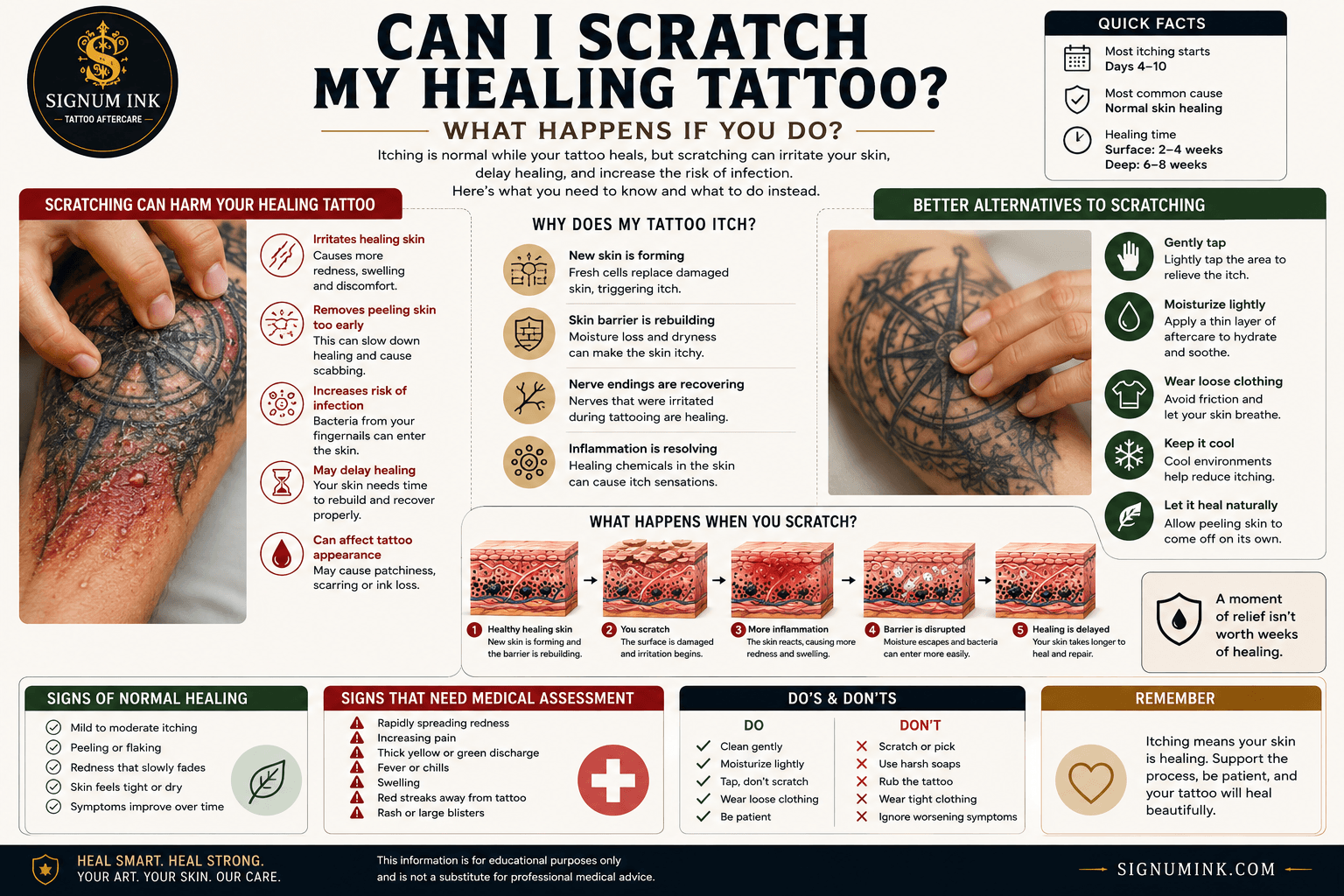
If the tattoo becomes itchy, safer alternatives such as gently tapping the area, applying a thin layer of moisturizer if the skin feels dry, or keeping the skin cool may help improve comfort without disrupting healing.
Quick Facts
Most Itching Starts
Days 4–10
Most Common Cause
Normal skin healing.
Avoid
❌ Scratching
❌ Picking peeling skin
❌ Rubbing aggressively
Better Options
✔ Gentle tapping
✔ Thin layer of moisturizer
✔ Loose clothing
✔ Cool environment
Why Do Healing Tattoos Itch?
Tattoo itching is not a sign that something is wrong.
In fact, it often reflects the remarkable biological work taking place beneath the surface.
Several healing processes contribute to the sensation.
New Skin Is Forming
As damaged epidermal cells are replaced, fresh skin gradually moves toward the surface.
This natural renewal stimulates tiny sensory nerves, creating the urge to scratch.
The Skin Barrier Is Rebuilding
Tattooing temporarily weakens the skin’s protective barrier.
As moisture escapes more easily, the skin becomes:
- Dry.
- Tight.
- Slightly rough.
Dry skin naturally feels itchier than well-hydrated skin.
Supporting the skin barrier helps reduce discomfort during healing.
Nerve Endings Are Recovering
Tattoo needles temporarily affect thousands of tiny nerve endings within the skin.
As these nerves recover, they may produce itching sensations similar to those experienced while other minor wounds heal.
Inflammation Is Resolving
As the early inflammatory phase settles, immune cells release chemical messengers that coordinate tissue repair.
Some of these natural signaling molecules also activate itch receptors within the skin.
This is one reason itching often increases just as redness begins fading.
What Happens If You Scratch?
Scratching may seem harmless, but healing skin is far more delicate than it appears.
Potential consequences include:
- Irritating fragile new skin.
- Delaying epidermal repair.
- Removing peeling skin before it is ready.
- Increasing inflammation.
- Introducing bacteria from your fingernails.
- Making the tattoo feel even more uncomfortable.
While an accidental light scratch is unlikely to ruin a tattoo, repeatedly scratching the area increases the risk of disrupting the normal healing process.
Why Picking and Scratching Are Different
Although both should be avoided, scratching and picking affect the skin in different ways.
Scratching
Usually causes friction across the surface.
This may irritate healing skin and increase inflammation.
Picking
Removes peeling skin or scabs before they naturally separate.
This can expose delicate new tissue and interfere with normal skin repair.
Why Itching Often Peaks During Peeling
Many people notice that itching becomes strongest just as peeling begins.
This happens because several biological processes overlap:
- New epidermal cells are replacing damaged skin.
- The skin barrier is still incomplete.
- Moisture levels fluctuate.
- Nerve endings remain highly sensitive.
Together, these changes make the peeling stage one of the itchiest parts of tattoo healing.
Supporting Comfortable Healing
Rather than trying to eliminate itching completely, focus on supporting healthy skin while it recovers.
Helpful habits include:
- Washing gently with a mild cleanser.
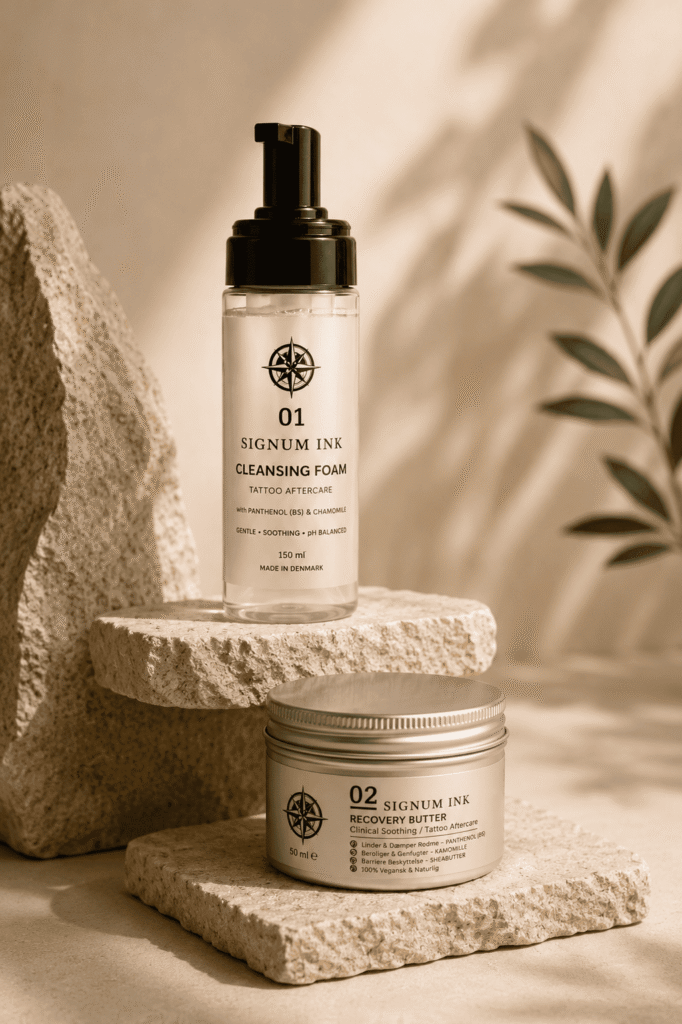
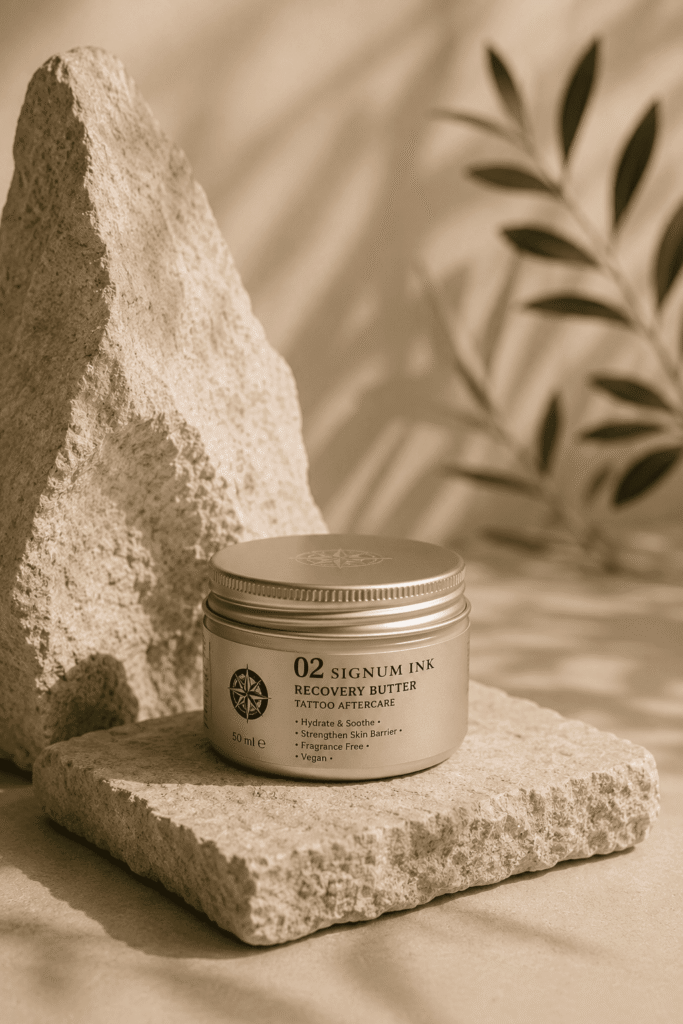
- Applying a thin layer of recovery cream when needed.
- Wearing loose, breathable clothing.
- Avoiding unnecessary friction.
- Keeping the tattoo clean.
These simple steps help maintain skin comfort while allowing natural healing to continue.
Can Scratching Damage Tattoo Ink?
This is one of the most common fears during tattoo healing.
Fortunately, a single accidental scratch is unlikely to damage your tattoo.
Tattoo pigment is placed deep within the dermis, while scratching usually affects only the outermost healing layers of the skin.
However, repeated or vigorous scratching can interfere with the healing process by damaging fragile new skin before it has fully matured.
The greatest concern is not removing tattoo ink directly, but disrupting the environment your skin needs to heal properly.
What If I Accidentally Scratched My Tattoo?
Accidents happen.
You may scratch your tattoo in your sleep or instinctively touch it without thinking.
In most cases, there is no reason to panic.
If the scratch is minor:
- Gently wash the area if needed.
- Pat the tattoo dry with a clean towel.
- Continue your normal aftercare routine.
- Observe the area over the next few days.
Most small accidental scratches heal without affecting the final appearance of the tattoo.
If the area begins showing increasing redness, swelling, discharge, or worsening pain afterward, seek medical advice.
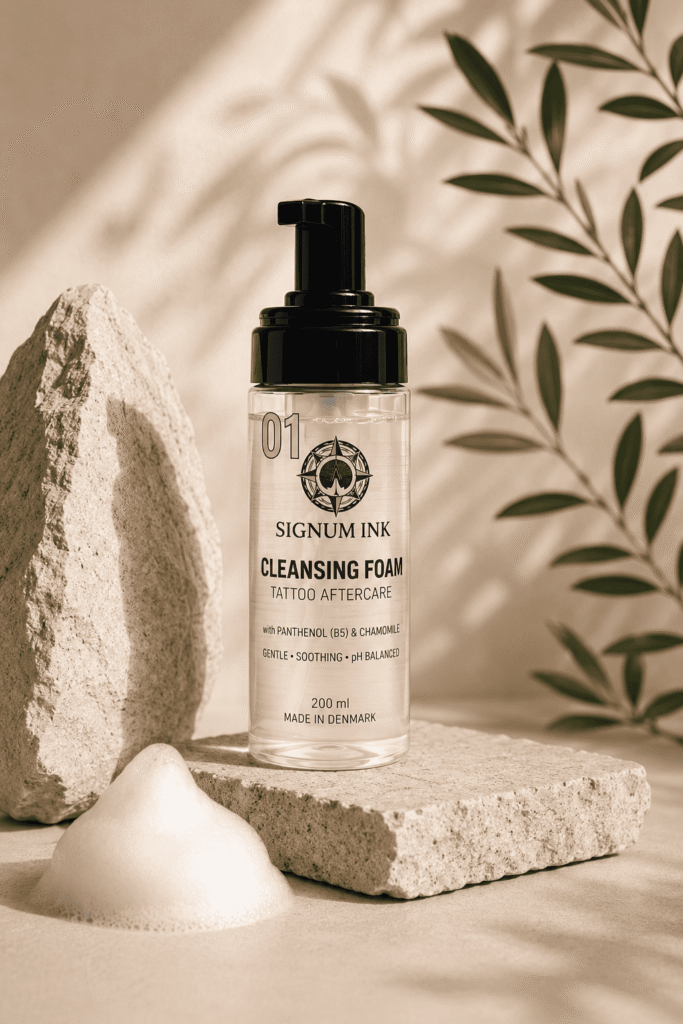
Safe Alternatives to Scratching
Although scratching feels satisfying for a moment, the relief is usually short-lived.
Fortunately, there are several safer ways to reduce discomfort.
Gently Tap the Skin
Many tattoo artists recommend lightly tapping the itchy area instead of scratching.
This may temporarily interrupt the itch sensation without damaging the healing skin.
Apply a Thin Layer of Moisturizer
If the skin feels dry or tight, a lightweight recovery cream can improve comfort by supporting the skin barrier.
Avoid applying excessively thick layers.
Keep the Tattoo Cool
Warm skin often feels itchier.
Keeping the room comfortably cool or wearing lightweight clothing may reduce irritation.
Avoid placing ice directly on the tattoo.
Avoid Friction
Tight clothing repeatedly rubbing against the tattoo may increase both itching and irritation.
Loose, breathable fabrics are often more comfortable during healing.
Stay Hydrated
Although hydration alone will not stop itching, maintaining good overall hydration supports healthy skin function.
When Itching Is No Longer Normal
Most tattoo itching gradually improves over time.
However, persistent or worsening symptoms deserve closer attention.
Arrange prompt medical assessment if itching is accompanied by:
- Rapidly spreading redness.
- Thick yellow or green discharge.
- Fever or chills.
- Significant swelling.
- A widespread rash.
- Large blisters.
- Increasing pain.
These symptoms do not automatically indicate an infection or allergic reaction, but they are not typical of uncomplicated tattoo healing.
What Does the Research Say?
Scientific research shows that itching is a common feature of wound healing.
Several biological processes contribute, including:
- Epidermal regeneration.
- Recovery of sensory nerve endings.
- Skin barrier repair.
- Temporary increases in transepidermal water loss (TEWL).
- Normal inflammatory signaling during tissue repair.
Rather than indicating damage, mild itching often reflects active skin recovery.
Why Moisture Balance Matters
Healthy skin requires balance.
Skin that becomes excessively dry often feels itchier.
On the other hand, applying heavy layers of ointment is not necessarily beneficial.
Modern tattoo aftercare focuses on maintaining comfortable hydration while allowing the skin barrier to rebuild naturally.
Common barrier-supporting ingredients include:
- Glycerin.
- Betaine.
- Ceramides.
- Niacinamide.
- Panthenol.
- Squalane.
Together, these ingredients help improve skin comfort while supporting normal healing.
Common Mistakes During the Itching Stage
Many people accidentally prolong discomfort.
Common examples include:
Scratching Repeatedly
Repeated scratching increases irritation and may damage fragile new skin.
Picking Loose Skin
Removing peeling skin too early interferes with normal epidermal renewal.
Using Harsh Cleansers
Strong soaps may further dry the healing skin barrier.
Taking Very Hot Showers
Hot water can temporarily increase itching by increasing blood flow to the skin.
Wearing Tight Clothing
Repeated friction often makes itching feel worse.
Applying Excessive Product
More cream is not always better.
A thin, even application is generally sufficient to support hydration.
Research Snapshot
| Research Area | Evidence |
|---|---|
| Wound Healing Itch | ★★★★★ |
| Skin Barrier Recovery | ★★★★★ |
| Epidermal Regeneration | ★★★★★ |
| Nerve Regeneration | ★★★★☆ |
| Tattoo Aftercare | ★★★★☆ |
| Tattoo Itching Research | ★★★☆☆ |
Frequently Asked Questions About Scratching a Healing Tattoo
Can scratching ruin a healing tattoo?
It can.
A single light accidental scratch is unlikely to permanently damage your tattoo, but repeated or vigorous scratching can interfere with normal healing.
Scratching may:
- Irritate fragile new skin.
- Remove peeling skin too early.
- Increase inflammation.
- Introduce bacteria from your fingernails.
- Delay recovery.
The best approach is to let the skin heal naturally.
What happens if I accidentally scratch my tattoo while sleeping?
Don’t panic.
Many people accidentally scratch their tattoo during sleep.
If the scratch is minor and the skin isn’t broken:
- Gently clean the area if necessary.
- Pat it dry with a clean towel.
- Continue your normal aftercare routine.
Most minor accidental scratches heal without affecting the final appearance of the tattoo.
Can scratching pull out tattoo ink?
Normally, no.
Tattoo pigment is stored within the dermis, while scratching usually affects only the healing epidermis.
The greater concern is that repeated scratching may delay healing or increase irritation—not that it will remove the tattoo ink itself.
Why does scratching feel so satisfying?
Itching activates specialized sensory nerves.
Scratching temporarily interrupts those nerve signals, creating short-lived relief.
Unfortunately, that relief often comes at the cost of additional irritation to healing skin.
Is tapping the tattoo better than scratching?
Yes.
Many tattoo artists recommend gently tapping or lightly pressing an itchy tattoo.
This may reduce the sensation of itching without damaging fragile new skin.
Should I moisturize when my tattoo itches?
If your tattoo feels dry or tight, applying a thin layer of recovery cream may improve comfort by supporting the skin barrier.
Avoid applying thick layers, as more product is not necessarily better.
Why does my tattoo itch more at night?
Many people notice increased itching during the evening because:
- Body temperature naturally rises slightly during sleep.
- There are fewer distractions, making you more aware of the sensation.
- Healing skin may become drier overnight.
Keeping your bedroom cool and wearing soft, breathable clothing may help.
When should I seek medical advice?
Arrange prompt medical assessment if itching is accompanied by:
- Rapidly spreading redness.
- Increasing pain.
- Thick yellow or green discharge.
- Fever or chills.
- Significant swelling.
- A widespread rash.
- Large blisters.
These symptoms are not typical of uncomplicated tattoo healing and should be evaluated by a healthcare professional.
Common Myths About Scratching Tattoos
Myth 1: One scratch will ruin my tattoo.
Reality:
A small accidental scratch is unlikely to cause permanent damage.
Repeated scratching is much more likely to interfere with healing.
Myth 2: Scratching helps peeling finish faster.
Reality:
Peeling skin should separate naturally.
Forcing it away too early may expose delicate new skin before it is ready.
Myth 3: If it itches, I have to scratch it.
Reality:
Itching is a normal part of skin repair.
Gentle tapping, cooling the skin, or applying a light layer of moisturizer are safer ways to manage discomfort.
Myth 4: Scratching removes tattoo ink.
Reality:
Tattoo pigment remains within the dermis.
Normal scratching is far more likely to irritate the healing skin than to remove ink.
Healing Timeline
| Healing Stage | What to Expect |
|---|---|
| Days 1–3 | Redness, swelling, tenderness |
| Days 3–7 | Peeling begins |
| Days 4–10 | Itching often becomes strongest |
| Week 2 | Itching gradually improves |
| Weeks 3–4 | Surface healing complete |
| Weeks 6–8 | Deep skin remodeling continues |
Research Snapshot
| Research Area | Evidence |
|---|---|
| Wound Healing Biology | ★★★★★ |
| Skin Barrier Recovery | ★★★★★ |
| Epidermal Regeneration | ★★★★★ |
| Nerve Repair | ★★★★☆ |
| Tattoo Aftercare | ★★★★☆ |
| Tattoo Itching Research | ★★★☆☆ |
Expert Tip
Think of itching as a sign that your skin is busy rebuilding itself.
The urge to scratch is temporary, but your tattoo is permanent. Every day you allow the skin to heal undisturbed gives it the best opportunity to recover naturally and preserve the detail of your artwork.
Signs Your Tattoo Is Healing Normally
✅ Mild to moderate itching.
✅ Thin peeling skin.
✅ Gradually improving redness.
✅ Skin becoming smoother.
✅ Less discomfort with each passing week.
Healthy tattoo healing is usually defined by steady improvement over time.
Signs That Need Medical Assessment
⚠️ Rapidly worsening redness.
⚠️ Increasing pain.
⚠️ Thick yellow or green discharge.
⚠️ Fever or chills.
⚠️ Significant swelling.
⚠️ Red streaks extending away from the tattoo.
⚠️ Persistent rash or blistering.
These symptoms do not automatically indicate an infection or allergic reaction, but they are not typical of uncomplicated tattoo healing and should be assessed by a healthcare professional.
Why Skin Barrier Recovery Helps Reduce Itching
One reason healing tattoos itch is that the skin’s protective barrier has been temporarily disrupted.
Modern tattoo aftercare supports this natural repair process by helping maintain hydration and reinforcing the barrier with carefully selected ingredients.
| Function | Example Ingredient |
|---|---|
| Attracts moisture | Glycerin |
| Supports hydration | Betaine |
| Reinforces the skin barrier | Ceramides |
| Supports barrier function | Niacinamide |
| Skin conditioning | Panthenol |
| Lightweight emollient | Squalane |
| Improves texture | Caprylic/Capric Triglyceride |
| Skin-soothing support | Allantoin |
| Botanical support | Madecassoside |
| Antioxidant protection | Vitamin E |
Together, these ingredients help reduce dryness and improve comfort while allowing the skin’s natural healing process to continue.
Final Thoughts
Scratching a healing tattoo may offer a few seconds of relief, but it can also interrupt a process that takes weeks to complete.
The itching you experience is usually a normal response to skin regeneration, barrier repair, and recovering nerve endings. Rather than fighting these natural processes, the goal is to support them with gentle cleansing, balanced hydration, and patience.
If you accidentally scratch your tattoo once, there’s usually no reason to worry. What matters most is avoiding repeated irritation and allowing peeling skin to separate naturally. In most cases, the less you interfere with the healing process, the better your tattoo will look once recovery is complete.
Related Articles
Continue learning about tattoo healing with these guides:
- Why Is My Tattoo Itchy?
- Tattoo Healing Timeline
- How Long Does a Tattoo Take to Heal?
- Tattoo Peeling Explained
- Is Tattoo Scabbing Normal?
- Tattoo Flaking vs. Infection
- Why Is My Tattoo Red?
- The Complete Science of Tattoo Healing
- Over-Moisturized Tattoo: Can You Use Too Much Tattoo Cream?
 English
  German