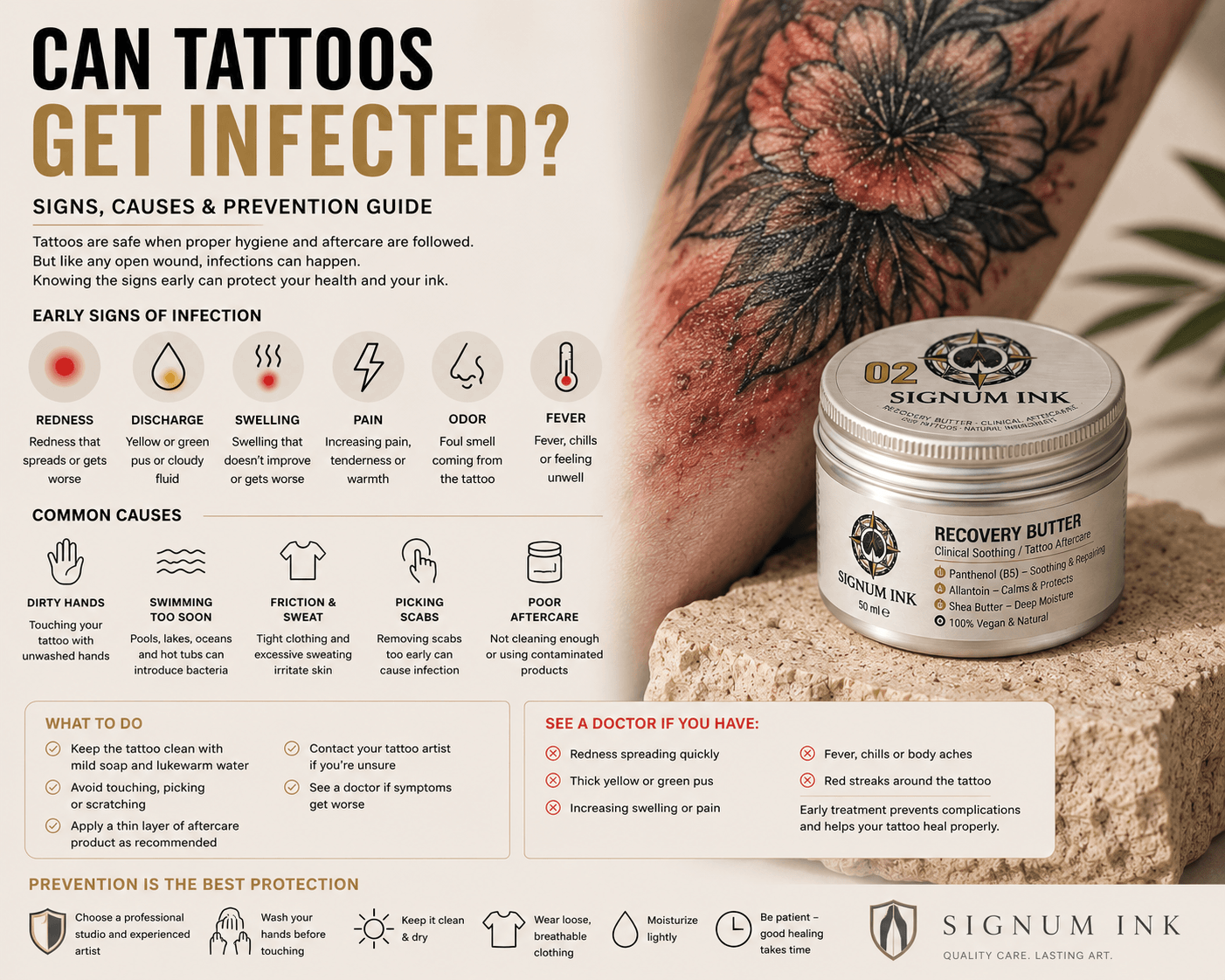
Getting a tattoo is a safe procedure when performed by a professional artist who follows strict hygiene standards. However, like any procedure that breaks the skin, tattoos carry a small risk of infection.
Fortunately, tattoo infections are relatively uncommon when proper aftercare is followed. Most tattoos heal without complications, but recognizing the early warning signs of infection can make a significant difference if something doesn’t seem right.
Many people mistake normal tattoo healing for an infection, while others ignore genuine symptoms, believing everything is part of the healing process. Understanding the difference is one of the most important aspects of tattoo aftercare.
In this guide, we’ll explain how tattoo infections develop, what symptoms to watch for, what increases the risk of infection, and how you can help your tattoo heal safely.
Can Tattoos Really Get Infected?
Yes.
A tattoo is essentially thousands of tiny puncture wounds created by tattoo needles that place ink into the dermis, the second layer of the skin.
Although your body’s immune system immediately begins repairing these microscopic wounds, bacteria can sometimes enter the damaged skin before it has fully healed.
This doesn’t mean tattoos are dangerous.
In fact, modern professional tattoo studios use:
- Sterile needles
- Single-use equipment
- Medical-grade disinfectants
- Protective gloves
- Proper skin preparation
These practices dramatically reduce the risk of infection.
Most infections occur after leaving the tattoo studio, often because of improper aftercare or unnecessary exposure to bacteria during the healing period.
How Common Are Tattoo Infections?
The vast majority of tattoos heal without developing an infection.
Professional tattoo studios that follow proper hygiene standards have extremely low infection rates.
The risk becomes significantly higher when tattoos are performed:
- In unlicensed studios
- Using non-sterile equipment
- By inexperienced artists
- In unsanitary environments
Even tattoos completed under ideal conditions can become infected if proper aftercare isn’t followed.
That’s why your responsibility begins the moment you leave the studio.
What Causes Tattoo Infections?
Tattoo infections occur when harmful microorganisms enter the healing skin before the protective barrier has fully recovered.
These microorganisms may include:
- Bacteria
- Fungi
- Viruses (less common)
The first few weeks after getting tattooed are the most vulnerable because the skin remains partially open while it repairs itself.
Although your immune system works continuously to protect the wound, excessive contamination can overwhelm the body’s natural defenses.
Common Causes of Tattoo Infections
Several situations increase the likelihood of developing an infection.
Poor Hand Hygiene
One of the most common causes is touching the tattoo with dirty hands.
Throughout the day, your hands collect bacteria from:
- Mobile phones
- Door handles
- Money
- Keyboards
- Public transport
- Shopping carts
Touching a fresh tattoo without washing your hands first transfers these microorganisms directly onto healing skin.
Always wash your hands thoroughly before cleaning or moisturizing your tattoo.
Swimming Too Soon
Fresh tattoos should never be submerged in water during the early healing stages.
Swimming pools, lakes, rivers, hot tubs, and the ocean may all contain microorganisms capable of entering healing skin.
Even chlorinated pools are not completely free from bacteria.
Most tattoo artists recommend avoiding swimming until the outer skin has fully healed.
Excessive Sweating
Heavy exercise immediately after getting tattooed may increase irritation.
Sweaty environments such as:
- Gyms
- Saunas
- Steam rooms
can expose healing skin to additional bacteria while increasing friction against clothing.
Light activity is usually acceptable, but intense exercise is best postponed during the first several days whenever possible.
Picking Scabs
Scabs protect healing tissue underneath.
Removing them too early creates new openings where bacteria may enter.
Picking also increases:
- Irritation
- Bleeding
- Delayed healing
- Risk of scarring
Allow scabs to fall off naturally.
Poor Aftercare
Proper aftercare plays a major role in preventing infection.
Common mistakes include:
- Not washing the tattoo often enough
- Using dirty towels
- Applying contaminated creams
- Covering the tattoo with dirty clothing
- Ignoring hygiene during the healing period
A simple, consistent aftercare routine is usually enough to keep the skin healthy.
Early Signs of an Infected Tattoo
Recognizing the first symptoms allows treatment to begin before the infection becomes more serious.
The following signs deserve attention.
Redness That Gets Worse
Some redness is completely normal during the first few days.
Healthy redness gradually fades.
An infection often causes redness that:
- Expands outward
- Becomes darker
- Feels increasingly warm
- Doesn’t improve after several days
If redness continues spreading instead of shrinking, it should be evaluated.
Increasing Pain
A fresh tattoo naturally feels sore.
Pain should gradually improve each day.
An infected tattoo often becomes:
- More painful
- More tender
- More swollen
instead of less.
Pain that suddenly worsens after initial improvement may indicate a developing problem.
Swelling That Doesn’t Improve
Mild swelling during the first 24–72 hours is expected.
However, swelling that:
- Continues increasing
- Returns after improving
- Extends beyond the tattoo
may require medical assessment.
Yellow or Green Discharge
One of the strongest indicators of infection is thick discharge.
Healthy tattoos may produce small amounts of:
- Clear plasma
- Tiny traces of blood
during the first day.
An infection is more likely if you notice:
- Thick yellow fluid
- Green discharge
- Pus
- An unpleasant smell
These symptoms should never be ignored.
Excessive Heat
Healing skin often feels slightly warm.
An infected tattoo may feel noticeably hotter than the surrounding skin.
Persistent warmth combined with redness, swelling, and pain can indicate inflammation caused by infection.
Normal Tattoo Healing vs. Infection
Many people worry unnecessarily because normal healing shares several symptoms with infection.
Here’s a simple comparison.
| Normal Healing | Possible Infection |
|---|---|
| Mild redness | Redness spreading outward |
| Mild swelling | Increasing swelling |
| Light soreness | Pain becoming worse |
| Clear plasma | Thick yellow or green pus |
| Mild itching | Severe pain and inflammation |
| Thin peeling | Foul odor |
| Gradual improvement | Symptoms becoming worse |
The most important difference is progression.
Healthy tattoos improve over time.
Infections typically become worse if left untreated.
Who Has a Higher Risk of Infection?
Although anyone can develop an infection, certain factors increase the risk.
These include:
- Diabetes
- Weakened immune system
- Poor circulation
- Smoking
- Poor nutrition
- Poor hygiene during healing
- Receiving a tattoo in an unlicensed studio
People with chronic medical conditions should always discuss tattoo healing with a healthcare professional if they have concerns.
Does Tattoo Location Matter?
Yes.
Some body areas are naturally more difficult to keep clean and protected.
Higher-risk locations include:
- Feet
- Hands
- Fingers
- Toes
- Underarms
- Groin
- Areas exposed to constant friction
These locations experience more movement, contact, sweat, and bacteria throughout the day, requiring extra attention during healing.
Can You Prevent Most Tattoo Infections?
Absolutely.
Most tattoo infections are preventable.
Choosing a reputable tattoo artist, following professional aftercare instructions, maintaining good hygiene, and avoiding unnecessary exposure to bacteria significantly reduce the risk.
In the next part of this guide, we’ll cover what happens if a tattoo becomes infected, when to seek medical attention, how infections are treated, common mistakes to avoid, and the best ways to ensure your tattoo heals safely and beautifully.
What Should You Do if You Think Your Tattoo Is Infected?
If you suspect your tattoo may be infected, the most important thing is to stay calm and avoid making the situation worse.
Many mild irritations turn out to be part of the normal healing process, but symptoms that continue to worsen should never be ignored.
The first step is to carefully examine your tattoo under good lighting and compare the symptoms with normal tattoo healing.
If you notice spreading redness, increasing pain, swelling, pus, or a fever, it’s time to seek professional medical advice.
Step 1: Keep the Tattoo Clean
Wash the tattoo gently using:
- Lukewarm water
- A mild fragrance-free cleanser
- Clean hands
Avoid scrubbing the tattoo or using rough towels.
Pat the area dry with a clean paper towel or a freshly washed soft towel.
Good hygiene helps prevent additional bacteria from entering the skin.
Step 2: Stop Picking or Scratching
When tattoos become irritated, it’s tempting to touch them constantly.
Avoid:
- Picking scabs
- Peeling loose skin
- Scratching
- Squeezing bumps
- Popping blisters
These actions can introduce more bacteria and delay healing.
Step 3: Don’t Cover It With Thick Cream
Many people believe that applying more ointment will solve every tattoo problem.
If an infection is developing, heavy layers of ointment may trap moisture, heat, and bacteria against the skin.
Continue following your aftercare routine unless advised otherwise by a healthcare professional.
A thin layer of aftercare product is generally preferable to excessive amounts.
Step 4: Contact Your Tattoo Artist
Professional tattoo artists have seen thousands of healing tattoos.
Although they cannot diagnose medical conditions, they can often help determine whether what you’re experiencing appears to be normal healing or something that requires medical attention.
If your symptoms seem unusual, contact your artist as soon as possible.
When Should You See a Doctor?
Some symptoms require prompt medical evaluation.
Seek medical advice if you experience:
- Redness spreading rapidly
- Thick yellow or green pus
- Increasing swelling
- Severe pain
- Fever
- Chills
- Red streaks extending away from the tattoo
- A foul smell coming from the tattoo
These symptoms may indicate a bacterial infection that requires treatment.
Early treatment usually leads to faster recovery and reduces the risk of complications.
How Are Tattoo Infections Treated?
Treatment depends on the severity of the infection.
A healthcare professional may recommend:
Topical Antibiotics
For mild skin infections, an antibiotic cream or ointment may be sufficient.
These medications help reduce bacterial growth while the skin continues healing.
Oral Antibiotics
More significant infections often require antibiotic tablets.
It’s important to complete the full course exactly as prescribed, even if symptoms improve before the medication is finished.
Stopping treatment too early may allow bacteria to return.
Wound Care
Your healthcare provider may also recommend:
- Gentle cleaning
- Temporary dressing changes
- Monitoring the area
- Follow-up appointments
Following medical advice carefully helps ensure the best possible outcome.
What Happens if an Infection Is Ignored?
Ignoring an infected tattoo can allow the infection to spread deeper into the skin.
Possible complications include:
- Delayed healing
- Permanent scarring
- Ink loss
- Distorted tattoo details
- Skin damage
- In rare cases, more serious infections requiring hospital treatment
Fortunately, serious complications are uncommon when infections are treated promptly.
Can an Infected Tattoo Heal Normally?
Yes.
Most tattoo infections heal completely when treated early.
Some tattoos may require a touch-up if small areas lose pigment during healing, but many recover with little or no visible difference.
The sooner treatment begins, the better the chances of preserving the tattoo’s appearance.
How Long Does Recovery Take?
Recovery depends on several factors:
- The severity of the infection
- Your immune system
- How quickly treatment begins
- Following medical advice
Minor infections often improve within several days after starting treatment.
More significant infections may require several weeks before the skin has fully recovered.
Even after the infection clears, the deeper layers of skin continue rebuilding for several months.
Can You Prevent Tattoo Infections?
Absolutely.
Most tattoo infections can be prevented with proper preparation and aftercare.
Choose a Professional Tattoo Studio
Always choose a licensed artist who follows strict hygiene practices.
Professional studios typically use:
- Sterile single-use needles
- Disposable gloves
- Medical-grade disinfectants
- Proper workstation cleaning
- High-quality tattoo inks
Never choose a tattoo studio based on price alone.
Follow Your Aftercare Instructions
Every tattoo artist may recommend a slightly different routine, but the fundamentals remain the same.
Keep your tattoo:
- Clean
- Lightly moisturized
- Protected from dirt
- Protected from excessive friction
Consistency is more important than using large amounts of aftercare products.
Wash Your Hands First
Every time you touch your tattoo:
Wash your hands first.
This simple habit dramatically reduces the number of bacteria introduced to healing skin.
Avoid Swimming
Until the tattoo has healed completely, avoid:
- Swimming pools
- Lakes
- Rivers
- Oceans
- Hot tubs
Submerging a fresh tattoo exposes it to unnecessary bacteria and may slow healing.
Avoid Tight Clothing
Clothing that constantly rubs against the tattoo may irritate healing skin.
Loose, breathable fabrics help reduce:
- Friction
- Sweat buildup
- Skin irritation
Protect Your Immune System
Your immune system performs most of the healing.
Support it by:
- Getting enough sleep
- Eating a balanced diet
- Drinking enough water
- Avoiding excessive alcohol
- Managing stress
Healthy skin generally heals more efficiently.
Frequently Asked Questions
Can a tattoo become infected weeks later?
Yes.
Although most infections develop during the first two weeks, delayed infections can occasionally occur.
Any sudden redness, swelling, pain, or discharge should be evaluated.
Can over-moisturizing cause infection?
Applying excessive amounts of aftercare doesn’t directly cause an infection, but overly moist skin may create an environment that supports bacterial growth if combined with poor hygiene.
The goal is always balance.
Can under-moisturized skin become infected?
Dry skin doesn’t automatically become infected.
However, severe cracking may create additional openings where bacteria can enter.
Keeping the tattoo properly moisturized helps support the skin’s protective barrier.
Is itching a sign of infection?
Usually not.
Mild to moderate itching is a normal part of tattoo healing.
Itching accompanied by spreading redness, swelling, pus, or increasing pain should be assessed.
Can I use alcohol or hydrogen peroxide?
No.
These products may damage healthy healing tissue and delay recovery.
Use only gentle cleansers unless instructed otherwise by a healthcare professional.
Will an infection ruin my tattoo?
Not necessarily.
Most infections heal successfully when treated early.
Prompt medical care greatly improves the chances of preserving the tattoo’s color and detail.
Final Thoughts
Tattoo infections are uncommon, but they can happen.
The good news is that most infections are preventable through proper hygiene, careful aftercare, and choosing a professional tattoo artist.
Learning the difference between normal healing and the warning signs of infection allows you to act quickly if something doesn’t seem right.
Remember these key points:
- Mild redness, peeling, itching, and tenderness are normal.
- Symptoms should gradually improve—not become worse.
- Spreading redness, increasing pain, pus, fever, and persistent swelling require medical attention.
- Good hygiene is your best defense against infection.
- Early treatment leads to the best outcomes.
A tattoo is an investment that can last a lifetime. By caring for your skin during the healing process and responding quickly to unusual symptoms, you’ll give your tattoo the best opportunity to heal cleanly, safely, and beautifully.
 English
  German
  Dutch
Dutch  Danish
  Swedish
  French
  Italian