Introduction
Getting a new tattoo often means making a few temporary adjustments to your daily routine.
One of the biggest questions people ask is:
“Can I go swimming while my tattoo heals?”
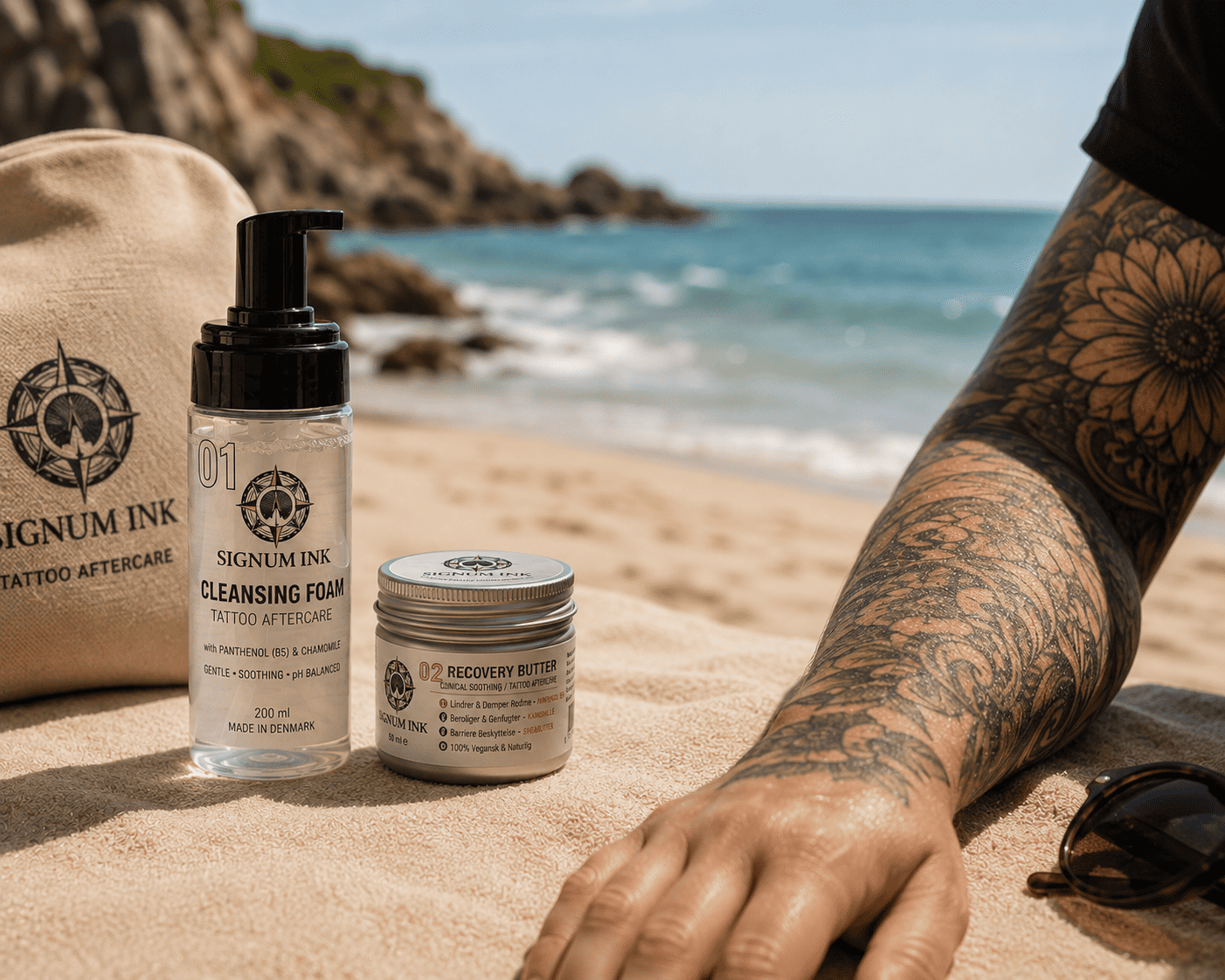
Whether you’re planning a beach holiday, relaxing by the pool or enjoying a day at the lake, it’s important to understand how prolonged water exposure affects healing skin.
Unlike a quick shower, swimming exposes your tattoo to water for an extended period—often together with microorganisms, chemicals and friction.
This guide explains why waiting is recommended, how long you should avoid swimming and when it’s generally safe to return to the water.
Why Swimming Is Different From Showering
Many people assume that if showering is safe, swimming must be safe too.
The two are very different.
A shower involves:
- Running clean water.
- Short exposure.
- Gentle cleansing.
Swimming usually involves:
- Long water exposure.
- Full submersion.
- Shared water environments.
- Increased skin softening.
These differences make swimming much less suitable while a tattoo is healing.
Why Should You Avoid Swimming?
A fresh tattoo is still repairing its protective skin barrier.
Extended soaking may:
- Soften healing skin.
- Increase irritation.
- Delay recovery.
- Expose the tattoo to bacteria and other microorganisms.
Although complications are uncommon with proper aftercare, avoiding unnecessary exposure gives your skin the best chance to heal comfortably.
Which Types of Water Should You Avoid?
During healing, it’s generally recommended to avoid:
- Swimming pools.
- Hot tubs.
- Lakes.
- Rivers.
- The ocean.
- Water parks.
Each environment presents different challenges, but all involve prolonged soaking of healing skin.
What About Chlorine?
Many people believe chlorine completely eliminates all risk.
While properly maintained pools are disinfected, chlorine itself may still irritate healing skin.
In addition, public pools are shared environments that expose the tattoo to prolonged water contact.
What About the Ocean?
Salt water is often believed to speed up healing.
However, scientific evidence doesn’t support using seawater as a tattoo treatment.
The ocean may expose healing skin to:
- Salt.
- Sand.
- Microorganisms.
- Friction.
These factors can increase irritation during the healing period.
Can You Just Keep Your Tattoo Above Water?
Sometimes this works in theory—but not always in practice.
Accidental splashing, sweating and brief submersion are difficult to avoid during swimming activities.
For this reason, most tattoo artists recommend postponing swimming until healing is complete.
Healing First, Swimming Later
Skipping the pool for a few weeks may feel inconvenient.
However, tattoo healing is temporary.
Protecting your tattoo during this short period helps support comfortable healing and reduces unnecessary risks.
When Can You Swim Again?
The safest approach is to wait until your tattoo has completely healed before swimming.
For most people, this means waiting at least 2–4 weeks, although larger or more complex tattoos may take longer.
Your tattoo is generally ready when:
- The skin has finished peeling.
- There are no open areas.
- The surface feels smooth.
- Redness has disappeared.
- The skin barrier has recovered.
Healing time varies from person to person, so avoid relying on the calendar alone.

What If You’re Going on Vacation?
This is a common situation.
If you’ve planned a beach holiday or pool vacation shortly after getting tattooed, consider scheduling your tattoo after your trip whenever possible.
If that’s not an option:
- Avoid swimming.
- Stay in the shade.
- Keep the tattoo clean.
- Protect it from unnecessary friction.
- Follow your normal aftercare routine.
A few weeks of patience are worth protecting your new tattoo.
Does Waterproof Film Make Swimming Safe?
Not necessarily.
Some protective films are designed to remain on the skin during the early stages of healing.
However, this doesn’t automatically mean they’re intended for swimming.
Long periods in water may affect:
- The adhesive.
- The seal.
- The film’s ability to protect the tattoo.
Always follow the instructions provided by your tattoo artist and the manufacturer of the dressing.
Common Swimming Mistakes
Many tattoo problems begin with good intentions.
Common mistakes include:
- Swimming because the tattoo “looks healed.”
- Assuming chlorine makes swimming completely safe.
- Entering hot tubs too early.
- Soaking the tattoo for long periods.
- Ignoring peeling skin.
- Returning to water sports before healing is complete.
Healing skin often looks better before it has fully recovered.
Does Water Remove Tattoo Ink?
No.
Tattoo pigment is placed within the dermis beneath the surface of the skin.
Swimming doesn’t wash the ink away.
The concern is that prolonged soaking may interfere with the healing skin—not with the tattoo pigment itself.
Frequently Asked Questions
Can I swim in a chlorinated pool?
It’s generally recommended to wait until your tattoo has completely healed before swimming in chlorinated pools.
Is the ocean safer than a swimming pool?
Neither is recommended during healing.
Both expose your tattoo to prolonged water exposure and environmental contaminants.
Can I briefly dip my tattoo in water?
Even brief submersion may soften healing skin.
It’s usually best to avoid intentional soaking until healing is complete.

Can I use waterproof bandages for swimming?
Unless specifically designed and recommended for that purpose, waterproof coverings shouldn’t be relied upon to make swimming safe for a healing tattoo.
What if my tattoo accidentally gets wet?
Don’t panic.
Simply pat the tattoo dry with a clean towel and continue your normal aftercare routine.
Brief accidental contact with water is very different from prolonged soaking.
Conclusion
Swimming is one activity that’s worth postponing while your tattoo heals.
Although showering plays an important role in aftercare, swimming exposes healing skin to prolonged moisture, chemicals and microorganisms that may increase irritation or delay recovery.
Waiting until the tattoo has fully healed helps protect both your skin and your tattoo.
With a little patience now, you’ll be able to enjoy the water later—without compromising your tattoo’s healing process.
 English
 German
 Dutch
 Danish
 Swedish
 French
 Italian