Kurz & Bündig
- Zutatenart: Feuchthaltemittel / hautpflegender Inhaltsstoff
- Hauptvorteil: Hydration & Stärkung der Hautbarriere
- Am besten für: Frische Tattoos, trockene Haut, empfindliche Haut
- Gefunden in: Wiederaufbaucremes, Schaumreiniger, Feuchtigkeitscremes
Ein neues Tattoo zu bekommen ist eine aufregende Erfahrung, markiert aber auch den Beginn des natürlichen Heilungsprozesses deiner Haut. In den Tagen und Wochen danach arbeitet deine Haut unermüdlich daran, sich selbst zu reparieren und gleichzeitig den neu tätowierten Bereich vor äußeren Belastungen zu schützen.
Die Qualität Ihrer Nachsorge kann einen erheblichen Unterschied darin machen, wie sich Ihre Haut während dieses Prozesses anfühlt. Sanfte Reinigung, richtige Feuchtigkeitsversorgung und die Unterstützung der natürlichen Hautbarriere spielen alle eine wichtige Rolle.
Unter den vielen Inhaltsstoffen, die in moderner Hautpflege verwendet werden, Panthenol, auch bekannt als Provitamin B5, hat sich einen außergewöhnlichen Ruf erworben. Aufgrund seiner Fähigkeit, die Haut mit Feuchtigkeit zu versorgen und ihr gleichzeitig ein beruhigtes und angenehmes Gefühl zu verleihen, wird es häufig in Produkten für empfindliche, trockene und gestresste Haut eingesetzt.
Für die Tattoo-Nachsorge, Panthenol ist zu einer der am meisten respektierten Inhaltsstoffe geworden, die von Formulierern auf der ganzen Welt verwendet werden. Anstatt Reizungen zu überdecken oder die Haut einfach nur zu umhüllen, arbeitet er im Einklang mit den körpereigenen Reparaturmechanismen der Haut und macht ihn so zu einem idealen Inhaltsstoff für frisch tätowierte Haut.
Ob Sie sich auf Ihr erstes Tattoo vorbereiten oder Ihre Heilungsroutine verbessern möchten, verstehen Sie, wie Panthenol Arbeiten wird Ihnen helfen, fundiertere Entscheidungen für Ihre Hautpflege zu treffen.
Was ist Panthenol?
Panthenol ist die Alkoholform von Vitamin B5, ein essentieller Nährstoff, der eine wichtige Rolle im gesamten menschlichen Körper spielt.
Auf die Haut aufgetragen, Panthenol wird natürlich umgewandelt in Pantothensäure (Vitamin B5), was ihm ermöglicht, an Prozessen teilzunehmen, die zur Erhaltung einer gesunden Haut beitragen.
Wegen seiner ausgezeichneten Hautverträglichkeit, Panthenol wird seit Jahrzehnten in dermatologischen Hautpflegeprodukten verwendet.
Heute findet es sich in Produkten wieder, die entwickelt wurden für:
- Empfindliche Haut
- Trockene Haut
- Geschwächte Hautbarrieren
- Babypflege
- Medizinische Hautpflege
- Brandwundenversorgung
- Tattoo-Nachsorge
Seine Vielseitigkeit hat es Panthenol eine der am meisten angesehenen Zutaten in der modernen kosmetischen Wissenschaft.
Wie wirkt Panthenol?
Frisch tätowierte Haut hat andere Bedürfnisse als gesunde, unbeschädigte Haut.
Unmittelbar nach dem Tätowieren ist die äußere Hautbarriere vorübergehend gestört. Während dieser Phase arbeitet die Haut hart daran, sich selbst wieder aufzubauen und gleichzeitig eine angemessene Hydration aufrechtzuerhalten.
Panthenol unterstützt diesen Prozess auf vielfältige Weise.
Eine seiner bekanntesten Eigenschaften ist seine Fähigkeit, Feuchtigkeit in den äußeren Hautschichten anzuziehen und zu halten. Eine ausreichende Feuchtigkeitsversorgung trägt zu einem verbesserten Hautkomfort bei und unterstützt eine gesunde Hautbarriere.
Im Gegensatz zu Inhaltsstoffen, die einfach einen schützenden Film bilden, Panthenol wird nach dem Eindringen in die Haut biologisch aktiv.
Sobald es in Vitamin B5 umgewandelt ist, trägt es zu den normalen Stoffwechselprozessen der Haut bei und macht es zu mehr als nur einer herkömmlichen Feuchtigkeitscreme.
Aus diesem Grund, Panthenol wird oft in Produkten enthalten sein, die für Haut bestimmt sind, die Umweltbelastungen oder kleineren kosmetischen Eingriffen ausgesetzt war.
Warum frische Tattoos von Panthenol profitieren
Ein heilendes Tattoo durchläuft während der Genesung mehrere natürliche Veränderungen.
Viele Leute bemerken:
- Enge
- Trockenheit
- Leichte Rötung
- Abschuppung
- Erhöhte Empfindlichkeit
Diese Veränderungen sind ganz normal, da die Haut sich selbst repariert.
Das Ziel der Tätowierpflege ist es nicht, diese natürlichen Prozesse zu stoppen, sondern sie zu unterstützen, indem eine Umgebung geschaffen wird, in der sich die Haut bequem erholen kann.
Hier ist wo Panthenol zeichnet sich aus.
Weil Panthenol hilft, die Flüssigkeitszufuhr aufrechtzuerhalten und unterstützt gleichzeitig die Hautbarriere. Es trägt zu einer weicheren, angenehmeren Haut während des gesamten Heilungsprozesses bei.
Gut hydrierte Haut fühlt sich im Allgemeinen weniger gespannt an und kann ihre natürliche Schutzfunktion besser aufrechterhalten.
Kombiniert mit einer sanften Reinigungsroutine und entsprechender Feuchtigkeitspflege, Panthenol wird ein wichtiger Bestandteil eines ausgewogenen Tattoo-Pflegeprogramms.
Warum Panthenol in professioneller Hautpflege verwendet wird
Wenige Hautpflegeinhaltsstoffe haben das gleiche Vertrauen erlangt wie Panthenol.
Seine Popularität reicht weit über die Nachsorge von Tätowierungen hinaus.
Professionelle Hautpflegemarken umfassen Panthenol weil es eine hervorragende Kombination aus Feuchtigkeitspflege, Hautkomfort und Verträglichkeit mit anderen Wirkstoffen bietet.
Einige der Gründe, warum sich Formulierer weiterhin für Panthenol einschließlich:
Hervorragende Hautverträglichkeit
Panthenol wird von den meisten Hauttypen, einschließlich empfindlicher Haut, im Allgemeinen gut vertragen.
Unterstützt die Hautfeuchtigkeit
Indem sie dazu beiträgt, die Feuchtigkeit in den äußeren Hautschichten zu erhalten, Panthenol trägt zu einem weicheren und angenehmeren Hautgefühl bei.
Ergänzt andere Zutaten
Eine der größten Stärken von Panthenol wie gut es mit anderen Hautpflegeinhaltsstoffen zusammenwirkt.
Es wird häufig kombiniert mit:
- Glycerin
- Beta-Glucan
- Allantoin
- Aloe Vera
- Ringelblumenextrakt
- Ceramide
- Sheabutter
Jede Zutat bietet einzigartige Vorteile, während Panthenol trägt zur Hydratation und zum allgemeinen Hautkomfort bei.
Geeignet für den täglichen Gebrauch
Wegen seiner sanften Natur, Panthenol wird häufig in Produkten verwendet, die für die wiederholte tägliche Anwendung bestimmt sind.
Dies macht es besonders wertvoll während der Tattooheilung, wo eine konsequente Hautpflege Teil des Erholungsprozesses ist.
Warum Panthenol zum Favoriten in der Tattoo-Nachsorge geworden ist
Die moderne Tätowierungsnachsorge hat sich im letzten Jahrzehnt erheblich weiterentwickelt.
Heutige Premium-Produkte konzentrieren sich weniger auf die Schaffung schwerer Barrieren als vielmehr auf die Unterstützung der natürlichen Heilungsumgebung der Haut.
Panthenol passt perfekt in diese Philosophie.
Seine Fähigkeit, Feuchtigkeit zu spenden, die Hautbarriere zu unterstützen und mit anderen wissenschaftlich etablierten Inhaltsstoffen zusammenzuarbeiten, hat es zu einem der Eckpfeiler der modernen Tattoo-Hautpflege gemacht.
Anstatt sich auf eine einzige “Wunderzutat” zu verlassen, kombinieren erfahrene Formulierer oft Panthenol mit ergänzenden Inhaltsstoffen, um ausgewogene Produkte zu schaffen, die helfen, frisch tätowierte Haut während des gesamten Heilungsprozesses sauber, hydriert und angenehm zu halten.
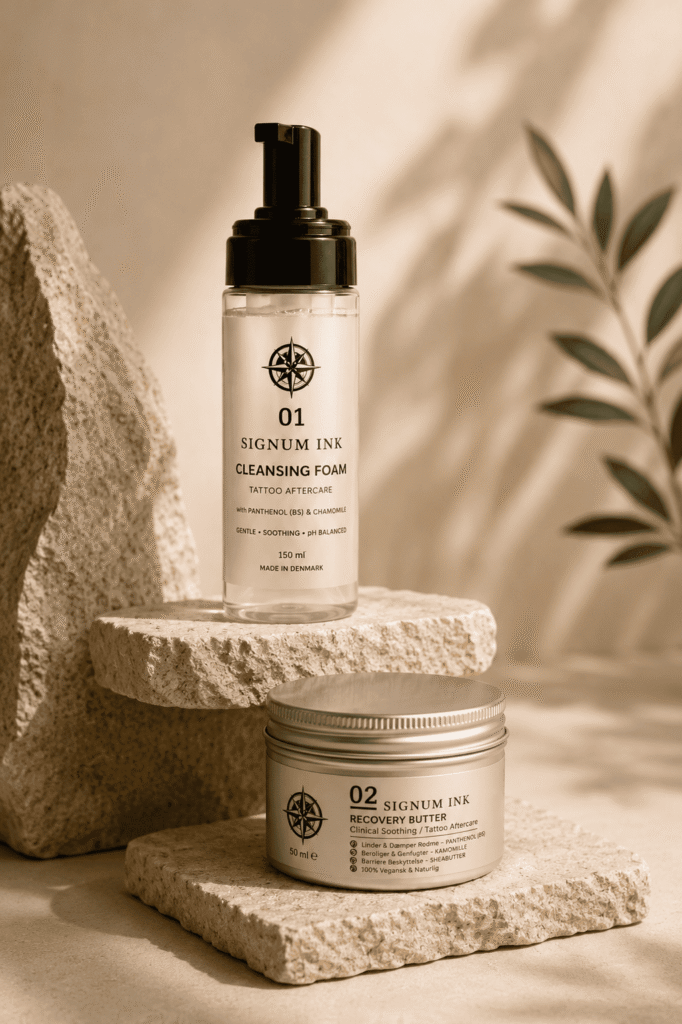
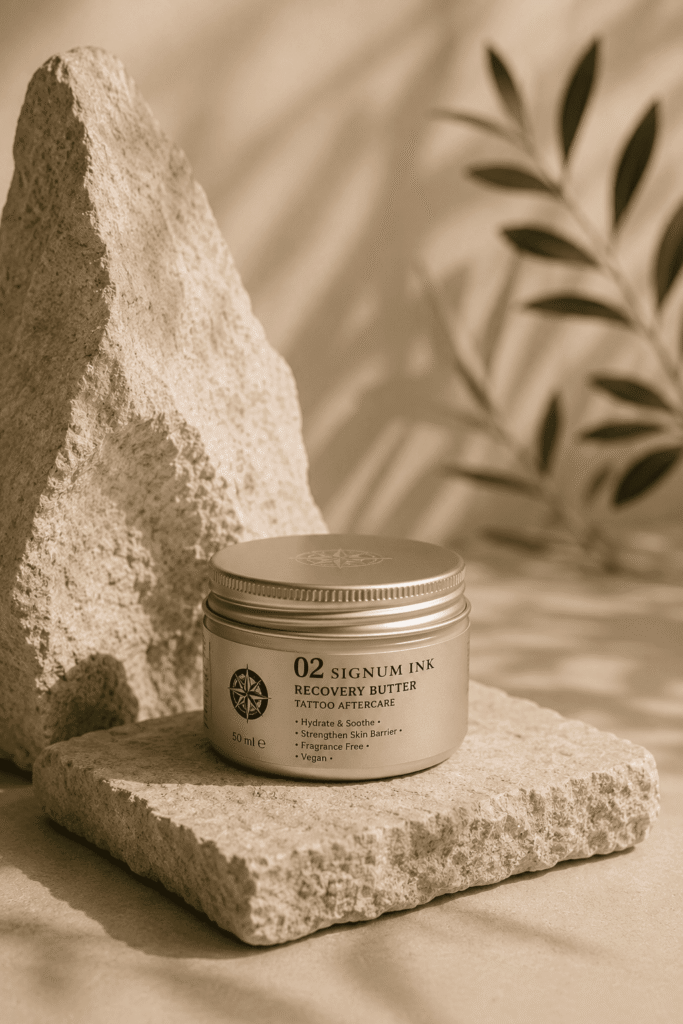
Panthenol in der Recovery Cream: Unterstützt die Haut auf dem Weg zur Heilung
Nach dem Tätowieren beginnt die Haut einen komplexen Reparaturprozess. Während dieser Zeit ist die Aufrechterhaltung der Flüssigkeitszufuhr nur ein Teil der wirksamen Nachsorge. Die Unterstützung der natürlichen Hautbarriere und die Linderung von Beschwerden sind ebenso wichtig.
Das ist einer der Gründe, warum Panthenol ist zu einer Hauptzutat in hochwertigen Erholungscremes geworden.
Auf die Haut aufgetragen, Panthenol wird umgewandelt in Pantothensäure (Vitamin B5), wo es die natürlichen Hautfunktionen unterstützt. Kombiniert mit einer ausgewogenen feuchtigkeitsspendenden Formel, Panthenol trägt dazu bei, heilende Haut weich, geschmeidig und mit Feuchtigkeit versorgt zu halten.
Im Gegensatz zu schwereren okklusiven Inhaltsstoffen, die hauptsächlich eine Schutzschicht auf der Oberfläche bilden, Panthenol funktioniert als Teil einer umfassenderen Hautpflegestrategie, indem es die körpereigene Hautbarrierefunktion unterstützt.
Für frisch tätowierte Haut bedeutet dies eine Zutat, die den natürlichen Heilungsprozess des Körpers unterstützt, anstatt die Haut einfach nur zu bedecken.
Dies ist ein Grund, warum Panthenol wird häufig in Regenerationscremes für empfindliche und geschädigte Haut aufgenommen.
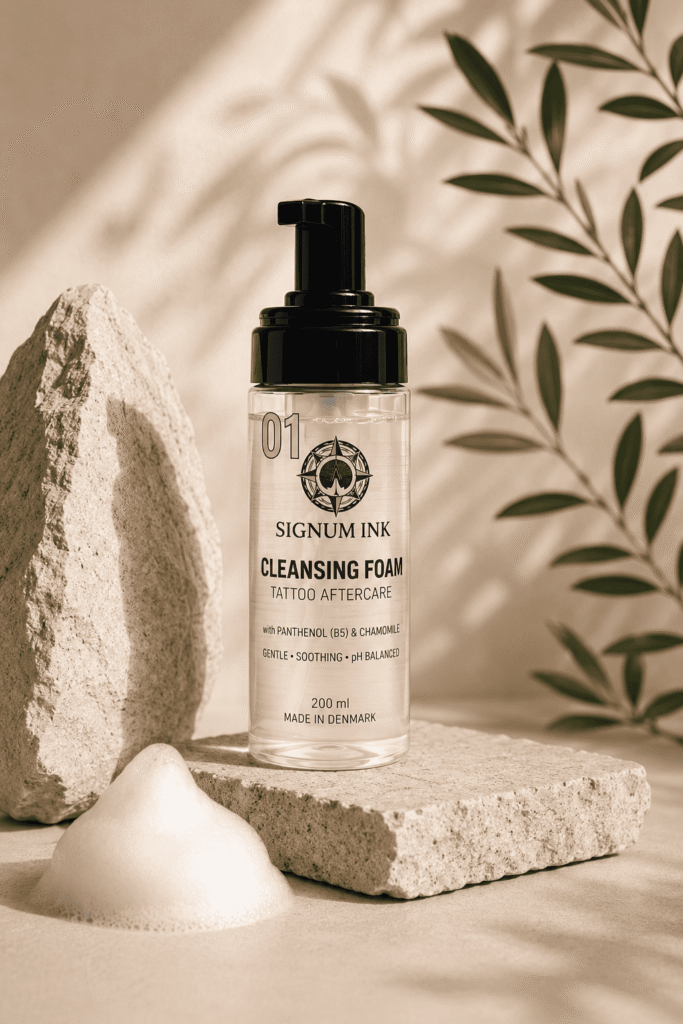
Panthenol in Tattoo-Schaumseife: Sanfte Pflege vom allerersten Waschen an
Viele Leute konzentrieren sich stark auf Feuchtigkeitscremes nach einer Tätowierung, übersehen aber die Bedeutung der Reinigung.
Eine gründliche Reinigung entfernt überschüssige Tinte, Plasma, Schweiß und tägliche Verunreinigungen und trägt gleichzeitig dazu bei, eine gesunde Hautumgebung zu erhalten.
Die Reinigung sollte jedoch niemals dazu führen, dass sich ein heilendes Tattoo trocken oder unangenehm anfühlt.
Hier ist wo Panthenol bietet zusätzlichen Wert.
Wenn es in einen sanften Tattoo-Schaumreiniger eingearbeitet ist, Panthenol unterstützt den Hautkomfort bei der täglichen Reinigung.
Zusammen mit feuchtigkeitsspendenden Inhaltsstoffen, Panthenol trägt zu einem Reinigungsmittel bei, das die natürliche Hautbarriere respektiert und gleichzeitig Unreinheiten effektiv entfernt.
Dieser ausgewogene Ansatz sorgt dafür, dass frisch tätowierte Haut sauber bleibt, ohne unnötige Trockenheit zu verursachen.
Ein moderner Tattoo-Reiniger sollte mehr tun, als nur die Haut zu reinigen – er sollte helfen, die Haut auf den nächsten Schritt in der Nachsorge vorzubereiten.
Die Wissenschaft hinter Panthenol
Panthenol wurde in der Dermatologie und kosmetischen Wissenschaft umfassend untersucht.
Seine Popularität beruht nicht nur auf der Verbrauchererfahrung, sondern auch auf jahrzehntelanger wissenschaftlicher Forschung, die seine Auswirkungen auf die Hautfeuchtigkeit, die Barrierefunktion und den Hautkomfort untersucht hat.
Forschungen haben gezeigt, dass topische Panthenol kann die Hydratation der äußeren Hautschichten verbessern und gleichzeitig die Hautbarriere unterstützen.
Eine gesunde Hautbarriere ist unerlässlich, da sie hilft, den Feuchtigkeitsverlust zu regulieren und die Haut vor externen Umweltbelastungen zu schützen.
Für die Heilung von Tätowierungen trägt die Aufrechterhaltung einer gesunden Barriere zu einem angenehmeren Heilungsprozess bei.
Wissenschaftliche Studien haben außerdem gezeigt, dass Panthenol dringt in die äußeren Hautschichten ein, wo es in Pantothensäure umgewandelt wird und so an der normalen Hautphysiologie teilnehmen kann.
Diese biologische Aktivität ist ein Grund dafür, warum Panthenol bleibt einer der am meisten respektierten Inhaltsstoffe, die in Produkten für empfindliche Haut verwendet werden.
Panthenol im Vergleich zu anderen beliebten Tattoo-Aftercare-Inhaltsstoffen
Jede Zutat hat ihre eigenen Stärken.
Verständnis dafür, wie Panthenol Vergleiche mit anderen bekannten Hautpflegeinhaltsstoffen erklären, warum sie oft mit ihnen kombiniert und nicht ersetzt werden.
Panthenol vs. Glycerin
Beide Inhaltsstoffe tragen zu hydrierter Haut bei, aber sie wirken unterschiedlich.
Glycerin ist primär ein Feuchthaltemittel, das Wasser in die äußeren Hautschichten zieht.
Panthenol unterstützt die Hydration und trägt gleichzeitig zum Hautkomfort bei und hilft, die Hautbarriere aufrechtzuerhalten.
Da ihre Mechanismen sich ergänzen, werden sie in hochwertigen Hautpflegeprodukten häufig zusammen eingesetzt.
Panthenol gegen Allantoin
Allantoin ist bekannt für seine hautpflegenden Eigenschaften und wird häufig in Produkten für empfindliche Haut verwendet.
Panthenol konzentriert sich mehr auf die Hydratation und die Unterstützung der Hautbarriere.
Zusammen bilden sie eine ausgezeichnete Kombination für die Haut nach dem Tätowieren.
Panthenol vs. Aloe Vera
Aloe Vera wird für sein erfrischendes Gefühl und seine pflanzlichen hautpflegenden Eigenschaften geschätzt.
Panthenol bietet eine andere Art der Unterstützung, indem sie hilft, die Flüssigkeitszufuhr während der natürlichen Erholungsprozesse der Haut aufrechtzuerhalten.
Viele moderne Hautpflegeprodukte enthalten beide Inhaltsstoffe, da sie sich außergewöhnlich gut ergänzen.
Panthenol gegen Beta-Glucan
Beide Inhaltsstoffe erfreuen sich in der fortschrittlichen Hautpflege wachsender Beliebtheit.
Beta-Glucan wird für seine Unterstützung der Hautbarriere und zur Verbesserung des Hautkomforts geschätzt.
Panthenol trägt zur Feuchtigkeit bei und hilft, eine gesunde Haut zu erhalten.
Zusammen bieten sie einen ausgewogenen Ansatz zur Unterstützung der Heilung der Haut.
Warum Dermatologen Panthenol vertrauen
Nur wenige kosmetische Inhaltsstoffe haben sich über Jahrzehnte dermatologischer Praxis hinweg einen derart konstant positiven Ruf bewahrt.
Dermatologen empfehlen häufig Panthenol weil es ist:
- Gut recherchiert.
- Sehr gut verträglich für empfindliche Haut.
- Effektiv zur Unterstützung der Flüssigkeitszufuhr.
- Geeignet für den täglichen Gebrauch.
- Einfach mit anderen nützlichen Hautpflegeinhaltsstoffen zu kombinieren.
Seine Vielseitigkeit erklärt, warum Panthenol findet sich nicht nur in der Tattoo-Nachsorge, sondern auch in Produkten für Babys, nach kosmetischen Eingriffen, bei trockener Haut und geschädigten Hautbarrieren.
Da sich die Hautpflegewissenschaft weiterentwickelt hat, sind viele Inhaltsstoffe in ihrer Beliebtheit gestiegen und gefallen.
Panthenol, jedoch eine vertrauenswürdige Zutat geblieben, da seine Vorteile weiterhin sowohl durch wissenschaftliche Forschung als auch durch jahrzehntelange praktische Anwendung gestützt werden.
Für Formulierer, die Tattoo-Nachsorgeprodukte entwickeln, Panthenol steht für Zuverlässigkeit, Sicherheit und nachgewiesene Leistung – Qualitäten, die es zu einem der Fundamente der modernen Hautpflege gemacht haben.
Häufig gestellte Fragen zu Panthenol (Vitamin B5)
Was ist Panthenol?
Panthenol, auch bekannt als Provitamin B5, ist ein Hautpflege-Inhaltsstoff, der sich in Pantothensäure (Vitamin B5) Wenn es von der Haut aufgenommen wird. Es wird häufig in der Dermatologie und in kosmetischen Formulierungen verwendet, da es die Hydration und die natürliche Schutzbarriere der Haut unterstützt.

Panthenol wird in der Tattoo-Nachsorge verwendet, weil es feuchtigkeitsspendend und entzündungshemmend wirkt. Es hilft, die Haut mit Feuchtigkeit zu versorgen und zu beruhigen, was für die Heilung eines frischen Tattoos entscheidend ist.
Frische Tattoos belasten die Hautbarriere vorübergehend.
Panthenol wird üblicherweise in Tattoo-Aftercare-Produkten verwendet, da es hilft, die Feuchtigkeit zu bewahren und gleichzeitig den natürlichen Heilungsprozess der Haut zu unterstützen, wodurch sich die Haut während der Heilung weicher und angenehmer anfühlt.
Ist Panthenol für empfindliche Haut geeignet?
Ja.
Einer der Gründe Panthenol so beliebt geworden ist, ist seine hervorragende Verträglichkeit mit empfindlicher Haut.
Es wird häufig in Produkten für Babys, trockene Haut, Hautpflege nach Eingriffen und geschädigte Hautbarrieren verwendet, da es im Allgemeinen gut verträglich ist.
Kann Panthenol helfen, trockene Haut zu reduzieren?
Hydration ist einer der Hauptgründe, warum Formulierer wählen Panthenol.
Indem sie hilft, Feuchtigkeit in den äußeren Hautschichten zu erhalten, Panthenol trägt zu einer Haut bei, die sich hydrierter und wohler anfühlt.
Kann Panthenol jeden Tag verwendet werden?
Absolut.
Panthenol gilt als für die regelmäßige tägliche Anwendung geeignet und wird häufig in Produkten für die häufige Anwendung eingesetzt.
Für die Tattoo-Nachsorge sind regelmäßiges Reinigen und Eincremen wesentliche Bestandteile einer gesunden Heilungsroutine.
Ist Panthenol nur für Tätowierungen von Vorteil?
Gern geschehen.
Obwohl Panthenol wird in der Tätowiernachsorge häufig verwendet, ist sie gleichermaßen wertvoll für die alltägliche Hautpflege.
Sie finden es häufig in Feuchtigkeitscremes, Gesichtsessenzen, Körperlotionen, Handcremes, Babyprodukten und Formulierungen für trockene oder empfindliche Haut.
Ersetzt Panthenol eine Feuchtigkeitscreme?
Nein.
Während Panthenol trägt zur Hydration bei, am besten wirkt es als Teil einer vollständigen Hautpflegeformulierung, die zusätzliche feuchtigkeitsspendende und Barriere-unterstützende Inhaltsstoffe enthält.
Darum kombinieren professionelle Hautpflegeprodukte mehrere komplementäre Inhaltsstoffe, anstatt sich auf einen einzigen Wirkstoff zu verlassen.
Kann Panthenol mit anderen Inhaltsstoffen kombiniert werden?
Ja.
Einer Panthenols stärkste Vorteile ist seine Kompatibilität mit anderen Hautpflegeinhaltsstoffen.
Es funktioniert besonders gut in Kombination mit:
- Glycerin
- Beta-Glucan
- Allantoin
- Aloe Vera
- Ceramide
- Ringelblumenextrakt
- Sheabutter
- Vitamin E
Jede Zutat trägt auf unterschiedliche Weise dazu bei, eine ausgewogene Hautpflegeformel zu schaffen.
Ist Panthenol ein natürlicher Inhaltsstoff?
Panthenol ist die Alkoholform von Vitamin B5 und wird unter sorgfältig kontrollierten Bedingungen für kosmetische Zwecke hergestellt.
Obwohl synthetisch hergestellt, ist es chemisch identisch mit der Form, die in der Haut in Pantothensäure umgewandelt wird.
Warum empfehlen Dermatologen Panthenol?
Dermatologen vertrauen Panthenol jahrzehntelang wegen seiner ausgezeichneten Hautverträglichkeit und seiner Fähigkeit, die Feuchtigkeit und die Hautbarriere zu unterstützen.
Seine lange Anwendungsgeschichte und die umfangreiche wissenschaftliche Dokumentation haben es zu einem der angesehensten Inhaltsstoffe in der modernen Hautpflege gemacht.
Was sagt die Forschung?
Panthenol ist einer der am besten untersuchten Inhaltsstoffe, die in der modernen Hautpflege verwendet werden.
Die Forschung über mehrere Jahrzehnte hat gezeigt, dass topische Panthenol können
- Verbessert die Hydration in den oberen Hautschichten.
- Unterstützt die natürliche Barrierefunktion der Haut.
- Reduziert den transepidermalen Wasserverlust (TEWL) und hilft der Haut, Feuchtigkeit zu speichern.
- Verbessert die Hautweichheit und Elastizität bei regelmäßiger Anwendung.
- Unterstützt den allgemeinen Hautkomfort bei trockener oder umweltbelasteter Haut.
Mehrere klinische Studien haben auch gezeigt, dass Formulierungen, die Folgendes enthalten Panthenol zur verbesserten Barriereerholung im Vergleich zu unbehandelter Haut beitragen. Während die Ergebnisse je nach Formulierung und Person variieren, unterstützen die Beweise konsistent Panthenol als wertvoller Inhaltsstoff zur Aufrechterhaltung einer gesunden Hautfeuchtigkeit und Barrierefunktion.
Aus diesen Gründen, Panthenol wird weiterhin häufig in Produkten für empfindliche Haut, Hautpflege nach Eingriffen, Babypflege und Tattoo-Nachsorge eingesetzt.
Gängige Mythen über Panthenol
Mythos 1: Panthenol ist nur eine Feuchtigkeitscreme.
Realität
Während Hydration einer seiner Hauptvorteile ist, Panthenol wird auch für seine Unterstützung der Hautbarriere und des allgemeinen Hautkomforts geschätzt.
Mythos 2: Panthenol ist nur bei trockener Haut nützlich.
Realität
Gesunde Flüssigkeitszufuhr nützt allen Hauttypen, einschließlich öliger und Mischhaut.
Mythos 3: Mehr Panthenol bedeutet immer bessere Ergebnisse.
Realität
Professionelle Hautpflegeformulierungen sind sorgfältig ausbalanciert. Die Wirksamkeit von Panthenol hängt von der vollständigen Formulierung ab und nicht einfach von einer Erhöhung seiner Konzentration.
Mythos 4: Panthenol wird nur in Kosmetikprodukten verwendet.
Realität
Wegen seiner ausgezeichneten Hautverträglichkeit, Panthenol ist auch in der dermatologischen Hautpflege, Babypflegeprodukten und Formulierungen für geschädigte Haut enthalten.
Abschließende Gedanken
Obwohl die Kosmetikindustrie jedes Jahr neue Inhaltsstoffe auf den Markt bringt, Panthenol bleibt einer der vertrauenswürdigsten und wissenschaftlich am besten etablierten Inhaltsstoffe, die verfügbar sind.
Seine Fähigkeit, die Hydratation zu unterstützen, die Hautbarriere zu stärken und mit anderen komplementären Inhaltsstoffen zusammenzuarbeiten, hat es zu einem Eckpfeiler moderner Hautpflegeformulierungen gemacht.
Für die Tätowierpflege sind diese Eigenschaften besonders wertvoll.
Die Heilung der Haut profitiert von Produkten, die helfen, Feuchtigkeit zu bewahren und gleichzeitig den natürlichen Erholungsprozess der Haut respektieren.
Anstatt sich auf Trends oder Marketingversprechen zu verlassen, Panthenol hat sich seinen Ruf durch jahrzehntelange wissenschaftliche Forschung und praktische Anwendung verdient.
Ob in einem sanften Reinigungsmittel, einer regenerierenden Creme oder einer täglichen Feuchtigkeitscreme verwendet, Panthenol fährt fort, zu beweisen, warum es als eine der wesentlichen Zutaten für die Erhaltung einer gesunden Haut gilt.
Lerne weiter
Wenn Ihnen dieser Artikel gefallen hat, finden Sie vielleicht auch diese Anleitungen hilfreich:
- Glycerin zur Nachsorge von Tätowierungen
- Beta-Glucan: Erweiterte Barriereunterstützung
- Allantoin: Sanfte Pflege für heilende Haut
- Centella Asiatica: Die Heilpflanze der Natur zur Regeneration
- Warum Hautfeuchtigkeit nach dem Tätowieren wichtig ist
- So bauen Sie die perfekte Tattoo-Nachsorge-Routine auf
 English
  German
  Dutch
Dutch  Danish
  Swedish
  French
  Italian