Ein frisches Tattoo ist viel mehr als Körperkunst. In den ersten Wochen nach dem Stechen heilt deine Haut von tausenden mikroskopischen Einstichen. Die Haut sauber, feucht und geschützt zu halten, ist entscheidend, um leuchtende Farben, scharfe Linien und eine angenehme Heilung zu erzielen.
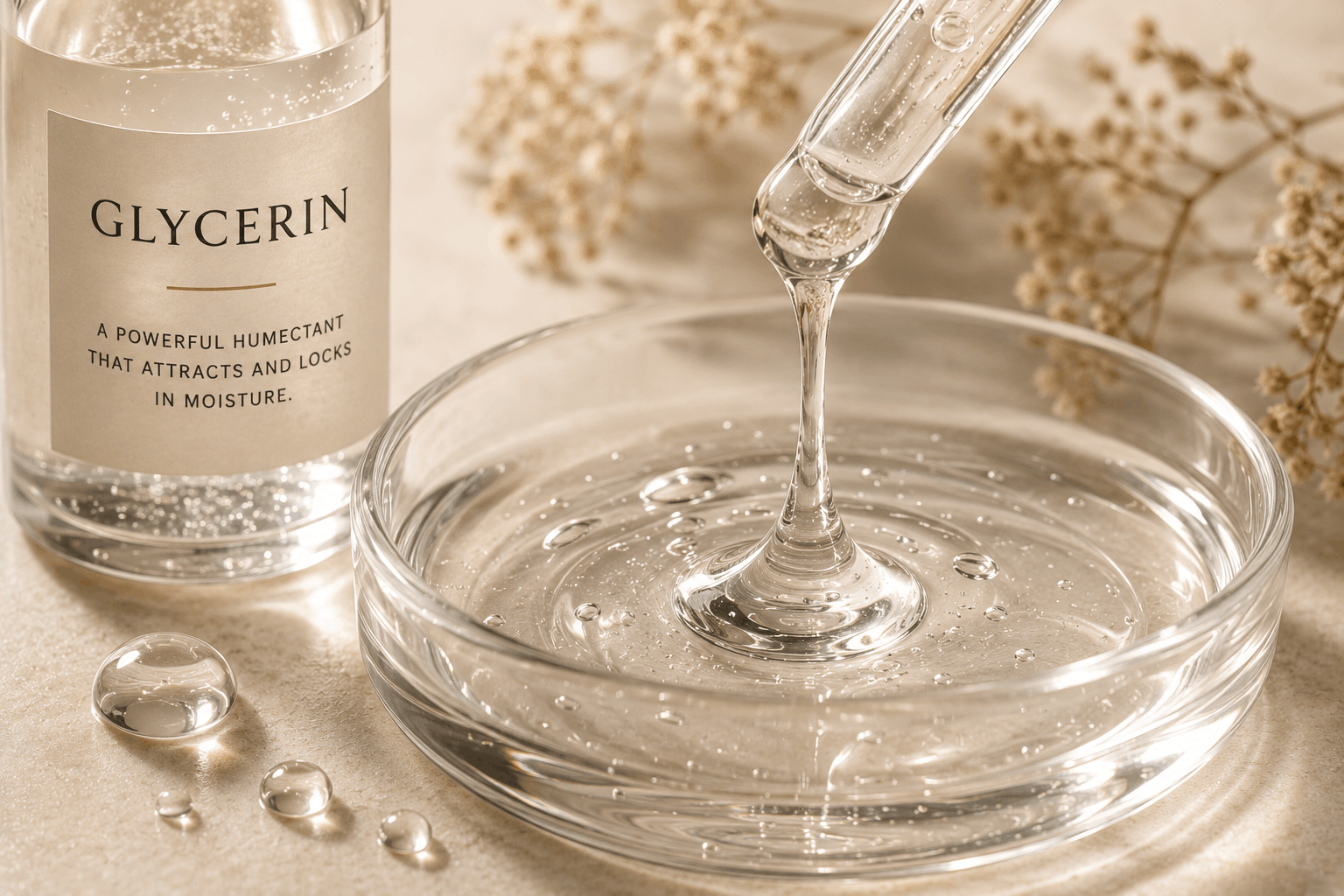
Eine Zutat, die sich einen festen Platz in der modernen Hautpflege erobert hat, ist Glycerin. Obwohl es vielleicht nicht so viel Aufmerksamkeit erhält wie Inhaltsstoffe wie Panthenol oder Hyaluronsäure, Glycerin wird seit Jahrzehnten von Dermatologen und Hautpflegeformulierern wegen seiner bemerkenswerten Fähigkeit, Feuchtigkeit anzuziehen und zu speichern, geschätzt.
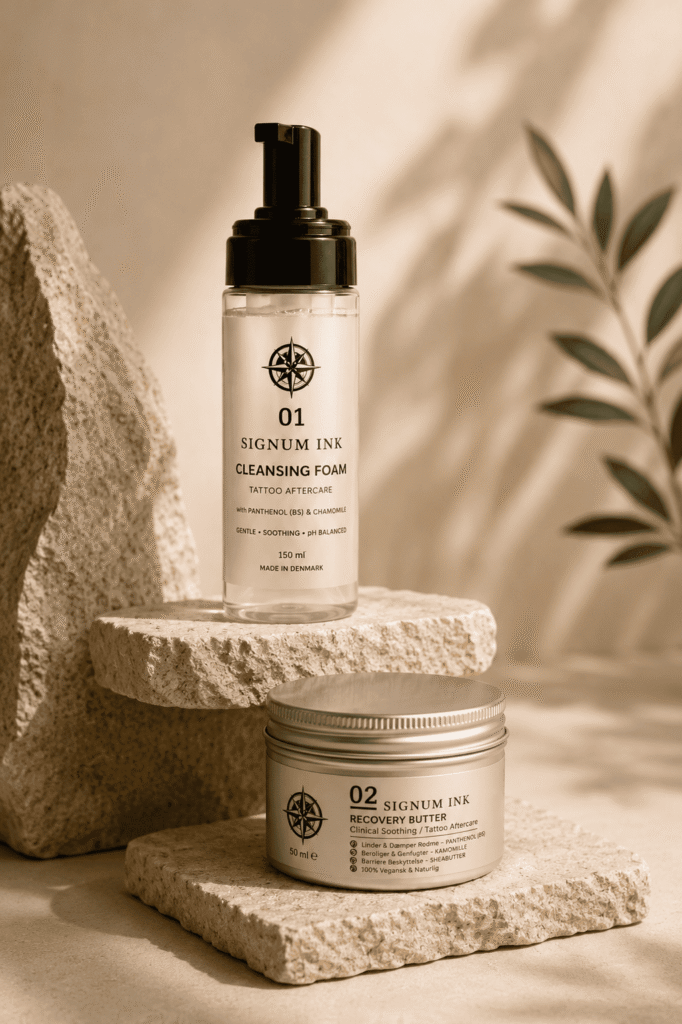
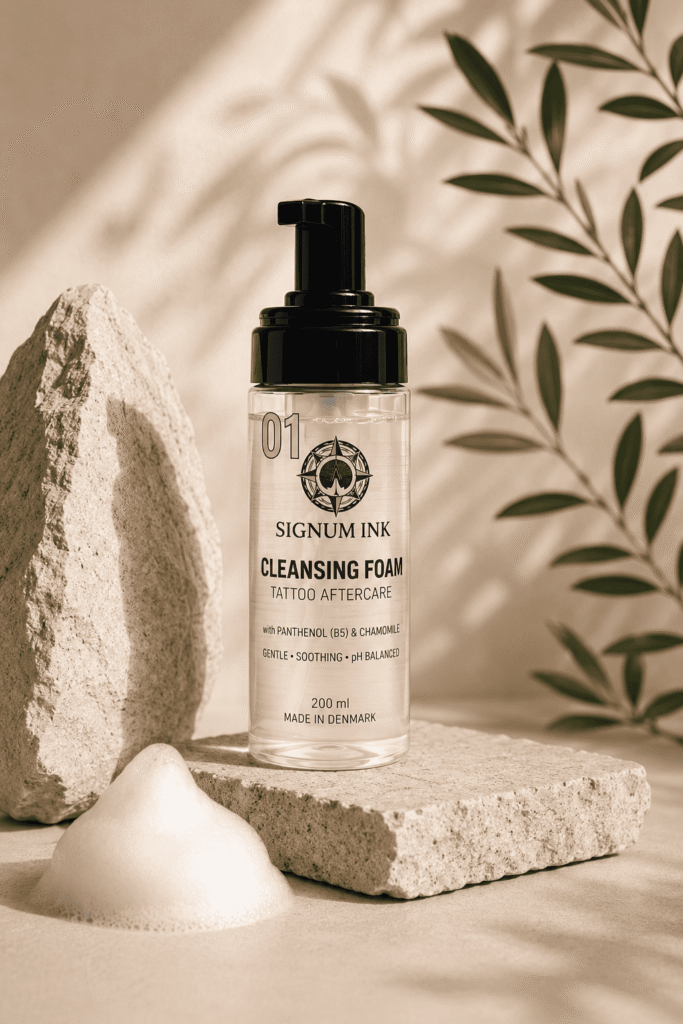
Bei Signum Ink, Glycerin sorgfältig als einer der Hauptbestandteile in beiden unserer Regenerierende Creme und Tattoo Schaumseife. Es hilft, den natürlichen Feuchtigkeitshaushalt der Haut zu erhalten und unterstützt den Heilungsprozess, ohne die Haut schwer oder fettig zu hinterlassen.
Ob Sie sich Ihr allererstes Tattoo stechen lassen oder ein weiteres Stück zu Ihrer Sammlung hinzufügen, wie Sie verstehen Glycerin Arbeiten können Ihnen helfen, bessere Entscheidungen während des Heilungsprozesses zu treffen.
Was ist Glycerin?
Glycerin, manchmal als Glycerin auf der Zutatenliste aufgeführt, ist eine natürlich vorkommende Verbindung, die sowohl in Pflanzen als auch in Tieren vorkommt. Heute ist kosmetische Qualität Glycerin wird hauptsächlich aus Pflanzenölen gewonnen, was es für moderne Hautpflegeformulierungen geeignet macht.
Der Grund Glycerin ist in Tausenden von Premium-Hautpflegeprodukten enthalten, ist einfach – sie ist eines der wirksamsten Feuchthaltemittel der Natur.
Ein Feuchthaltemittel ist ein Inhaltsstoff, der Wasser anzieht.
Anstatt einfach die Hautoberfläche zu beschichten, Glycerin zieht Feuchtigkeit zur äußeren Hautschicht, um die Feuchtigkeitsversorgung dort aufrechtzuerhalten, wo sie am dringendsten benötigt wird.
Im Gegensatz zu schweren Ölen, die eine physikalische Barriere bilden, Glycerin funktioniert mit dem natürlichen Feuchtigkeitssystem der Haut und ist daher für fast jeden Hauttyp geeignet.
Dies ist besonders wertvoll während der Tattooheilung, wo die Haut ständig Feuchtigkeit verliert, während sie sich selbst repariert.
Wie funktioniert Glycerin?
Um zu verstehen, warum Glycerin ist so effektiv, es hilft zu verstehen, was nach dem Tätowieren passiert.
Unmittelbar nach einer Tattoo-Sitzung beginnt die Haut mit einem intensiven Reparaturprozess.
Während dieser Zeit wird die Haut oft:
- Trocken
- Eng
- Empfindlich
- Leicht entzündet
- Feuchtigkeitsverlustanfälliger
Hier ist wo Glycerin wird besonders wertvoll.
Weil Glycerin zieht Wassermoleküle sowohl aus der Umgebung als auch aus tieferen Hautschichten an und hilft so, die Feuchtigkeit in den oberen Epidermisschichten aufrechtzuerhalten.
Wenn die Haut richtig hydriert ist, fühlt sie sich im Allgemeinen an:
- Weicher
- Bequemer
- Weniger eng
- Weniger anfällig für übermäßige Trockenheit
Die Aufrechterhaltung der Feuchtigkeit unterstützt auch die natürliche Hautbarriere, die während des Tätowierungsheilungsprozesses eine wichtige Rolle spielt.
Im Gegensatz zu Inhaltsstoffen, die nur auf der Haut liegen, Glycerin integriert sich natürlich in den Feuchtigkeitszyklus der Haut.
Das ist einer der Gründe, warum Glycerin zu einer der am weitesten verbreiteten feuchtigkeitsspendenden Inhaltsstoffe in der Dermatologie geworden ist.
Warum Flüssigkeitszufuhr für frische Tattoos unerlässlich ist
Ein heilendes Tattoo verliert ständig Wasser durch einen Prozess, der als transepidermaler Wasserverlust (TEWL) bekannt ist.
Wenn Feuchtigkeit entweicht, kann sich die Haut unangenehm anfühlen.
Häufige Symptome sind:
- Trockenheit
- Enge
- Abschuppung
- Raue Textur
- Erhöhte Empfindlichkeit
Die richtige Tätowierungsnachsorge konzentriert sich auf die Aufrechterhaltung des richtigen Feuchtigkeitshaushalts – die Tätowierung weder übermäßig nass zu machen, noch sie übermäßig austrocknen zu lassen.
Hier ist wo Glycerin zeichnet sich aus.
Weil Glycerin hilft kontinuierlich, Feuchtigkeit anzuziehen, unterstützt er eine ausgeglichenere Heilungsumgebung.
Viele Tattoo-Enthusiasten bemerken, dass sich gut hydrierte Haut während des Heilungsprozesses einfach angenehmer anfühlt.
Während jede Haut anders heilt, wird die Aufrechterhaltung der Flüssigkeitszufuhr weithin als wichtiger Teil der Unterstützung einer gesunden Hautregeneration anerkannt.
Warum Glycerin in der professionellen Hautpflege verwendet wird
Es gibt einen Grund, warum Glycerin erscheint in Produkten vieler der weltweit führenden Hautpflegemarken.
Es bietet eine hervorragende Kombination aus Leistung, Kompatibilität und Hautverträglichkeit.
Einige der Hauptgründe, warum Formulierer wählen Glycerin einschließlich:
Hervorragende Feuchtigkeitsspeicherung
Glycerin hilft, Wasser in den äußeren Hautschichten zu binden und zu halten, was eine langanhaltende Feuchtigkeitsversorgung unterstützt.
Geeignet für die meisten Hauttypen
Ob Ihre Haut von Natur aus trocken, normal, Mischhaut oder ölig ist, Glycerin ist generell gut verträglich und lässt sich gut in verschiedene Formulierungen integrieren.
Leichtes Gefühl
Im Gegensatz zu schwereren okklusiven Inhaltsstoffen, Glycerin spendet Feuchtigkeit, ohne ein dickes oder fettiges Finish zu hinterlassen.
Dies macht es besonders nützlich in Produkten für die Tattoo-Nachsorge, wo Komfort unerlässlich ist.
Funktioniert gut mit anderen Zutaten
Ein weiterer großer Vorteil von Glycerin wie leicht es mit anderen vorteilhaften Hautpflegeinhaltsstoffen zusammenarbeitet.
Zum Beispiel, Glycerin ergänzt Zutaten wie:
- Panthenol
- Beta-Glucan
- Aloe Vera
- Allantoin
- Ringelblumenextrakt
- Sheabutter
Jede Zutat trägt anders bei, während Glycerin hilft, die für eine gesunde Haut notwendige Feuchtigkeit zu erhalten.
Warum wir Glycerin in Signum Ink-Produkten verwenden
Bei Signum Ink wird jede Zutat mit einem klaren Zweck ausgewählt.
Wir beinhalten Glycerin da es zwei der wichtigsten Ziele bei der Nachsorge von Tattoos unterstützt:
- Frisch tätowierte Haut angenehm hydriert halten.
- Hilft, den natürlichen Feuchtigkeitshaushalt der Haut während der Reinigung und Erholung zu erhalten.
In unserem Tattoo Schaumseife, Glycerin hilft, das Gefühl von Trockenheit zu reduzieren, das manchmal nach der Hautreinigung auftreten kann.
Anstatt die Haut auszutrocknen, trägt es zu einem weicheren, angenehmeren Gefühl nach der Reinigung bei.
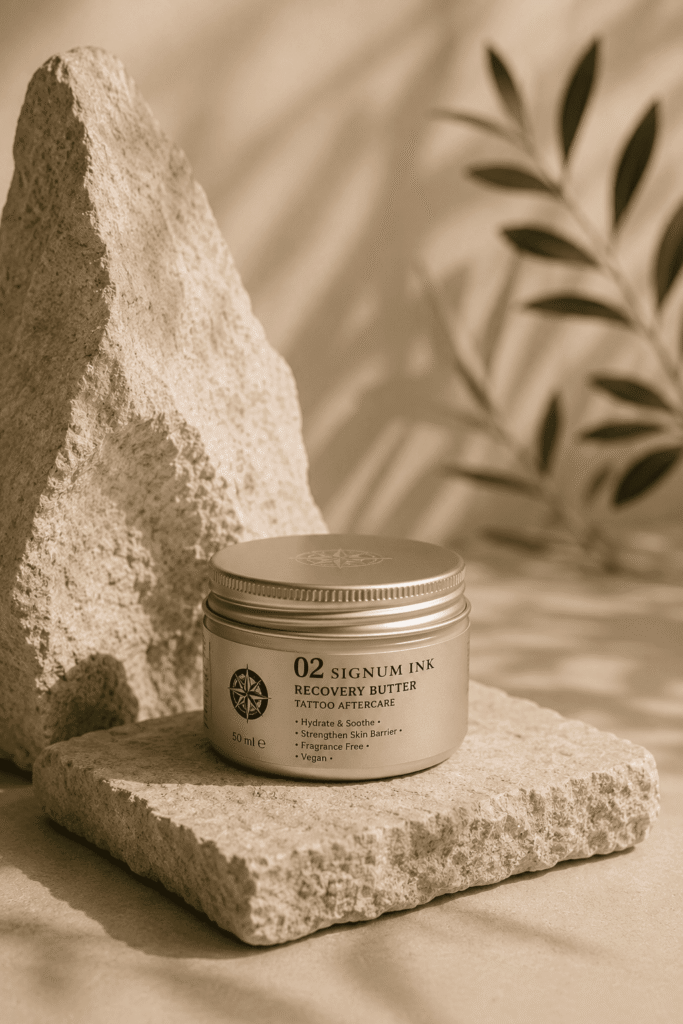
In unserem Regenerierende Creme, Glycerin arbeitet zusammen mit anderen sorgfältig ausgewählten Inhaltsstoffen, um leichte Feuchtigkeit zu spenden und gleichzeitig die schützende Feuchtigkeitsbarriere der Haut zu unterstützen.
Das Ergebnis ist eine Hautpflege, die darauf abzielt, den Komfort während des gesamten Tattoo-Heilungsprozesses zu erhalten, ohne sich übermäßig schwer auf der Haut anzufühlen.
Glycerin in Recovery Cream: Lang anhaltende Feuchtigkeit für heilende Haut
Nachdem Ihre Tattoo-Sitzung beendet ist, beginnt Ihre Haut sofort mit einem natürlichen Reparaturprozess. In den folgenden Tagen und Wochen arbeitet die Haut kontinuierlich daran, ihre Schutzbarriere wieder aufzubauen und beschädigte Zellen zu ersetzen. Während dieser Zeit ist die Aufrechterhaltung einer angemessenen Flüssigkeitszufuhr einer der wichtigsten Aspekte einer erfolgreichen Tattoo-Nachsorge.
Hier ist wo Glycerin spielt eine entscheidende Rolle in Signum Ink Recovery Cream.
Im Gegensatz zu Inhaltsstoffen, die einfach auf der Hautoberfläche liegen, Glycerin fungiert als hochwirksames Feuchthaltemittel. Es hilft, Feuchtigkeit in die oberen Hautschichten zu ziehen und unterstützt die Hydratation genau dort, wo frisch tätowierte Haut sie am dringendsten benötigt.
Frische Tätowierungen verlieren oft vermehrt Feuchtigkeit, was zu einem Gefühl der Spannung und Unbehaglichkeit führen kann. Durch die Unterstützung der Hydration, Glycerin trägt zu weicherer, angenehmerer Haut während des Heilungsprozesses bei.
Einer der größten Vorteile von Glycerin dass es Feuchtigkeit spendet, ohne ein übermäßig fettiges oder schweres Gefühl zu hinterlassen. Das macht es ideal für moderne Tattoo-Nachsorgeprodukte, die darauf abzielen, die Haut zu nähren und ihr gleichzeitig ein angenehmes Atmen zu ermöglichen.
Bei Signum Ink, Glycerin wird mit sorgfältig ausgewählten hautpflegenden Inhaltsstoffen kombiniert, um eine ausgewogene Regenerationscreme zu schaffen, die auf die Unterstützung einer gesunden Haut abzielt, anstatt Trockenheit allein mit reichhaltigen Ölen zu kaschieren.
Glycerin in Tattoo Foam Soap: Gentle Cleansing Without Excessive Dryness
Cleaning a fresh tattoo is just as important as moisturizing it.
Throughout the healing process, tattoos should be cleansed carefully to remove excess ink, plasma, sweat, and everyday impurities. However, cleansing should never leave the skin feeling tight or stripped.
Many traditional soaps remove not only dirt but also a significant amount of the skin’s natural moisture.
This is why Glycerin is such an important ingredient in Signum Ink Tattoo Foam Soap.
As the skin is cleansed, Glycerin helps reduce the drying sensation that can occur after washing. Instead of feeling rough or uncomfortable, the skin feels cleaner while maintaining a more balanced level of hydration.
This makes daily cleansing a more pleasant experience throughout the tattoo healing process.
A quality tattoo cleanser should achieve two goals at the same time:
- Remove unwanted impurities.
- Respect the skin’s natural moisture balance.
Glycerin helps support this balance by contributing moisture while cleansing takes place.
The result is a tattoo foam that feels gentle, refreshing, and suitable for repeated daily use.
The Science Behind Glycerin
The effectiveness of Glycerin is supported by decades of scientific research.
Unlike many cosmetic ingredients that appear and disappear with trends, Glycerin has remained one of the most trusted moisturizing ingredients in dermatology for generations.
Research consistently shows that Glycerin helps improve hydration of the outer skin layers and supports the skin barrier by attracting and retaining water.
For healing skin, maintaining adequate hydration is important because moisture supports the flexibility of the outer skin layers and contributes to overall skin comfort.
Scientists often describe Glycerin as one of the benchmark ingredients against which many newer moisturizers are compared.
Despite the introduction of countless modern skincare ingredients, Glycerin continues to be included in premium formulations because of its proven performance, excellent compatibility, and reliable skin tolerance.
Glycerin Compared with Other Moisturizing Ingredients
Modern tattoo aftercare products often combine several moisturizing ingredients because each one contributes in a different way.
Verständnis dafür, wie Glycerin compares with other popular ingredients helps explain why it remains a cornerstone of professional skincare formulations.
Glycerin vs. Hyaluronic Acid
Both ingredients are exceptional humectants, meaning they attract water.
Hyaluronic Acid is well known for its ability to bind significant amounts of water and provide an immediate feeling of hydration.
Glycerin, however, is often valued for its consistency, stability, and ability to support long-lasting hydration across a wide range of skincare formulations.
Rather than competing with one another, these ingredients often complement each other beautifully.
Glycerin vs. Panthenol
Panthenol (Provitamin B5) is widely appreciated for helping soothe the skin while supporting the skin barrier.
Glycerin focuses primarily on attracting and maintaining moisture.
Together, they create an excellent combination for tattoo aftercare by helping the skin remain hydrated while supporting overall skin comfort.
This is one reason why many premium tattoo recovery products include both ingredients.
Glycerin vs. Aloe Vera
Aloe Vera is valued for its cooling sensation and skin-conditioning properties.
Glycerin, on the other hand, excels at maintaining moisture within the skin.
While Aloe Vera provides a refreshing feel, Glycerin works continuously to support hydration over time.
When used together, they create a balanced skincare experience that feels both soothing and moisturizing.
Glycerin vs. Shea Butter
Shea Butter works differently from Glycerin.
Instead of attracting water, Shea Butter helps reduce moisture loss by forming a protective layer on the skin.
Glycerin brings moisture into the skin, while Shea Butter helps keep that moisture from escaping.
This complementary relationship is one reason why these ingredients are frequently paired in recovery creams designed for dry or healing skin.
Why Glycerin Continues to Be a Gold Standard
Skincare trends constantly evolve, introducing new ingredients with impressive marketing claims.
Doch Glycerin continues to appear in products developed by dermatologists and premium skincare brands around the world.
Why?
Weil Glycerin consistently delivers results.
Es ist:
- Highly effective at attracting moisture.
- Suitable for nearly all skin types.
- Lightweight and comfortable on the skin.
- Compatible with a wide range of skincare ingredients.
- Backed by decades of scientific use.
For tattoo aftercare, these qualities make Glycerin an outstanding ingredient in both cleansing and recovery products.
Rather than relying on a single “miracle ingredient,” modern tattoo skincare combines carefully selected ingredients that work together—and Glycerin remains one of the most important building blocks of that approach.
Frequently Asked Questions About Glycerin and Tattoo Aftercare
Is Glycerin good for a new tattoo?
Ja. Glycerin is widely used in tattoo aftercare because it helps maintain skin hydration during the healing process. Freshly tattooed skin naturally loses moisture while repairing itself, and Glycerin helps attract water to the outer layers of the skin, making the skin feel softer and more comfortable.
Can Glycerin help prevent dry skin after getting tattooed?
Einer der größten Vorteile von Glycerin is its ability to reduce the feeling of dryness. While some flaking during tattoo healing is completely normal, maintaining proper hydration helps keep the skin feeling more comfortable throughout the healing process.
Is Glycerin suitable for sensitive skin?
In general, Glycerin is considered one of the most skin-friendly moisturizing ingredients available. It has been used safely in skincare for decades and is commonly included in products designed for sensitive and compromised skin.
As with any cosmetic product, individual reactions can occur, so it is always recommended to follow your tattoo artist’s aftercare advice and discontinue use if irritation develops.
Why is Glycerin used in tattoo foam soap?
Many cleansers remove dirt effectively but may also leave the skin feeling dry.
Einschließlich Glycerin in a tattoo foam soap helps support the skin’s moisture balance during cleansing. This creates a gentler cleansing experience while helping the skin feel clean, refreshed, and comfortable after washing.
Why is Glycerin included in tattoo recovery creams?
Recovery creams are designed to help maintain a healthy environment for healing skin.
Glycerin contributes by attracting moisture to the skin’s surface while working alongside other carefully selected ingredients to support hydration and skin comfort.
Does Glycerin make the skin feel greasy?
Nicht unbedingt.
Unlike many heavy oils, Glycerin is lightweight and water-loving. When formulated correctly, it provides hydration without leaving an excessively greasy finish.
This makes it particularly suitable for modern tattoo aftercare products where comfort is just as important as moisturization.
Can Glycerin be combined with other skincare ingredients?
Absolut.
Einer der Gründe Glycerin remains so popular is its excellent compatibility with other active skincare ingredients.
It works particularly well alongside ingredients such as:
- Panthenol
- Beta-Glucan
- Aloe Vera
- Allantoin
- Ringelblumenextrakt
- Sheabutter
- Jojobaöl
- Vitamin E
Each ingredient contributes unique benefits while Glycerin hilft, die für eine gesunde Haut notwendige Feuchtigkeit zu erhalten.
Is Glycerin only beneficial during tattoo healing?
Nein.
Obwohl Glycerin is excellent for tattoo aftercare, it also benefits everyday skincare.
People with dry, dehydrated, or environmentally stressed skin often use products containing Glycerin as part of their daily skincare routine to help maintain healthy skin hydration.
Is vegetable Glycerin better?
Most premium skincare products, including modern tattoo aftercare formulations, use vegetable-derived Glycerin because it offers excellent purity and compatibility with contemporary cosmetic formulations.
Why do dermatologists recommend Glycerin?
Dermatologen empfehlen häufig Glycerin because it is one of the most thoroughly researched and reliable moisturizing ingredients available.
Its long history of safe use, excellent skin compatibility, and ability to support hydration have made it a cornerstone of professional skincare formulations worldwide.
Common Myths About Glycerin
Myth 1: Glycerin makes the skin oily.
Realität
Glycerin attracts moisture—it is not an oil. Well-formulated products containing Glycerin generally leave the skin feeling hydrated rather than greasy.
Myth 2: Glycerin is only for dry skin.
Realität
All skin types benefit from maintaining proper hydration, including normal, combination, and oily skin.
Myth 3: More Glycerin is always better.
Realität
Like every skincare ingredient, Glycerin performs best at carefully balanced concentrations. Professional formulations are designed to achieve effective hydration while maintaining an elegant skin feel.
Myth 4: Glycerin is an outdated ingredient.
Realität
Despite being used for generations, Glycerin remains one of the most trusted moisturizing ingredients in dermatology and premium skincare. Its continued popularity is based on proven performance rather than marketing trends.
Abschließende Gedanken
When it comes to tattoo aftercare, there are countless ingredients promising healthier skin and better healing. Few, however, have earned the level of trust and scientific recognition that Glycerin has achieved.
Its ability to attract and retain moisture makes it one of the most valuable ingredients for supporting comfortable, well-hydrated skin during the tattoo healing process.
At Signum Tinte, we believe exceptional tattoo aftercare starts with carefully selected ingredients that complement each other rather than relying on a single “hero ingredient.”
That is why Glycerin plays an important role in both our Regenerierende Creme and our Tattoo Schaumseife.
While the foam cleanser helps cleanse freshly tattooed skin without leaving it feeling excessively dry, the recovery cream helps maintain hydration throughout the healing journey.
Together, they create a balanced aftercare routine designed to support clean, comfortable, and healthy-looking skin from the first wash to the final stage of recovery.
Choosing high-quality tattoo aftercare is about more than simply applying a cream or using a cleanser. It is about understanding how carefully selected ingredients work together to support your skin every step of the way.
For that reason, Glycerin continues to be one of the most trusted ingredients in modern tattoo skincare—and one of the reasons it remains an essential part of the Signum Ink philosophy.
Recommended Reading
Continue exploring the science behind premium tattoo aftercare:
- Panthenol (Vitamin B5): Why It Is Essential for Tattoo Healing
- Beta-Glucan: Advanced Skin Barrier Support
- Allantoin: Soothing Freshly Tattooed Skin
- Centella Asiatica: The Science Behind Skin Recovery
- Why Hydration Matters During Tattoo Healing
- How to Wash a New Tattoo Correctly
- Recovery Cream vs. Tattoo Butter – What’s the Difference?
 English
  German