Ein frisches Tattoo ist viel mehr als Körperkunst. In den ersten Wochen nach dem Stechen heilt deine Haut von tausenden mikroskopischen Einstichen. Die Haut sauber, feucht und geschützt zu halten, ist entscheidend, um leuchtende Farben, scharfe Linien und eine angenehme Heilung zu erzielen.
Eine Zutat, die sich einen festen Platz in der modernen Hautpflege erobert hat, ist Glycerin. Obwohl es vielleicht nicht so viel Aufmerksamkeit erhält wie Inhaltsstoffe wie Panthenol oder Hyaluronsäure, Glycerin wird seit Jahrzehnten von Dermatologen und Hautpflegeformulierern wegen seiner bemerkenswerten Fähigkeit, Feuchtigkeit anzuziehen und zu speichern, geschätzt.
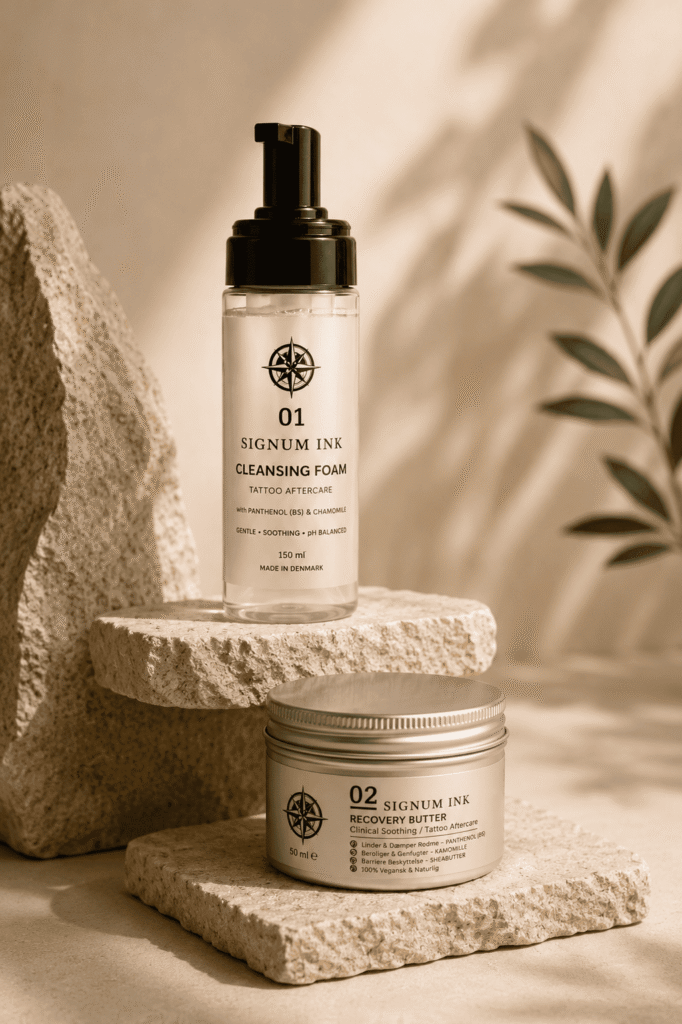
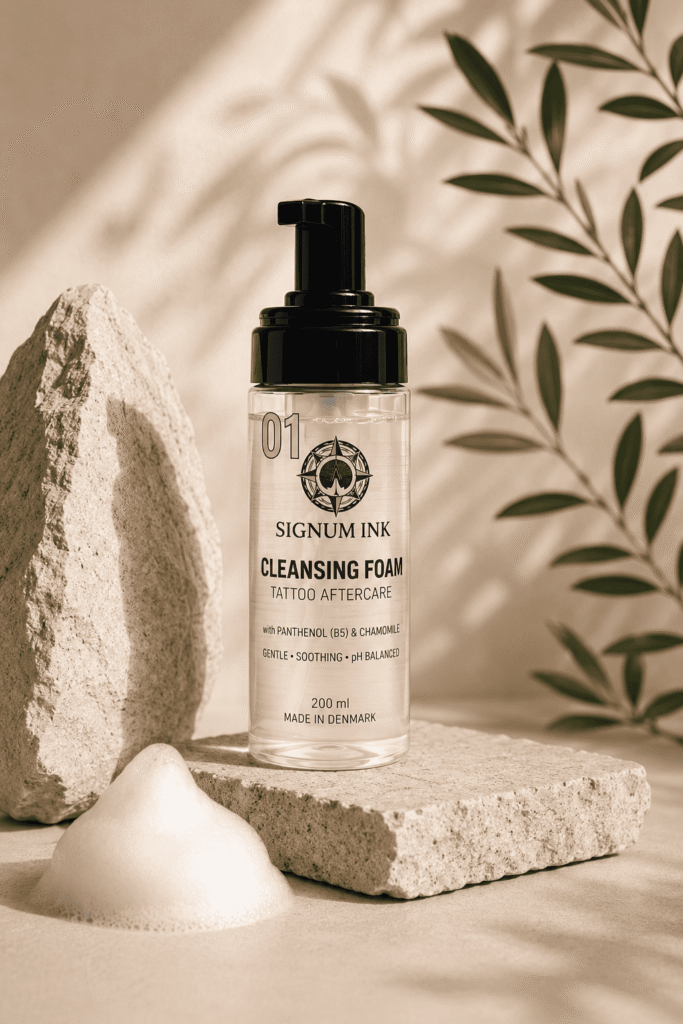
Bei Signum Ink, Glycerin sorgfältig als einer der Hauptbestandteile in beiden unserer Regenerierende Creme und Tattoo Schaumseife. Es hilft, den natürlichen Feuchtigkeitshaushalt der Haut zu erhalten und unterstützt den Heilungsprozess, ohne die Haut schwer oder fettig zu hinterlassen.
Ob Sie sich Ihr allererstes Tattoo stechen lassen oder ein weiteres Stück zu Ihrer Sammlung hinzufügen, wie Sie verstehen Glycerin Arbeiten können Ihnen helfen, bessere Entscheidungen während des Heilungsprozesses zu treffen.
Was ist Glycerin?
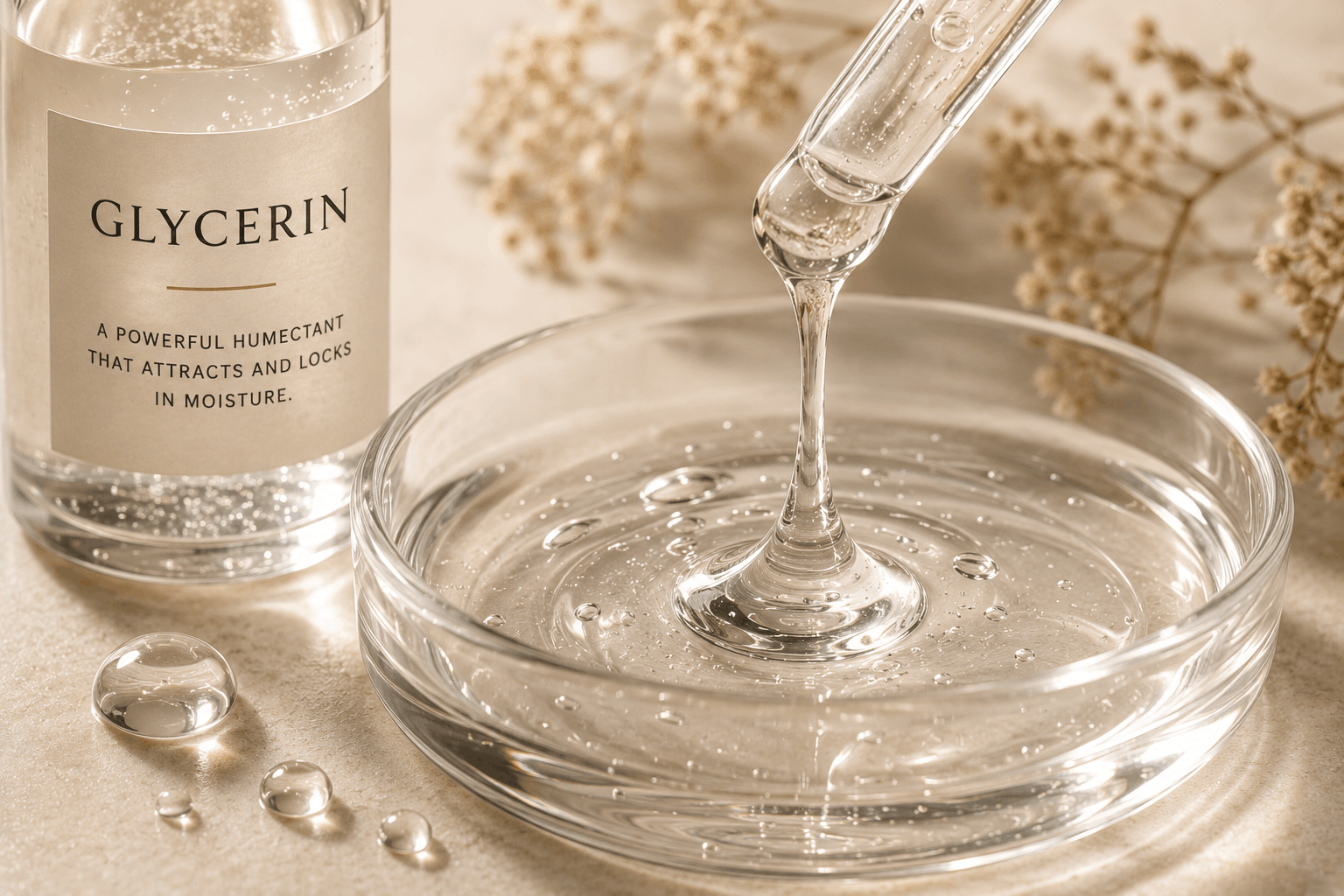
Glycerin, manchmal als Glycerin auf der Zutatenliste aufgeführt, ist eine natürlich vorkommende Verbindung, die sowohl in Pflanzen als auch in Tieren vorkommt. Heute ist kosmetische Qualität Glycerin wird hauptsächlich aus Pflanzenölen gewonnen, was es für moderne Hautpflegeformulierungen geeignet macht.
Der Grund Glycerin ist in Tausenden von Premium-Hautpflegeprodukten enthalten, ist einfach – sie ist eines der wirksamsten Feuchthaltemittel der Natur.
Ein Feuchthaltemittel ist ein Inhaltsstoff, der Wasser anzieht.
Anstatt einfach die Hautoberfläche zu beschichten, Glycerin zieht Feuchtigkeit zur äußeren Hautschicht, um die Feuchtigkeitsversorgung dort aufrechtzuerhalten, wo sie am dringendsten benötigt wird.
Im Gegensatz zu schweren Ölen, die eine physikalische Barriere bilden, Glycerin funktioniert mit dem natürlichen Feuchtigkeitssystem der Haut und ist daher für fast jeden Hauttyp geeignet.
Dies ist besonders wertvoll während der Tattooheilung, wo die Haut ständig Feuchtigkeit verliert, während sie sich selbst repariert.
Wie funktioniert Glycerin?
Um zu verstehen, warum Glycerin ist so effektiv, es hilft zu verstehen, was nach dem Tätowieren passiert.
Unmittelbar nach einer Tattoo-Sitzung beginnt die Haut mit einem intensiven Reparaturprozess.
Während dieser Zeit wird die Haut oft:
- Trocken
- Eng
- Empfindlich
- Leicht entzündet
- Feuchtigkeitsverlustanfälliger
Hier ist wo Glycerin wird besonders wertvoll.
Weil Glycerin zieht Wassermoleküle sowohl aus der Umgebung als auch aus tieferen Hautschichten an und hilft so, die Feuchtigkeit in den oberen Epidermisschichten aufrechtzuerhalten.
Wenn die Haut richtig hydriert ist, fühlt sie sich im Allgemeinen an:
- Weicher
- Bequemer
- Weniger eng
- Weniger anfällig für übermäßige Trockenheit
Die Aufrechterhaltung der Feuchtigkeit unterstützt auch die natürliche Hautbarriere, die während des Tätowierungsheilungsprozesses eine wichtige Rolle spielt.
Im Gegensatz zu Inhaltsstoffen, die nur auf der Haut liegen, Glycerin integriert sich natürlich in den Feuchtigkeitszyklus der Haut.
Das ist einer der Gründe, warum Glycerin zu einer der am weitesten verbreiteten feuchtigkeitsspendenden Inhaltsstoffe in der Dermatologie geworden ist.
Warum Flüssigkeitszufuhr für frische Tattoos unerlässlich ist
Ein heilendes Tattoo verliert ständig Wasser durch einen Prozess, der als transepidermaler Wasserverlust (TEWL) bekannt ist.
Wenn Feuchtigkeit entweicht, kann sich die Haut unangenehm anfühlen.
Häufige Symptome sind:
- Trockenheit
- Enge
- Abschuppung
- Raue Textur
- Erhöhte Empfindlichkeit
Die richtige Tätowierungsnachsorge konzentriert sich auf die Aufrechterhaltung des richtigen Feuchtigkeitshaushalts – die Tätowierung weder übermäßig nass zu machen, noch sie übermäßig austrocknen zu lassen.
Hier ist wo Glycerin zeichnet sich aus.
Weil Glycerin hilft kontinuierlich, Feuchtigkeit anzuziehen, unterstützt er eine ausgeglichenere Heilungsumgebung.
Viele Tattoo-Enthusiasten bemerken, dass sich gut hydrierte Haut während des Heilungsprozesses einfach angenehmer anfühlt.
Während jede Haut anders heilt, wird die Aufrechterhaltung der Flüssigkeitszufuhr weithin als wichtiger Teil der Unterstützung einer gesunden Hautregeneration anerkannt.
Warum Glycerin in der professionellen Hautpflege verwendet wird
Es gibt einen Grund, warum Glycerin erscheint in Produkten vieler der weltweit führenden Hautpflegemarken.
Es bietet eine hervorragende Kombination aus Leistung, Kompatibilität und Hautverträglichkeit.
Einige der Hauptgründe, warum Formulierer wählen Glycerin einschließlich:
Hervorragende Feuchtigkeitsspeicherung
Glycerin hilft, Wasser in den äußeren Hautschichten zu binden und zu halten, was eine langanhaltende Feuchtigkeitsversorgung unterstützt.
Geeignet für die meisten Hauttypen
Ob Ihre Haut von Natur aus trocken, normal, Mischhaut oder ölig ist, Glycerin ist generell gut verträglich und lässt sich gut in verschiedene Formulierungen integrieren.
Leichtes Gefühl
Im Gegensatz zu schwereren okklusiven Inhaltsstoffen, Glycerin spendet Feuchtigkeit, ohne ein dickes oder fettiges Finish zu hinterlassen.
Dies macht es besonders nützlich in Produkten für die Tattoo-Nachsorge, wo Komfort unerlässlich ist.
Funktioniert gut mit anderen Zutaten
Ein weiterer großer Vorteil von Glycerin wie leicht es mit anderen vorteilhaften Hautpflegeinhaltsstoffen zusammenarbeitet.
Zum Beispiel, Glycerin ergänzt Zutaten wie:
- Panthenol
- Beta-Glucan
- Aloe Vera
- Allantoin
- Ringelblumenextrakt
- Sheabutter
Jede Zutat trägt anders bei, während Glycerin hilft, die für eine gesunde Haut notwendige Feuchtigkeit zu erhalten.
Warum wir Glycerin in Signum Ink-Produkten verwenden
Bei Signum Ink wird jede Zutat mit einem klaren Zweck ausgewählt.
Wir beinhalten Glycerin da es zwei der wichtigsten Ziele bei der Nachsorge von Tattoos unterstützt:
- Frisch tätowierte Haut angenehm hydriert halten.
- Hilft, den natürlichen Feuchtigkeitshaushalt der Haut während der Reinigung und Erholung zu erhalten.
In unserem Tattoo Schaumseife, Glycerin hilft, das Gefühl von Trockenheit zu reduzieren, das manchmal nach der Hautreinigung auftreten kann.
Anstatt die Haut auszutrocknen, trägt es zu einem weicheren, angenehmeren Gefühl nach der Reinigung bei.
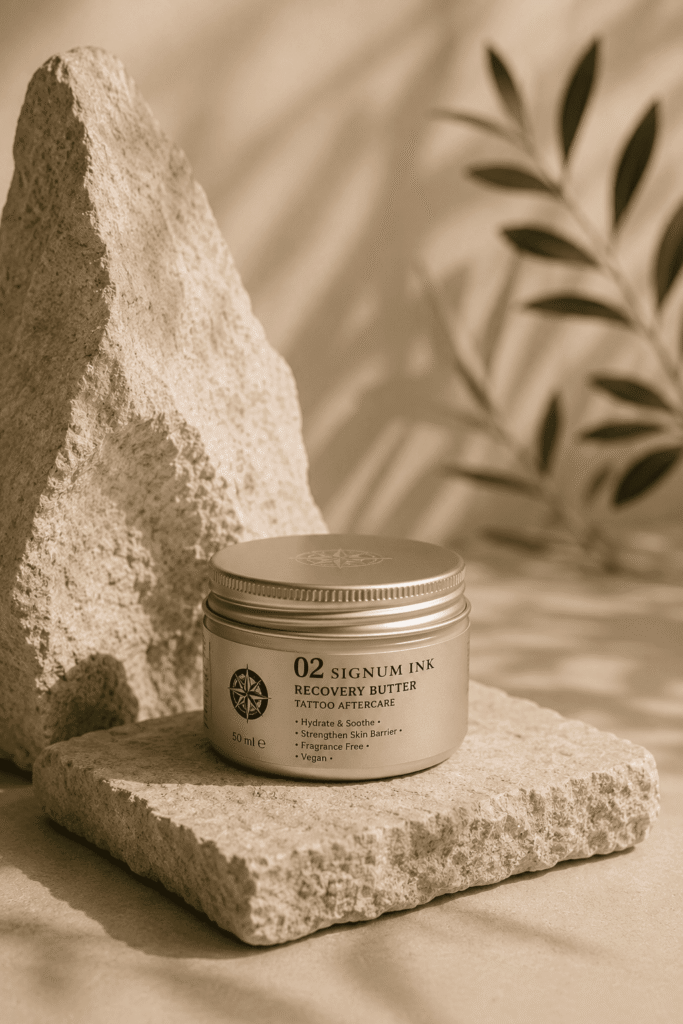
In unserem Regenerierende Creme, Glycerin arbeitet zusammen mit anderen sorgfältig ausgewählten Inhaltsstoffen, um leichte Feuchtigkeit zu spenden und gleichzeitig die schützende Feuchtigkeitsbarriere der Haut zu unterstützen.
Das Ergebnis ist eine Hautpflege, die darauf abzielt, den Komfort während des gesamten Tattoo-Heilungsprozesses zu erhalten, ohne sich übermäßig schwer auf der Haut anzufühlen.
Glycerin in Recovery Cream: Lang anhaltende Feuchtigkeit für heilende Haut
Nachdem Ihre Tattoo-Sitzung beendet ist, beginnt Ihre Haut sofort mit einem natürlichen Reparaturprozess. In den folgenden Tagen und Wochen arbeitet die Haut kontinuierlich daran, ihre Schutzbarriere wieder aufzubauen und beschädigte Zellen zu ersetzen. Während dieser Zeit ist die Aufrechterhaltung einer angemessenen Flüssigkeitszufuhr einer der wichtigsten Aspekte einer erfolgreichen Tattoo-Nachsorge.
Hier ist wo Glycerin spielt eine entscheidende Rolle in Signum Ink Recovery Cream.
Im Gegensatz zu Inhaltsstoffen, die einfach auf der Hautoberfläche liegen, Glycerin fungiert als hochwirksames Feuchthaltemittel. Es hilft, Feuchtigkeit in die oberen Hautschichten zu ziehen und unterstützt die Hydratation genau dort, wo frisch tätowierte Haut sie am dringendsten benötigt.
Frische Tätowierungen verlieren oft vermehrt Feuchtigkeit, was zu einem Gefühl der Spannung und Unbehaglichkeit führen kann. Durch die Unterstützung der Hydration, Glycerin trägt zu weicherer, angenehmerer Haut während des Heilungsprozesses bei.
Einer der größten Vorteile von Glycerin dass es Feuchtigkeit spendet, ohne ein übermäßig fettiges oder schweres Gefühl zu hinterlassen. Das macht es ideal für moderne Tattoo-Nachsorgeprodukte, die darauf abzielen, die Haut zu nähren und ihr gleichzeitig ein angenehmes Atmen zu ermöglichen.
Bei Signum Ink, Glycerin wird mit sorgfältig ausgewählten hautpflegenden Inhaltsstoffen kombiniert, um eine ausgewogene Regenerationscreme zu schaffen, die auf die Unterstützung einer gesunden Haut abzielt, anstatt Trockenheit allein mit reichhaltigen Ölen zu kaschieren.
Glycerin in Tattoo-Schaumseife: Sanfte Reinigung ohne übermäßige Austrocknung
Die Reinigung eines frischen Tattoos ist genauso wichtig wie die Pflege mit Feuchtigkeit.
Während des Heilungsprozesses sollten Tätowierungen sorgfältig gereinigt werden, um überschüssige Tinte, Plasma, Schweiß und alltägliche Verunreinigungen zu entfernen. Die Reinigung sollte die Haut jedoch niemals straff oder ausgetrocknet hinterlassen.
Viele traditionelle Seifen entfernen nicht nur Schmutz, sondern auch einen erheblichen Teil der natürlichen Feuchtigkeit der Haut.
Darum Glycerin ist eine so wichtige Zutat in Signum Ink Tattoo Schaumseife.
Während die Haut gereinigt wird, Glycerin hilft, das Trockenheitsgefühl nach dem Waschen zu reduzieren. Anstatt sich rau oder unangenehm anzufühlen, fühlt sich die Haut sauberer an und behält gleichzeitig einen ausgewogeneren Feuchtigkeitsgehalt.
Dies macht die tägliche Reinigung während des gesamten Heilungsprozesses des Tattoos zu einem angenehmeren Erlebnis.
Ein qualitativ hochwertiges Tattoo-Reinigungsmittel sollte zwei Ziele gleichzeitig erfüllen:
- Unerwünschte Verunreinigungen entfernen.
- Respektieren Sie das natürliche Feuchtigkeitsgleichgewicht der Haut.
Glycerin unterstützt dieses Gleichgewicht, indem sie während der Reinigung Feuchtigkeit spendet.
Das Ergebnis ist ein Tattoo-Schaum, der sich sanft und erfrischend anfühlt und sich für die wiederholte tägliche Anwendung eignet.
Die Wissenschaft hinter Glycerin
Die Wirksamkeit von Glycerin wird durch jahrzehntelange wissenschaftliche Forschung gestützt.
Im Gegensatz zu vielen kosmetischen Inhaltsstoffen, die mit Trends auftauchen und wieder verschwinden, Glycerin ist seit Generationen einer der vertrauenswürdigsten feuchtigkeitsspendenden Inhaltsstoffe in der Dermatologie geblieben.
Forschungsergebnisse zeigen durchweg, dass Glycerin verbessert die Hydration der äußeren Hautschichten und unterstützt die Hautbarriere, indem es Wasser anzieht und speichert.
Für die Hautheilung ist eine ausreichende Flüssigkeitszufuhr wichtig, da Feuchtigkeit die Elastizität der äußeren Hautschichten unterstützt und zum allgemeinen Hautkomfort beiträgt.
Wissenschaftler beschreiben oft Glycerin als eine der Benchmark-Zutaten, mit denen viele neuere Feuchtigkeitscremes verglichen werden.
Trotz der Einführung unzähliger moderner Hautpflegeinhaltsstoffe, Glycerin wird aufgrund seiner nachgewiesenen Leistung, hervorragenden Verträglichkeit und zuverlässigen Hautverträglichkeit weiterhin in Premiumformulierungen verwendet.
Glycerin im Vergleich zu anderen feuchtigkeitsspendenden Inhaltsstoffen
Moderne Tattoo-Pflegeprodukte kombinieren oft mehrere feuchtigkeitsspendende Inhaltsstoffe, da jeder auf unterschiedliche Weise dazu beiträgt.
Verständnis dafür, wie Glycerin vergleicht mit anderen beliebten Inhaltsstoffen erklärt, warum es ein Eckpfeiler professioneller Hautpflegeformulierungen bleibt.
Glycerin vs. Hyaluronsäure
Beide Inhaltsstoffe sind außergewöhnliche Feuchthaltemittel, was bedeutet, dass sie Wasser anziehen.
Hyaluronsäure ist bekannt für ihre Fähigkeit, erhebliche Mengen Wasser zu binden und ein sofortiges Gefühl der Hydration zu vermitteln.
Glycerin, wird jedoch oft für seine Konsistenz, Stabilität und seine Fähigkeit geschätzt, lang anhaltende Feuchtigkeit in einer Vielzahl von Hautpflegeformulierungen zu unterstützen.
Anstatt miteinander zu konkurrieren, ergänzen sich diese Zutaten oft auf wunderbare Weise.
Glycerin gegen Panthenol
Panthenol (Provitamin B5) wird weithin dafür geschätzt, dass es die Haut beruhigt und gleichzeitig die Hautbarriere unterstützt.
Glycerin konzentriert sich hauptsächlich auf das Anziehen und Beibehalten von Feuchtigkeit.
Zusammen ergeben sie eine ausgezeichnete Kombination für die Tattoo-Nachsorge, da sie dazu beitragen, die Haut mit Feuchtigkeit versorgt zu halten und gleichzeitig den allgemeinen Hautkomfort zu unterstützen.
Dies ist einer der Gründe, warum viele Premium-Tattoo-Pflegeprodukte beide Inhaltsstoffe enthalten.
Glycerin vs. Aloe Vera
Aloe Vera wird für seine kühlende Wirkung und seine hautpflegenden Eigenschaften geschätzt.
Glycerin, hingegen zeichnet sich durch die Erhaltung der Feuchtigkeit in der Haut aus.
Obwohl Aloe Vera ein erfrischendes Gefühl bietet, Glycerin arbeitet kontinuierlich daran, die Hydration über die Zeit zu unterstützen.
Wenn sie zusammen verwendet werden, ergeben sie ein ausgewogenes Hautpflegeerlebnis, das sowohl beruhigend als auch feuchtigkeitsspendend ist.
Glycerin gegen Sheabutter
Sheabutter wirkt anders als Glycerin.
Anstatt Wasser anzuziehen, hilft Sheabutter, den Feuchtigkeitsverlust zu reduzieren, indem sie eine schützende Schicht auf der Haut bildet.
Glycerin bringt Feuchtigkeit in die Haut, während Sheabutter hilft, diese Feuchtigkeit nicht entweichen zu lassen.
Diese komplementäre Beziehung ist ein Grund dafür, dass diese Inhaltsstoffe häufig in Regenerationscremes für trockene oder heilende Haut kombiniert werden.
Warum Glycerin weiterhin ein Goldstandard ist
Hautpflegetrends entwickeln sich ständig weiter und führen neue Inhaltsstoffe mit beeindruckenden Marketingaussagen ein.
Doch Glycerin weiterhin in Produkten von Dermatologen und Premium-Hautpflegemarken weltweit zu finden ist.
Warum?
Weil Glycerin liefert konstant Ergebnisse.
Es ist:
- Hochwirksam bei der Anziehung von Feuchtigkeit.
- Geeignet für nahezu alle Hauttypen.
- Leicht und angenehm auf der Haut.
- Verträglich mit einer Vielzahl von Hautpflegeinhaltsstoffen.
- Gestützt auf jahrzehntelange wissenschaftliche Nutzung.
Für die Nachsorge von Tattoos machen diese Eigenschaften Glycerin ein herausragender Inhaltsstoff in Reinigungs- und Regenerationsprodukten.
Anstatt sich auf eine einzige “Wunderzutat” zu verlassen, kombiniert moderne Tattoo-Hautpflege sorgfältig ausgewählte Inhaltsstoffe, die zusammenarbeiten – und Glycerin bleibt einer der wichtigsten Bausteine dieses Ansatzes.
Häufig gestellte Fragen zu Glycerin und Tattoo-Nachsorge
Ist Glycerin gut für ein neues Tattoo?
Ja. Glycerin wird häufig in der Nachsorge von Tätowierungen verwendet, da es dazu beiträgt, die Hautfeuchtigkeit während des Heilungsprozesses aufrechtzuerhalten. Frisch tätowierte Haut verliert während der Reparatur von Natur aus Feuchtigkeit und Glycerin hilft, Wasser in die äußeren Hautschichten zu ziehen, wodurch sich die Haut weicher und angenehmer anfühlt.
Kann Glycerin helfen, trockene Haut nach dem Tätowieren zu verhindern?
Einer der größten Vorteile von Glycerin ist seine Fähigkeit, das Gefühl von Trockenheit zu reduzieren. Während ein gewisses Abschälen während der Tätowierungsheilung völlig normal ist, hilft die richtige Hydration, die Haut während des Heilungsprozesses angenehmer zu halten.
Ist Glycerin für empfindliche Haut geeignet?
Im Allgemeinen, Glycerin gilt als einer der hautfreundlichsten feuchtigkeitsspendenden Inhaltsstoffe überhaupt. Es wird seit Jahrzehnten sicher in der Hautpflege eingesetzt und ist häufig in Produkten enthalten, die für empfindliche und geschädigte Haut entwickelt wurden.
Wie bei jedem kosmetischen Produkt können individuelle Reaktionen auftreten. Daher wird immer empfohlen, die Anweisungen Ihres Tätowierers zur Nachsorge zu befolgen und die Anwendung abzubrechen, falls Reizungen auftreten.
Glycerin wird in Tattoo-Schaumseife verwendet, weil es ein starkes Feuchthaltemittel ist. Das bedeutet, dass es Feuchtigkeit aus der Luft anzieht und in der Haut hält. Dies hilft, die Haut während des Tätowierens mit Feuchtigkeit zu versorgen und Austrocknung vorzubeugen, was besonders wichtig ist, da die Haut während des Prozesses gereinigt und desinfiziert wird. Außerdem kann Glycerin dazu beitragen, die Haut geschmeidiger zu machen, was das Tätowieren erleichtert.
Viele Reinigungsmittel entfernen Schmutz effektiv, können aber auch ein trockenes Hautgefühl hinterlassen.
Inklusive Glycerin In Tätowier-Schaumseife hilft, den Feuchtigkeitshaushalt der Haut während der Reinigung zu unterstützen. Dies schafft ein sanfteres Reinigungserlebnis und sorgt dafür, dass sich die Haut nach dem Waschen sauber, erfrischt und angenehm anfühlt.
Warum ist Glycerin in Tattoo-Pflegecremes enthalten?
Regenerierende Cremes sind dazu bestimmt, ein gesundes Milieu für heilende Haut zu fördern.
Glycerin trägt dazu bei, Feuchtigkeit an die Hautoberfläche zu ziehen, während es mit anderen sorgfältig ausgewählten Inhaltsstoffen zusammenarbeitet, um die Hydratation und den Hautkomfort zu unterstützen.
Fühlt sich Glycerin auf der Haut fettig an?
Nicht unbedingt.
Im Gegensatz zu vielen schweren Ölen, Glycerin ist leicht und feuchtigkeitsliebend. Richtig formuliert spendet sie Feuchtigkeit, ohne einen übermäßig fettigen Abgang zu hinterlassen.
Dies macht es besonders gut geeignet für moderne Tattoo-Pflegeprodukte, bei denen Komfort genauso wichtig ist wie Feuchtigkeitspflege.
Kann Glycerin mit anderen Hautpflegeinhaltsstoffen kombiniert werden?
Absolut.
Einer der Gründe Glycerin bleibt seine hervorragende Kompatibilität mit anderen aktiven Hautpflegeinhaltsstoffen so beliebt.
Es funktioniert besonders gut in Kombination mit Zutaten wie:
- Panthenol
- Beta-Glucan
- Aloe Vera
- Allantoin
- Ringelblumenextrakt
- Sheabutter
- Jojobaöl
- Vitamin E
Jede Zutat trägt einzigartige Vorteile bei, während Glycerin hilft, die für eine gesunde Haut notwendige Feuchtigkeit zu erhalten.
Ist Glycerin nur während der Tattoo-Heilung vorteilhaft?
Nein.
Obwohl Glycerin ist hervorragend für die Tattoo-Nachsorge und nützt auch der täglichen Hautpflege.
Menschen mit trockener, dehydrierter oder umweltbelasteter Haut verwenden oft Produkte, die enthalten Glycerin als Teil ihrer täglichen Hautpflege, um die gesunde Hautfeuchtigkeit zu erhalten.
Ist pflanzliches Glycerin besser?
Die meisten erstklassigen Hautpflegeprodukte, einschließlich moderner Tattoo-Nachpflegeformulierungen, verwenden pflanzliche Stoffe Glycerin weil es eine ausgezeichnete Reinheit und Kompatibilität mit zeitgenössischen kosmetischen Formulierungen bietet.
Warum empfehlen Dermatologen Glycerin?
Dermatologen empfehlen häufig Glycerin weil es einer der am gründlichsten erforschten und zuverlässigsten feuchtigkeitsspendenden Inhaltsstoffe ist, die es gibt.
Seine lange Geschichte sicherer Anwendung, ausgezeichnete Hautverträglichkeit und seine Fähigkeit, die Hydratation zu unterstützen, haben es zu einem Eckpfeiler professioneller Hautpflegeformulierungen weltweit gemacht.
Gängige Mythen über Glycerin
Mythos 1: Glycerin macht die Haut fettig.
Realität
Glycerin zieht Feuchtigkeit an – es ist kein Öl. Gut formulierte Produkte, die enthalten Glycerin in der Regel hinterlässt die Haut ein hydratisiertes, statt ein fettiges Gefühl.
Mythos 2: Glycerin ist nur für trockene Haut.
Realität
Alle Hauttypen profitieren von ausreichender Feuchtigkeitsversorgung, einschließlich normaler, Mischhaut und fettiger Haut.
Mythos 3: Mehr Glycerin ist immer besser.
Realität
Wie jeder Hautpflege-Inhaltsstoff, Glycerin am besten bei sorgfältig ausbalancierten Konzentrationen wirken. Professionelle Formulierungen sind darauf ausgelegt, eine effektive Hydratation zu erzielen und gleichzeitig ein elegantes Hautgefühl zu bewahren.
Mythos 4: Glycerin ist ein veralteter Inhaltsstoff.
Realität
Trotz seiner jahrzehntelangen Verwendung, Glycerin bleibt einer der vertrauenswürdigsten feuchtigkeitsspendenden Inhaltsstoffe in der Dermatologie und Premium-Hautpflege. Seine anhaltende Beliebtheit beruht auf nachgewiesener Leistung und nicht auf Marketingtrends.
Abschließende Gedanken
Wenn es um die Nachsorge von Tätowierungen geht, gibt es unzählige Inhaltsstoffe, die gesündere Haut und eine bessere Heilung versprechen. Nur wenige haben jedoch das Vertrauen und die wissenschaftliche Anerkennung erlangt, die Glycerin hat erreicht.
Seine Fähigkeit, Feuchtigkeit zu binden und zu speichern, macht es zu einer der wertvollsten Zutaten zur Unterstützung einer angenehmen, gut hydrierten Haut während des Heilungsprozesses von Tätowierungen.
Bei Signum Tinte, Wir glauben, dass eine außergewöhnliche Tattoo-Nachsorge mit sorgfältig ausgewählten Inhaltsstoffen beginnt, die sich gegenseitig ergänzen, anstatt sich auf einen einzigen “Helden-Inhaltsstoff” zu verlassen.”
Deshalb Glycerin spielt eine wichtige Rolle in beiden unseren Regenerierende Creme und unser Tattoo Schaumseife.
Während der Schaumreiniger hilft, frisch tätowierte Haut zu reinigen, ohne sie übermäßig auszutrocknen, hilft die Recovery Cream, die Feuchtigkeit während des gesamten Heilungsprozesses aufrechtzuerhalten.
Zusammen erstellen sie eine ausgewogene Nachsorge-Routine, die darauf abzielt, von der ersten Wäsche bis zur letzten Erholungsphase reine, angenehme und gesund aussehende Haut zu unterstützen.
Die Wahl einer hochwertigen Tätowierpflege geht über das einfache Auftragen einer Creme oder die Verwendung eines Reinigungsmittels hinaus. Es geht darum zu verstehen, wie sorgfältig ausgewählte Inhaltsstoffe zusammenarbeiten, um Ihre Haut auf jedem Schritt des Weges zu unterstützen.
Aus diesem Grund, Glycerin bleibt einer der vertrauenswürdigsten Inhaltsstoffe in der modernen Tätowierpflege – und einer der Gründe, warum er ein wesentlicher Bestandteil der Signum Ink-Philosophie bleibt.
Empfohlene Lektüre
Erkunden Sie weiter die Wissenschaft hinter der Premium-Tattoo-Nachsorge:
- Panthenol (Vitamin B5): Warum es für die Tattooheilung unerlässlich ist
- Beta-Glucan: Verbesserter Schutz der Hautbarriere
- Allantoin: Beruhigt frisch tätowierte Haut
- Centella Asiatica: Die Wissenschaft hinter der Hautregeneration
- Warum Hydration während der Tattooheilung wichtig ist
- So waschen Sie ein neues Tattoo richtig
- Recovery Cream vs. Tattoo Butter – Was ist der Unterschied?
 English
  German
  Dutch
Dutch  Danish
  Swedish
  French
  Italian