
Einleitung
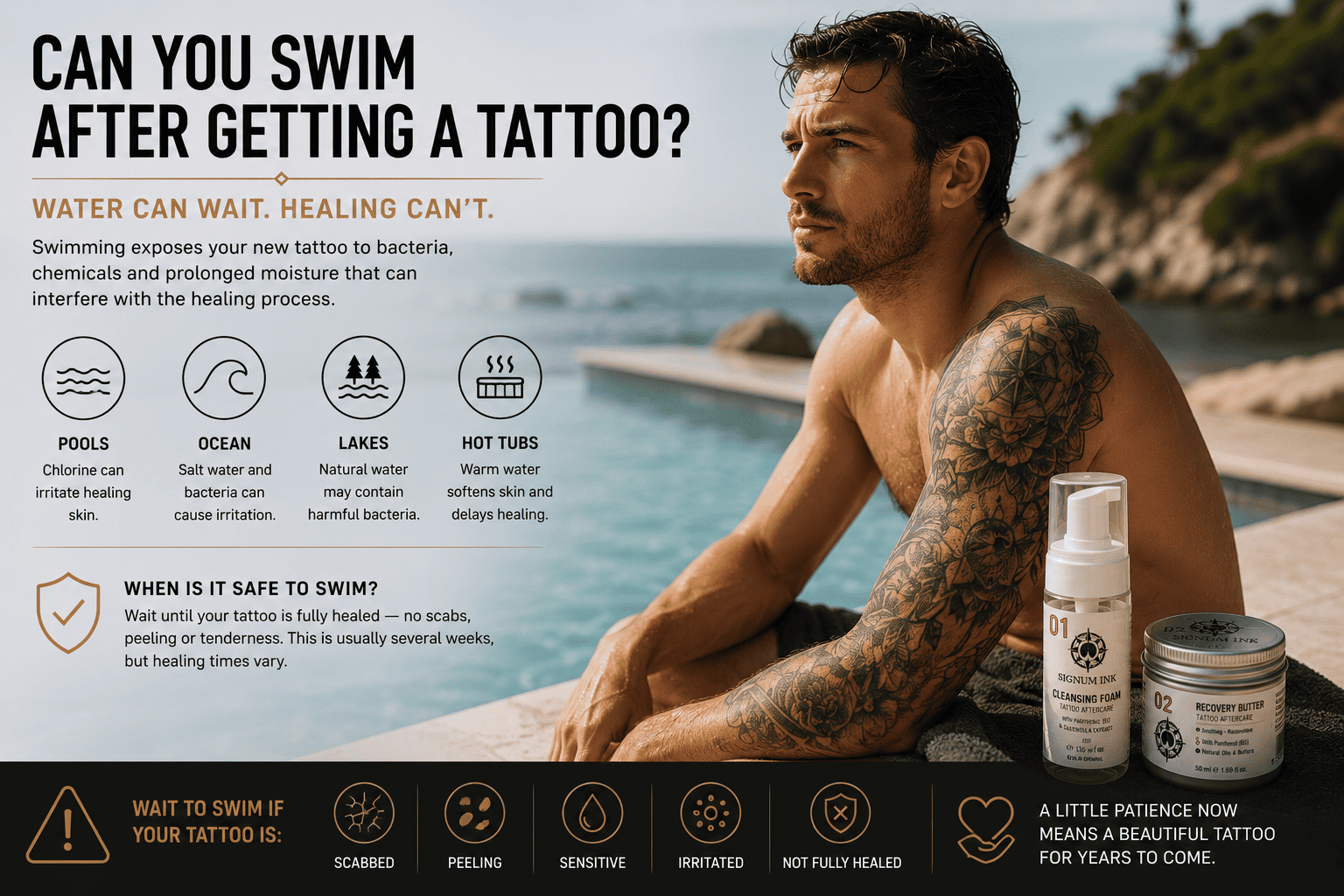
You’ve just gotten a new tattoo, and your next holiday, beach day or swimming session is coming up.
Naturally, one question comes to mind:
“Can I go swimming?”
The short answer is:
Not yet.
Although showering is an important part of tattoo aftercare, swimming is very different.
Pools, lakes, rivers, hot tubs and the ocean all expose your healing tattoo to prolonged moisture and microorganisms that can interfere with the healing process.
Fortunately, waiting a few weeks is usually all it takes to protect both your skin and your new tattoo.
Why Swimming Is Different From Showering
Many people assume that if showering is safe, swimming must be safe too.
The difference is time.
A shower briefly rinses your tattoo.
Swimming keeps your tattoo submerged for an extended period.
Prolonged soaking can soften healing skin, loosen forming scabs and make the tattoo more vulnerable to irritation.
That’s why tattoo artists generally recommend avoiding swimming until healing is complete.
Why Water Matters During Healing
A fresh tattoo is still rebuilding its protective skin barrier.
During this stage, prolonged exposure to water may:
- Soften healing skin
- Reizung steigern
- Delay the natural healing process
- Make the skin more prone to friction
- Increase exposure to bacteria and other microorganisms
Keeping your tattoo clean is important.
Keeping it submerged is not.
Can Swimming Cause an Infection?
Swimming itself doesn’t automatically cause an infection.
However, natural bodies of water and public swimming facilities may contain bacteria, fungi and other microorganisms.
Because your tattoo is still healing, your skin is more vulnerable than usual.
Reducing unnecessary exposure during the first few weeks helps lower the risk of complications.
Is Chlorine Safe for a Fresh Tattoo?
Swimming pools are often thought to be cleaner than lakes or the ocean.
While properly maintained pools are disinfected, chlorine can still be harsh on healing skin.
Some people find that chlorinated water leaves their tattoo feeling:
- Drier
- Tighter
- More irritated
Waiting until your tattoo has fully healed is generally the safest option.
What About the Ocean?
Salt water is often believed to have healing properties.
While seawater may contain minerals, it also contains bacteria and other microorganisms.
Salt water can also sting sensitive skin and contribute to dryness during the early stages of healing.
A healing tattoo is best protected by staying out of the water until the skin has recovered.
Can You Swim in a Lake?
Lakes and rivers deserve particular caution.
Unlike treated swimming pools, natural freshwater contains varying levels of bacteria and microorganisms.
The water quality can also change depending on:
- Weather
- Temperature
- Wildlife
- Water flow
Because you can’t see what’s in the water, it’s best not to expose a healing tattoo unnecessarily.
Hot Tubs and Jacuzzis
Warm water may feel relaxing, but hot tubs combine two things that aren’t ideal for a fresh tattoo:
- Prolonged soaking
- Warm water
Heat increases blood flow near the skin’s surface, while long periods in water soften healing skin.
For this reason, most tattoo artists recommend avoiding hot tubs until your tattoo has fully healed.
Water Can Wait—Your Tattoo Can’t
Missing a few swimming sessions may feel frustrating.
But compared with the years you’ll enjoy your tattoo, it’s a very short wait.
Giving your skin enough time to recover now helps protect both the healing process and the long-term appearance of your tattoo.
When Can You Swim Again?
The exact timing depends on how your tattoo is healing.
As a general rule, it’s best to wait until the skin has fully recovered before swimming.
A fully healed tattoo should no longer have:
- Scabs
- Peeling
- Open areas
- Zärtlichkeit
- Noticeable dryness
For many people, this means waiting several weeks, but healing times vary from person to person.
If you’re unsure, ask your tattoo artist before returning to the water.
What About Waterproof Bandages?
Some waterproof dressings are designed to protect a fresh tattoo for a limited time.
However, wearing a waterproof bandage does not automatically make swimming safe.
Extended time in water may weaken the adhesive, allow water to seep underneath or create a warm, moist environment that isn’t ideal for healing skin.
Unless your tattoo artist specifically advises otherwise, it’s still best to avoid swimming during the healing period.
Planning a Holiday?
Getting a tattoo just before a beach holiday requires some planning.
If possible, schedule your tattoo after your holiday rather than just before it.
This allows you to enjoy:
- Swimming
- Sunbathing
- Water sports
without worrying about interrupting the healing process.
If you’ve already been tattooed:
- Stay in the shade.
- Keep your tattoo covered with loose clothing.
- Skip swimming until the tattoo has healed.
- Setzen Sie Ihre normale Nachsorge fort.
A little patience helps protect your investment.
Common Myths About Swimming and Tattoos
Myth 1: Salt Water Heals Tattoos Faster
Nicht unbedingt.
Although seawater contains natural minerals, it also contains bacteria and can dry out healing skin.
Your tattoo heals best in a clean, controlled environment.
Myth 2: Chlorine Kills All Germs, So Pools Are Safe
Falsch.
Even well-maintained swimming pools are not recommended for fresh tattoos.
Chlorinated water can still irritate healing skin, and no pool is completely sterile.
Myth 3: If My Tattoo Looks Healed, I Can Swim
Nicht immer.
The surface of your skin may appear healed before deeper layers have fully recovered.
Waiting until the tattoo is completely healed reduces unnecessary risk.
Myth 4: A Quick Swim Won’t Matter
Even a short swim exposes your healing tattoo to prolonged soaking and whatever microorganisms are present in the water.
Waiting a little longer is usually the safer choice.
Häufig gestellte Fragen
Can I swim after two weeks?
It depends on how well your tattoo has healed.
Some tattoos may still be peeling or sensitive after two weeks.
Wait until the skin has fully recovered before swimming.
Can I swim in the ocean before my tattoo is healed?
It’s generally best to avoid swimming in the ocean until healing is complete.
Salt water and naturally occurring microorganisms may irritate healing skin.
Can I cover my tattoo with plastic wrap before swimming?
Nein.
Plastic wrap is not designed for swimming and can trap moisture against the skin.
It doesn’t provide reliable protection in water.
What if my tattoo accidentally gets wet?
A brief splash or unexpected rain isn’t usually a problem.
Simply pat the tattoo dry with a clean towel and continue your normal aftercare routine.
The concern is prolonged soaking—not brief contact with water.
Does swimming fade tattoos?
Swimming itself doesn’t remove tattoo ink.
However, exposing a healing tattoo to prolonged soaking may interfere with the healing process, while regular sun exposure during outdoor swimming contributes much more to long-term fading.
Fazit
Swimming is one of the few activities that’s worth postponing while your tattoo heals.
Although water may seem harmless, prolonged soaking combined with exposure to bacteria, chlorine or salt water can make healing more challenging.
Fortunately, the solution is simple.
Wait until your tattoo has fully healed before returning to pools, lakes, rivers or the ocean.
In the meantime, continue your regular aftercare routine, keep your tattoo clean and protect it from unnecessary irritation.
A few weeks of patience can help your tattoo stay vibrant for years to come.
Weiterlernen
Want to understand exactly how your skin heals from day one until full recovery?
→ Read: The Complete Science of Tattoo Healing: What Happens to Your Skin from Day 1 to Day 60
 English
  German
  Dutch
Dutch  Danish
  Swedish
  French
  Italian