Ein neues Tattoo zu bekommen ist aufregend, aber viele Leute stellen sich schnell die gleiche Frage:
“Wie lange wird es dauern, bis es verheilt ist?”
Die Antwort ist überraschenderweise komplexer, als viele Leute erwarten.
Obwohl eine Tätowierung nach nur wenigen Wochen verheilt aussehen mag, repariert sich Ihre Haut unter der Oberfläche lange nachdem Rötungen, Schuppenbildung und Juckreiz verschwunden sind.
Heilung geschieht in Phasen.
Die äußere Hautschicht (die Epidermis) heilt typischerweise zuerst, während die tiefere Schicht (die Dermis) setzt den Wiederaufbau von Kollagen fort, stellt die Hautbarriere wieder her und stabilisiert das Tattoo-Pigment über mehrere Wochen hinweg.
Das Verständnis dieses Zeitplans kann Ihnen helfen, Ihr Tattoo richtig zu pflegen und häufige Fehler während der Genesung zu vermeiden.
Kurze Antwort
Wie lange dauert es, bis ein Tattoo verheilt ist?
Für die meisten Menschen:
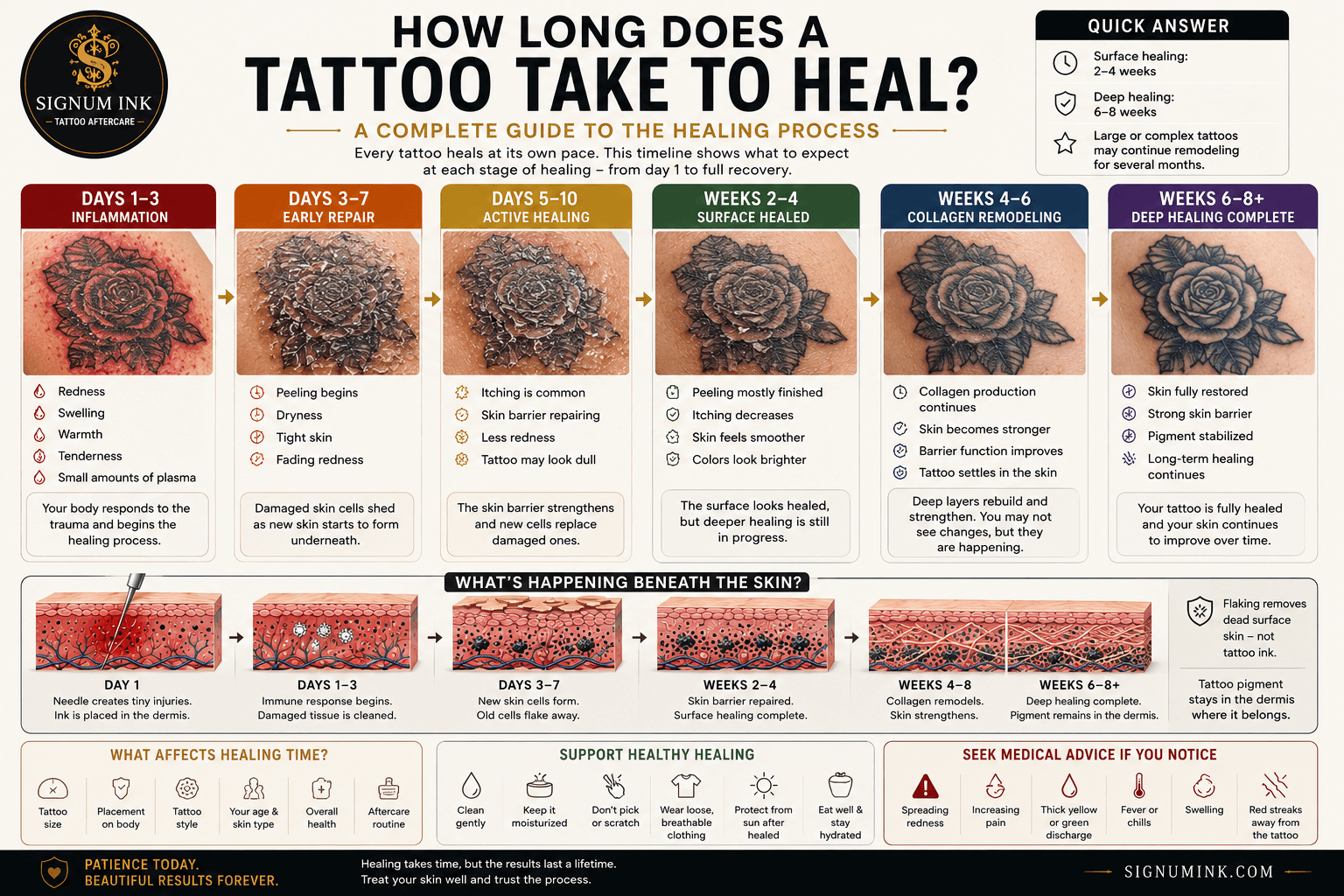
- Oberflächenheilung ungefähr 2–4 Wochen
- Tiefere Hautheilung: ungefähr 6–8 Wochen
- Große oder komplexe Tätowierungen: die Renovierung kann noch mehrere Monate andauern
Die Heilungsgeschwindigkeit hängt von mehreren Faktoren ab, darunter die Größe des Tattoos, die Platzierung, den Hauttyp, die allgemeine Gesundheit und die Nachsorge.
Kurz & Bündig
Tage 1–3
- Rötung
- Schwellung
- Zärtlichkeit
Tage 3–7
- Peeling beginnt
- Trockenheit
- Straffe Haut
Tage 5–10
- Juckreiz wird häufig
Wochen 2–4
- Oberflächenheilung weitgehend abgeschlossen
Wochen 6–8
- Tiefgreifende Hauterneuerung setzt sich fort
Warum Heilung länger dauert, als die meisten Leute denken
Eines der größten Missverständnisse bei der Heilung von Tattoos ist, dass sie endet, wenn das Tattoo aufhört zu schälen.
In Wirklichkeit erholt sich die Haut unter der Oberfläche immer noch.
Tätowiernadeln lagern Pigment in die Dermis, wo spezialisierte Immunzellen helfen, die Tinte im Laufe der Zeit zu stabilisieren.
Gleichzeitig produzieren Fibroblasten weiterhin Kollagen, während die Hautbarriere allmählich ihre normale Stärke und Feuchtigkeitsspeicherfähigkeit zurückgewinnt.
Diese tiefere Umgestaltung dauert lange an, nachdem die Tätowierung verheilt zu sein scheint.
Der Unterschied zwischen oberflächlicher und tiefer Heilung
Das Verständnis dieser beiden Phasen erklärt, warum Ihr Tattoo vollständig verheilt aussehen kann, obwohl die biologische Reparatur noch im Gange ist.
Oberflächenheilung
Die Epidermis regeneriert sich normalerweise innerhalb von 2–4 Wochen.
In dieser Phase können Sie Folgendes bemerken:
- Peeling.
- Milder Juckreiz.
- Vorübergehende Trockenheit.
- Straffe Haut.
- Allmählich abklingende Rötung.
Sobald diese Symptome abgeklungen sind, erscheint das Tattoo oft vollständig abgeheilt.
Tiefe Heilung
Die Dermis repariert sich für mehrere zusätzliche Wochen weiter.
Diese Phase beinhaltet:
- Kollagenumbau.
- Hautstärkung.
- Barriere-Reifung.
- Pigmentstabilisierung.
- Langfristige Geweberegeneration.
Obwohl diese Veränderungen unsichtbar sind, bleiben sie ein wichtiger Bestandteil der vollständigen Heilung.
Typischer Heilungsverlauf
Jede Tätowierung heilt anders, aber ein allgemeiner Zeitplan sieht so aus.
Tage 1–3
Die Entzündungsphase beginnt.
Häufige Änderungen umfassen:
- Rötung.
- Schwellung.
- Wärme.
- Milde Zärtlichkeit.
- Kleine Mengen klares Plasma.
Dies ist die normale Reaktion Ihres Körpers auf mikroskopische Hautverletzungen.
Tage 3–7
Das Tattoo wird normalerweise:
- Trocken.
- Eng.
- Flaky.
- Leicht juckend.
Peeling beginnt, wenn beschädigte Oberflächenzellen durch gesunde neue Haut ersetzt werden.
Wochen 2–4
Sichtbare Heilung schreitet schnell voran.
Die meisten Leute bemerken:
- Weniger Rötungen.
- Weniger Juckreiz.
- Glattere Haut.
- Brillanteres Erscheinungsbild von Tattoos.
Obwohl die Oberfläche oft geheilt aussieht, repariert sich tieferes Gewebe weiter.
Wochen 6–8
Die letzte Heilungsphase konzentriert sich auf:
- Kollagenreifung.
- Hautbarriere-Erholung.
- Langfristige Gewebestärkung.
- Stabiles Aussehen des Tattoos.
Diese Phase ist weitgehend unsichtbar, bleibt aber für gesunde Haut unerlässlich.
Was beeinflusst die Heilungszeit?
Mehrere Faktoren beeinflussen, wie schnell dein Tattoo verheilt.
Tattoo-Größe
Größere Tätowierungen erfordern mehr Gewebereparatur und brauchen oft länger zum Heilen.
Tattoo-Platzierung
Bereiche, die ständiger Bewegung oder Reibung ausgesetzt sind – wie Hände, Füße, Ellbogen, Knie und Rippen – können langsamer heilen als andere Körperteile.
Tattoo-Stil
Dichte Farbpakete und starkes Schattieren erfordern oft mehr Nadelstiche als Feinstrichtattoos, was die Heilungszeit verlängern kann.
Individuelle Biologie
Die Heilungsgeschwindigkeit wird beeinflusst durch:
- Alter.
- Hauttyp.
- Gesundheit insgesamt.
- Ernährung.
- Kreislauf.
- Tägliche Hautpflege-Gewohnheiten.
Keine zwei Menschen heilen mit genau der gleichen Geschwindigkeit.
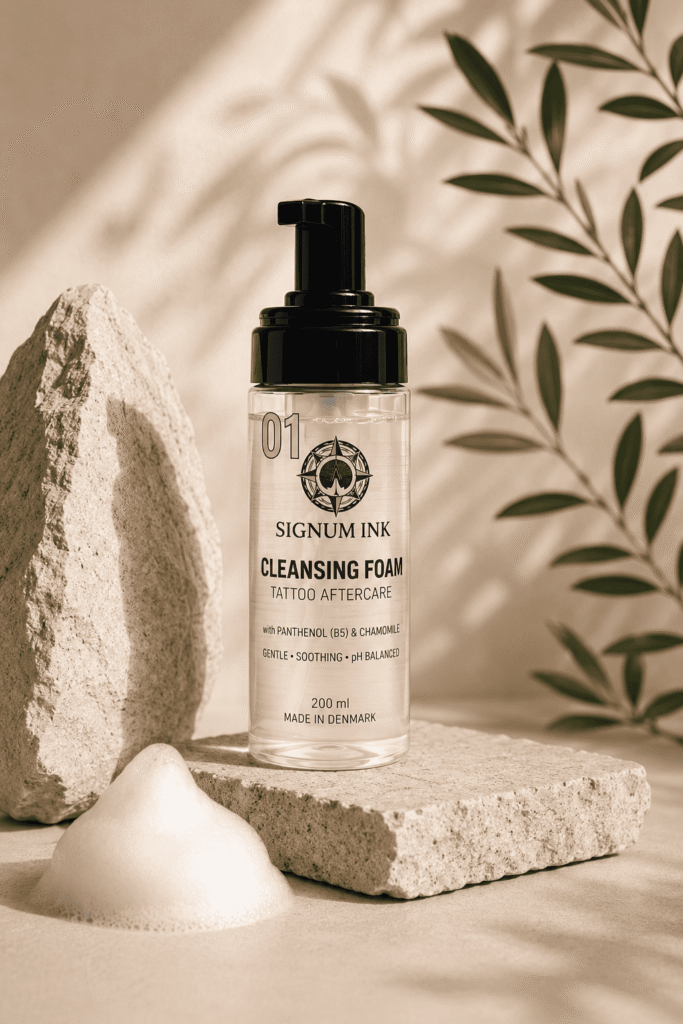
Gesunde Tattoo-Heilung unterstützen
Gesundes Heilen dreht sich weniger darum, den Prozess zu beschleunigen, sondern vielmehr darum, Ihrer Haut die bestmögliche Umgebung zur Erholung zu bieten.
Eine ausgewogene Routine beinhaltet:
- Sanfte Reinigung mit einem milden Reinigungsmittel.
- Eine dünne Schicht Wiederherstellungscreme auftragen, wenn sich die Haut trocken anfühlt.
- Vermeiden Sie es, sich an sich schälender Haut zu kratzen oder zu zupfen.
- Tragen Sie lockere, atmungsaktive Kleidung über dem Tattoo.
- Schutz der Stelle vor unnötiger Reibung und, sobald vollständig verheilt, vor übermäßiger UV-Strahlung.
Die Unterstützung der Hautbarriere hilft, den Komfort zu verbessern und gleichzeitig die natürlichen Reparaturprozesse des Körpers fortzusetzen.
Wochenweiser Leitfaden zur Tattoo-Heilung
Jede Tätowierung heilt in ihrem eigenen Tempo, aber die meisten Leute folgen einem ähnlichen Muster.
Wenn man versteht, was typischerweise jede Woche passiert, fällt es leichter zu wissen, was normal ist – und was genauere Aufmerksamkeit erfordert.
Woche 1: Entzündung und frühe Reparatur
Die erste Woche ist, wenn dein Körper beginnt, Tausende von mikroskopisch kleinen Nadelstichen zu reparieren.
Sie werden vielleicht bemerken:
- Rötung.
- Leichte Schwellung.
- Wärme.
- Zärtlichkeit.
- Kleine Mengen klares Plasma.
- Trockenheit.
- Straffe Haut.
Gegen Ende der Woche beginnt oft das Schälen.
Obwohl die Tätowierung in dieser Phase dramatisch aussehen mag, sind diese Veränderungen normalerweise Teil des normalen Heilungsprozesses.
Woche 2: Peeling und Wiederherstellung der Hautbarriere
Bis zur zweiten Woche:
- Die meisten Schälarbeiten sind im Gange.
- Juckreiz erreicht oft seinen Höhepunkt.
- Die Rötung geht weiter zurück.
- Die Haut beginnt, sich glatter anzufühlen.
Die Epidermis ersetzt geschädigte Oberflächenzellen, während die Hautbarriere allmählich stärker wird.
Viele Leute glauben fälschlicherweise, dass die Heilung abgeschlossen ist, sobald das Schälen endet.
Wochen 3–4: Oberflächliche Heilung
An diesem Punkt:
- Das Peeling ist meistens beendet.
- Das Tattoo fühlt sich besser an.
- Die Oberfläche erscheint glatt.
- Farben wirken oft leuchtender.
Auch wenn die Tätowierung verheilt aussieht, finden tiefere biologische Reparaturen statt.
Darum bleibt gute Hautpflege in dieser Phase wichtig.
Wochen 4–8: Tiefe Hautumgestaltung
Die letzte Heilungsphase findet fast ausschließlich unter der Oberfläche statt.
Während dieser Wochen:
- Kollagenfasern organisieren sich weiter um.
- Die Haut wird stärker.
- Die Schutzbarriere reift.
- Tätowierpigment wird immer stabiler.
- Der Feuchtigkeitshaushalt verbessert sich weiter.
Diese Veränderungen sind normalerweise nicht sichtbar, aber sie sind ein wesentlicher Bestandteil der vollständigen Tattoo-Heilung.
Wann ist ein Tattoo vollständig verheilt?
Die Antwort hängt davon ab, was wir unter “geheilt” verstehen.”
Oberflächenheilung
Für die meisten Menschen scheint die Hautoberfläche innerhalb von 2–4 Wochen.
An diesem Punkt:
- Das Peeling ist abgeschlossen.
- Die Rötung ist verblasst.
- Das Jucken ist weitgehend verschwunden.
- Das Tattoo sieht fertig aus.
Biologische Heilung
Unter der Oberfläche setzt sich die Heilung fort für ungefähr 6–8 Wochen, und manchmal länger für größere Tattoos.
Die Haut baut weiterhin Kollagen auf, stärkt die Epidermis und stellt ihre natürliche Schutzbarriere wieder her.
Warum Tätowierungen während der Heilung abblättern
Peeling bereitet Erstbesitzern von Tätowierungen oft Sorgen.
Glücklicherweise ist es ein normaler Bestandteil der Hauterneuerung.
Während neue Haut entsteht:
- Beschädigte Oberflächenzellen trennen sich.
- Frische Epidermiszellen ersetzen sie.
- Die Hautbarriere erholt sich allmählich.
Die Haut schält sich nicht das Tattoo selbst.
Das Tätowierpigment verbleibt sicher in der Dermis.
Warum Tattoos beim Abheilen jucken
Juckreiz ist ein weiterer häufiger Stadium der Genesung.
Mehrere biologische Prozesse tragen dazu bei:
- Heilung von Nervenenden.
- Vorübergehender Feuchtigkeitsverlust.
- Hautbarriere-Reparatur.
- Epidermale Regeneration.
Der Juckreiz lässt mit fortschreitender Heilung allmählich nach.
Was sagt die Forschung?
Die moderne Wundheilungsforschung unterteilt die Heilung in mehrere überlappende biologische Phasen.
Entzündungsphase
Immunzellen reinigen beschädigtes Gewebe und beginnen mit der Koordination der Reparatur.
Proliferationsphase
Frische Hautzellen ersetzen geschädigtes Gewebe, während Fibroblasten Kollagen produzieren.
Neue Blutgefäße helfen auch, die heilende Haut zu nähren.
Renovierungsphase
Kollagenfasern reorganisieren sich, die Hautfestigkeit verbessert sich und die Barrierefunktion kehrt allmählich zur Normalität zurück.
Diese Phase dauert lange nach dem sichtbaren Abschluss der Heilung an.
Häufige Fehler, die die Heilung verlangsamen
Obwohl der Körper sich auf natürliche Weise heilt, können bestimmte Gewohnheiten die Genesung beeinträchtigen.
Abpuhlen von Haut
Zu frühes Entfernen von Schuppen kann die empfindliche neue Haut schädigen.
Kratzen
Kratzen kann die Reizung verstärken und die Heilung verzögern.
Zu viel Produkt auftragen
Eine sehr dicke Salbenschicht ist nicht unbedingt besser.
Ein dünner, gleichmäßiger Auftrag genügt normalerweise, um die Hydratation zu unterstützen.
Übermäßiges Waschen
Zu häufiges Waschen kann die sich erholende Hautbarriere austrocknen.
Enge Kleidung
Ständige Reibung kann heilende Haut reizen und die Genesung unangenehmer machen.
Zu viel Sonneneinstrahlung
Frisch verheilte Haut ist besonders anfällig für ultraviolette Strahlung.
Sobald Ihre Tätowierung vollständig verheilt ist, hilft die regelmäßige Anwendung von Sonnencreme, sowohl die Hautgesundheit als auch die Farbe der Tätowierung zu erhalten.
Schneller aussehende (nicht schnellere) Heilung unterstützen
Während Sie Ihre Haut nicht zwingen können, schneller zu heilen, können Sie eine Umgebung schaffen, die eine effiziente Erholung ermöglicht.
Hilfreiche Gewohnheiten sind:
✔ Reinige das Tattoo sanft.
✔ Hält die Haut angenehm hydriert.
✔ Vermeiden Sie Kratzen oder Zupfen.
✔ Ausreichend Schlaf bekommen.
✔ Ernähren Sie sich ausgewogen und proteinreich, voller Vitamine und Mineralstoffe.
✔ Trinke ausreichend.
Gesunde Haut heilt angenehmer – und erscheint während des Prozesses oft gesünder.
Forschungsbericht
| Forschungsbereich | Beweis |
|---|---|
| Wundheilungsbiologie | ★★★★★ |
| Epidermale Regeneration | ★★★★★ |
| Hautbarriere-Regeneration | ★★★★★ |
| Kollagenumbau | ★★★★★ |
| Tattoo-Nachsorge | ★★★★☆ |
| Tattoo Heilungszeitplan | ★★★★☆ |
Häufig gestellte Fragen zur Tattoo-Heilung
Wie lange dauert es, bis ein Tattoo vollständig verheilt ist?
Das hängt davon ab, was Sie unter ... verstehen geheilt.
Für die meisten Menschen:
- Oberflächenheilung 2–4 Wochen
- Tiefe Hautheilung: 6–8 Wochen
Obwohl die Tätowierung nach ein paar Wochen vollständig verheilt aussehen mag, baut Ihre Haut weiterhin Kollagen auf, stellt die Hautbarriere wieder her und remodelliert das Gewebe unter der Oberfläche.
Ist mein Tattoo verheilt, wenn es nicht mehr abblättert?
Nicht ganz.
Peeling markiert normalerweise das Ende der Oberflächenreparatur, aber die tieferen Hautschichten heilen noch.
Das Tattoo mag fertig aussehen, während die biologische Heilung noch mehrere Wochen andauert.
Kann eine Tätowierung in zwei Wochen heilen?
Kleine Tätowierungen scheinen manchmal nach zwei Wochen abgeheilt zu sein.
Doch selbst wenn die Haut gesund aussieht, findet unter der Epidermis noch eine tiefere Heilung statt.
Geduld bleibt in den ersten beiden Monaten wichtig.
Warum fühlt sich mein Tattoo nach vier Wochen immer noch trocken an?
Dies hängt normalerweise mit der Hautbarriere zusammen.
Obwohl das Schälen abgeschlossen ist, kann die Epidermis ihre Fähigkeit zur Feuchtigkeitsspeicherung noch verbessern.
Die Haut angenehm feucht zu halten, hilft oft, Trockenheit in dieser Phase zu reduzieren.
Kann sich mein Tattoo nach einem Monat noch verändern?
Ja.
Viele Menschen bemerken allmähliche Verbesserungen wie:
- Sanftere Haut.
- Verbesserte Hydratation.
- Schärferes Tattoo-Erscheinungsbild.
- Gleichmäßigere Textur.
Diese Veränderungen spiegeln die fortlaufende Hautreifung wider und nicht Veränderungen am Tattoo-Pigment selbst.
Beeinflusst der Ort eines Tattoos die Heilungszeit?
Absolut.
Bereiche, die häufiger Bewegung oder Reibung ausgesetzt sind, heilen oft langsamer.
Dazu gehören:
- Hände.
- Finger.
- Füße.
- Knöchel.
- Ellbogen.
- Knie.
- Rippchen.
Größere Tattoos an diesen Stellen erfordern möglicherweise etwas mehr Geduld.
Kann ich die Heilung von Tätowierungen beschleunigen?
Man kann die Haut nicht dazu zwingen, schneller zu heilen, als es die biologischen Gegebenheiten zulassen.
Sie können jedoch den Heilungsprozess auf folgende Weise unterstützen:
- Sanft waschen.
- Das Tattoo sauber halten.
- Aufrechterhaltung einer ausgewogenen Flüssigkeitszufuhr.
- Vermeiden von Kratzern.
- Gut schlafen.
- Sich ausgewogen ernähren.
- Flüssigkeitszufuhr.
Gesunde Gewohnheiten schaffen die bestmöglichen Voraussetzungen für die Genesung.
Wann kann ich wieder Sport treiben?
Je nach Stelle des Tattoos und dem eigenen Befinden sind leichte Aktivitäten oft schon nach den ersten Tagen möglich.
Intensive Übungen, die zu starkem Schwitzen führen, wiederholtes Dehnen oder Reibung über dem Tattoo können jedoch die Beschwerden verstärken und die Heilung beeinträchtigen.
Allmählich wieder zu den gewohnten Aktivitäten zurückzukehren und dabei auf die Haut zu achten, ist im Allgemeinen der sicherste Ansatz.
Wann kann ich schwimmen?
Warten Sie, bis die Tätowierung vollständig verheilt ist, bevor Sie in folgenden Gewässern schwimmen:
- Schwimmbecken.
- Seen.
- Flüsse.
- Whirlpools.
- Das Meer.
Längeres Einweichen kann die sich regenerierende Haut aufweichen und das Risiko von Reizungen erhöhen.
Wann sollte ich ärztlichen Rat einholen?
Sorgen Sie für eine umgehende ärztliche Untersuchung, wenn Sie Folgendes bemerken:
- Schnell ausbreitende Rötung.
- Zunehmende Schmerzen.
- Dicker gelber oder grüner Ausfluss.
- Fieber oder Schüttelfrost.
- Erhebliche Schwellung.
- Rote Streifen, die sich vom Tattoo weg erstrecken.
- Symptome, die sich stattdessen allmählich verschlimmern.
Diese Ergebnisse sind nicht typisch für eine unkomplizierte Tattooheilung und sollte von einer medizinischen Fachkraft untersucht werden.
Vollständige Heilungszeitlinie
| Heilungsphase | Typische Zeit | Was passiert? |
|---|---|---|
| Entzündung | Tage 1–3 | Rötung, Schwellung, Zärtlichkeit |
| Frühe Reparatur | Tage 3–7 | Hautschuppung, Trockenheit, Spannungsgefühl |
| Aktive Heilung | Tage 5–14 | Juckreiz, Barriereaufbau |
| Oberflächenheilung | Wochen 2–4 | Die Haut scheint verheilt zu sein |
| Umfassende Renovierung | Wochen 4–8 | Kollagen reift, Barriere stärkt sich |
Zeichen dafür, dass Ihr Tattoo normal heilt
✅ Rötung verblasst allmählich.
✅ Peeling verlangsamt sich und stoppt schließlich.
✅ Leichter Juckreiz wird weniger spürbar.
✅ Die Haut fühlt sich von Woche zu Woche glatter an.
✅ Das Tattoo wird nach dem Abblättern deutlicher.
✅ Symptome verbessern sich stetig.
Die allgemeine Richtung sollte eine allmähliche Erholung und kein plötzlicher Wandel sein.
Anzeichen, die eine ärztliche Untersuchung erfordern
⚠️ Die Rötung breitet sich über das Tattoo hinaus aus.
⚠️ Die Schmerzen werden schlimmer statt besser.
⚠️ Dickflüssiger gelber oder grüner Ausfluss erscheint.
⚠️ Fieber oder Schüttelfrost entwickeln.
⚠️ Die Schwellung nimmt weiter zu.
⚠️ Es sind rote Streifen zu sehen, die vom Tattoo weg verlaufen.
⚠️ Symptome verschlimmern sich mit der Zeit.
Diese Symptome bedeuten nicht automatisch, dass eine Infektion vorliegt, aber sie sind nicht typisch für eine unkomplizierte Heilung und bedürfen einer umgehenden ärztlichen Abklärung.
Häufige Mythen über die Tattooheilung
Mythos 1: Mein Tattoo ist nach zwei Wochen vollständig verheilt.
Realität
Die Oberflächenheilung kann abgeschlossen sein, aber die tiefere Gewebsremodellierung setzt sich noch mehrere Wochen fort.
Mythos 2: Peeling bedeutet, dass das Tattoo verblasst.
Realität
Peelings entfernen abgestorbene Epidermiszellen – nicht das Tattoo-Pigment, das in der Dermis gespeichert ist.
Mythos 3: Mehr Nachsorgecreme lässt Tattoos schneller heilen.
Realität
Gesundes Heilen hängt vom Gleichgewicht ab.
Eine dünne, gleichmäßige Schicht Feuchtigkeitscreme ist im Allgemeinen vorteilhafter als das Auftragen übermäßiger Mengen des Produkts.
Mythos 4: Sobald es nicht mehr wehtut, ist die Heilung abgeschlossen.
Realität
Schmerzen verschwinden normalerweise lange, bevor die Haut ihre tiefere Heilung abgeschlossen hat.
Forschungsbericht
| Forschungsbereich | Beweis |
|---|---|
| Wundheilungsbiologie | ★★★★★ |
| Hautbarriere-Regeneration | ★★★★★ |
| Epidermale Regeneration | ★★★★★ |
| Kollagenumbau | ★★★★★ |
| Tattoo-Nachsorge | ★★★★☆ |
| Tattooheilungsforschung | ★★★★☆ |
Experten-Tipp
Beurteile Heilung nach dem Trend – nicht nach einem einzelnen Tag.
Tattoos heilen selten in einer perfekt geraden Linie. An manchen Tagen fühlt sich die Haut trockener oder juckender an als am Vortag. Wichtig ist, dass mit der Zeit Rötungen verblassen, Beschwerden abnehmen und das Tattoo gesünder und angenehmer wird.
Warum die Wiederherstellung der Hautbarriere so wichtig ist
Jede Phase der Tätowierungsheilung hängt von der schrittweisen Wiederherstellung der Hautbarriere ab.
Moderne Tattoo-Nachsorge konzentriert sich darauf, diesen natürlichen Prozess mit Inhaltsstoffen zu unterstützen, die helfen, die Feuchtigkeit zu erhalten und die Schutzfunktion der Haut zu stärken.
| Funktion | Beispiel für eine Zutat |
|---|---|
| Zieht Feuchtigkeit an | Glycerin |
| Unterstützt die Flüssigkeitszufuhr | Betain |
| Verstärkt die Barriere | Ceramide |
| Unterstützt die Barrierefunktion | Niacinamid |
| Hautpflege | Panthenol |
| Leichtes Emoiollient | Squalane |
| Einfaches Auftragen | Capryl-Capric-Triglyceride |
| Hautkomfort | Allantoin |
| Pflanzliche Unterstützung | Madecassosid |
| Antioxidativer Schutz | Vitamin E |
Anstatt die Biologie zu beschleunigen, helfen diese Inhaltsstoffe dabei, Bedingungen zu schaffen, die es Ihrer Haut ermöglichen, sich bequem und effizient zu erholen.
Abschließende Gedanken
Die Heilung einer Tätowierung dauert länger, als viele Menschen glauben. Zwar klingen Rötungen, Hautschuppen und Juckreiz oft schon innerhalb der ersten Wochen ab, doch unter der Hautoberfläche regeneriert sich Ihre Haut noch viel länger.
Den Unterschied zwischen Oberflächenheilung und tiefgreifende Heilung hilft zu erklären, warum Geduld ein so wichtiger Bestandteil der Tätowierpflege ist. Das Kunstwerk mag bereits fertig aussehen, aber Ihre Haut stärkt immer noch ihre Barriere, baut Kollagen um und passt sich dem Pigment an, das in die Dermis eingebracht wurde.
Der beste Ansatz ist einfach: Geben Sie Ihrem Körper Zeit, behandeln Sie Ihre Haut sanft und lassen Sie den Heilungsprozess natürlich ablaufen. Mit konsequenter Nachsorge und realistischen Erwartungen hat Ihr Tattoo die besten Chancen, sauber zu verheilen und seine Details und Lebendigkeit über Jahre hinweg zu erhalten.
Verwandte Artikel
Dieser Artikel verlinkt natürlich zu:
- Tattoo-Heilungs-Zeitplan: Was Sie von Tag 1 bis Tag 60 erwarten können
- Die umfassende Wissenschaft der Tattoo-Heilung
- Tattoo-Peeling erklärt
- Warum juckt mein Tattoo?
- Warum ist mein Tattoo rot?
- Ist es normal, dass sich bei einem Tattoo eine Kruste bildet?
- Abblättern des Tattoos vs. Infektion
- Tattoo-Pickel nach der Abheilung
- Überfeuchtetes Tattoo: Kann man zu viel Tattoo-Creme verwenden?
 English
  German
  Dutch
Dutch  Danish
  Swedish
  French
  Italian