Moderne Hautpflege hat sich weit über die einfache Feuchtigkeitspflege hinaus entwickelt.
Heute konzentrieren sich viele Premium-Formulierungen auf die Unterstützung der natürlichen Hautbiologie – und nur wenige Inhaltsstoffe verkörpern diese Philosophie besser als Squalane.
Obwohl sein Name vielen Verbrauchern unbekannt klingt, ist Squalane eng mit einem der natürlich vorkommenden Lipide der Haut verwandt.
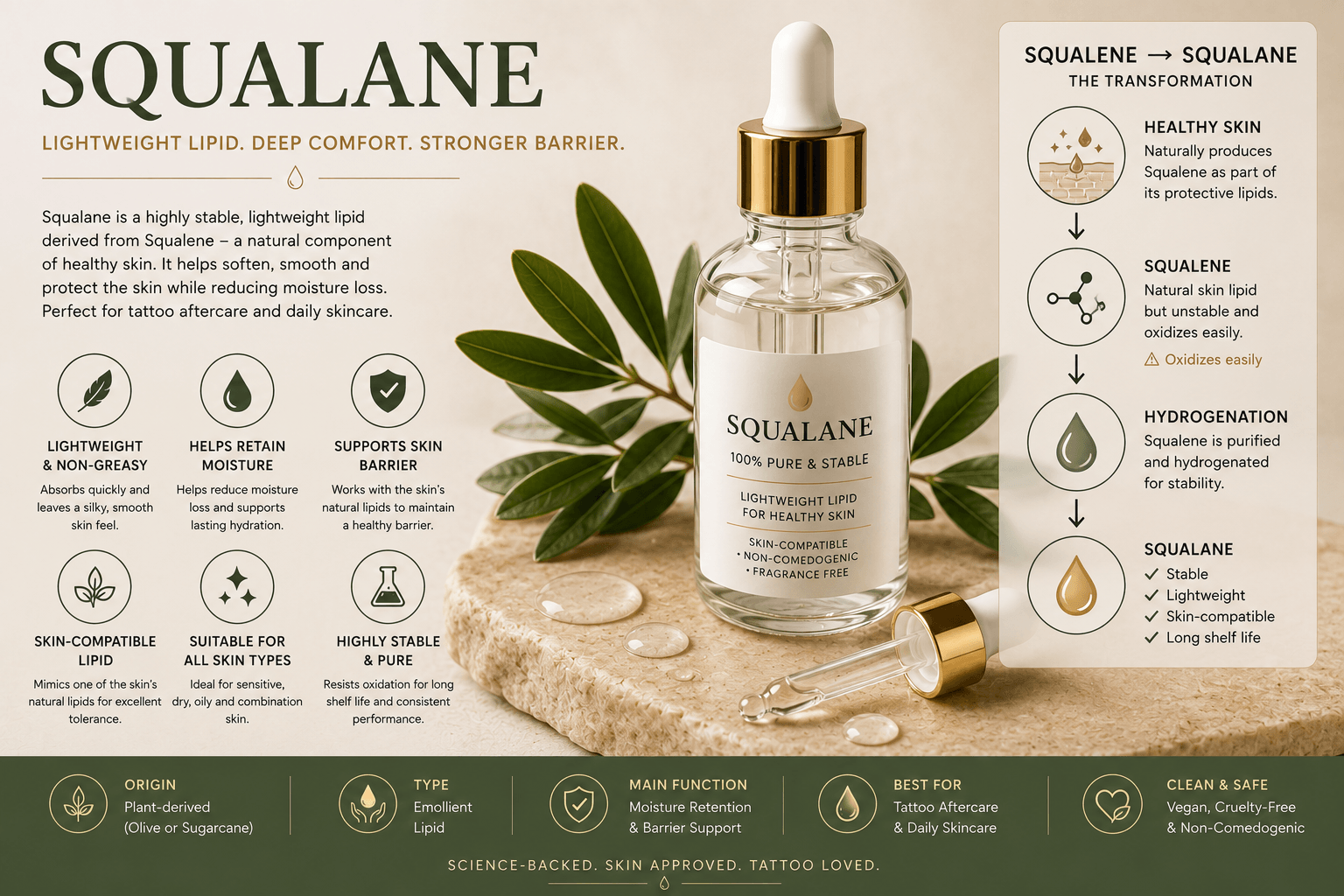
Gesunde menschliche Haut produziert natürlich Squalen, ein Lipid, das Teil der schützenden Oberflächenöle der Haut, auch bekannt als Sebum, bildet.
Da natürliches Squalan chemisch instabil und luftempfindlich ist, entwickelten Kosmetikwissenschaftler Squalane– eine hydrierte, hochstabile Version, die die hautfreundlichen Eigenschaften von Squalen beibehält und gleichzeitig eine außergewöhnliche Formulierungstabilität bietet.
Diese Innovation verwandelte Squalane in eines der angesehensten Emollienzien, die in der modernen Hautpflege verwendet werden.
Für die Tattoo-Nachsorge bietet Squalan eine elegante Kombination aus leichter Pflege, Feuchtigkeitsspeicherung und ausgezeichneter Hautverträglichkeit.
Anstatt Zutaten wie Ceramide, Panthenol, oder Glycerin, es wirkt zusammen mit ihnen, um die Hautbarriere zu erhalten und die Haut weich, geschmeidig und angenehm zu machen.
Seine seidige Textur und schnelle Absorption erklären, warum Squalan zu einem bevorzugten Inhaltsstoff sowohl in der von der Dermatologie inspirierten Hautpflege als auch in luxuriösen kosmetischen Formulierungen geworden ist.
Kurz & Bündig
Zutatenart
Hautverträgliches Weichmacher
Primäre Vorteile
Barriereunterstützung • Leichte Feuchtigkeitsbindung • Hautpflege
Am besten für
Frische Tattoos • Empfindliche Haut • Trockene Haut • Tägliches Feuchtigkeitspflege
Gefunden in
Regenerierende Cremes • Gesichtsöle • Feuchtigkeitscremes • Barrierecremes • Tattoo-Nachsorge
Geeignet für
Alle Hauttypen
Typische kosmetische Konzentration
1–10%
Passt gut zu
Ceramide • Glycerin • Panthenol • Jojobaöl • Sheabutter • Beta-Glucan
Wissenschaftliche Unterstützung
★★★★★ Herausragend
Wussten Sie schon?
Obwohl Squalane häufig mit Hautpflegeprodukten auf Olivenbasis in Verbindung gebracht wird, wird heutiges Premium-Kosmetik-Squalane oft aus nachhaltig gewonnenem Zuckerrohr hergestellt. Dies bietet eine ausgezeichnete Reinheit und reduziert gleichzeitig die Umweltauswirkungen.
Was ist Squalane?
Squalane ist ein hochstabiles Lipid, das in der modernen Hautpflege als Feuchtigkeitsspender verwendet wird.
Es stammt aus Squalen, ein natürlich vorkommendes Lipid, das Teil des gesunden menschlichen Sebums ist.
Talg erfüllt mehrere wichtige Funktionen.
Es hilft:
- Schützen Sie die Hautoberfläche.
- Feuchtigkeitsverlust reduzieren.
- Hautflexibilität erhalten.
- Die Hautbarriere unterstützen.
Leider ist natürliches Squalen sehr oxidationsempfindlich.
Nachdem es Sauerstoff und Licht ausgesetzt wurde, zersetzt es sich allmählich, was es für die meisten kosmetischen Formulierungen ungeeignet macht.
Um diese Herausforderung zu lösen, wandeln Kosmetikhersteller Squalan in Squalane durch einen Prozess namens Hydrierung.
Dies erzeugt eine Zutat, die ist:
- Hochstabil.
- Leicht.
- Fettfrei.
- Oxidationsbeständig.
- Außergewöhnlich hautfreundlich.
Diese Eigenschaften erklären, warum Squalane zu einem der am weitesten verbreiteten Premium-Emollentien in der modernen Hautpflege geworden ist.
Squalane vs. Squalan: Den Unterschied verstehen
Viele Leute gehen davon aus, dass sich diese Namen auf dieselbe Zutat beziehen.
Sie tun es nicht.
Squalen
- Natürlich produziert von gesunder Haut.
- Gefunden in menschlichem Talg.
- Chemisch instabil.
- Oxidiert schnell.
- Wird in der modernen Hautpflege selten direkt verwendet.
Squalane
- Hergestellt durch Hydrierung von Squalen.
- Hochstabil.
- Lange Haltbarkeit von Kosmetika.
- Ausgezeichnete Hautverträglichkeit.
- Eines der am weitesten verbreiteten modernen Emollientien.
Dieser kleine chemische Unterschied hat enorme praktische Bedeutung.
Ohne Hydrierung wäre Squalana nie zu einem der zuverlässigsten Lipide der Hautpflege geworden.
Wie funktioniert Squalan?
Im Gegensatz zu Feuchthaltemitteln, die Wasser in die Haut ziehen, Squalane fungiert primär als ein Emolliens.
Es verteilt sich leicht auf der Haut, hilft, die Oberfläche zu glätten und reduziert gleichzeitig den Feuchtigkeitsverlust.
Seine leichte Textur macht es besonders attraktiv für die Premium-Hautpflege, da es die Haut pflegt, ohne das schwere Finish zu erzeugen, das mit vielen reichhaltigeren pflanzlichen Ölen verbunden ist.
Ein weiterer Vorteil ist die ausgezeichnete Verträglichkeit mit den hauteigenen Oberflächenlipiden.
Anstatt schwer auf der Haut zu liegen, verschmilzt Squalane auf natürliche Weise mit der schützenden Lipidschicht der Haut und sorgt so für langanhaltenden Komfort.
Warum frische Tattoos von Squalane profitieren
Tattoo-Heilstellen stellen erhöhte Anforderungen an die Hautbarriere.
Während der ersten Tage nach dem Tätowieren wird die Aufrechterhaltung der Feuchtigkeit bei gleichzeitiger Unterstützung der natürlichen schützenden Lipide der Haut besonders wichtig.
Squalane trägt dazu bei, eine leichte Konditionierung zu bieten, die Inhaltsstoffe ergänzt, die für Feuchtigkeit und den Schutz der Hautbarriere verantwortlich sind.
Professionelle Tattoo-Nachsorgeformulierungen kombinieren häufig Squalane mit:
- Ceramide – zur Unterstützung der Lipidstruktur der Haut.
- Glycerin – um Feuchtigkeit anzuziehen.
- Panthenol – zur Unterstützung der Hydration und der Barrierefunktion.
- Jojobaöl – zur Unterstützung der hauteigenen Oberflächenlipide.
- Sheabutter – um Feuchtigkeitsverlust zu reduzieren.
- Beta-Glucan – zur Ergänzung der Feuchtigkeitsversorgung und des Hautkomforts.
Zusammen ergeben diese Inhaltsstoffe hochentwickelte Formulierungen, die zu einer gesunden Haut beitragen, ohne ein übermäßig fettiges Finish zu hinterlassen.
Warum Squalan zu einem der am meisten geschätzten Lipide in der modernen Hautpflege geworden ist
Die moderne Dermatologie konzentriert sich zunehmend auf Inhaltsstoffe, die die körpereigene Biologie der Haut nachahmen.
Squalane passt perfekt zu dieser Philosophie.
Hautkompatibles Lipid
Seine enge Verwandtschaft mit dem körpereigenen Squalen trägt zu seiner herausragenden Verträglichkeit bei.
Außergewöhnliche Stabilität
Im Gegensatz zu Squalen bleibt Squalane während der gesamten Haltbarkeit des Produkts hochstabil.
Leichte Eleganz
Squalane sorgt für ein seidiges Hautgefühl, das schnell einzieht und die Haut gepflegt hinterlässt, anstatt fettig zu wirken.
Hervorragende Formulierungskompatibilität
Professionelle Formulierer kombinieren Squalan häufig mit:
- Ceramide
- Panthenol
- Glycerin
- Sheabutter
- Jojobaöl
- Beta-Glucan
- Tigerkraut
Zusammen ergeben diese Inhaltsstoffe ausgewogene Formulierungen, die auf Feuchtigkeitsversorgung, Stärkung der Hautbarriere und lang anhaltenden Hautkomfort abzielen.
Warum professionelle Formulierer weiterhin Squalane wählen
Squalane demonstriert eines der wichtigsten Prinzipien der kosmetischen Wissenschaft:
Die besten Hautpflegeinhaltsstoffe imitieren oft die Haut selbst.
Anstatt die Haut mit schweren Ölen zu überlasten, unterstützt Squalan die natürliche Lipidbarriere der Haut und verbessert gleichzeitig die Textur, die Verteilbarkeit und die allgemeine Eleganz des Produkts.
Für die Tattoo-Nachsorge macht Squalane es zu einem hervorragenden unterstützenden Inhaltsstoff.
In Kombination mit Ceramiden, Panthenol, Glycerin und anderen barriereunterstützenden Inhaltsstoffen trägt es zu fortschrittlichen Formulierungen bei, die während des gesamten Heilungsprozesses Hautkomfort, Feuchtigkeitsspeicherung und eine widerstandsfähige Hautbarriere priorisieren.
Squalan in der Recovery Cream: Leichte Lipidunterstützung für heilende Haut
Eine effektive Erholungscreme sollte die Haut mit Feuchtigkeit versorgen und gleichzeitig dazu beitragen, ihre natürliche Schutzbarriere zu erhalten.
Nachdem man sich ein Tattoo stechen lässt, wird die Haut vorübergehend anfälliger für Feuchtigkeitsverlust, da die äußere Barriere ihren Heilungsprozess beginnt.
Hier ist wo Squalane leistet einen einzigartigen Beitrag.
Im Gegensatz zu reichhaltigeren Pflanzenbutterarten, die eine schwerere Schutzschicht bilden, bietet Squalane eine leichte Pflege, die sich fast schwerelos auf der Haut anfühlt.
Ihre exzellente Streichfähigkeit ermöglicht es, dass sich Recovery-Cremes sanft über die tätowierte Stelle ziehen lassen und ein weiches, seidiges Finish hinterlassen.
Da Squalane einem der natürlichen Lipide der Haut sehr ähnlich ist, fügt es sich gut in die Hautoberfläche ein, ohne sich fettig anzufühlen.
Professionelle Formulierer beschreiben Squalane oft als “Eleganz-Inhaltsstoff”.”
Nicht weil es die biologische Funktion einer Formulierung verändert, sondern weil es das Hautgefühl während der Anwendung dramatisch verbessert.
Bei Premium-Tattoo-Aftercare-Cremes, Squalane wird häufig kombiniert mit:
- Ceramide zur Unterstützung der Lipidbarriere der Haut.
- Glycerin um Feuchtigkeit anzuziehen.
- Panthenol zur Unterstützung der Hydratation und der Barrierefunktion.
- Beta-Glucan zur Ergänzung der Flüssigkeitszufuhr.
- Jojobaöl um Oberflächenlipide zu unterstützen.
- Sheabutter um Feuchtigkeitsverlust zu reduzieren.
Zusammen spenden diese Inhaltsstoffe Feuchtigkeit, unterstützen die Hautbarriere, speichern Feuchtigkeit und sorgen für außergewöhnlichen Hautkomfort.
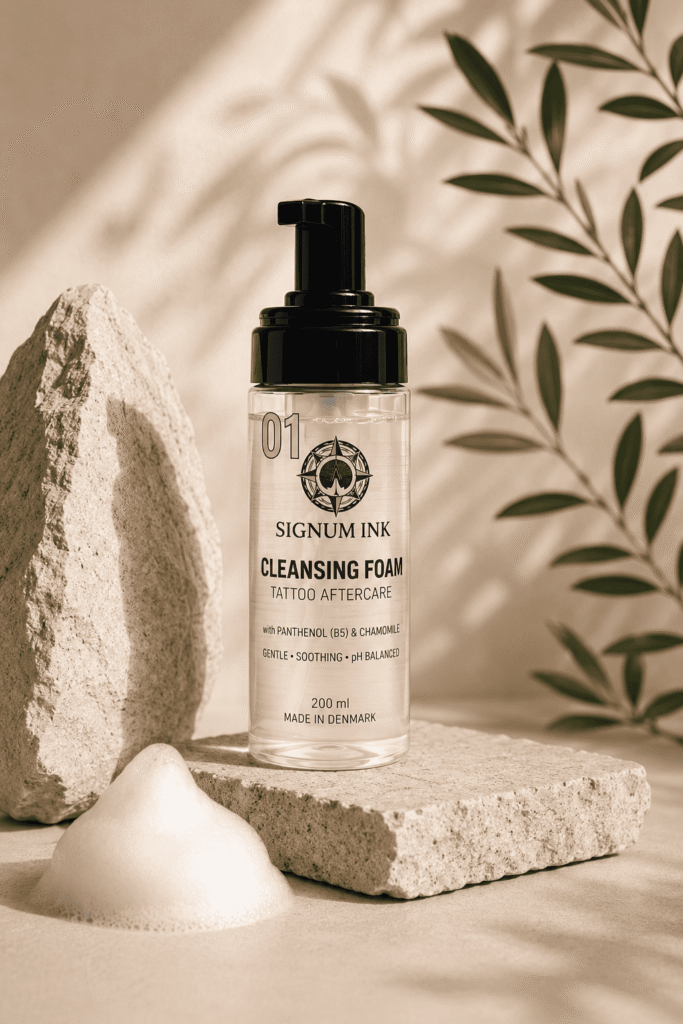
Squalane in Tattoo Schaumseife
Schaumreiniger erfüllen einen ganz anderen Zweck als Produkte zum Verbleiben auf der Haut.
Da ein Reinigungsmittel nach kurzer Zeit abgewaschen wird, haben Inhaltsstoffe, die die Haut hauptsächlich erweichen und pflegen, weniger Gelegenheit, ihre volle Wirkung zu entfalten.
Aus diesem Grund, Squalane wird in Tattoo-Schaumseifen seltener verwendet als in Recovery-Cremes.
Allerdings enthalten Premium-Reiniger manchmal geringe Mengen Squalan, um das Hautgefühl während der Reinigung zu verbessern.
Seine leichte Beschaffenheit hilft, das Gefühl der Straffheit nach dem Waschen zu reduzieren und trägt gleichzeitig zu einem sanfteren Reinigungserlebnis bei.
Anstatt feuchtigkeitsspendende Produkte zu ersetzen, unterstützt Squalan in einem Reinigungsprodukt eine sanfte Routine, die die Haut auf die Anwendung einer Recovery-Creme vorbereitet.
Was sagt die Forschung?
Obwohl Squalane Obwohl sie nicht so viel öffentliche Aufmerksamkeit erhält wie Ceramide oder Hyaluronsäure, ist sie eines der am besten etablierten Emollientien in der kosmetischen Wissenschaft.
Forschungsergebnisse zeigen, dass Squalane mehrere Eigenschaften besitzt, die es für Hautpflegeformulierungen äußerst wertvoll machen.
Topisches Squalane hat sich gezeigt, dass es:
- Hautweichheit verbessern.
- Hilft, den transepidermalen Wasserverlust (TEWL) zu reduzieren.
- Unterstützt die natürliche Hautbarriere.
- Verbessern Sie die Hautglätte.
- Verbessern Sie die sensorischen Eigenschaften von Feuchtigkeitscremes.
- Wird von empfindlicher Haut gut vertragen.
Seine hervorragende oxidative Stabilität macht es auch aus formuliertechnischer Sicht besonders wertvoll.
Im Gegensatz zu vielen Pflanzenölen, die mit der Zeit allmählich oxidieren, behält Squalan seine Qualität über die gesamte Haltbarkeit des Produkts hinweg außergewöhnlich gut bei.
Diese Stabilität trägt zu einer gleichbleibenden Produktleistung bei und macht Squalan zu einem der zuverlässigsten Lipide, die in hochwertiger Hautpflege verwendet werden.
Wichtigste Forschungsergebnisse
Aktuelle kosmetische Forschung deutet darauf hin, dass Squalane:
- Imitiert natürlich vorkommende Hautlipide.
- Hilft, die Hautfeuchtigkeit durch Reduzierung des Feuchtigkeitsverlusts zu erhalten.
- Unterstützt eine barrierefokussierte Hautpflege.
- Verbessert die Hautweichheit und -flexibilität.
- Ist sehr gut verträglich bei empfindlicher Haut.
- Lässt sich außergewöhnlich gut in fortgeschrittene Emulsionen integrieren.
Diese Eigenschaften erklären, warum Squalane weltweit zu einem bevorzugten Inhaltsstoff in von der Dermatologie inspirierter Hautpflege geworden ist.
Forschungsbericht
| Forschungsbereich | Beweis |
|---|---|
| Hautverträglichkeit | ★★★★★ |
| Feuchtigkeitsspeicherung | ★★★★★ |
| Barriereunterstützung | ★★★★☆ |
| Kosmetische Stabilität | ★★★★★ |
| Empfindliche Haut | ★★★★★ |
| Tattoo-Nachsorge | ★★★☆☆ |
Die meiste veröffentlichte Forschung konzentriert sich auf kosmetische Hautpflege, Barriereunterstützung und die Leistung von Emollientien statt auf tätowierungsspezifische klinische Studien.
Squalan im Vergleich zu anderen modernen Lipiden
Obwohl mehrere Inhaltsstoffe zu einer hautbarriere-fokussierten Hautpflege beitragen, erfüllen sie sehr unterschiedliche Aufgaben.
Das Verständnis dieser Unterschiede hilft zu erklären, warum professionelle Formulierungen mehrere Lipidarten kombinieren.
Squalane vs. Squalan
Das ist eine der wichtigsten Unterscheidungen in der modernen Hautpflege.
Squalen wird von gesunder Haut natürlich produziert, oxidiert aber schnell.
Squalane ist die hydrierte, hochstabile Version, die speziell für die kosmetische Anwendung entwickelt wurde.
Beide stammen vom selben Molekül ab.
Nur eines ist für die Langzeitstabilität der Formulierung geeignet.
Squalane im Vergleich zu Jojobaöl
Beide Inhaltsstoffe hinterlassen ein elegantes, leichtes Finish.
Jojobaöl ist ein flüssiges Wachsester, das den Oberflächenwachsen der Haut ähnelt.
Squalane ähnelt einem der natürlich vorkommenden Hautlipide.
Zusammen bieten sie eine außergewöhnliche Hautverträglichkeit und eine luxuriöse Textur.
Squalane vs. Ceramide
Diese Zutaten ergänzen sich eher, als dass sie konkurrieren.
Ceramide die strukturelle Lipidbarriere der Haut unterstützen.
Squalane pflegt die Haut, verbessert die Feuchtigkeitsbindung und erhöht die Eleganz der Formulierung.
Squalane vs. Arganöl
Beide Inhaltsstoffe pflegen die Haut wunderbar.
Arganöl liefert essentielle Fettsäuren und natürlich vorkommende Antioxidantien.
Squalane bietet eine größere oxidative Stabilität und ein noch leichteres Hautgefühl.
Viele Premiumformulierungen enthalten beides.
Warum Squalan zum Goldstandard in der modernen Hautpflege geworden ist
Professionelle Formulierer entscheiden sich zunehmend für Inhaltsstoffe, die eine ausgezeichnete biologische Verträglichkeit mit hervorragender kosmetischer Leistung verbinden.
Squalane erfüllt beide Kriterien.
Seine Beliebtheit wird getragen von:
- Hervorragende Hautverträglichkeit.
- Außergewöhnliche oxidative Stabilität.
- Leichte, nicht fettende Textur.
- Hervorragende Streichfähigkeit.
- Kompatibilität mit nahezu jeder modernen Hautpflegezutat.
Diese Eigenschaften erklären, warum Squalane heute in vielen der weltweit führenden Feuchtigkeitscremes, Gesichtsölen, Barrierecremes und fortschrittlichen Tattoo-Nachsorgeprodukten zu finden ist.
Zutatenklassifizierung
| Eigentum | Klassifizierung |
|---|---|
| Ursprung | Bioidentisches Lipid (häufig pflanzlichen Ursprungs) |
| Chemische Familie | Gesättigter Kohlenwasserstoff |
| Hauptfunktion | Emollient |
| Wasserlöslich | ❌ Nein |
| Öllöslich | ✅ Ja |
| Hautbarriere-Funktion | Unterstützt die Lipidbarriere der Haut |
| Oxidative Stabilität | ★★★★★ Herausragend |
Häufig gestellte Fragen zu Squalane
Was ist Squalan?
Squalane ist ein leichtes, hochstabiles Emolliens, das in der modernen Hautpflege verwendet wird. Es wird durch Hydrierung hergestellt Squalen, ein natürlich vorkommendes Lipid, das im gesunden menschlichen Sebum vorkommt.
Dieser Prozess schafft einen hautverträglichen Inhaltsstoff, der außergewöhnlich stabil, leicht und für den täglichen Gebrauch geeignet ist.
Warum wird Squalen in der Tattoo-Nachsorge verwendet?
Frische Tattoos schwächen die natürliche Hautbarriere vorübergehend.
Squalane hilft, die Haut weicher zu machen, den Feuchtigkeitsverlust zu reduzieren und die schützende Lipidschicht der Haut zu unterstützen, während sie ein seidiges, nicht fettendes Finish bietet.
Seine hervorragende Hautverträglichkeit macht es ideal für Formulierungen, die zur Heilung der Haut bestimmt sind.
Ist Squalan dasselbe wie Squalen?
Nein.
Obwohl ihre Namen ähnlich sind, sind es unterschiedliche Zutaten.
Squalen wird von gesunder Haut natürlich produziert, oxidiert aber schnell.
Squalane die hydrierte, stabile Version, die in Hautpflegeprodukten verwendet wird.
Ist Squalan für empfindliche Haut geeignet?
Ja.
Aufgrund seiner ausgezeichneten Hautverträglichkeit und leichten Textur, Squalane wird häufig in Hautpflegeprodukten verwendet, die für empfindliche, trockene und geschädigte Haut entwickelt wurden.
Es wird von den meisten Hauttypen im Allgemeinen gut vertragen.
Spendet Squalen der Haut Feuchtigkeit?
Nicht direkt.
Im Gegensatz zu Glycerin, das Wasser in die Haut zieht, Squalane wirkt als Weichmacher.
Es hilft, Feuchtigkeitsverlust zu reduzieren und gleichzeitig die Weichheit und den allgemeinen Hautkomfort zu verbessern.
Kann Squalan Poren verstopfen?
Squalane gilt allgemein als sehr geringes komedogenes Potenzial.
Seine leichte Textur ist ein Grund, warum es in Produkten für trockene, Mischhaut und fettige Haut gleichermaßen häufig verwendet wird.
Ist Squalan natürlich?
Squalane selbst kommt nicht in nennenswerten Mengen natürlich vor.
Es wird durch Hydrierung von natürlich vorkommendem hergestellt Squalen.
Heute wird hochwertiges kosmetisches Squalane üblicherweise aus nachwachsenden pflanzlichen Rohstoffen wie Zuckerrohr oder Oliven gewonnen.
Warum verwenden Premium-Hautpflegemarken Squalan?
Professionelle Formulierer schätzen Squalane weil es kombiniert:
- Herausragende Stabilität.
- Leichtes Hautgefühl.
- Hervorragende Streichfähigkeit.
- Hautverträglichkeit ausgezeichnet.
- Kompatibilität mit praktisch jeder modernen Hautpflegezutat.
Ist Squalan besser als Jojobaöl?
Keine der beiden Zutaten ist universell besser.
Jojobaöl ist ein flüssiger Wachsester, der dem natürlichen Hautwachs ähnelt.
Squalane ähnelt einem körpereigenen Hautfett.
Professionelle Formulierungen enthalten oft beides, da sie sich ergänzende Vorteile bieten.
Kann Squalan Ceramide ersetzen?
Nein.
Ceramide die natürliche Barrierefunktion der Haut zu stärken.
Squalane pflegt die Haut und hilft, den Feuchtigkeitsverlust zu reduzieren.
Zusammen bieten sie ein vollständigeres Barriere-Unterstützungssystem als jede einzelne Zutat.
Häufige Mythen über Squalane
Mythos 1: Squalane und Squalen sind identisch.
Realität
Obwohl eng verwandt, Squalane die stabile hydrierte Version von Squalen.
Diese Stabilität macht Squalan für moderne Hautpflegeformulierungen geeignet.
Mythos 2: Squalan ist nur ein weiteres Gesichtsöl.
Realität
Squalane verhält sich anders als die meisten pflanzlichen Öle.
Seine außergewöhnliche Stabilität, leichte Textur und Hautverträglichkeit verleihen ihm einzigartige Vorteile in kosmetischen Formulierungen.
Mythos 3: Squalan nützt nur trockener Haut.
Realität
Wegen seines leichten Finishs ist Squalan für nahezu jeden Hauttyp geeignet, einschließlich Mischhaut und fettiger Haut.
Mythos 4: Mehr Squalan bedeutet immer bessere Hautpflege.
Realität
Professionelle Formulierungen beruhen auf Ausgewogenheit.
Squalane wirkt am besten in Kombination mit Feuchthaltemitteln, barriereunterstützenden Lipiden und ergänzenden Emollentien.
Forschungsbericht
| Forschungsbereich | Beweis |
|---|---|
| Hautverträglichkeit | ★★★★★ |
| Kosmetische Stabilität | ★★★★★ |
| Feuchtigkeitsspeicherung | ★★★★★ |
| Empfindliche Haut | ★★★★★ |
| Barriereunterstützung | ★★★★☆ |
| Tattoo-Nachsorge | ★★★☆☆ |
Die meisten veröffentlichten Beweise beziehen sich auf Hautpflege, Barriereunterstützung und kosmetische Formulierungen. Direkte klinische Studien, die speziell auf Tattoos abzielen, bleiben begrenzt.
Evidenzniveau
| Beweisquelle | Stärke |
|---|---|
| Hautbiologie | ★★★★☆ |
| Moderne Kosmetikwissenschaft | ★★★★★ |
| Klinische Dermatologie | ★★★★☆ |
| Traditionelle Verwendung | ★☆☆☆☆ Squalan ist ein moderner kosmetischer Inhaltsstoff und keine traditionelle Pflanzenessenz. |
| Tattoo-spezifische Studien | ★★☆☆☆ |
Warum das wichtig ist:
Squalan hat sich aufgrund seiner ausgezeichneten Stabilität, Hautverträglichkeit und Formulierungsflexibilität zu einem der vertrauenswürdigsten Emollientien in der Hautpflege entwickelt. Obwohl die Forschung speziell für Tattoos noch begrenzt ist, machen seine etablierte Rolle bei der Reduzierung des Feuchtigkeitsverlusts und der Verbesserung des Hautkomforts es für Regenerationsprodukte sehr relevant.
Zutatenklassifizierung
| Eigentum | Klassifizierung |
|---|---|
| Ursprung | Bioidentisches Lipid (typischerweise pflanzlich gewonnen) |
| Chemische Familie | Gesättigter Kohlenwasserstoff |
| Hauptfunktion | Emollient |
| Wasserlöslich | ❌ Nein |
| Öllöslich | ✅ Ja |
| Hautbarriere-Funktion | Unterstützt die Lipidbarriere der Haut |
| Oxidative Stabilität | ★★★★★ Herausragend |
Wie es in einer Formel funktioniert
| Rolle | Funktion |
|---|---|
| Feuchthaltemittel | ❌ |
| Emollient | ✅ Primär |
| Okklusiv | ⚪ Licht |
| Barriereunterstützung | ✅ Ergänzend |
| Hautpflege | ✅ Stark |
| Antioxidativer Schutz | ❌ (Squalane selbst ist sehr stabil, aber kein Antioxidans.) |
Formulierungseinblick
Squalan verbessert die Eleganz einer Formulierung, indem es die Verteilbarkeit verbessert, Feuchtigkeitsverlust reduziert und ein seidiges Finish hinterlässt. Es ersetzt keine Feuchthaltemittel wie Glycerin oder Strukturfette wie Ceramide, hilft aber dabei, Produkte zu entwickeln, die sich angenehm anfühlen und gleichbleibend gut wirken.
Leistungsübersicht der Inhaltsstoffe
| Kategorie | Bewertung |
|---|---|
| Hautverträglichkeit | ⭐⭐⭐⭐⭐ |
| Leichtes Gefühl | ⭐⭐⭐⭐⭐ |
| Feuchtigkeitsspeicherung | ⭐⭐⭐⭐⭐ |
| Barriereunterstützung | ⭐⭐⭐⭐☆ |
| Empfindliche Haut | ⭐⭐⭐⭐⭐ |
| Formulierungsstabilität | ⭐⭐⭐⭐⭐ |
| Wissenschaftliche Beweise | ⭐⭐⭐⭐⭐ |
Warum Formulierer Squalane wählen
| Formulierungsnutzen | Warum es wichtig ist |
|---|---|
| Außergewöhnliche Stabilität | Widersteht Oxidation und verlängert die Qualität der Formulierung. |
| Leichtes Hautgefühl | Bedingungen ohne fettige Rückstände. |
| Ausgezeichnete Streichfähigkeit | Verbessert die Anwendungs- und sensorische Leistung. |
| Hautverträglichkeit | Imitiert einen der natürlichen Lipidbestandteile der Haut. |
| Breite Formulierungsvielfalt | Lässt sich gut mit fast jeder wichtigen Hautpflegesubstanz kombinieren. |
Perspektive des Formulierers
Squalane zeigt, dass die besten Hautpflegeinhaltsstoffe oft leise im Hintergrund wirken.
Es ist nicht enthalten, weil es dramatische über Nacht Ergebnisse liefert. Stattdessen wählen Formulierer Squalan, weil es fast jeden Aspekt eines Produkts verbessert – von der Textur und Verteilbarkeit bis hin zur Langzeitstabilität und dem Hautkomfort.
Kombiniert mit Ceramide, Glycerin, Panthenol, Jojobaöl, und Sheabutter, Squalane hilft bei der Erstellung anspruchsvoller Formulierungen, die die Hautbarriere unterstützen und gleichzeitig ein leichtes, luxuriöses Gefühl vermitteln.
Experten-Tipp
Eine reichhaltige Regenerationscreme sollte sich nach dem Auftragen fast unsichtbar anfühlen.
Dieses elegante Hautgefühl wird oft durch Inhaltsstoffe wie diese erreicht Squalane. Während Feuchthaltemittel Feuchtigkeit anziehen und Ceramide die Barriere unterstützen, hilft Squalan, die Formulierung gleichmäßig zu verteilen und hinterlässt ein Gefühl von weicher, glatter und angenehmer Haut, ohne unnötige Schwere.
Zutaten-Synergie
| Passt besonders gut zu | Warum |
|---|---|
| Ceramide | Ceramide unterstützen die Barriere, während Squalane die Oberfläche pflegen. |
| Glycerin | Glycerin zieht Feuchtigkeit an; Squalane hilft, den Feuchtigkeitsverlust zu reduzieren. |
| Panthenol | Unterstützt die Hydratation, während Squalan die Hautweichheit verbessert. |
| Jojobaöl | Zusammen bieten sie leichte Lipidunterstützung und ein ausgezeichnetes Hautgefühl. |
| Sheabutter | Balanziert intensive Feuchtigkeitsspeicherung mit einem leichteren Finish. |
| Beta-Glucan | Ergänzt feuchtigkeitsspendende und barrierefokussierte Formulierungen. |
Zutatenurteil
| Kategorie | Bewertung |
|---|---|
| Gesamtbewertung | ⭐⭐⭐⭐⭐ |
| Am besten für | Empfindliche Haut, frische Tattoos, leichte Feuchtigkeitscremes |
| Wissenschaftliche Zuversicht | Sehr hoch |
| Formulator-Empfehlung | Essentielles modernes Emoillient |
| Funktioniert am besten mit | Ceramide, Glycerin, Panthenol, Jojobaöl, Sheabutter |
Abschließende Gedanken
Squalane ist zu einem der bestimmenden Inhaltsstoffe der modernen Hautpflege geworden, da es Wissenschaft, Stabilität und hervorragende Hautverträglichkeit vereint.
Squalane, abgeleitet vom natürlich vorkommenden Hautlipid Squalen, sorgt für leichte Pflege, reduziert den Feuchtigkeitsverlust und verbessert das gesamte sensorische Erlebnis einer Formulierung. Seine seidige Textur, schnelle Absorption und ausgezeichnete Stabilität haben es zu einem Favoriten unter Formulierern gemacht, die Produkte für empfindliche, trockene und heilende Haut entwickeln.
Für die Tattoo-Nachsorge ist Squalane am wirksamsten als Teil einer ausgewogenen Formulierung. Es wirkt zusammen mit Feuchthaltemitteln wie Glycerin, Barriere stärkenden Inhaltsstoffen wie Ceramide und pflegenden Lipiden wie Jojobaöl und Sheabutter, um Produkte zu schaffen, die die Hydration unterstützen, die Hautbarriere stärken und lang anhaltenden Hautkomfort erhalten.
Anstatt eine Hauptzutat zu sein, ist Squalane einer der Schlüsselbestandteile, der eine luxuriöse Erholungscreme mühelos auftragbar und außergewöhnlich angenehm zu tragen macht.
 English
  German
  Dutch
Dutch  Danish
  Swedish
  French
  Italian