
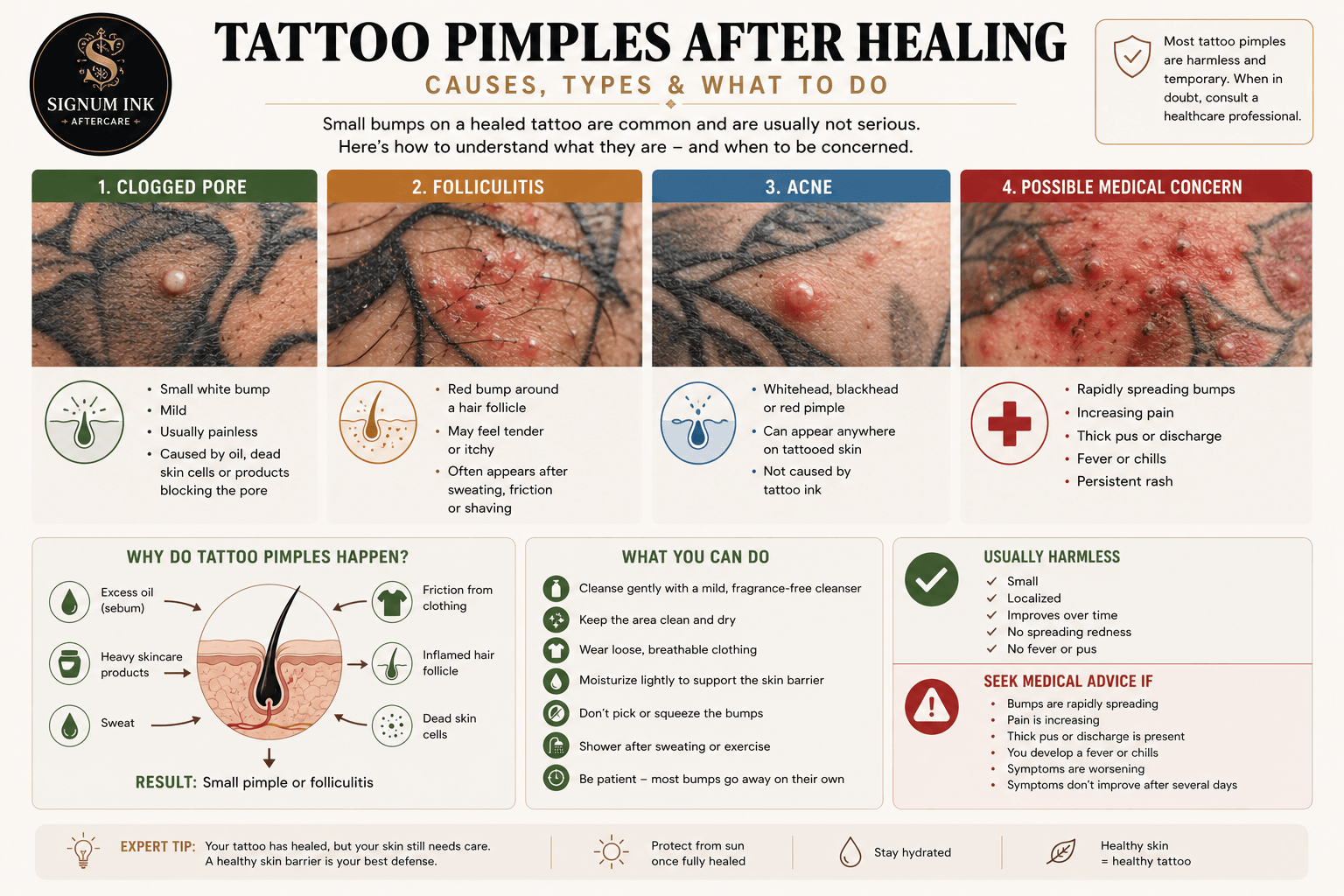
Deine Tätowierung ist verheilt.
Die Rötung ist verblasst.
Das Schälen ist vorbei.
Alles erscheint normal – bis Sie eines Tages feststellen, dass sich kleine Pickelchen auf oder um Ihr Tattoo herum entwickeln.
Es ist eine überraschend häufige Erfahrung, und für viele Menschen wirft sie sofort Fragen auf:
“Hat sich mein Tattoo infiziert?”
“Bin ich allergisch gegen die Tinte?”
“Habe ich das falsche Nachsorgeprodukt verwendet?”
Glücklicherweise, Kleine Pickelchen, die nach der Heilung eines Tattoos auftreten, sind oft harmlos und kann durch verschiedene Hauterkrankungen verursacht werden, die nichts mit dem Tattoo selbst zu tun haben.
Manchmal ist die Erklärung so einfach wie ein verstopfter Haarfollikel.
In anderen Fällen können Schwitzen, Reibung, okklusive Hautpflegeprodukte oder normale Akne verantwortlich sein.
Dennoch sollte nicht jede Beule automatisch abgetan werden.
Anhaltende, schmerzhafte, sich ausbreitende oder ungewöhnliche Hautveränderungen verdienen eine angemessene ärztliche Untersuchung, um die zugrunde liegende Ursache zu identifizieren.
Zu verstehen, warum sich Pickel auf Tätowierungen bilden und wie man gewöhnliche Hautreizungen von Symptomen, die eine professionelle Beurteilung erfordern könnten, unterscheiden kann, kann Ihnen helfen, sowohl Ihre Tätowierung als auch Ihre Haut mit Zuversicht zu pflegen.
Kurze Antwort
Sind Pickel auf einem abgeheilten Tattoo normal?
Manchmal, ja.
Kleine Pickel können aus vielen Gründen auf verheilten Tattoos entstehen, darunter verstopfte Poren, gereizte Haarfollikel, Schweiß oder Reibung.
Die meisten Fälle sind vorübergehend und lösen sich mit angemessener Hautpflege.
Anhaltende, sich verschlimmernde oder ungewöhnliche Beulen sollten jedoch von einem Arzt untersucht werden.
Kurz & Bündig
Häufigste Ursachen
- Verstopfte Poren
- Follikulitis (entzündete Haarfollikel)
- Akne
- Schweiß, der sich unter Kleidung staut
- Reibung
- Reichhaltige Hautpflegeprodukte
Erscheint normalerweise
Mehrere Tage bis mehrere Wochen nach der Tattoo-Heilung.
Oft fühlt sich an wie
- Kleine rote Beulen.
- Mitesser.
- Kleine entzündete Follikel.
- Milde Zärtlichkeit.
- Gelegentlicher Juckreiz.
Ärztlichen Rat einholen, wenn
- Pickel breiten sich weiter aus.
- Der Schmerz wird stark.
- Dicker Eiter entwickelt sich.
- Fieber tritt auf.
- Der Ausschlag verschlimmert sich weiter.
- Hautveränderungen bleiben über mehrere Wochen bestehen.
Warum können Pickel nach der Tattoo-Heilung auftreten?
Sobald die Tätowierung abgeheilt ist, verhält sich Ihre Haut ähnlich wie die umliegende Haut.
Das bedeutet, dass sich viele der gleichen häufigen Hauterkrankungen entwickeln können, die auch an anderen Stellen des Körpers auftreten.
Das Tattoo selbst ist nicht immer die Ursache.
Stattdessen führt der Zeitpunkt oft dazu, dass die Menschen jede kleine Hautveränderung genauer bemerken, als sie es normalerweise tun würden.
Mehrere Faktoren können dazu beitragen.
Verstopfte Haarfollikel
Eine der häufigsten Erklärungen ist ein verstopfter Haarfollikel.
Haarfollikel produzieren natürlich Öl, das die Haut geschmeidig hält.
Wenn sich überschüssiges Öl, abgestorbene Hautzellen, Schweiß oder Hautpflegeprodukte ansammeln, kann der Follikel blockiert werden.
Dies kann dazu führen, dass sich direkt auf oder in der Nähe des Tattoos kleine Pickel oder Mitesser bilden.
Follikulitis
Eine weitere häufige Ursache ist Follikulitis, eine Erkrankung, bei der ein oder mehrere Haarfollikel entzündet sind.
Follikulitis kann sich entwickeln aufgrund von:
- Reibung durch Kleidung.
- Schwitzen.
- Rasur.
- Bakterielle Reizung.
- Okklusion durch schwere Produkte.
Es erscheint oft als mehrere kleine rote Beulen, die um einzelne Haare herum zentriert sind.
Während viele Fälle mild verlaufen und mit einfacher Hautpflege besser werden, sollte eine anhaltende oder sich verschlimmernde Follikulitis von einem Arzt untersucht werden.
Können Tattoo-Nachsorgeprodukte Pickel verursachen?
Manchmal.
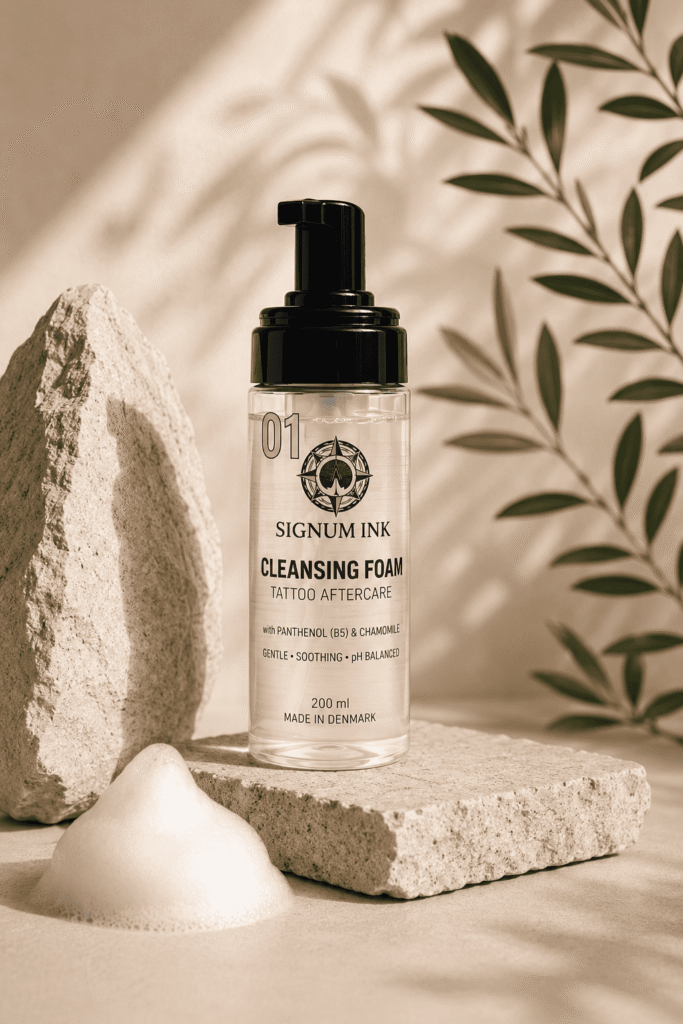
Sehr reichhaltige oder stark okklusive Produkte können bei Menschen, die zu Akne neigen, zu verstopften Poren beitragen.
Dies tut nicht nicht unbedingt bedeuten, dass das Produkt schlecht ist.
Verschiedene Hauttypen reagieren unterschiedlich auf Hautpflegeinhaltsstoffe.
Das Auftragen einer sehr dicken Schicht jeder Creme oder Salbe kann die Wahrscheinlichkeit von verstopften Follikeln erhöhen, insbesondere in warmen Umgebungen, in denen Schwitzen häufig vorkommt.
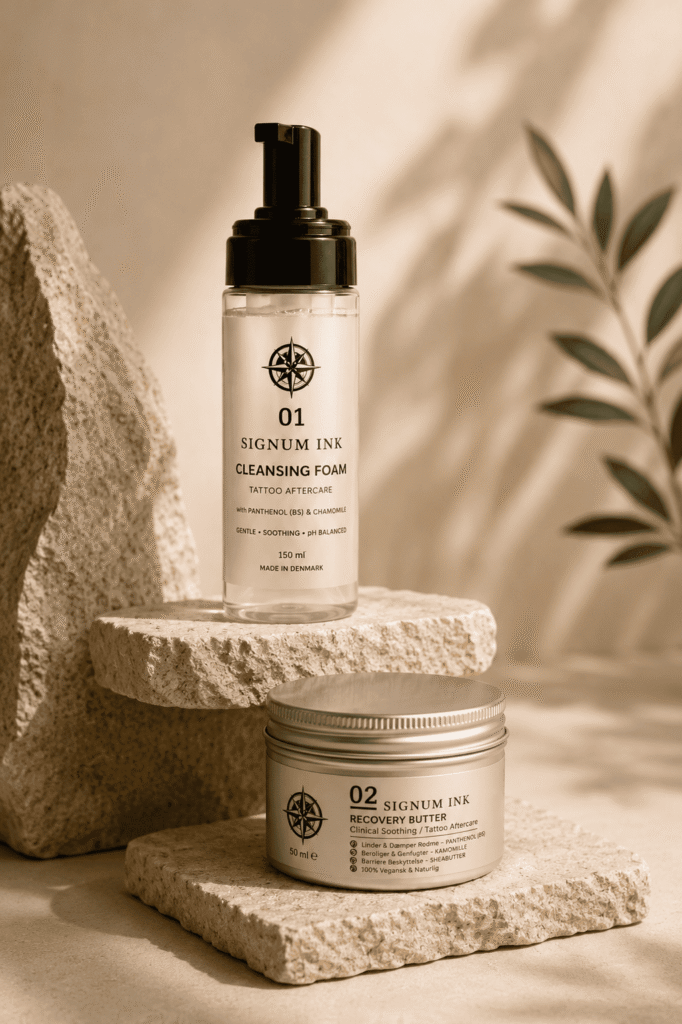
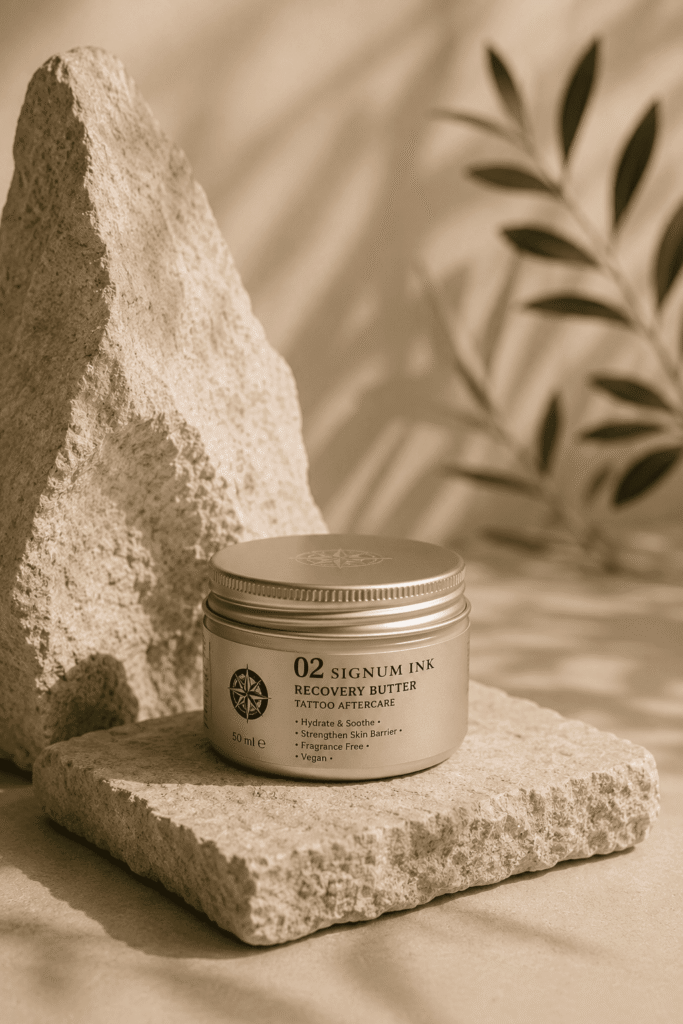
Moderne Aufbaucremes sind oft so formuliert, dass sie die Hydratation mit einem leichteren Hautgefühl ausgleichen und so die Hautbarriere unterstützen, ohne einen übermäßig schweren Film zu hinterlassen.
Schweiß und Reibung
Frisch verheilte Tätowierungen werden häufig von Kleidung bedeckt.
In Kombination mit Bewegung oder heißem Wetter entsteht eine Umgebung, in der Schweiß, Hitze und Reibung die Haut vorübergehend reizen können.
Besonders anfällige Bereiche sind hierbei:
- Oberarme
- Zurück
- Brust
- Oberschenkel
- Schultern
An diesen Stellen können die Haut sauber zu halten, sie atmen zu lassen und lockere Kleidung zu tragen helfen, Irritationen zu reduzieren.
Akne vs. Tattoo-Pickel
Viele Leute gehen davon aus, dass jede Beule, die auf einem Tattoo auftaucht, mit dem Tattoo zusammenhängt.
Tatsächlich kann sich auf tätowierter Haut genauso wie überall sonst am Körper normale Akne entwickeln.
Das Tattoo-Pigment selbst verhindert nicht, dass normale Hautzustände auftreten.
Das Verständnis dieses Unterschieds kann unnötige Sorgen verhindern.
Warum Barrieregesundheit immer noch wichtig ist
Auch nachdem ein Tattoo verheilt ist, bleibt die Aufrechterhaltung einer gesunden Hautbarriere wichtig.
Eine gut funktionierende Barriere hilft, Feuchtigkeit zu regulieren, unterstützt die natürlichen Abwehrkräfte der Haut und reduziert unnötige Reizungen.
Eine ausgewogene Hautpflegeroutine, die sanfte Reinigung und leichte Feuchtigkeitspflege umfasst, kann helfen, gesund aussehende Haut zu erhalten, ohne die Oberfläche mit schweren Produkten zu überladen.
Tattoo-Pickel vs. Infektion
Eine der ersten Fragen, die Menschen stellen, wenn sie Beulen auf einem verheilten Tattoo bemerken, ist, ob sich das Tattoo infiziert hat.
Glücklicherweise, Die meisten kleinen Pickel, die nach dem Abheilen einer Tätowierung auftreten, werden nicht durch eine Infektion verursacht..
Der Zeitpunkt liefert oft einen wichtigen Hinweis.
Wenn die Tätowierung über mehrere Wochen normal verheilte, bevor Beulen auftraten, sind häufige Hauterkrankungen wie verstopfte Poren, Akne oder gereizte Haarfollikel oft wahrscheinlichere Erklärungen als eine neue, tätowierungsbedingte Infektion.
Infektionen können jedoch gelegentlich auftreten und sollten niemals ignoriert werden.
Normal Pimples
Typischerweise:
- Small individual bumps.
- Localized to one area.
- Mild tenderness or no pain.
- Kein Fieber.
- No rapidly spreading redness.
- Skin otherwise feels normal.
Anzeichen, die eine ärztliche Untersuchung erfordern
Prompt medical evaluation is appropriate if bumps are accompanied by:
- Schnell ausbreitende Rötung.
- Zunehmende Schmerzen.
- Erhebliche Schwellung.
- Dicker gelber oder grüner Ausfluss.
- Fieber oder Schüttelfrost.
- Rote Streifen, die sich vom Tattoo weg erstrecken.
- Skin that continues worsening rather than improving.
Diese Symptome Infektion nicht automatisch bestätigen, but they should be assessed by a healthcare professional as soon as possible.
Tattoo Pimples vs. Allergic Reaction
Although uncommon, allergic reactions can sometimes develop after tattooing.
Unlike ordinary pimples, allergic reactions often appear differently.
Possible features include:
- Widespread redness.
- Persistent itching.
- Raised rash.
- Swelling extending beyond individual follicles.
- Symptoms affecting larger portions of the tattoo.
Some allergic reactions may develop weeks, months, or even years after the tattoo was completed.
Because allergic reactions vary greatly, persistent or worsening skin changes should be evaluated by a healthcare professional.
Was sagt die Forschung?
Dermatology research shows that several common skin conditions may occur on tattooed skin just as they do on non-tattooed skin.
Dazu gehören:
- Acne.
- Folliculitis.
- Contact dermatitis.
- Irritant dermatitis.
- Occluded hair follicles.
Importantly, the presence of tattoo ink does not prevent ordinary skin conditions from developing.
In many cases, the tattoo simply makes people notice changes they might otherwise overlook.
Current research also emphasizes the importance of protecting the skin barrier, as healthy barrier function helps maintain comfortable, resilient skin after healing.
Can Moisturizers Cause Pimples?
Sometimes—but not always.
Many people immediately blame their recovery cream when pimples appear.
In reality, several factors usually contribute.
Applying a very thick layer of any skincare product may increase the likelihood of clogged pores, particularly if:
- Your skin is naturally acne-prone.
- You live in a hot, humid climate.
- The tattoo is covered by tight clothing.
- You sweat heavily during exercise.
A lightweight recovery cream applied in a thin, even layer is generally less likely to contribute to pore blockage than excessive amounts of a heavier product.
Why Hair Follicles Matter
Hair follicles continue functioning normally after tattoo healing.
Each follicle produces natural oils that help maintain healthy skin.
Sometimes these follicles become temporarily blocked.
Common contributing factors include:
- Schweiß.
- Dead skin cells.
- Natural skin oil (sebum).
- Friction.
- Tight clothing.
- Heavy skincare products.
When this occurs, a small pimple or inflamed follicle may develop.
This is often unrelated to the tattoo pigment itself.
How to Care for Tattoo Pimples
Most mild pimples improve with simple, gentle skin care.
Helpful steps include:
✔ Wash the area with a mild cleanser.
✔ Avoid scrubbing the tattoo.
✔ Apply lightweight moisturizer if the skin feels dry.
✔ Wear loose-fitting clothing.
✔ Shower after heavy sweating.
✔ Avoid squeezing or picking pimples.
Keeping the skin clean while minimizing irritation allows the skin’s natural repair processes to continue.
What Should You Avoid?
Certain habits may prolong irritation.
Vermeiden:
❌ Picking pimples.
❌ Scratching itchy bumps.
❌ Applying very thick layers of skincare products.
❌ Using harsh exfoliants on recently healed tattoos.
❌ Wearing tight, non-breathable clothing for prolonged periods.
❌ Aggressively washing the area.
Gentle, consistent care is usually more effective than trying multiple treatments in a short period.
Warum Barrieregesundheit immer noch wichtig ist
Even weeks after healing, the skin barrier continues protecting the tattoo from everyday environmental stress.
A healthy barrier helps:
- Maintain moisture.
- Reduce irritation.
- Support resilient skin.
- Verbessern Sie den allgemeinen Hautkomfort.
Modern skincare therefore focuses not only on treating individual symptoms but also on supporting long-term barrier function through balanced formulations.
Forschungsbericht
| Forschungsbereich | Beweis |
|---|---|
| Follikulitis | ★★★★★ |
| Acne on Tattooed Skin | ★★★★★ |
| Skin Barrier Function | ★★★★★ |
| Cosmetic Formulation | ★★★★☆ |
| Tattoo-Nachsorge | ★★★★☆ |
| Tattoo-Specific Acne Studies | ★★★☆☆ |
Common Mistakes That Make Pimples Worse
Many people unintentionally prolong irritation by trying to “fix” the bumps too quickly.
Häufige Fehler sind:
Picking Pimples
This increases the risk of irritation, scarring, and delayed recovery.
Using Too Many Products
Frequently switching cleansers, creams, or spot treatments may further irritate the skin.
Übermäßiges Waschen
Excessive cleansing can disrupt the skin barrier and increase dryness.
Ignoring Sweat
Sweat itself is not harmful, but remaining in damp clothing for extended periods may increase irritation around hair follicles.
Continuing Heavy Occlusion
If the tattoo has already healed, continuing to apply large amounts of thick ointment may unnecessarily increase the likelihood of clogged follicles in susceptible individuals.
Frequently Asked Questions About Tattoo Pimples After Healing
Is it normal to get pimples on a healed tattoo?
Yes—sometimes.
Once your tattoo has healed, the skin functions much like the surrounding skin. This means common skin conditions such as clogged pores, acne, or inflamed hair follicles can develop on tattooed skin just as they do anywhere else on the body.
Most small pimples are temporary and improve with gentle skin care.
Can I pop a pimple on my tattoo?
It is best not to.
Squeezing or picking pimples may increase irritation, damage the surrounding skin, and increase the risk of scarring or secondary infection.
Allow the blemish to heal naturally whenever possible.
Will pimples damage my tattoo?
Usually not.
Small pimples that remain within the superficial layers of the skin generally do not affect the tattoo pigment, which is located deeper in the dermis.
However, repeatedly picking or squeezing the skin may increase the risk of damaging the healing tissue and could affect the appearance of the tattoo.
Can sweating cause tattoo pimples?
Ja.
Sweat itself is not harmful, but when combined with heat, friction, and tight clothing, it can contribute to clogged follicles and temporary skin irritation.
Showering after exercise and changing into dry clothing may help reduce this risk.
Can moisturizers cause pimples?
Manchmal.
Using very large amounts of a rich cream or ointment may contribute to clogged pores in people with acne-prone skin.
Applying a thin, even layer of a lightweight recovery cream is generally less likely to cause problems than using excessive amounts of any product.
Why do I only have one or two pimples?
This is very common.
Individual hair follicles can occasionally become blocked or irritated without affecting the surrounding skin.
A small number of isolated pimples is often less concerning than a widespread or rapidly progressing rash.
Can tattoo ink cause pimples?
Tattoo pigment itself is not considered a common cause of ordinary pimples.
If skin changes are related to tattoo ink, they are more likely to involve an inflammatory or allergic reaction rather than typical acne.
If you notice persistent bumps that remain in one colour of ink or continue to worsen, seek medical advice for an appropriate assessment.
Why do pimples appear weeks after healing?
Some skin conditions take time to develop.
As normal activities such as exercising, shaving, sweating, or wearing tighter clothing resume, blocked follicles or acne may appear even though the tattoo itself has already healed.
The timing does not necessarily mean the tattoo is causing the problem.
Should I stop moisturizing?
Nicht unbedingt.
Maintaining a healthy skin barrier remains important even after the tattoo has healed.
If you suspect your skincare routine is contributing to clogged pores, consider using a lighter moisturizer rather than stopping hydration altogether.
When should I contact a healthcare professional?
Arrange prompt medical assessment if you experience:
- Schnell ausbreitende Rötung.
- Zunehmende Schmerzen.
- Dicker gelber oder grüner Ausfluss.
- Fieber oder Schüttelfrost.
- Large areas of swelling.
- A rash that continues worsening.
- Persistent bumps that do not improve over time.
- Any skin change that causes concern or appears significantly different from ordinary acne.
Common Myths About Tattoo Pimples
Myth 1: Every pimple means the tattoo is infected.
Realität
Most pimples appearing after a tattoo has healed are related to common skin conditions rather than infection.
Myth 2: Tattoo ink blocks pores forever.
Realität
Tattoo pigment is placed in the dermis, while pores and hair follicles continue functioning normally within the skin.
Myth 3: You should stop using moisturizer immediately.
Realität
Healthy skin still needs hydration.
The goal is to use products appropriate for your skin type and apply them in sensible amounts.
Myth 4: Pimples will ruin the tattoo.
Realität
Most small pimples heal without affecting the tattoo itself.
Problems are more likely to arise from squeezing, scratching, or repeatedly traumatizing the skin.
Long-Term Care for Tattooed Skin
Even after healing is complete, healthy skin helps tattoos look their best.
A simple long-term routine includes:
✔ Cleanse the skin gently.
✔ Moisturize regularly to support the skin barrier.
✔ Protect tattoos from excessive UV exposure with sunscreen once fully healed.
✔ Wear breathable clothing during exercise.
✔ Avoid repeatedly irritating the same area.
Healthy skin provides the best foundation for maintaining a sharp, vibrant tattoo over time.
Forschungsbericht
| Forschungsbereich | Beweis |
|---|---|
| Acne Biology | ★★★★★ |
| Follikulitis | ★★★★★ |
| Skin Barrier Function | ★★★★★ |
| Cosmetic Dermatology | ★★★★★ |
| Tattoo-Nachsorge | ★★★★☆ |
| Tattoo-Specific Acne Research | ★★★☆☆ |
Ingredient Guide for Acne-Prone Tattooed Skin
| Goal | Helpful Ingredients |
|---|---|
| Maintain hydration | Glycerin, Betaine |
| Support the skin barrier | Ceramides, Niacinamide |
| Lightweight skin conditioning | Squalane, Caprylic/Capric Triglyceride |
| Support skin comfort | Panthenol, Allantoin |
| Botanical support | Madecassosid |
| Antioxidant support | Vitamin E |
These ingredients help maintain a healthy skin barrier and comfortable skin but are not treatments for acne. If acne becomes persistent or severe, seek advice from a healthcare professional.
Experten-Tipp
Don’t focus only on the pimple—look at your skin as a whole.
A single small bump on an otherwise healthy tattoo is usually less concerning than widespread redness, increasing pain, or symptoms that continue to worsen. The overall pattern of healing is often more informative than any one individual blemish.
Signs Your Skin Is Recovering Normally
✅ Only a few isolated pimples.
✅ Skin otherwise feels healthy.
✅ No increasing redness.
✅ No fever.
✅ Pimples gradually improve.
✅ Tattoo appearance remains unchanged.
Anzeichen, die eine ärztliche Untersuchung erfordern
⚠️ Rapidly spreading redness.
⚠️ Dickflüssiger gelber oder grüner Ausfluss.
Fieber oder Schüttelfrost.
⚠️ Severe or increasing pain.
⚠️ Large painful nodules.
⚠️ Persistent rash or bumps that do not improve.
⚠️ Skin changes that continue worsening over time.
Diese Symptome do not automatically indicate an infection or another specific condition, but they should be assessed by a healthcare professional to determine the underlying cause.
Abschließende Gedanken
Finding a pimple on a healed tattoo can be frustrating, but in many cases it is simply a reflection of how normal skin behaves. Hair follicles, oil glands, and pores continue to function after tattooing, which means acne, clogged pores, and mild folliculitis can develop just as they would on non-tattooed skin.
The key is to look at the bigger picture. Small, isolated pimples that gradually improve are often harmless, while symptoms such as spreading redness, increasing pain, fever, or persistent skin changes deserve prompt medical evaluation.
A gentle skincare routine, consistent hydration, and attention to the skin barrier remain some of the best ways to keep both your skin and your tattoo healthy in the long term. By understanding the difference between common blemishes and signs that require professional assessment, you can care for your tattoo with confidence while preserving its appearance for years to come.
 English
  German