
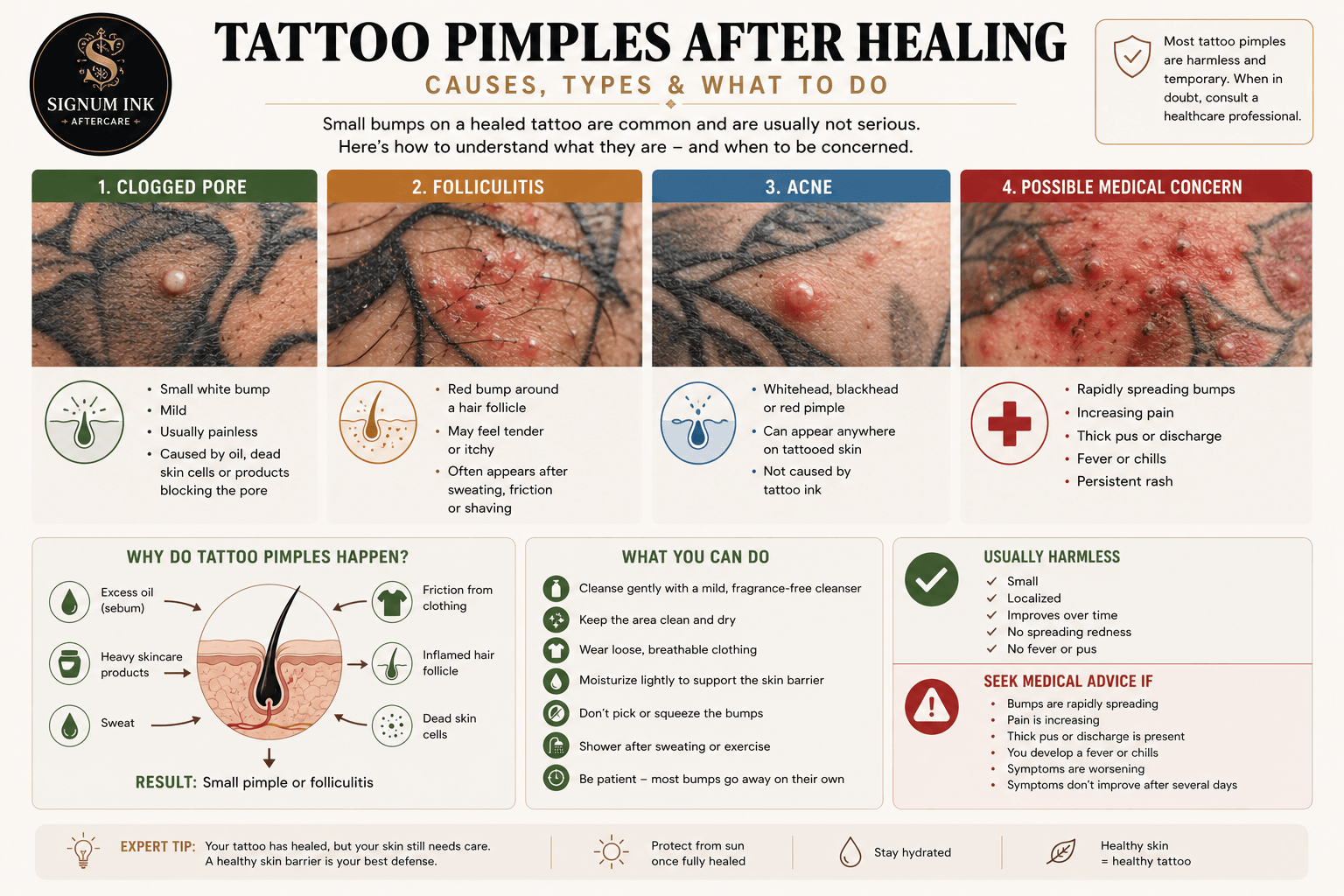
Deine Tätowierung ist verheilt.
Die Rötung ist verblasst.
Das Schälen ist vorbei.
Alles erscheint normal – bis Sie eines Tages feststellen, dass sich kleine Pickelchen auf oder um Ihr Tattoo herum entwickeln.
Es ist eine überraschend häufige Erfahrung, und für viele Menschen wirft sie sofort Fragen auf:
“Hat sich mein Tattoo infiziert?”
“Bin ich allergisch gegen die Tinte?”
“Habe ich das falsche Nachsorgeprodukt verwendet?”
Glücklicherweise, Kleine Pickelchen, die nach der Heilung eines Tattoos auftreten, sind oft harmlos und kann durch verschiedene Hauterkrankungen verursacht werden, die nichts mit dem Tattoo selbst zu tun haben.
Manchmal ist die Erklärung so einfach wie ein verstopfter Haarfollikel.
In anderen Fällen können Schwitzen, Reibung, okklusive Hautpflegeprodukte oder normale Akne verantwortlich sein.
Dennoch sollte nicht jede Beule automatisch abgetan werden.
Anhaltende, schmerzhafte, sich ausbreitende oder ungewöhnliche Hautveränderungen verdienen eine angemessene ärztliche Untersuchung, um die zugrunde liegende Ursache zu identifizieren.
Zu verstehen, warum sich Pickel auf Tätowierungen bilden und wie man gewöhnliche Hautreizungen von Symptomen, die eine professionelle Beurteilung erfordern könnten, unterscheiden kann, kann Ihnen helfen, sowohl Ihre Tätowierung als auch Ihre Haut mit Zuversicht zu pflegen.
Kurze Antwort
Sind Pickel auf einem abgeheilten Tattoo normal?
Manchmal, ja.
Kleine Pickel können aus vielen Gründen auf verheilten Tattoos entstehen, darunter verstopfte Poren, gereizte Haarfollikel, Schweiß oder Reibung.
Die meisten Fälle sind vorübergehend und lösen sich mit angemessener Hautpflege.
Anhaltende, sich verschlimmernde oder ungewöhnliche Beulen sollten jedoch von einem Arzt untersucht werden.
Kurz & Bündig
Häufigste Ursachen
- Verstopfte Poren
- Follikulitis (entzündete Haarfollikel)
- Akne
- Schweiß, der sich unter Kleidung staut
- Reibung
- Reichhaltige Hautpflegeprodukte
Erscheint normalerweise
Mehrere Tage bis mehrere Wochen nach der Tattoo-Heilung.
Oft fühlt sich an wie
- Kleine rote Beulen.
- Mitesser.
- Kleine entzündete Follikel.
- Milde Zärtlichkeit.
- Gelegentlicher Juckreiz.
Ärztlichen Rat einholen, wenn
- Pickel breiten sich weiter aus.
- Der Schmerz wird stark.
- Dicker Eiter entwickelt sich.
- Fieber tritt auf.
- Der Ausschlag verschlimmert sich weiter.
- Hautveränderungen bleiben über mehrere Wochen bestehen.
Warum können Pickel nach der Tattoo-Heilung auftreten?
Sobald die Tätowierung abgeheilt ist, verhält sich Ihre Haut ähnlich wie die umliegende Haut.
Das bedeutet, dass sich viele der gleichen häufigen Hauterkrankungen entwickeln können, die auch an anderen Stellen des Körpers auftreten.
Das Tattoo selbst ist nicht immer die Ursache.
Stattdessen führt der Zeitpunkt oft dazu, dass die Menschen jede kleine Hautveränderung genauer bemerken, als sie es normalerweise tun würden.
Mehrere Faktoren können dazu beitragen.
Verstopfte Haarfollikel
Eine der häufigsten Erklärungen ist ein verstopfter Haarfollikel.
Haarfollikel produzieren natürlich Öl, das die Haut geschmeidig hält.
Wenn sich überschüssiges Öl, abgestorbene Hautzellen, Schweiß oder Hautpflegeprodukte ansammeln, kann der Follikel blockiert werden.
Dies kann dazu führen, dass sich direkt auf oder in der Nähe des Tattoos kleine Pickel oder Mitesser bilden.
Follikulitis
Eine weitere häufige Ursache ist Follikulitis, eine Erkrankung, bei der ein oder mehrere Haarfollikel entzündet sind.
Follikulitis kann sich entwickeln aufgrund von:
- Reibung durch Kleidung.
- Schwitzen.
- Rasur.
- Bakterielle Reizung.
- Okklusion durch schwere Produkte.
Es erscheint oft als mehrere kleine rote Beulen, die um einzelne Haare herum zentriert sind.
Während viele Fälle mild verlaufen und mit einfacher Hautpflege besser werden, sollte eine anhaltende oder sich verschlimmernde Follikulitis von einem Arzt untersucht werden.
Können Tattoo-Nachsorgeprodukte Pickel verursachen?
Manchmal.
Sehr reichhaltige oder stark okklusive Produkte können bei Menschen, die zu Akne neigen, zu verstopften Poren beitragen.
Dies tut nicht nicht unbedingt bedeuten, dass das Produkt schlecht ist.
Verschiedene Hauttypen reagieren unterschiedlich auf Hautpflegeinhaltsstoffe.
Das Auftragen einer sehr dicken Schicht jeder Creme oder Salbe kann die Wahrscheinlichkeit von verstopften Follikeln erhöhen, insbesondere in warmen Umgebungen, in denen Schwitzen häufig vorkommt.
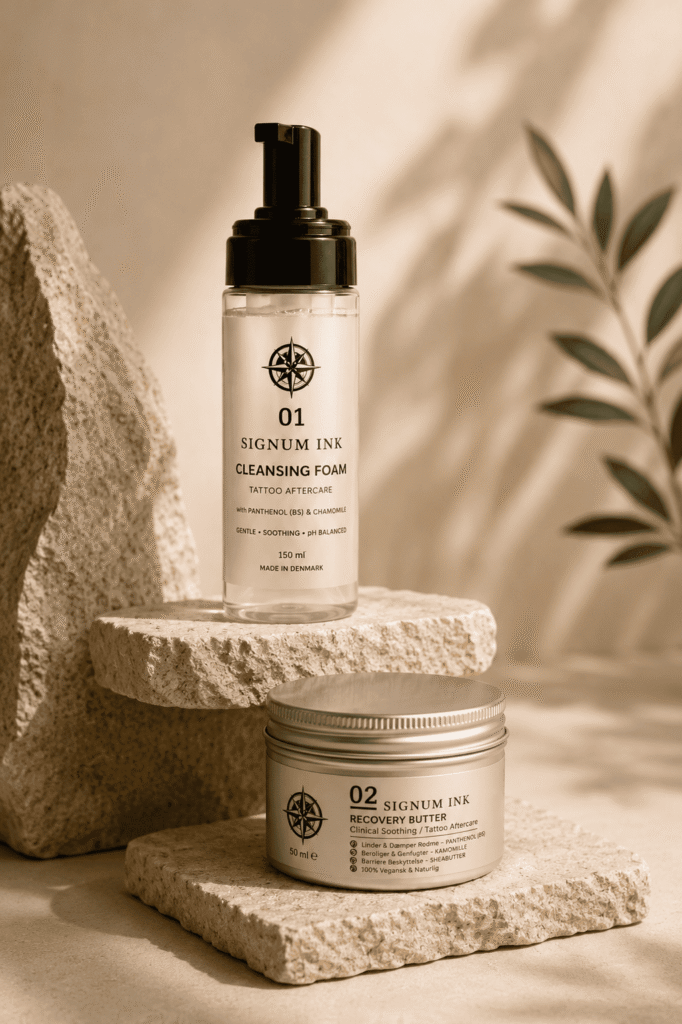
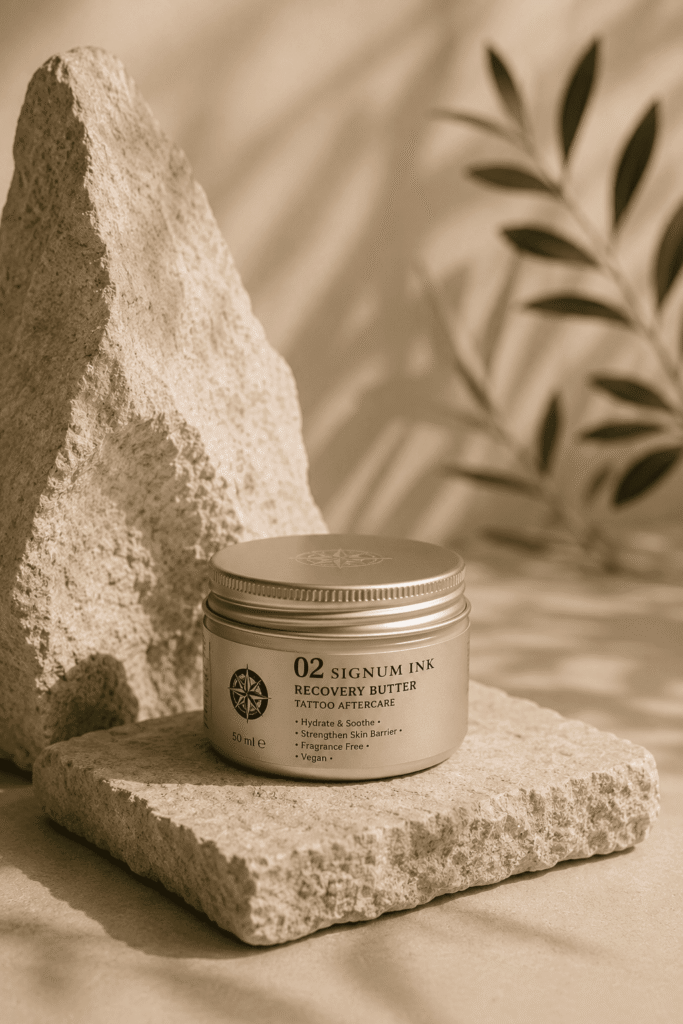
Moderne Aufbaucremes sind oft so formuliert, dass sie die Hydratation mit einem leichteren Hautgefühl ausgleichen und so die Hautbarriere unterstützen, ohne einen übermäßig schweren Film zu hinterlassen.
Schweiß und Reibung
Frisch verheilte Tätowierungen werden häufig von Kleidung bedeckt.
In Kombination mit Bewegung oder heißem Wetter entsteht eine Umgebung, in der Schweiß, Hitze und Reibung die Haut vorübergehend reizen können.
Besonders anfällige Bereiche sind hierbei:
- Oberarme
- Zurück
- Brust
- Oberschenkel
- Schultern
An diesen Stellen können die Haut sauber zu halten, sie atmen zu lassen und lockere Kleidung zu tragen helfen, Irritationen zu reduzieren.
Akne vs. Tattoo-Pickel
Viele Leute gehen davon aus, dass jede Beule, die auf einem Tattoo auftaucht, mit dem Tattoo zusammenhängt.
Tatsächlich kann sich auf tätowierter Haut genauso wie überall sonst am Körper normale Akne entwickeln.
Das Tattoo-Pigment selbst verhindert nicht, dass normale Hautzustände auftreten.
Das Verständnis dieses Unterschieds kann unnötige Sorgen verhindern.
Warum Barrieregesundheit immer noch wichtig ist
Auch nachdem ein Tattoo verheilt ist, bleibt die Aufrechterhaltung einer gesunden Hautbarriere wichtig.
Eine gut funktionierende Barriere hilft, Feuchtigkeit zu regulieren, unterstützt die natürlichen Abwehrkräfte der Haut und reduziert unnötige Reizungen.
Eine ausgewogene Hautpflegeroutine, die sanfte Reinigung und leichte Feuchtigkeitspflege umfasst, kann helfen, gesund aussehende Haut zu erhalten, ohne die Oberfläche mit schweren Produkten zu überladen.
Tattoo-Pickel vs. Infektion
Eine der ersten Fragen, die Menschen stellen, wenn sie Beulen auf einem verheilten Tattoo bemerken, ist, ob sich das Tattoo infiziert hat.
Glücklicherweise, Die meisten kleinen Pickel, die nach dem Abheilen einer Tätowierung auftreten, werden nicht durch eine Infektion verursacht..
Der Zeitpunkt liefert oft einen wichtigen Hinweis.
Wenn die Tätowierung über mehrere Wochen normal verheilte, bevor Beulen auftraten, sind häufige Hauterkrankungen wie verstopfte Poren, Akne oder gereizte Haarfollikel oft wahrscheinlichere Erklärungen als eine neue, tätowierungsbedingte Infektion.
Infektionen können jedoch gelegentlich auftreten und sollten niemals ignoriert werden.
Normale Pickel
Typischerweise:
- Kleine einzelne Beulen.
- Auf einen Bereich beschränkt.
- Milde Druckempfindlichkeit oder keine Schmerzen.
- Kein Fieber.
- Keine sich schnell ausbreitende Rötung.
- Haut fühlt sich ansonsten normal an.
Anzeichen, die eine ärztliche Untersuchung erfordern
Die ärztliche Untersuchung ist angezeigt, wenn die Beulen begleitet werden von:
- Schnell ausbreitende Rötung.
- Zunehmende Schmerzen.
- Erhebliche Schwellung.
- Dicker gelber oder grüner Ausfluss.
- Fieber oder Schüttelfrost.
- Rote Streifen, die sich vom Tattoo weg erstrecken.
- Haut, die sich eher verschlimmert als verbessert.
Diese Symptome Infektion nicht automatisch bestätigen, aber sie sollten so bald wie möglich von einem Arzt beurteilt werden.
Tattoo-Pickel vs. allergische Reaktion
Obwohl selten, können allergische Reaktionen manchmal nach dem Tätowieren auftreten.
Im Gegensatz zu gewöhnlichen Pickeln treten allergische Reaktionen oft anders auf.
Mögliche Funktionen umfassen:
- Ausgedehnte Rötung.
- Anhaltender Juckreiz.
- Erhobener Ausschlag.
- Schwellung, die über einzelne Follikel hinausgeht.
- Symptome, die größere Teile der Tätowierung betreffen.
Einige allergische Reaktionen können Wochen, Monate oder sogar Jahre nach der Fertigstellung des Tattoos auftreten.
Da allergische Reaktionen stark variieren, sollten anhaltende oder sich verschlimmernde Hautveränderungen von einem Arzt beurteilt werden.
Was sagt die Forschung?
Die dermatologische Forschung zeigt, dass verschiedene häufige Hauterkrankungen auf tätowierter Haut genauso auftreten können wie auf nicht tätowierter Haut.
Dazu gehören:
- Akne.
- Follikulitis.
- Kontaktdermatitis.
- Irritative Kontaktdermatitis.
- Verstopfte Haarfollikel.
Wichtig ist, Das Vorhandensein von Tätowierfarbe verhindert nicht, dass gewöhnliche Hauterkrankungen auftreten..
In vielen Fällen lässt das Tattoo die Menschen einfach Veränderungen bemerken, die sie sonst übersehen würden.
Aktuelle Forschungsergebnisse betonen auch die Bedeutung des Schutzes der Hautbarriere, da eine gesunde Barrierefunktion dazu beiträgt, dass die Haut nach der Heilung komfortabel und widerstandsfähig bleibt.
Können Feuchtigkeitscremes Pickel verursachen?
Manchmal – aber nicht immer.
Viele Leute geben ihrer Regenerationcreme sofort die Schuld, wenn Pickel auftauchen.
In Wirklichkeit tragen in der Regel mehrere Faktoren bei.
Das Auftragen einer sehr dicken Schicht jedes Hautpflegeprodukts kann die Wahrscheinlichkeit von verstopften Poren erhöhen, insbesondere wenn:
- Deine Haut ist von Natur aus zu Akne neigend.
- Du lebst in einem heißen, feuchten Klima.
- Das Tattoo ist von enger Kleidung bedeckt.
- Du schwitzt stark während des Trainings.
Eine leichte Regenerationscreme, die in einer dünnen, gleichmäßigen Schicht aufgetragen wird, trägt im Allgemeinen weniger zur Verstopfung der Poren bei als übermäßige Mengen eines reichhaltigeren Produkts.
Warum Haarfollikel wichtig sind
Haarfollikel funktionieren nach der Heilung von Tätowierungen weiterhin normal.
Jeder Follikel produziert natürliche Öle, die zur Erhaltung gesunder Haut beitragen.
Manchmal werden diese Follikel vorübergehend blockiert.
Zu den häufigsten Faktoren, die dazu beitragen, gehören:
- Schweiß.
- Abgestorbene Hautzellen.
- Natürliches Hautöl (Talg).
- Reibung.
- Enge Kleidung.
- Schwere Hautpflegeprodukte.
Wenn dies auftritt, kann sich ein kleiner Pickel oder ein entzündeter Haarfollikel entwickeln.
Dies hat oft nichts mit der Tätowierfarbe selbst zu tun.
Wie man sich um Tattoo-Pickel kümmert
Die meisten leichten Pickel verbessern sich mit einfacher, sanfter Hautpflege.
Hilfreiche Schritte beinhalten:
✔ Waschen Sie die Stelle mit einem milden Reinigungsmittel.
✔ Vermeide es, das Tattoo zu schrubben.
✔ Eine leichte Feuchtigkeitscreme auftragen, wenn sich die Haut trocken anfühlt.
✔ Tragen Sie locker sitzende Kleidung.
Duschen nach starkem Schwitzen.
✔ Vermeiden Sie es, Pickel auszudrücken oder daran herumzudrücken.
Die Haut sauber zu halten und gleichzeitig Irritationen zu minimieren, ermöglicht den natürlichen Reparaturprozessen der Haut, fortzufahren.
Was sollten Sie vermeiden?
Bestimmte Gewohnheiten können Irritationen verlängern.
Vermeiden:
❌ An Pickeln herumdrücken.
❌ Juckende Beulen kratzen.
❌ Zu dicke Schichten von Hautpflegeprodukten auftragen.
❌ Die Verwendung von aggressiven Peeling-Produkten bei frisch verheilten Tattoos.
❌ Das Tragen von enger, nicht atmungsaktiver Kleidung über einen längeren Zeitraum.
❌ Aggressives Waschen des Bereichs.
Eine sanfte, konsequente Pflege ist in der Regel wirksamer als der Versuch, innerhalb kurzer Zeit mehrere Behandlungen auszuprobieren.
Warum Barrieregesundheit immer noch wichtig ist
Auch noch Wochen nach der Heilung schützt die Hautbarriere das Tattoo weiterhin vor alltäglichen Umwelteinflüssen.
Eine gesunde Barriere hilft:
- Für ausreichende Feuchtigkeit sorgen.
- Reizung reduzieren.
- Fördert eine widerstandsfähige Haut.
- Verbessern Sie den allgemeinen Hautkomfort.
Die moderne Hautpflege konzentriert sich daher nicht nur auf die Behandlung einzelner Symptome, sondern auch auf die langfristige Stärkung der Hautbarriere durch ausgewogene Rezepturen.
Forschungsbericht
| Forschungsbereich | Beweis |
|---|---|
| Follikulitis | ★★★★★ |
| Akne auf tätowierter Haut | ★★★★★ |
| Hautbarrierefunktion | ★★★★★ |
| Kosmetische Rezeptur | ★★★★☆ |
| Tattoo-Nachsorge | ★★★★☆ |
| Studien zu tätowierungsbedingter Akne | ★★★☆☆ |
Häufige Fehler, die Pickel verschlimmern
Viele Menschen verlängern die Reizung ungewollt, indem sie versuchen, die Beulen zu schnell “zu beseitigen”.
Häufige Fehler sind:
An Pickeln herumdrücken
Dies erhöht das Risiko von Reizungen, Narbenbildung und einer verzögerten Genesung.
Zu viele Produkte verwenden
Ein häufiger Wechsel von Reinigungsprodukten, Cremes oder Produkten zur Behandlung von Hautunreinheiten kann die Haut zusätzlich reizen.
Übermäßiges Waschen
Übermäßige Reinigung kann die Hautbarriere beeinträchtigen und zu erhöhter Trockenheit führen.
Schweiß ignorieren
Schweiß an sich ist nicht schädlich, doch wenn man längere Zeit in feuchter Kleidung bleibt, kann dies zu Reizungen im Bereich der Haarfollikel führen.
Anhaltende starke Okklusion
Wenn das Tattoo bereits verheilt ist, kann das weitere Auftragen großer Mengen dickflüssiger Salbe bei anfälligen Personen die Wahrscheinlichkeit von verstopften Haarfollikeln unnötig erhöhen.
Häufig gestellte Fragen zu Tattoo-Pickeln nach der Abheilung
Ist es normal, dass man auf einem verheilten Tattoo Pickel bekommt?
Ja – manchmal.
Sobald Ihr Tattoo verheilt ist, verhält sich die Haut ähnlich wie die umgebende Haut. Das bedeutet, dass häufige Hautprobleme wie verstopfte Poren, Akne oder entzündete Haarfollikel auf der tätowierten Haut genauso auftreten können wie an jeder anderen Stelle des Körpers.
Die meisten kleinen Pickel sind vorübergehend und klingen bei sanfter Hautpflege von selbst ab.
Kann ich einen Pickel auf meinem Tattoo ausdrücken?
Das sollte man besser nicht tun.
Das Ausdrücken oder Aufkratzen von Pickeln kann zu verstärkten Reizungen führen, die umliegende Haut schädigen und das Risiko von Narbenbildung oder Sekundärinfektionen erhöhen.
Lassen Sie den Makel wann immer möglich natürlich heilen.
Können Pickel mein Tattoo beschädigen?
Normalerweise nicht.
Kleine Pickel, die in den oberflächlichen Hautschichten verbleiben, beeinträchtigen in der Regel nicht das Tätowierpigment, das tiefer in der Dermis liegt.
Das wiederholte Zupfen oder Ausdrücken der Haut kann jedoch das Risiko einer Beschädigung des heilenden Gewebes erhöhen und das Erscheinungsbild der Tätowierung beeinträchtigen.
Kann Schwitzen Pickel im Tattoo verursachen?
Ja.
Schweiß allein ist nicht schädlich, aber in Kombination mit Hitze, Reibung und enger Kleidung kann er zu verstopften Follikeln und vorübergehenden Hautreizungen beitragen.
Duschen nach dem Training und das Anziehen trockener Kleidung können helfen, dieses Risiko zu verringern.
Können Feuchtigkeitscremes Pickel verursachen?
Manchmal.
Die Verwendung sehr großer Mengen einer reichhaltigen Creme oder Salbe kann bei Menschen mit zu Akne neigender Haut zu verstopften Poren beitragen.
Das Auftragen einer dünnen, gleichmäßigen Schicht einer leichten Erholungscreme ist im Allgemeinen weniger problematisch als die übermäßige Verwendung irgendeines Produkts.
Warum habe ich nur ein oder zwei Pickel?
Das ist sehr üblich.
Einzelne Haarfollikel können gelegentlich verstopfen oder gereizt werden, ohne die umliegende Haut zu beeinträchtigen.
Eine kleine Anzahl vereinzelter Pickel ist oft weniger besorgniserregend als ein sich ausbreitender oder sich schnell entwickelnder Ausschlag.
Kann Tattoo-Tinte Pickel verursachen?
Tätowierfarbe selbst ist nicht als häufige Ursache für gewöhnliche Pickel angesehen.
Wenn Hautveränderungen mit Tattoo-Tinte zusammenhängen, sind sie eher eine entzündliche oder allergische Reaktion als typische Akne.
Wenn Sie anhaltende Beulen bemerken, die in einer einzigen Tintenfarbe verbleiben oder sich verschlimmern, suchen Sie ärztlichen Rat für eine angemessene Beurteilung.
Warum treten Pickel Wochen nach der Heilung auf?
Einige Hauterkrankungen entwickeln sich mit der Zeit.
Sobald normale Aktivitäten wie Sport, Rasieren, Schwitzen oder das Tragen engerer Kleidung wieder aufgenommen werden, können verstopfte Follikel oder Akne auftreten, auch wenn das Tattoo selbst bereits verheilt ist.
Der Zeitpunkt bedeutet nicht zwangsläufig, dass die Tätowierung das Problem verursacht.
Sollte ich aufhören, mich einzucremen?
Nicht unbedingt.
Die Aufrechterhaltung einer gesunden Hautbarriere bleibt auch nach dem Abheilen der Tätowierung wichtig.
Wenn Sie vermuten, dass Ihre Hautpflegeroutine zu verstopften Poren beiträgt, sollten Sie eine leichtere Feuchtigkeitscreme verwenden, anstatt ganz auf die Feuchtigkeitszufuhr zu verzichten.
Wann sollte ich einen Arzt aufsuchen?
Sofortige ärztliche Untersuchung, wenn Sie Folgendes erfahren:
- Schnell ausbreitende Rötung.
- Zunehmende Schmerzen.
- Dicker gelber oder grüner Ausfluss.
- Fieber oder Schüttelfrost.
- Großflächige Schwellungen.
- Ein sich verschlimmernder Hautausschlag.
- Anhaltende Beulen, die sich mit der Zeit nicht bessern.
- Jede Hautveränderung, die Anlass zur Sorge gibt oder deutlich von gewöhnlicher Akne abweicht.
Gängige Mythen über Tattoo-Pickel
Mythos 1: Jeder Pickel bedeutet, dass das Tattoo infiziert ist.
Realität
Die meisten Pickel, die nach der Heilung eines Tattoos auftreten, stehen eher im Zusammenhang mit häufigen Hauterkrankungen als mit Infektionen.
Mythos 2: Tattoofarben blockieren für immer die Poren.
Realität
Tätowierpigment wird in die Dermis eingebracht, während Poren und Haarfollikel innerhalb der Haut normal weiter funktionieren.
Mythos 3: Sie sollten sofort aufhören, Feuchtigkeitscreme zu verwenden.
Realität
Gesunde Haut braucht trotzdem Feuchtigkeit.
Das Ziel ist es, Produkte zu verwenden, die für Ihren Hauttyp geeignet sind und diese in sinnvollen Mengen aufzutragen.
Mythos 4: Pickel ruinieren das Tattoo.
Realität
Die meisten kleinen Pickel heilen ab, ohne die Tätowierung selbst zu beeinträchtigen.
Probleme entstehen wahrscheinlicher durch Quetschen, Kratzen oder wiederholte Traumatisierung der Haut.
Langzeitpflege für tätowierte Haut
Auch nach abgeschlossener Heilung trägt gesunde Haut dazu bei, dass Tattoos am besten aussehen.
Eine einfache Langzeitroutine beinhaltet:
Die Haut sanft reinigen.
Regelmäßig eincremen, um die Hautbarriere zu unterstützen.
✔ Schützen Sie Tattoos mit Sonnenschutz vor übermäßiger UV-Strahlung, sobald sie vollständig abgeheilt sind.
✔ Tragen Sie beim Sport atmungsaktive Kleidung.
✔ Vermeiden Sie es, dieselbe Stelle wiederholt zu reizen.
Gesunde Haut bietet die beste Grundlage, um ein scharfes, lebendiges Tattoo über die Zeit zu erhalten.
Forschungsbericht
| Forschungsbereich | Beweis |
|---|---|
| Aknebiologie | ★★★★★ |
| Follikulitis | ★★★★★ |
| Hautbarrierefunktion | ★★★★★ |
| Kosmetische Dermatologie | ★★★★★ |
| Tattoo-Nachsorge | ★★★★☆ |
| Tattoo-spezifische Akne-Forschung | ★★★☆☆ |
Inhaltsstoff-Leitfaden für zu Akne neigende Tätowierte Haut
| Ziel | Hilfreiche Zutaten |
|---|---|
| Flüssigkeitszufuhr aufrechterhalten | Glycerin, Betain |
| Die Hautbarriere unterstützen | Ceramide, Niacinamid |
| Leichte Hautpflege | Squalane, Caprylic/Capric Triglyceride |
| Hautkomfort unterstützen | Panthenol, Allantoin |
| Pflanzliche Unterstützung | Madecassosid |
| Antioxidative Unterstützung | Vitamin E |
Diese Inhaltsstoffe helfen, eine gesunde Hautbarriere und eine angenehme Haut zu erhalten, aber keine Behandlungsmethoden für Akne sind. Suchen Sie einen Arzt auf, wenn die Akne anhaltend oder schwerwiegend wird.
Experten-Tipp
Konzentriere dich nicht nur auf den Pickel – betrachte deine Haut als Ganzes.
Ein einzelner kleiner Hügel auf einem ansonsten gesunden Tattoo ist normalerweise weniger besorgniserregend als fl.
Zeichen, dass sich Ihre Haut normal erholt
✅ Nur ein paar vereinzelte Pickel.
✅ Haut fühlt sich sonst gesund an.
✅ Keine zunehmende Rötung.
✅ Kein Fieber.
Pickel verbessern sich allmählich.
✅ Das Tattoo-Aussehen bleibt unverändert.
Anzeichen, die eine ärztliche Untersuchung erfordern
⚠️ Sich schnell ausbreitende Rötung.
⚠️ Dickflüssiger gelber oder grüner Ausfluss.
Fieber oder Schüttelfrost.
⚠️ Starke oder zunehmende Schmerzen.
⚠️ Große schmerzhafte Knoten.
⚠️ Anhaltender Ausschlag oder Beulen, die sich nicht bessern.
⚠️ Hautveränderungen, die sich mit der Zeit verschlimmern.
Diese Symptome keine Infektion oder eine andere spezifische Erkrankung automatisch anzeigen, aber sie sollten von einem Arzt beurteilt werden, um die zugrundeliegende Ursache zu ermitteln.
Abschließende Gedanken
Einen Pickel auf einem verheilten Tattoo zu finden, kann frustrierend sein, aber in vielen Fällen spiegelt dies lediglich das normale Verhalten der Haut wider. Haarfollikel, Talgdrüsen und Poren funktionieren auch nach dem Tätowieren weiterhin, was bedeutet, dass sich Akne, verstopfte Poren und leichte Follikulitis genauso entwickeln können wie auf nicht tätowierter Haut.
Der Schlüssel ist, das Gesamtbild zu betrachten. Kleine, isolierte Pickel, die sich allmählich bessern, sind oft harmlos, während Symptome wie sich ausbreitende Rötung, zunehmende Schmerzen, Fieber oder anhaltende Hautveränderungen eine umgehende ärztliche Abklärung verdienen.
Eine sanfte Hautpflegeroutine, durchgehende Feuchtigkeitsversorgung und die Beachtung der Hautbarriere bleiben einige der besten Methoden, um sowohl Ihre Haut als auch Ihr Tattoo langfristig gesund zu halten. Indem Sie den Unterschied zwischen gewöhnlichen Schönheitsfehlern und Anzeichen, die eine professionelle Beurteilung erfordern, verstehen, können Sie Ihr Tattoo mit Zuversicht pflegen und sein Aussehen über Jahre hinweg erhalten.
 English
  German
  Dutch
Dutch  Danish
  Swedish
  French
  Italian