Ein paar Tage nach dem Stechen eines Tattoos wird die Aufregung über frische Tinte oft durch etwas Unerwartetes ersetzt.
Dein Tattoo beginnt trocken auszusehen.
Kleine Hautschuppen beginnen sich von der Oberfläche zu lösen.
Die Farben können fahl erscheinen und die Haut kann sich straff oder juckend anfühlen.
Für viele Menschen – insbesondere für diejenigen, die ihre erste Tätowierung bekommen – setzt in diesem Moment die Besorgnis ein.
“Sollte sich mein Tattoo so schälen?”
“Könnte das eine Infektion sein?”
“Woher weiß ich den Unterschied?”
Die beruhigende Nachricht ist, dass Abblättern ist eine der häufigsten und erwarteten Phasen der Tätowierungsheilung.
Wenn die äußere Schicht beschädigter Haut durch gesunde neue Zellen ersetzt wird, lösen sich auf natürliche Weise kleine Schuppen von der Oberfläche. Dieser Prozess ist Teil der normalen Hauterneuerung und geschieht nicht Das bedeutet, dass deine Tätowierung nicht richtig verheilt.
Allerdings sollte nicht jede Veränderung während des Heilungsprozesses ignoriert werden.
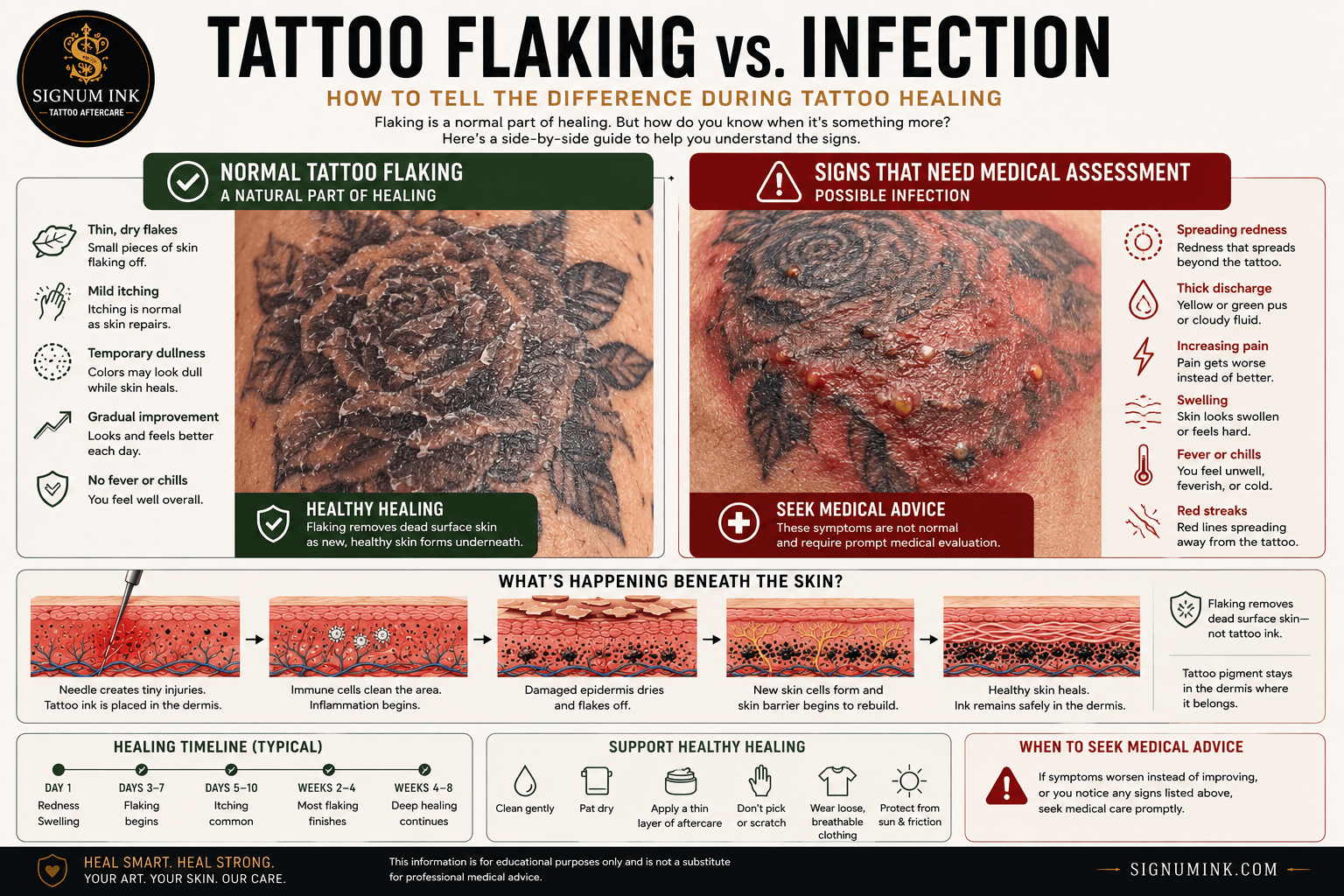
Symptome wie sich schnell ausbreitende Rötungen, zunehmende Schmerzen, zähflüssiger gelber oder grüner Ausfluss, Fieber oder Schwellungen, die sich verschlimmern, anstatt abzuklingen, sind nicht typisch für einen komplikationslosen Heilungsverlauf und sollte umgehend von einem Arzt beurteilt werden.
Zu lernen, den Unterschied zwischen normale Schuppenbildung und Warnzeichen, die ärztliche Aufmerksamkeit verdienen kann Ihnen helfen, Ihr Tattoo mit mehr Selbstvertrauen zu pflegen.
Kurze Antwort
Ist es normal, dass sich ein Tattoo ablöst?
Ja.
Die meisten Tätowierungen beginnen abzuscheuern zwischen Tage 3 und 7 nach dem Tätowieren.
Das Schälen dauert normalerweise 4–10 Tage und ist ein normaler Bestandteil der epidermalen Erneuerung.
Abplatzen allein ist nicht gilt als Zeichen einer Infektion.
Kurz & Bündig
Normales Abblättern
✅ Dünne Hautschuppen
✅ Leichter Juckreiz
✅ Vorübergehend mattes Aussehen
✅ Schrittweise Verbesserung
Symptome, die ärztlich abgeklärt werden müssen
⚠️ Sich schnell ausbreitende Rötung
⚠️ Zunehmende Schmerzen
⚠️ Dickflüssiger gelber oder grüner Ausfluss
Fieber oder Schüttelfrost
⚠️ Deutliche Schwellung
Rote Streifen, die vom Tattoo wegführen
Warum schuppen Tattoos?
Tätowieren verursacht tausende mikroskopisch kleine Verletzungen in der Haut.
Obwohl das Tätowierpigment in die Dermis, die Epidermis wird durch die Tätowiernadeln vorübergehend geschädigt.
Im Laufe des Heilungsprozesses ersetzt Ihr Körper diese beschädigten Oberflächenzellen durch gesunde neue Zellen.
Die alten Zellen lösen sich allmählich von der Oberfläche.
Diesen Vorgang bezeichnen wir als Abschuppung.
Schuppung zeigt normalerweise, dass Ihre Haut in die nächste Heilungsphase übergeht, anstatt ein Problem anzuzeigen.
Wie sieht normales Tätowierungs-Schuppen aus?
Gesunde Tattoo-Schuppen weisen normalerweise mehrere erkennbare Merkmale auf.
Es erscheint oft als:
- Dünne, trockene Flocken.
- Kleine Hautschüppchen.
- Milder Juckreiz.
- Leichte Anspannung.
- Vorübergehende Stumpfheit.
Die Haut unter den Schuppen sieht in der Regel gesund aus und wird im Laufe des Heilungsprozesses allmählich glatter.
Am wichtigsten ist, dass sich die Tätowierung langsam verbessert und nicht gereizter wird.
Warum Schuppen oft mit Infektionen verwechselt werden
Viele der normalen Veränderungen, die während der Heilung eines Tattoos auftreten, können beunruhigend aussehen, wenn man sie nicht erwartet.
Zum Beispiel:
- Trockene Haut kann rissig aussehen.
- Peeling kann dazu führen, dass Farben verblasst erscheinen.
- Leichte Rötungen können mehrere Tage bestehen bleiben.
- Juckreiz nimmt oft zu, wenn die Schuppung beginnt.
Da diese Veränderungen gleichzeitig auftreten, gehen viele Menschen fälschlicherweise davon aus, dass sich das Tattoo infiziert.
In Wirklichkeit, Das Timing ist einer der hilfreichsten Hinweise.
Normale Heilung tendiert dazu, sich allmählich zu verbessern.
Infektionen verschlimmern sich oft zunehmend statt besser zu werden.
Was passiert unter der Haut?
Obwohl an der Oberfläche Abblätterungen sichtbar sind, findet die eigentliche Heilung darunter statt.
Mehrere wichtige biologische Prozesse laufen gleichzeitig ab.
Neue Epidermiszellen ersetzen geschädigte Haut
Frische Hautzellen wandern zur Oberfläche und ersetzen nach und nach die geschädigte äußere Schicht.
Die Hautbarriere baut sich weiter auf
Die Barriere ist während der Ablösungsphase noch unvollständig.
Das erklärt, warum sich die Tätowierung trocken, straff oder leicht juckend anfühlen kann.
Kollagenproduktion geht weiter
Innerhalb der Dermis produzieren Fibroblasten weiterhin Kollagen, um heilendes Gewebe zu stärken.
Tätowierfarbe bleibt stabil
Tätowierfarbe verbleibt in der Dermis, während nur die oberflächlichen Epidermiszellen abgeworfen werden.
Deshalb schuppt sich die Haut nicht normalerweise das Tattoo entfernen.
Unterstützung der gesunden Heilung
Das Ziel beim Flacken ist nicht, den Ablöseprozess zu stoppen.
Unterstützen Sie stattdessen Ihre Haut, während sie auf natürliche Weise heilt.
Hilfreiche Gewohnheiten sind:
- Sanft mit einem milden Reinigungsmittel waschen.
- Das Tattoo trocken tupfen.
- Eine dünne Schicht Wiederherstellungscreme auftragen.
- Vermeiden Sie es, sich an sich schälender Haut zu kratzen oder zu zupfen.
- Lockere, atmungsaktive Kleidung tragen.
Die Unterstützung der Hautbarriere hilft, den Komfort zu erhalten und die natürliche Heilung fortzusetzen.
Normales Tätowierungspeeling im Vergleich zu möglicher Infektion
Auf den ersten Blick mögen normale Abschuppung und eine Infektion schwer zu unterscheiden sein.
Beides kann Rötungen, Druckempfindlichkeit und Veränderungen im Erscheinungsbild des Tattoos mit sich bringen.
Der Hauptunterschied ist normalerweise wie sich die Tätowierung mit der Zeit verändert.
Ein normal heilendes Tattoo wird tendenziell jeden Tag ein kleines bisschen besser.
Eine Infektion verschlimmert sich oft fortschreitend.
Normale Tätowierungsabblätterung
Gesunde Abschuppung umfasst typischerweise:
- Dünne, trockene Flocken.
- Milder Juckreiz.
- Vorübergehende Stumpfheit.
- Leichte Hautstraffheit.
- Milde Rötung, die allmählich abklingt.
- Haut, die mit fortschreitender Ablösung gesünder aussieht.
Diese Änderungen treten normalerweise auf zwischen Tage 3 und 10 und stetig verbessern.
Symptome, die ärztlich abgeklärt werden müssen
Eine dringende ärztliche Untersuchung ist angebracht, wenn Sie Folgendes bemerken:
- Rötung, die sich weit über das Tattoo hinaus ausbreitet.
- Zunehmende Schmerzen statt allmählicher Besserung.
- Dicker gelber oder grüner Ausfluss.
- Fieber oder Schüttelfrost.
- Deutliche Schwellung, die sich verschlimmert.
- Rote Streifen, die sich vom Tattoo weg erstrecken.
- Ein übler Geruch aus der Wunde.
Diese Ergebnisse Infektion nicht automatisch bestätigen, aber sie sind nicht typisch für eine unkomplizierte Tätowierungsheilung und sollten von einem Arzt beurteilt werden.
Tätowierungsschuppen im Vergleich zu Krustenbildung
Viele Leute verwechseln Abblättern mit Krustenbildung.
Obwohl beide während der Heilung auftreten, handelt es sich um unterschiedliche biologische Prozesse.
Abschuppung
Schuppenbildung tritt auf, wenn geschädigte Hautoberfläche auf natürliche Weise abfällt.
Es erscheint normalerweise als:
- Dünne Flocken.
- Trockene Haut.
- Milder Juckreiz.
- Flexible Schälhaut.
Diese Phase ist Teil der normalen epidermalen Erneuerung.
Verkrustung
Schorf sind schützende Krusten, die aus getrocknetem Plasma, Blut und Proteinen entstehen.
Kleine, dünne Krusten können bei manchen Tattoos normal sein.
Schwere, dicke Krusten sind seltener und können darauf hindeuten, dass die Haut während.
Lassen Sie sowohl Flocken als auch Krusten natürlich abfallen.
Wann ist eine Rötung noch normal?
Rötungen machen den Menschen oft mehr Sorgen als die Schuppenbildung selbst.
Glücklicherweise ist in den ersten Tagen nach dem Tätowieren eine leichte Rötung zu erwarten.
Gesunde Rötung normalerweise:
- Bleibt nah am Tattoo.
- Langsam verblasst.
- Wird von verbesserter Zärtlichkeit begleitet.
- Nicht weiter verbreiten.
Die Richtung der Veränderung ist wichtiger als der genaue Rotton.
Was sagt die Forschung?
Die Heilung von Tätowierungen folgt denselben biologischen Prinzipien wie andere oberflächliche Hautverletzungen.
Wissenschaftliche Forschung beschreibt drei sich überschneidende Phasen:
Entzündung
Immunzellen entfernen geschädigtes Gewebe und koordinieren die Reparatur.
Proliferation
Frische epidermale Zellen ersetzen geschädigte Haut, während Fibroblasten die Kollagenproduktion steigern.
Renovierung
Die Haut gewinnt allmählich an Stärke, Elastizität und Barrierefunktion zurück.
Das Schuppen tritt während des Übergangs zwischen Entzündung und Proliferation auf, wenn beschädigte Oberflächenzellen durch gesunde neue Epidermis ersetzt werden.
Warum die Hautbarriere wichtig ist
Die Hautbarriere ist nach dem Tätowieren vorübergehend geschwächt.
Während der Schuppenbildung:
- Wasser entweicht leichter.
- Die Haut fühlt sich straffer an.
- Die Trockenheit nimmt zu.
- Der Juckreiz wird stärker wahrgenommen.
Unterstützung der Barriere durch angemessene Hydration verbessert den Komfort und ermöglicht die natürliche Heilung.
Tipps zur Erholung während der Schuppenbildung
Gesunde Heilung wird meist durch einfache, konsequente Pflege unterstützt.
Hilfreiche Gewohnheiten sind:
✔ Wasche das Tattoo vorsichtig mit einem milden Reinigungsmittel.
✔ Tupfen Sie die Haut mit einem sauberen Handtuch trocken.
Tragen Sie eine dünne Schicht Wiederherstellungskrems auf, wenn sich die Haut trocken anfühlt.
✔ Tragen Sie lockere, atmungsaktive Kleidung.
✔ Vermeiden Sie es, abblätternde Haut abzukratzen oder aufzukratzen.
✔ Schützen Sie das Tattoo vor unnötiger Reibung.
Das Ziel ist es, die Haut zu unterstützen – nicht, den natürlichen Heilungsprozess des Körpers zu unterbrechen.
Häufige Fehler beim Ausflocken
Viele Leute verlängern versehentlich Reizungen.
Häufige Fehler sind:
Abziehende Haut
Das Entfernen von Schuppen, bevor sie sich von selbst ablösen, kann empfindliche neue Haut freilegen.
Kratzen
Kratzen erhöht die Reizung und kann die Heilung verzögern.
Übermäßiges Waschen
Übermäßiges Reinigen kann die sich erholende Hautbarriere austrocknen.
Übermäßige Salbenanwendung
Sehr dicke Produktlagen können das Gefühl von übermäßiger Okklusion auf der Haut hinterlassen.
Ein dünner, gleichmäßiger Auftrag ist im Allgemeinen ausreichend.
Enge Kleidung tragen
Wiederholtes Reiben kann die Reizung verstärken und eine angenehme Heilung verlangsamen.
Sonnenschutz vernachlässigen
Heilende Haut ist besonders empfindlich gegenüber ultravioletter Strahlung.
Nach vollständiger Heilung schützt die regelmäßige Anwendung von Sonnenschutz sowohl die Haut als auch die Tätowierungsfarben.
Forschungsbericht
| Forschungsbereich | Beweis |
|---|---|
| Epidermale Regeneration | ★★★★★ |
| Wundheilungsbiologie | ★★★★★ |
| Hautbarriere-Regeneration | ★★★★★ |
| Feuchtigkeitshaushalt | ★★★★★ |
| Tattoo-Nachsorge | ★★★★☆ |
| Tattoo Abblättern Forschung | ★★★★☆ |
Häufig gestellte Fragen zu Hautschuppung vs. Infektion bei Tattoos
Ist Tätowierungsablösung immer normal?
In den meisten Fällen ja.
Schuppung ist eine der erwarteten Phasen der Tattooheilung und beginnt normalerweise zwischen Tage 3 und 7. Das geschieht, weil die äußere Schicht geschädigter Haut natürlich durch gesunde neue Haut ersetzt wird.
Was am wichtigsten ist, ist, ob dein Tattoo sich mit der Zeit weiter verbessert.
Kann Ablösen Tätowierfarbe entfernen?
Nein.
Das ist eine der häufigsten Sorgen bei Menschen mit neuen Tätowierungen.
Die Hautschuppen bestehen aus abgestorbenen Epidermiszellen.
Tätowierfarbe wird viel tiefer in der Dermis, normale Hautablösung entfernt das Tattoo selbst nicht.
Warum sieht mein Tattoo verblasst aus, während es sich schält?
Trockene, schuppige Haut verändert vorübergehend, wie Licht vom Tattoo reflektiert wird.
Das Kunstwerk kann trüb oder weniger lebendig erscheinen, bis die Abziehphase abgeschlossen ist.
Wenn sich die Hautbarriere erholt, werden die Farben normalerweise wieder klarer.
Ist es normal, dass mein Tattoo beim Abheilen leicht gerötet ist?
Ja.
Eine leichte Rötung kann in den frühen Phasen des Peelings bestehen bleiben.
Gesunde Rötung normalerweise:
- Bleibt nah am Tattoo.
- Langsam verblasst.
- Wird von verbessertem Komfort begleitet.
Rötungen, die sich ausbreiten, zunehmend schmerzhaft werden oder mit Fieber oder Ausfluss einhergehen, sollten von einem Arzt beurteilt werden.
Kann Juckreiz während des Schuppens auftreten?
Absolut.
Schuppen und Juckreiz treten oft gemeinsam auf.
Während sich die Hautbarriere wieder aufbaut, schwanken die Feuchtigkeitswerte und winzige Nervenenden erholen sich weiter, was milden Juckreiz zu einem normalen Teil des Heilungsprozesses macht.
Soll ich lose Flocken entfernen?
Nein.
Lassen Sie sich abblätternde Haut natürlich lösen.
Zu frühes Abziehen von Schuppen kann die Haut reizen und die normale Heilung beeinträchtigen.
Wie lange dauert das Abblättern von Tattoos?
Bei den meisten Menschen hält das Schälen zwischen 4 und 10 Tage.
Größere Tattoos oder natürlich trockene Haut können noch etwas länger kleine Schuppen absondern.
Der allgemeine Trend sollte eine allmähliche Verbesserung sein.
Bedeutet Hautabblättern, dass meine Tätowierung infiziert ist?
Nein.
Abblättern an sich ist nicht gilt als Zeichen einer Infektion.
Besorgniserregendere Symptome sind:
- Zunehmende Schmerzen.
- Dicker gelber oder grüner Ausfluss.
- Fieber.
- Schnell ausbreitende Rötung.
- Sich verschlimmernde Schwellung.
Diese Symptome verdienen eine umgehende ärztliche Untersuchung.
Kann ich duschen, während meine Tätowierung abblättert?
Ja.
Normale Duschen mit lauwarmem Wasser sind in der Regel in Ordnung.
Vermeiden:
- Sehr heißes Wasser.
- Lange Badesitzungen.
- Das Tattoo abrubbeln.
- Nach dem Duschen die aufgeweichten Schuppen abziehen.
Tupfen Sie die Stelle vorsichtig mit einem sauberen Handtuch trocken.
Wann sollte ich ärztlichen Rat einholen?
Sorgen Sie für eine umgehende ärztliche Untersuchung, wenn Sie Folgendes bemerken:
- Rötung breitet sich über das Tattoo hinaus aus.
- Zunehmende Schmerzen nach den ersten Tagen.
- Dicker gelber oder grüner Ausfluss.
- Fieber oder Schüttelfrost.
- Erhebliche Schwellung.
- Rote Streifen, die sich vom Tattoo weg erstrecken.
- Jedes Symptom, das sich eher verschlimmert als verbessert.
Gängige Mythen über das Abblättern von Tattoos
Mythos 1: Jede abheilende Tätowierung ist infiziert.
Realität
Schuppenbildung ist eines der häufigsten Anzeichen für die normale Heilung eines Tattoos.
Die meisten Tätowierungen schälen sich, ohne sich zu infizieren.
Mythos 2: Die Tätowierfarbe blättert ab.
Realität
Nur abgestorbene Hautschüppchen werden abgelöst.
Das Pigment verbleibt sicher in der Dermis gespeichert.
Mythos 3: Peeling sollte nach drei Tagen aufhören.
Realität
Heilung ist von Person zu Person unterschiedlich.
Manche Tätowierungen produzieren mehr als eine Woche lang feine Schuppen.
Mythos 4: Wenn die Tätowierung vollständig austrocknet, hilft das bei der Heilung.
Realität
Übermäßige Trockenheit kann Spannungsgefühl, Beschwerden und Juckreiz verstärken.
Die Unterstützung der Hautbarriere mit angemessener Feuchtigkeit fördert im Allgemeinen einen größeren Komfort während der Heilung.
Heilungsverlauf
| Zeit nach der Tätowierung | Was ist normalerweise normal |
|---|---|
| Tag 1 | Rötung, Schwellung, Zärtlichkeit |
| Tage 2–3 | Die Haut beginnt zu trocknen |
| Tage 3–7 | Abblättern beginnt |
| Tage 5–10 | Schälen und Jucken überschneiden sich |
| Woche 2 | Die meiste sichtbare Abschuppung ist abgeschlossen |
| Wochen 3–4 | Oberflächenheilung abgeschlossen |
| Wochen 6–8 | Tiefgreifende Hauterneuerung setzt sich fort |
Forschungsbericht
| Forschungsbereich | Beweis |
|---|---|
| Epidermale Erneuerung | ★★★★★ |
| Hautbarriere-Regeneration | ★★★★★ |
| Wundheilungsbiologie | ★★★★★ |
| Feuchtigkeitshaushalt | ★★★★★ |
| Tattoo-Nachsorge | ★★★★☆ |
| Tattooheilungsforschung | ★★★★☆ |
Experten-Tipp
Das wichtigste Zeichen einer gesunden Heilung ist Fortschritt.
Ein normal verheilendes Tattoo wird nach und nach weniger rot, weniger geschwollen, juckt weniger und fühlt sich angenehmer an. Vorübergehendes Pellen und Schuppen sind zu erwarten, aber Symptome, die eher schlimmer als besser werden, erfordern eine ärztliche Beurteilung.
Anzeichen von normalem Tattoo-Schälen
✅ Dünne Schuppen trockener Haut.
✅ Leichter Juckreiz.
✅ Leichte Enge.
✅ Gesunde Haut unter den Schuppen sichtbar.
✅ Das Tattoo wird nach und nach klarer.
✅ Die Symptome verbessern sich im Laufe der Zeit.
Anzeichen, die eine ärztliche Untersuchung erfordern
⚠️ Sich schnell ausbreitende Rötung.
⚠️ Zunehmende Schmerzen.
⚠️ Dickflüssiger gelber oder grüner Ausfluss.
Fieber oder Schüttelfrost.
⚠️ Deutliche Schwellung.
⚠️ Rote Streifen, die vom Tattoo wegführen.
⚠️ Symptome, die sich verschlimmern, anstatt sich zu bessern.
Diese Schilder bedeuten nicht notwendigerweise, dass eine Infektion vorliegt, sind aber nicht typisch für eine unkomplizierte Heilung und sollten von einer medizinischen Fachkraft untersucht werden.
Warum die Stärkung der Hautbarriere wichtig ist
Während der Schuppungsphase baut sich die Schutzbarriere der Haut noch wieder auf.
Die moderne Tattoo-Nachsorge konzentriert sich darauf, diesen Prozess mit Inhaltsstoffen zu unterstützen, die dazu beitragen, die Feuchtigkeit zu bewahren und die natürlichen Schutzfunktionen der Haut zu stärken.
| Funktion | Beispiel für eine Zutat |
|---|---|
| Zieht Feuchtigkeit an | Glycerin |
| Unterstützt die Flüssigkeitszufuhr | Betain |
| Verstärkt die Barriere | Ceramide |
| Unterstützt die Barrierefunktion | Niacinamid |
| Hautpflege | Panthenol |
| Leichtes Emoiollient | Squalane |
| Verbessert die Textur | Capryl-Capric-Triglyceride |
| Hautberuhigende Unterstützung | Allantoin |
| Pflanzliche Unterstützung | Madecassosid |
| Antioxidativer Schutz | Vitamin E |
Zusammen tragen diese Inhaltsstoffe dazu bei, ein angenehmes Wundheilungsmilieu aufrechtzuerhalten, während die natürlichen Reparaturprozesse der Haut fortgesetzt werden können.
Abschließende Gedanken
Das Pellen ist eine der sichtbarsten – und oft am meisten missverstandenen – Phasen der Tattoo-Heilung. Auch wenn es dramatisch aussehen kann, spiegelt es normalerweise den normalen Prozess der Haut wider, beschädigte Oberflächenzellen durch gesundes neues Gewebe zu ersetzen.
Der zuverlässigste Weg, normale Heilung von einem potenziellen Problem zu unterscheiden, besteht darin, die allgemeine Richtung des Genesungsprozesses zu betrachten. Gesunde Tattoos werden im Laufe der Zeit im Allgemeinen angenehmer und weniger entzündet, selbst wenn Schuppenbildung und Juckreiz die Haut vorübergehend schlechter aussehen lassen, bevor sie besser wird.
Indem Sie verstehen, wie normales Pellen aussieht, Ihre Haut mit sanfter Nachsorge unterstützen und Symptome erkennen, die medizinische Aufmerksamkeit erfordern, können Sie den Heilungsprozess mit Zuversicht meistern und Ihrem Tattoo gleichzeitig die beste Möglichkeit geben, wunderschön zu verheilen.
Verwandte Artikel
Für Leser, die mehr über bestimmte Phasen der Heilung erfahren möchten, fügen Sie interne Links ein zu:
- Tattoo Heilungszeitplan
- Die umfassende Wissenschaft der Tattoo-Heilung
- Tattoo-Peeling erklärt
- Warum ist mein Tattoo rot?
- Warum juckt mein Tattoo?
- Ist es normal, dass sich bei einem Tattoo eine Kruste bildet?
- Tattoo-Pickel nach der Abheilung
- Überfeuchtetes Tattoo: Kann man zu viel Tattoo-Creme verwenden?
 English
  German
  Dutch
Dutch  Danish
  Swedish
  French
  Italian