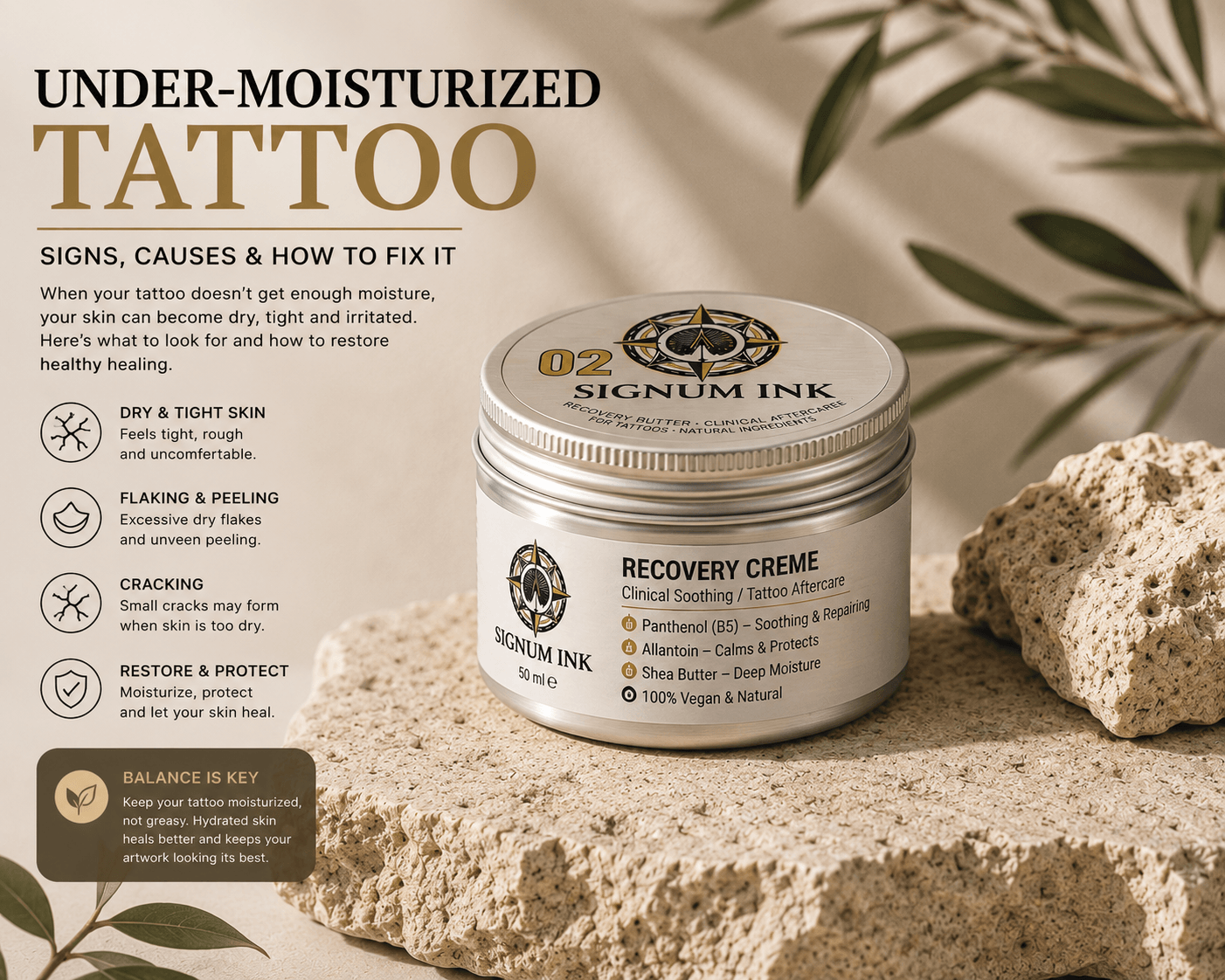
Getting a new tattoo is an exciting experience, but the healing process is just as important as the tattoo itself. Even the most beautifully executed artwork can heal poorly if the skin doesn’t receive the right level of aftercare. While many people worry about applying too much tattoo cream, the opposite problem is surprisingly common—an under-moisturized tattoo.
When healing skin becomes too dry, it can feel tight, itchy, flaky, and uncomfortable. In more severe cases, excessive dryness may lead to deeper cracking, delayed healing, heavier scabbing, and a higher risk of losing tiny details in the tattoo.
Fortunately, an under-moisturized tattoo is usually easy to correct once you understand the signs and know how to restore the skin’s natural moisture balance.
This guide explains everything you need to know about under-moisturized tattoos, including the symptoms, causes, treatment, prevention, and best practices for keeping your tattoo healthy from day one.
What Is an Under-Moisturized Tattoo?
An under-moisturized tattoo is exactly what it sounds like—a healing tattoo that isn’t receiving enough moisture to support the skin’s natural repair process.
After getting tattooed, thousands of microscopic wounds are created in the skin. Your body immediately begins repairing these tiny injuries by producing new skin cells, rebuilding the protective barrier, and sealing the damaged tissue.
This healing process depends on balance.
The skin shouldn’t remain soaking wet, but it also shouldn’t become excessively dry. When moisture levels drop too low, the outer layer of skin loses flexibility. Instead of remaining soft and elastic, it becomes stiff, rough, and fragile.
The result is often:
- Straffe Haut
- Zunehmender Juckreiz
- Dry flakes
- Thick scabs
- Small cracks
- Slower recovery
Think of healthy tattoo healing like caring for a young plant. Too much water can cause problems, but too little causes it to dry out before it has a chance to thrive.
Why Moisture Matters During Tattoo Healing
Healthy skin contains natural oils, lipids, and water that keep the protective barrier intact.
A fresh tattoo temporarily damages this barrier.
During the first several days after getting tattooed:
- The skin loses moisture faster than normal.
- Dead skin begins shedding.
- New cells develop underneath.
- Mild inflammation occurs.
- The immune system repairs the damaged tissue.
Without adequate hydration, these natural processes become less efficient.
Proper moisturizing helps:
- Reduce excessive dryness
- Improve skin flexibility
- Minimize uncomfortable itching
- Prevent deep cracking
- Support natural barrier repair
- Create a healthier healing environment
The goal isn’t to keep the tattoo wet. Instead, you’re replacing some of the moisture the skin naturally loses while it heals.
Common Signs of an Under-Moisturized Tattoo
Recognizing the symptoms early makes the problem much easier to correct.
Here are the most common warning signs.
1. Tight Skin
One of the earliest symptoms is a feeling that the tattoo is stretched.
You may notice this especially after:
- Washing the tattoo
- Taking a shower
- Waking up
- Moving the tattooed area
Many people describe the sensation as feeling similar to dry skin after spending time in cold winter weather.
2. Excessive Flaking
Some peeling is completely normal.
However, an under-moisturized tattoo often develops larger, drier flakes that lift away from the skin more quickly than expected.
Healthy peeling usually appears as thin, soft pieces of dead skin.
Excessive dryness often creates:
- Thick flakes
- Powdery skin
- White patches
- Raue Textur
3. Persistent Itching
Almost every tattoo becomes itchy.
The difference is the intensity.
When the skin lacks moisture, itching often becomes significantly worse because the damaged skin barrier exposes sensitive nerve endings.
Avoid scratching, even if the urge feels overwhelming.
Scratching may:
- Remove healing skin
- Pull away scabs too early
- Increase irritation
- Raise the risk of infection
- Affect the final appearance of fine details
4. Cracking
One of the clearest signs of severe dryness is visible cracking.
As the skin loses flexibility, movement around joints and muscles creates tiny splits.
Common locations include:
- Ellbogen
- Knie
- Hände
- Fingers
- Knöchel
- Wrists
Although small surface cracks can occur during healing, deeper cracks should be avoided because they may interfere with proper recovery.
5. Thick, Hard Scabs
Not every tattoo forms large scabs.
Modern tattoo techniques usually produce relatively light peeling.
When the tattoo becomes excessively dry, however, the skin may develop:
- Hard crusts
- Thick scabs
- Dark patches
- Uneven peeling
These thicker scabs are more likely to crack or lift before the skin underneath has finished healing.
What Causes an Under-Moisturized Tattoo?
Several factors can contribute to overly dry healing skin.
Often, it’s not just one issue but a combination of daily habits and environmental conditions.
Applying Too Little Aftercare
The most obvious cause is simply not moisturizing often enough.
Some people worry about over-moisturizing and accidentally swing too far in the opposite direction.
Instead of maintaining balance, the tattoo dries out completely between applications.
Using the Wrong Product
Not every moisturizer is suitable for fresh tattoos.
Products containing large amounts of:
- Alcohol
- Strong fragrance
- Essential oils
- Harsh preservatives
may irritate healing skin or fail to provide lasting hydration.
Choosing a tattoo-specific aftercare product or a gentle, fragrance-free moisturizer is generally the safest option.
Washing Too Frequently
Cleaning your tattoo is important.
Cleaning it excessively is not.
Repeated washing strips away natural oils before the skin has time to rebuild them.
Using very hot water can make this even worse.
Most people only need to gently cleanse the tattoo two to three times per day during the initial healing period.
Dry Air
Environmental conditions have a surprisingly large effect on tattoo healing.
Dry indoor heating during winter, air conditioning during summer, and naturally low humidity can all increase moisture loss.
People living in colder climates often notice their tattoos becoming drier than expected during the first week.
Long Hot Showers
Hot water removes the skin’s protective oils much faster than lukewarm water.
After a long shower, many people notice their tattoo immediately feels:
- Eng
- Trocken
- Itchy
- Less comfortable
Keeping showers shorter and avoiding prolonged exposure to hot water can help preserve the skin’s natural moisture balance.
How to Treat an Under-Moisturized Tattoo
If your tattoo feels unusually dry, don’t panic. In most cases, the skin can recover quickly once you restore the proper balance of moisture.
The key is not to suddenly apply large amounts of ointment or cream. Instead, focus on gentle care that supports the skin’s natural healing process.
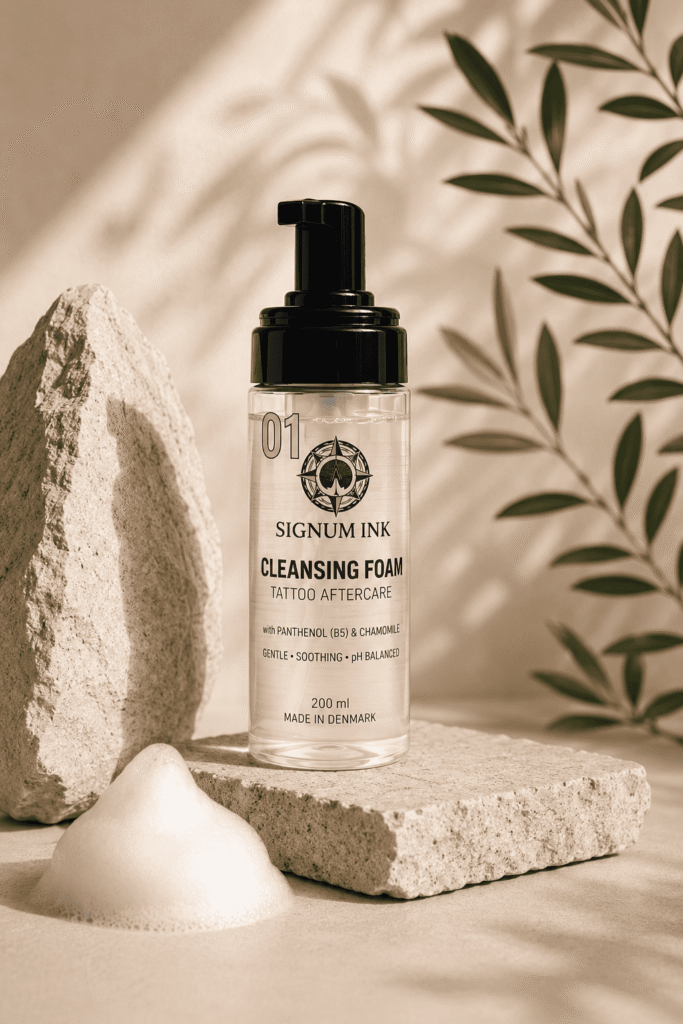
Step 1: Clean the Tattoo Gently
Start by washing the tattoo with lukewarm water and a mild, fragrance-free cleanser.
Vermeiden:
- Hot water
- Scrubbing
- Waschlappen
- Exfoliating products
- Alcohol-based cleansers
Pat the tattoo dry with a clean, soft towel. Never rub the skin, as friction can disturb peeling skin and newly forming tissue.
Allow the tattoo to air dry for a minute or two before applying moisturizer.
Step 2: Apply a Thin Layer of Moisturizer
One of the biggest misconceptions is that dry skin needs a thick layer of cream.
It doesn’t.
A very thin layer is usually enough.
The moisturizer should absorb into the skin within a few minutes. If it remains shiny or sticky for a long time, you’ve probably applied too much.
The skin should feel:
- Bequem
- Weich
- Flexibel
—not greasy.
Step 3: Moisturize When Needed
There is no universal schedule that works for everyone.
Your tattoo may need more or less moisture depending on:
- Climate
- Skin type
- Tattoo location
- Daily activity
- Season
Statt auf die Uhr zu achten, achte auf deine Haut.
Apply another light layer when the tattoo begins to feel:
- Eng
- Trocken
- Uncomfortable
- Itchy
This approach helps maintain a healthy moisture balance without overdoing it.
Step 4: Protect the Healing Skin
Fresh tattoos are more vulnerable to external irritation.
While healing, avoid:
- Tight clothing
- Übermäßige Reibung
- Heavy sweating
- Swimming pools
- Hot tubs
- Long baths
- Direct sunlight
Protecting the skin reduces unnecessary stress while your body repairs the tattoo.
Mistakes That Make Dry Tattoos Worse
Many people unintentionally delay healing by trying to fix dryness the wrong way.
Hier sind einige der häufigsten Fehler.
Applying Thick Layers of Ointment
More isn’t always better.
Heavy layers can trap heat and moisture against the skin, making it harder for the tattoo to breathe naturally.
Instead, use only enough product to lightly hydrate the surface.

Abpuhlen von Haut
Dry tattoos often produce larger flakes.
Although it can be tempting, never pull away peeling skin.
Removing flakes prematurely may:
- Damage healing tissue
- Increase irritation
- Create uneven healing
- Affect fine lines and small details
Lassen Sie die Haut auf natürliche Weise abfallen.
Das Kratzen der Tätowierung
Dryness usually leads to increased itching.
Instead of scratching, try:
- Applying a small amount of moisturizer
- Gently tapping the area
- Cooling the skin with a clean, cool compress for a few minutes
These methods provide relief without disturbing the healing process.
Ignoring Severe Dryness
Small amounts of dryness are normal.
Deep cracking, bleeding, severe redness, increasing pain, or signs of infection should never be ignored.
If symptoms worsen instead of improving, seek advice from your tattoo artist or a healthcare professional.
How Long Does an Under-Moisturized Tattoo Take to Recover?
The good news is that mild dryness often improves within a few days after adjusting your aftercare routine.
A general timeline looks like this:
Tage 1–3
- Mild swelling
- Tender skin
- Plasma leakage is normal
- Frequent gentle cleansing
Days 4–10
- Peeling beginnt
- Dryness becomes more noticeable
- Moisture balance is especially important
Days 10–21
- Most visible peeling ends
- New skin continues developing
- The tattoo may still appear slightly dull
Weeks 3–6
- Skin barrier continues strengthening
- Color gradually becomes clearer
- Normal skin texture returns
Remember that deeper layers of skin continue healing long after the surface looks finished.
How to Prevent an Under-Moisturized Tattoo
Preventing dryness is much easier than correcting it later.
The following habits help support healthy healing from the beginning.
Use a High-Quality Tattoo Aftercare Product
Choose an aftercare product specifically developed for healing tattoos.
Look for formulas that help support the skin barrier without feeling excessively heavy.
Many tattoo artists recommend products that contain skin-conditioning ingredients such as:
- Panthenol
- Glycerin
- Allantoin
- Beta-Glucan
- Sheabutter
- Jojobaöl
The exact formula matters less than using a product that keeps the skin comfortable without causing irritation.
Drink Enough Water
Hydrated skin starts from within.
While drinking water alone won’t prevent dryness, maintaining normal hydration supports healthy skin function throughout the healing process.
Avoid Extremely Dry Environments
If indoor air is very dry, especially during winter, consider using a humidifier.
Maintaining moderate humidity may help reduce excessive moisture loss from healing skin.
Wear Comfortable Clothing
Loose, breathable fabrics reduce friction and help prevent unnecessary irritation.
Cotton clothing is often more comfortable than tight synthetic materials while a tattoo heals.
Häufig gestellte Fragen
Can a tattoo become too dry?
Ja.
A tattoo that becomes excessively dry may feel tight, itchy, rough, and uncomfortable. Severe dryness can contribute to cracking and thicker scabbing.
Will dryness ruin my tattoo?
Usually not.
Most dry tattoos heal perfectly once proper aftercare is restored.
Only severe or prolonged dryness combined with picking, scratching, or infection is more likely to affect the final result.
Ist Peeling normal?
Absolut.
Almost every tattoo peels.
Healthy peeling consists of thin layers of dead skin naturally shedding as new skin develops underneath.
Should I moisturize every few hours?
Only if your skin needs it.
Rather than following a strict schedule, monitor how the tattoo feels and apply a thin layer whenever the skin becomes noticeably dry.
Can I use regular body lotion?
Some fragrance-free body lotions may be suitable, but products designed for tattoo aftercare are generally formulated with healing skin in mind and are often the safer choice during the first weeks.
Abschließende Gedanken
An under-moisturized tattoo is one of the most common healing concerns, but it’s also one of the easiest to correct.
The goal isn’t to keep your tattoo constantly covered in cream. It’s to maintain a healthy balance where the skin stays comfortable, flexible, and protected while your body completes the healing process.
By cleansing gently, moisturizing with a light hand, avoiding unnecessary irritation, and allowing the skin to heal naturally, you’ll give your tattoo the best possible conditions to retain its sharp details, rich contrast, and long-lasting appearance.
Healing is a gradual process. Patience, consistency, and proper aftercare will almost always produce better results than trying to speed the process along.
Treat your tattoo with care during these first weeks, and you’ll enjoy artwork that continues to look its best for years to come.
 English
  German