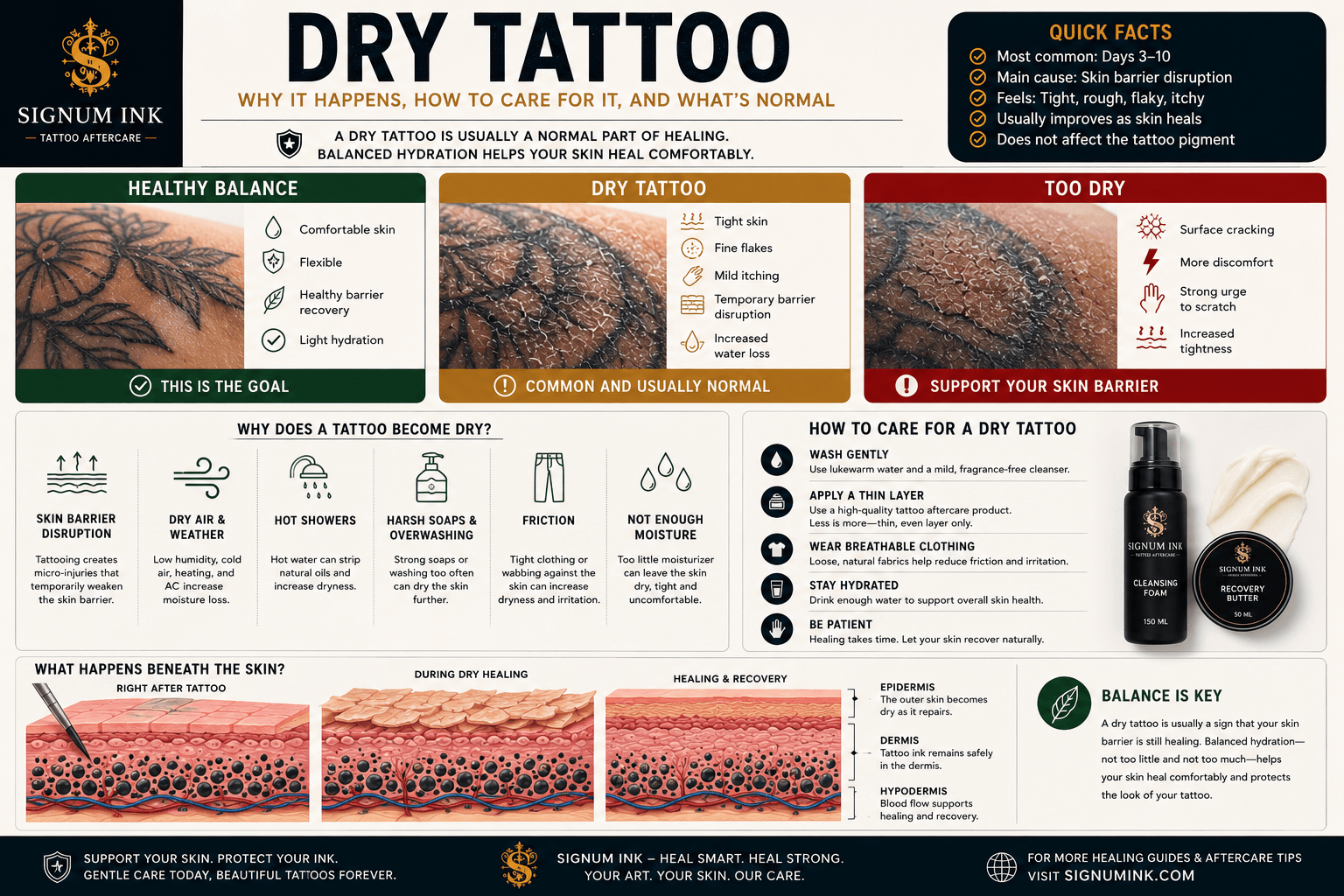
Almost every healing tattoo goes through a period where the skin feels noticeably drier than usual.
The tattoo may become tight, rough, flaky, or slightly uncomfortable as the outer layer of skin repairs itself.
For someone getting their first tattoo, this sudden dryness can be worrying.
“Is my tattoo too dry?”
“Should I apply more cream?”
“Can dry skin damage my tattoo?”
In most cases, dryness is a completely normal part of tattoo healing.
After tattooing, the skin barrier has been temporarily disrupted. Until it is fully restored, the skin loses moisture more easily, making it feel tight and dry.
Understanding why tattoos become dry—and how to maintain the right moisture balance—can help your skin heal comfortably while protecting the appearance of your tattoo.
Quick Answer
Is it normal for a tattoo to feel dry?
Yes.
Most tattoos become dry during the first week of healing as the epidermis replaces damaged skin and the skin barrier gradually recovers.
A dry tattoo is usually normal if the skin continues improving over time and is not accompanied by increasing pain, spreading redness, thick yellow or green discharge, fever, or significant swelling.
Quick Facts
Most Common Time
Days 3–10
Most Common Cause
Temporary skin barrier disruption.
Common Symptoms
- Dry skin.
- Tightness.
- Mild peeling.
- Slight itching.
- Fine flaking.
Usually Improves
As the skin barrier recovers over the following weeks.
Why Does a Tattoo Become Dry?
Tattooing creates thousands of tiny punctures in the skin.
Although these microscopic injuries heal remarkably well, they temporarily reduce the skin’s ability to retain moisture.
As a result:
- Water evaporates more easily.
- The skin feels tighter.
- Dryness becomes more noticeable.
- Peeling often begins.
This temporary increase in water loss is a normal part of the healing process.
Understanding the Skin Barrier
Your skin is protected by a sophisticated barrier made up of skin cells, natural lipids, and moisturizing factors.
This barrier helps:
- Retain moisture.
- Protect against bacteria.
- Reduce irritation.
- Keep the skin flexible.
Tattooing temporarily disrupts this protective barrier.
Until it rebuilds, the skin naturally feels drier than usual.
Common Causes of a Dry Tattoo
Several factors can contribute to dryness during healing.
Natural Healing
The most common cause is simply the normal healing process.
As new epidermal cells replace damaged ones, the skin naturally becomes dry before returning to normal.
Dry Indoor Air
Low humidity, air conditioning, and indoor heating can increase moisture loss from healing skin.
This is especially noticeable during the winter months.
Frequent Washing
Keeping a tattoo clean is important.
However, washing too frequently—or using harsh soaps—may remove natural oils that help keep the skin comfortable.
Long Hot Showers
Hot water can temporarily remove protective skin lipids, leaving the tattoo feeling tighter afterward.
Short, lukewarm showers are generally more comfortable during healing.
Friction
Tight clothing rubbing against a healing tattoo may increase dryness and irritation.
Loose, breathable fabrics help reduce unnecessary friction.
What Does a Dry Tattoo Feel Like?
A dry tattoo may feel:
- Tight.
- Slightly rough.
- Mildly itchy.
- Less flexible.
- Flaky.
The appearance may include:
- Fine peeling.
- Small flakes.
- Slight dullness.
- Temporary cloudiness.
These changes are usually expected while the epidermis is repairing itself.
Can Dry Skin Damage My Tattoo?
In most cases, no.
Temporary dryness does not normally damage the tattoo pigment.
However, if the skin becomes extremely dry, it may:
- Feel more uncomfortable.
- Develop small surface cracks.
- Increase the urge to scratch.
- Make peeling more noticeable.
Maintaining balanced hydration helps support a comfortable healing environment.
Supporting Healthy Moisture Balance
The goal is not to keep the tattoo constantly wet.
Instead, aim for healthy moisture balance.
Helpful habits include:
- Washing gently with a mild cleanser.
- Applying a thin layer of recovery cream when the skin feels dry.
- Avoiding harsh soaps.
- Wearing breathable clothing.
- Allowing peeling skin to separate naturally.
Supporting the skin barrier helps reduce discomfort while healing continues.
Dry Tattoo vs. Normal Peeling
Many people assume that a dry tattoo means something is wrong.
In reality, dryness and peeling often occur together during healthy tattoo healing.
The difference is simply how the skin behaves.
Normal Peeling
Healthy peeling usually includes:
- Thin, dry flakes.
- Mild itching.
- Slight tightness.
- Skin gradually shedding naturally.
- Steady improvement each day.
Peeling is part of normal epidermal renewal.
Dry Tattoo
A dry tattoo may feel:
- Tight.
- Rough.
- Less flexible.
- Mildly itchy.
- Slightly uncomfortable.
Dryness often develops before or during peeling because the skin barrier is still rebuilding.
Dry Tattoo vs. Tattoo Cracking
Dryness and cracking are closely related, but they are not identical.
Dry Tattoo
The skin feels dry but remains mostly intact.
Common signs include:
- Tightness.
- Mild flaking.
- Slight dullness.
- Rough texture.
Tattoo Cracking
When skin becomes very dry, it may lose flexibility.
This can lead to:
- Fine surface cracks.
- Small fissures.
- Cracked peeling skin.
- Cracks within thin scabs.
Cracking is often simply a more advanced stage of dryness.
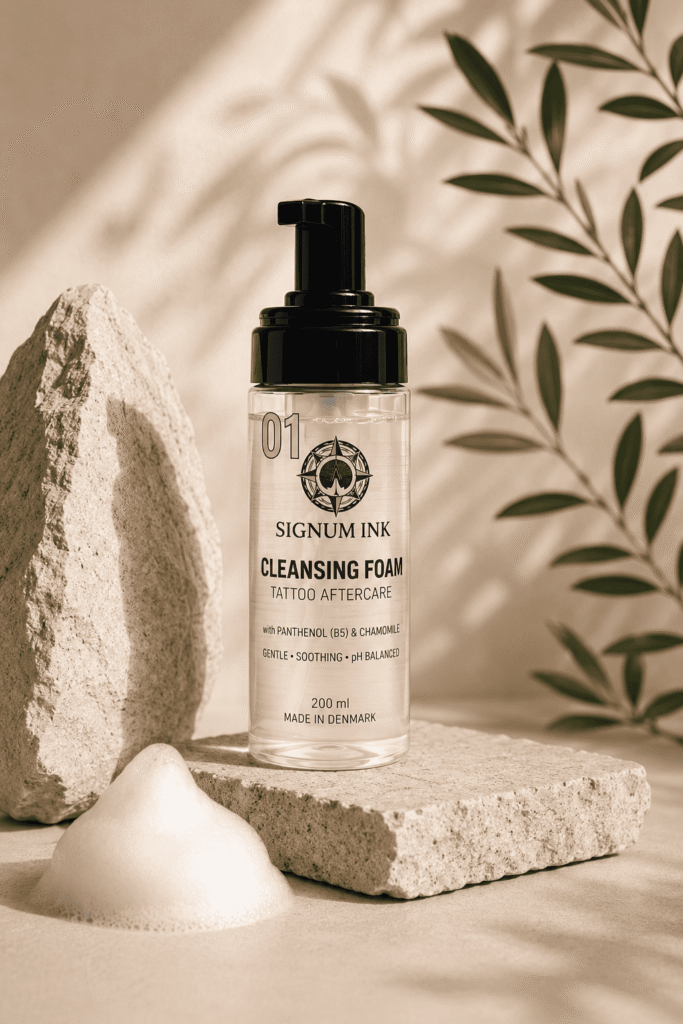
Dry Tattoo vs. Over-Moisturized Tattoo
One of the most common mistakes is assuming that every dry tattoo needs more cream.
In reality, both too little and too much moisture can interfere with comfort.
Dry Tattoo
Usually appears:
- Matte.
- Tight.
- Flaky.
- Slightly rough.
Over-Moisturized Tattoo
Often appears:
- Shiny.
- Soft.
- Waterlogged.
- Slightly swollen.
- Sticky.
Healthy healing depends on balanced hydration, not constant moisture.
How to Treat a Dry Tattoo
The goal is to restore moisture balance while allowing the skin barrier to recover naturally.
Wash Gently
Clean the tattoo with lukewarm water and a mild cleanser.
Avoid harsh soaps that may remove protective skin lipids.
Apply a Thin Layer of Moisturizer
If the skin feels dry or tight, apply a thin, even layer of recovery cream.
The skin should feel comfortable—not greasy or overly coated.
Avoid Overwashing
Cleaning too frequently may remove natural oils that help maintain the skin barrier.
Follow your tattoo artist’s aftercare instructions regarding cleansing frequency.
Wear Breathable Clothing
Loose fabrics reduce friction while allowing the skin to regulate moisture more effectively.
Stay Hydrated
Drinking enough water supports your body’s overall skin function and healing, although it does not replace proper topical aftercare.
What Happens Beneath the Skin?
Although the surface feels dry, healing continues actively beneath it.
Several biological processes remain underway.
Epidermal Renewal
New skin cells gradually replace damaged surface tissue.
Barrier Recovery
The skin slowly regains its ability to retain moisture.
Collagen Production
Fibroblasts continue strengthening the dermis by producing collagen.
Pigment Stabilization
Tattoo ink remains safely stored within the dermis while only the outer epidermis is renewed.
What Does the Research Say?
Modern wound-healing research shows that healthy skin recovery depends on maintaining an appropriate moisture balance.
During tattoo healing:
- The skin barrier is temporarily weakened.
- Transepidermal water loss (TEWL) increases.
- Dryness becomes more noticeable.
- Moisture retention gradually improves as healing progresses.
Research also suggests that maintaining a balanced healing environment supports barrier recovery and skin comfort.

Common Mistakes That Make Dryness Worse
Several habits can increase tattoo dryness.
Using Harsh Soap
Strong cleansers may strip natural skin lipids.
Taking Long Hot Showers
Hot water can increase moisture loss from healing skin.
Ignoring Tightness
Very dry skin often becomes less flexible and more uncomfortable.
Picking Peeling Skin
Removing flakes before they naturally separate may irritate the recovering epidermis.
Wearing Tight Clothing
Repeated friction may increase irritation and dryness.
Applying Too Little—or Too Much—Product
Too little moisturizer may leave the skin uncomfortable.
Too much may leave the skin overly hydrated.
The healthiest approach is balance.
Research Snapshot
| Research Area | Evidence |
|---|---|
| Skin Barrier Recovery | ★★★★★ |
| Epidermal Regeneration | ★★★★★ |
| Moisture Balance | ★★★★★ |
| Wound Healing Biology | ★★★★★ |
| Tattoo Aftercare | ★★★★☆ |
| Tattoo Dryness Research | ★★★★☆ |
Frequently Asked Questions About Dry Tattoos
Is it normal for a healing tattoo to feel dry?
Yes.
Dryness is one of the most common stages of tattoo healing.
After tattooing, the skin barrier is temporarily weakened, allowing more moisture to escape from the epidermis. This often causes the skin to feel tight, dry, or slightly rough during the first week.
As long as your tattoo continues to improve over time, mild dryness is usually part of normal healing.
Can a dry tattoo damage the tattoo ink?
No.
Temporary dryness does not normally affect the tattoo pigment.
The ink is stored within the dermis, while dryness mainly affects the healing outer layer of skin (the epidermis).
The greater concern is that very dry skin may become uncomfortable, crack, or tempt you to scratch or pick at peeling skin.
Should I moisturize a dry tattoo?
Yes—but in moderation.
If your tattoo feels dry or tight, applying a thin layer of a suitable tattoo aftercare product can help support the skin barrier.
The goal is to keep the skin comfortable without leaving it greasy or overly saturated.
How often should I moisturize a dry tattoo?
There is no single schedule that works for everyone.
Instead of applying cream at fixed intervals, pay attention to your skin.
If the tattoo feels:
- Tight
- Dry
- Slightly itchy
…it may be time for a light application.
If it still feels soft or moisturized, applying more product is usually unnecessary.
Why does my tattoo look dull when it is dry?
Dry skin changes the way light reflects from the surface.
During healing, tattoos often appear:
- Cloudy
- Less vibrant
- Slightly faded
Once the skin barrier recovers and peeling is complete, colours usually appear brighter again.
Can weather make my tattoo drier?
Absolutely.
Several environmental factors may increase skin dryness:
- Cold weather.
- Low humidity.
- Indoor heating.
- Air conditioning.
- Wind exposure.
These conditions increase water loss from the skin, making balanced aftercare even more important.
Is it normal for a tattoo to feel tight?
Yes.
Tightness is one of the most common sensations during healing.
It usually improves as:
- Peeling finishes.
- New epidermal cells mature.
- The skin barrier regains flexibility.
When should I seek medical advice?
Arrange prompt medical assessment if dryness is accompanied by:
- Rapidly spreading redness.
- Thick yellow or green discharge.
- Increasing pain.
- Fever or chills.
- Significant swelling.
- Red streaks extending away from the tattoo.
These symptoms are not typical of uncomplicated tattoo healing and should be evaluated by a healthcare professional.
Common Myths About Dry Tattoos
Myth 1: A dry tattoo means something is wrong.
Reality:
Most healing tattoos become dry for a short period while the skin barrier repairs itself.
Myth 2: The drier the tattoo, the faster it heals.
Reality:
Excessive dryness may increase tightness, itching, and discomfort.
Healthy healing depends on moisture balance—not allowing the skin to become extremely dry.
Myth 3: More cream always means better healing.
Reality:
Applying excessive amounts of product may over-moisturize the skin.
Balanced hydration is generally more beneficial than heavy application.
Myth 4: Dry skin means the tattoo ink is fading.
Reality:
Temporary dryness affects the surface of the skin—not the pigment stored within the dermis.
Healing Timeline
| Time After Tattoo | What You May Notice |
|---|---|
| Days 1–3 | Redness, swelling, tenderness |
| Days 3–7 | Dryness, tightness, peeling begins |
| Days 4–10 | Mild itching becomes common |
| Week 2 | Dryness gradually improves |
| Weeks 3–4 | Surface healing largely complete |
| Weeks 6–8 | Deep skin remodeling continues |
Research Snapshot
| Research Area | Evidence |
|---|---|
| Skin Barrier Recovery | ★★★★★ |
| Epidermal Regeneration | ★★★★★ |
| Moisture Balance | ★★★★★ |
| Wound Healing Biology | ★★★★★ |
| Tattoo Aftercare | ★★★★☆ |
| Tattoo Dryness Research | ★★★★☆ |
Expert Tip
Healthy tattoo healing is about balance—not extremes.
Skin that becomes too dry may feel tight, flaky, and uncomfortable. Skin that stays constantly wet may soften excessively. The ideal environment is one where the skin remains comfortably hydrated while the natural healing process continues undisturbed.
Signs Your Dry Tattoo Is Healing Normally
✅ Mild tightness.
✅ Fine flaking.
✅ Temporary dull appearance.
✅ Mild itching.
✅ Skin becoming smoother over time.
✅ Less dryness each week.
✅ Overall improvement.
These are reassuring signs that your skin barrier is recovering as expected.
Signs That Need Medical Assessment
⚠️ Redness spreading beyond the tattoo.
⚠️ Increasing pain.
⚠️ Thick yellow or green discharge.
⚠️ Fever or chills.
⚠️ Significant swelling.
⚠️ Red streaks extending away from the tattoo.
⚠️ Symptoms that worsen instead of gradually improving.
These findings do not necessarily indicate an infection, but they are not typical of uncomplicated tattoo healing and should be assessed promptly.
Why the Skin Barrier Needs the Right Ingredients
During healing, the skin barrier is rebuilding its ability to retain moisture and protect against external irritants.
Modern tattoo aftercare products often include ingredients selected to support this natural process.
| Function | Example Ingredient |
|---|---|
| Attracts moisture | Glycerin |
| Supports hydration | Betaine |
| Reinforces barrier lipids | Ceramides |
| Supports barrier function | Niacinamide |
| Skin conditioning | Panthenol |
| Lightweight emollient | Squalane |
| Improves skin feel | Caprylic/Capric Triglyceride |
| Soothes skin | Allantoin |
| Botanical support | Madecassoside |
| Antioxidant protection | Vitamin E |
Together, these ingredients help support hydration, improve comfort, and reinforce the skin barrier while the tattoo heals naturally.
Final Thoughts
A dry tattoo can feel uncomfortable, but in most cases it is simply part of the skin’s natural healing process. As the outer layer of skin renews itself and the protective barrier rebuilds, temporary dryness, tightness, and mild flaking are all expected changes.
Rather than trying to eliminate every sign of dryness, focus on maintaining a healthy balance. Gentle cleansing, light moisturization, breathable clothing, and patience allow the skin to recover at its own pace without becoming excessively dry or overly saturated.
Remember that the most reliable sign of healthy healing is steady improvement. If your tattoo becomes less tight, less itchy, and more comfortable with each passing week, your skin is usually healing exactly as it should.
Related Articles
To learn more about tattoo healing, continue with:
- How Long Does a Tattoo Take to Heal?
- Tattoo Healing Timeline: What to Expect from Day 1 to Day 60
- Signs Your Tattoo Is Healing Properly
- Tattoo Peeling Explained
- Tattoo Cracking Explained
- Tattoo Bubbling Explained
- Tattoo Flaking vs. Infection
- Can I Scratch My Healing Tattoo?
- Why Is My Tattoo Itchy?
- Why Is My Tattoo Red?
- Over-Moisturized Tattoo: Can You Use Too Much Tattoo Cream?
- The Complete Science of Tattoo Healing
 English
  German