Introduction
Choosing a tattoo aftercare product isn’t always easy.
There are countless creams, butters, lotions and balms available, all claiming to be the best choice for healing tattoos.
So how do you know which one is right for you?
The answer isn’t simply choosing the most expensive product or the one with the longest ingredient list.
Instead, it’s about understanding what healing skin actually needs.
This guide will help you identify the characteristics of a high-quality tattoo aftercare product so you can make an informed decision.
Start With Your Skin—Not the Brand
Many people begin by comparing brands.
A better approach is to begin by thinking about your own skin.
Ask yourself:
- Is your skin naturally dry?
- Do you have sensitive skin?
- Do you prefer lighter or richer moisturizers?
- Have you reacted to skincare products before?
Your skin type plays a major role in determining which product feels most comfortable.
Understand What a Tattoo Needs
A fresh tattoo has very different needs from normal skin.
During healing, your skin benefits from products that help:
- Maintain hydration.
- Support the skin barrier.
- Improve skin comfort.
- Minimize moisture loss.
- Fit easily into a daily routine.
The goal isn’t to overload the skin with ingredients.
It’s to support its natural recovery process.
Look Beyond Marketing Claims
Many cosmetic products use attractive phrases such as:
- Natural.
- Premium.
- Organic.
- Botanical.
- Clinical.
- Dermatologist tested.
While these terms may describe certain aspects of a product, they don’t automatically tell you how well it performs.
Instead of focusing on marketing language, pay attention to:
- The ingredient list.
- The product’s intended use.
- Its overall formulation.
- Whether it’s appropriate for sensitive skin.
Ingredients Matter
A well-formulated tattoo aftercare product often combines ingredients that work together.
Some of the most commonly used include:
- Panthenol.
- Glycerin.
- Shea Butter.
- Jojoba Oil.
- Beta-Glucan.
- Allantoin.
- Centella Asiatica.
Rather than searching for one “miracle ingredient,” look for products with balanced formulations.

Consider the Product Type
Different product types offer different experiences.
For example:
Tattoo Cream
Often:
- Lightweight.
- Fast absorbing.
- Easy to apply.
Tattoo Butter
Often:
- Richer.
- More nourishing.
- Longer-lasting on the skin.
Neither is universally better.
The right choice depends on your skin and personal preference.
Texture Matters
One of the most overlooked factors is how a product feels.
If you dislike the texture, you’re less likely to use it consistently.
Choose a product that:
- Spreads easily.
- Absorbs comfortably.
- Doesn’t feel overly greasy.
- Leaves your skin feeling comfortable.
Consistency is often more important than finding the “perfect” formulation.
Think About Your Daily Routine
Your lifestyle also matters.
Ask yourself:
- Will you apply the product several times per day?
- Do you work with your hands?
- Do you wear clothing that may rub against the tattoo?
- Do you prefer fast-absorbing products before getting dressed?
Choosing products that fit naturally into your daily routine increases the likelihood that you’ll use them consistently.
A Simple Routine Usually Works Best
One of the biggest mistakes is believing you need several different products.
For most people, a routine built around:
- A gentle cleanser.
- A suitable moisturizer or tattoo butter.
- Consistent daily care.
…is more than enough.
Packaging Can Make a Difference
The packaging of a tattoo aftercare product doesn’t determine its quality—but it can influence hygiene, convenience and everyday use.
For example:
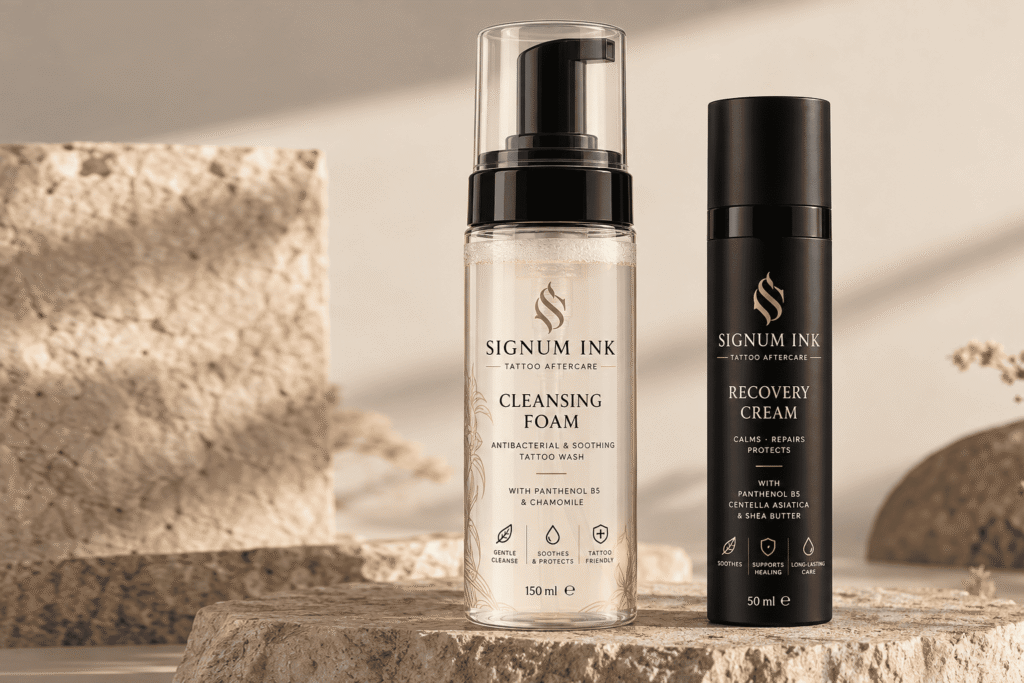
Pump Bottles
Pump bottles help dispense a controlled amount of product while reducing how often the remaining contents are exposed to air and hands.
They are commonly used for cleansers and lightweight moisturizers.
Tubes
Tubes are portable, easy to use and allow precise application.
They are a popular choice for creams and lotions.
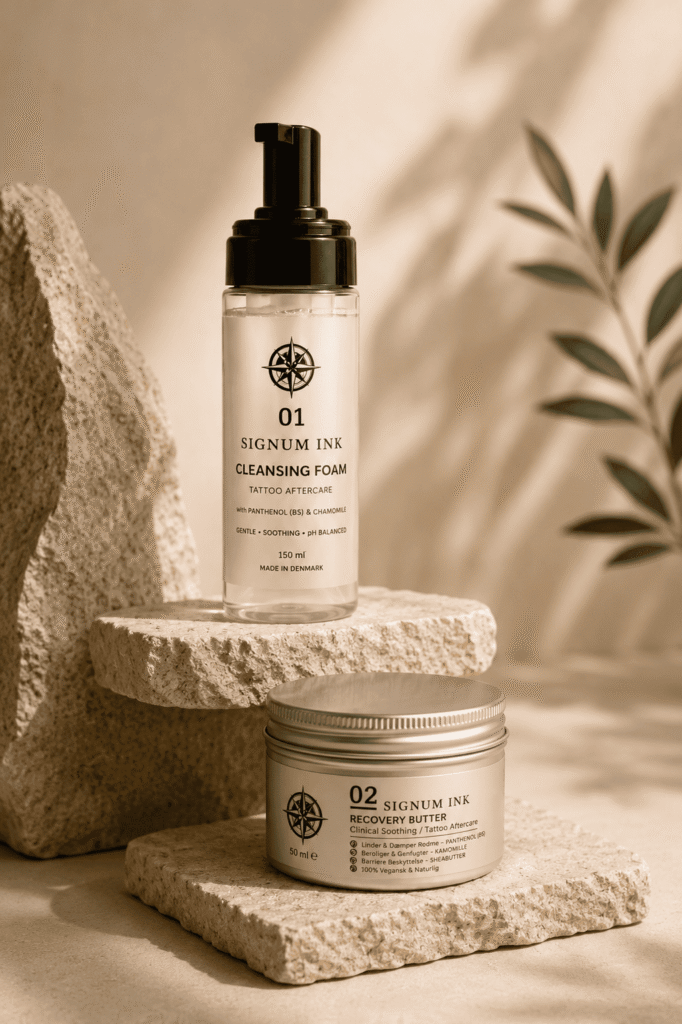
Jars
Jars are often used for richer tattoo butters.
If you choose a jar, always use clean hands before removing product to help keep the contents hygienic.
Choosing Products for Your Skin Type
No single product is ideal for everyone.
Dry Skin
People with dry skin often prefer richer formulations that help reduce moisture loss and keep the skin feeling comfortable.
Oily Skin
If your skin is naturally oily, you may prefer a lighter product that absorbs quickly without leaving a heavy finish.
Sensitive Skin
Sensitive skin often benefits from products that are:
- Fragrance-free whenever possible.
- Formulated with gentle ingredients.
- Designed to support the skin barrier.
- Free from unnecessary irritants.
Combination Skin
Combination skin may require a balanced formulation that provides hydration without feeling overly rich.

Questions to Ask Before Buying
Before choosing a tattoo aftercare product, ask yourself:
- Is it intended for sensitive or healing skin?
- Does it contain ingredients that support hydration and the skin barrier?
- Is the formulation simple and well-balanced?
- Does the texture suit my preferences?
- Will I realistically use it every day?
These questions are often more useful than comparing advertising claims.
Common Buying Mistakes
Many people unknowingly make tattoo aftercare more complicated than it needs to be.
Common mistakes include:
- Buying the most expensive product without understanding its formulation.
- Choosing products solely because they’re popular on social media.
- Switching products every few days.
- Applying far too much moisturizer.
- Assuming a product with more ingredients is automatically better.
- Ignoring how their own skin responds.
Consistency and compatibility usually matter more than trends.
Frequently Asked Questions
Do I need a tattoo-specific product?
Not always.
Some skincare products formulated for sensitive skin may also be suitable.
The important factor is whether the formulation supports healing skin.
Is tattoo butter better than tattoo cream?
Neither is automatically better.
The best choice depends on your skin type, personal preference and the product’s formulation.
Should I buy the most expensive product?
Price alone doesn’t determine quality.
Focus on formulation, ingredients and whether the product is appropriate for your skin.
How many aftercare products do I need?
For most people, a simple routine consisting of:
- A gentle cleanser.
- A suitable moisturizer or tattoo butter.
…is sufficient.
Can one product work for every tattoo?
Often, yes.
A well-formulated aftercare product can usually be used for tattoos of different sizes and locations, provided it suits your skin and you follow your tattoo artist’s aftercare advice.
Conclusion
Choosing a tattoo aftercare product doesn’t have to be complicated.
The best products are those that support your skin’s natural healing process through balanced formulations, skin-friendly ingredients and a texture you’ll enjoy using every day.
Rather than chasing trends or marketing claims, focus on products that fit your skin, your lifestyle and your aftercare routine.
Simple, consistent care is often the most effective care.
 English
 German
 Dutch
 Danish
 Swedish
 French
 Italian