Introduction
A tattoo is created by placing pigment into the dermis through thousands of tiny needle punctures.
Most tattoos heal without leaving permanent scars.
However, in some situations, the skin experiences more trauma than it can repair smoothly.
When this happens, scar tissue may develop.
For many people, the biggest challenge is knowing the difference between normal healing, temporary raised skin and true tattoo scarring.
Fortunately, permanent scarring is relatively uncommon, particularly when tattoos are performed by experienced artists and followed by appropriate aftercare.
In this guide, you’ll learn what tattoo scarring is, why it happens, how to recognize it and what treatment options may help improve its appearance.
What Is Tattoo Scarring?
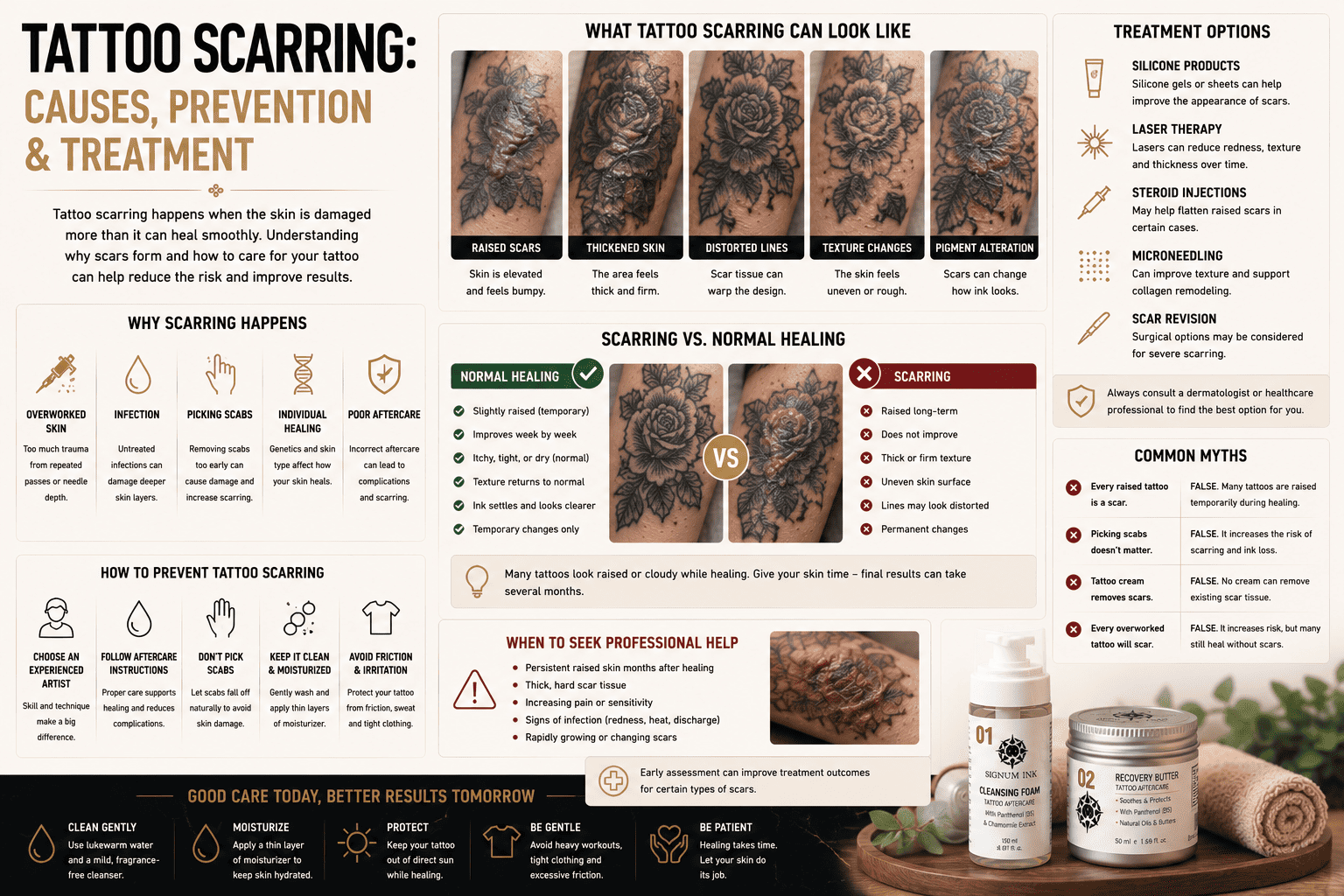
Tattoo scarring occurs when the skin repairs itself by forming scar tissue instead of recreating its normal structure.
Unlike healthy skin, scar tissue has a different collagen arrangement and texture.
Depending on the type of scar, the tattoo may appear:
- Raised.
- Thickened.
- Uneven.
- Firm to the touch.
- Distorted.
The appearance varies from person to person.
Why Does Tattoo Scarring Happen?
Several factors can increase the likelihood of scar formation.
Often, more than one factor is involved.
Overworked Skin
One of the most common causes is excessive trauma during tattooing.
Repeated passes over the same area or overly aggressive needle depth may increase tissue damage.
Infection
Although uncommon, untreated tattoo infections can damage deeper skin layers.
As the body repairs this damage, scar tissue may form.
Picking Scabs
Removing thick scabs before they detach naturally may interfere with healing.
This can increase the risk of both pigment loss and scar formation.
Individual Healing Response
Some people naturally produce more scar tissue than others.
Genetics, previous scars and certain skin conditions all influence healing.
What Does Tattoo Scarring Look Like?
Tattoo scars can appear in several different ways.
Common features include:
- Permanently raised areas.
- Thickened skin.
- Firm texture.
- Uneven tattoo surface.
- Distorted lines.
- Areas where pigment appears altered by the scar.
Unlike temporary swelling, these changes remain after the tattoo has fully healed.
Tattoo Scarring vs. Normal Healing
This distinction is extremely important.
During normal healing, tattoos often become:
- Slightly raised.
- Dry.
- Itchy.
- Tight.
These changes usually improve over several weeks.
Scarring, on the other hand, tends to remain long after healing has finished.
The skin texture itself changes rather than simply appearing temporarily swollen.
Can Every Raised Tattoo Be a Scar?
No.
Many tattoos become temporarily raised while healing.
Even older tattoos may occasionally feel slightly raised due to weather changes, dry skin or mild irritation.
Persistent thickening that remains months after healing is more suggestive of scar tissue.
Is Tattoo Scarring Permanent?
Scar tissue itself is permanent.
However, its appearance often changes over time.
Many scars gradually become:
- Flatter.
- Softer.
- Lighter.
- Less noticeable.
Treatment may further improve appearance, although complete removal of scar tissue isn’t usually possible.
Early Healing Doesn’t Predict the Final Result
Many people worry when their tattoo feels thick or raised during the first weeks.
Fortunately, early healing doesn’t necessarily predict permanent scarring.
The skin continues remodeling for many months after the tattoo appears healed on the surface.
Patience is often rewarded.
Can Tattoo Scars Be Treated?
Although scar tissue cannot usually be completely removed, several treatments may improve its appearance and texture.
The best option depends on:
- The type of scar.
- Its size.
- Its location.
- How long it has been present.
If you’re considering treatment, speak with a dermatologist or another qualified healthcare professional.
Common Treatment Options
Depending on the individual case, treatment may include:
- Silicone scar gels or silicone sheets.
- Prescription treatments recommended by a healthcare professional.
- Steroid injections for certain raised scars.
- Laser therapy.
- Microneedling (only after complete healing and when appropriate).
- Scar revision procedures in selected cases.
Not every scar requires treatment.
Many become softer and less noticeable with time.
Can You Prevent Tattoo Scarring?
While no method can eliminate the risk completely, good preparation and aftercare significantly reduce the likelihood of permanent scarring.
Helpful steps include:
- Choosing an experienced tattoo artist.
- Following all aftercare instructions.
- Avoiding picking or scratching scabs.
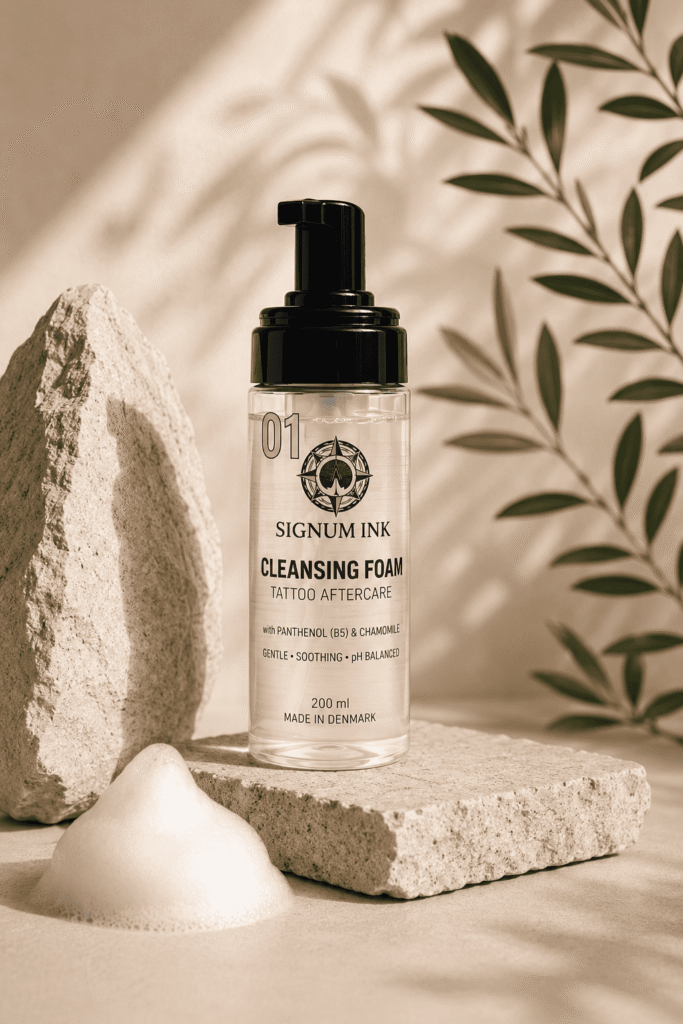
- Washing the tattoo gently.
- Applying moisturizer in a thin layer.
- Protecting the tattoo from unnecessary friction during healing.
Healthy healing gives the skin the best opportunity to repair itself normally.
When Should You See a Healthcare Professional?
Seek professional advice if you notice:
- Persistent raised skin several months after healing.
- Thick, firm scar tissue.
- Increasing pain after the initial healing period.
- Repeated breakdown of the skin.
- Signs of infection.
- Rapidly growing raised scars.
Early assessment may improve treatment options for certain types of scars.
Common Myths About Tattoo Scarring
Myth 1: Every Raised Tattoo Is Scar Tissue
False.
Many tattoos remain slightly raised during normal healing.
Temporary swelling is not the same as permanent scarring.
Myth 2: Picking Scabs Doesn’t Matter
False.
Removing scabs prematurely increases the risk of skin damage, pigment loss and scar formation.
Myth 3: Tattoo Cream Removes Scar Tissue
False.
Moisturizers support healthy healing but cannot dissolve existing scar tissue.
Myth 4: Every Overworked Tattoo Will Scar
False.
Although overworked skin carries a higher risk, many overworked tattoos still heal without permanent scarring.
Frequently Asked Questions
Can tattoos leave permanent scars?
Yes—but permanent scarring is relatively uncommon when tattoos are performed correctly and heal without complications.
Will tattoo scars flatten over time?
Many scars gradually become softer and flatter over months or even years.
The extent of improvement varies between individuals.
Can scar tissue affect tattoo ink?
Yes.
Scar tissue may alter the appearance of tattoo pigment by changing the skin’s texture and how light reflects from the surface.
Can you tattoo over scar tissue?
Sometimes.
Many scars can be tattooed once they have fully matured, but this should always be evaluated by an experienced tattoo artist.
Does moisturizer prevent scars?
Moisturizer supports healthy healing but cannot completely prevent scar formation if significant skin damage occurs.
Conclusion
Tattoo scarring is uncommon, but it can occur when the skin experiences more trauma than it can repair normally.
The good news is that most tattoos heal without permanent scars, especially when performed by experienced artists and supported by proper aftercare.
Understanding the difference between temporary healing changes and true scar tissue helps prevent unnecessary worry during recovery.
If scarring does develop, modern treatments may improve both its appearance and texture.
 English
  German
  Dutch
Dutch  Danish
  Swedish
  French
  Italian