A healing tattoo goes through several noticeable changes.
During the first week, it may become red, dry, itchy, flaky, or begin to peel.
For some people, however, another change appears that can be particularly worrying.
The skin may start to look cracked, almost as if tiny fractures have formed across the surface of the tattoo.
At first glance, it can seem as though the tattoo itself is breaking apart.
Fortunately, this is usually not what is happening.
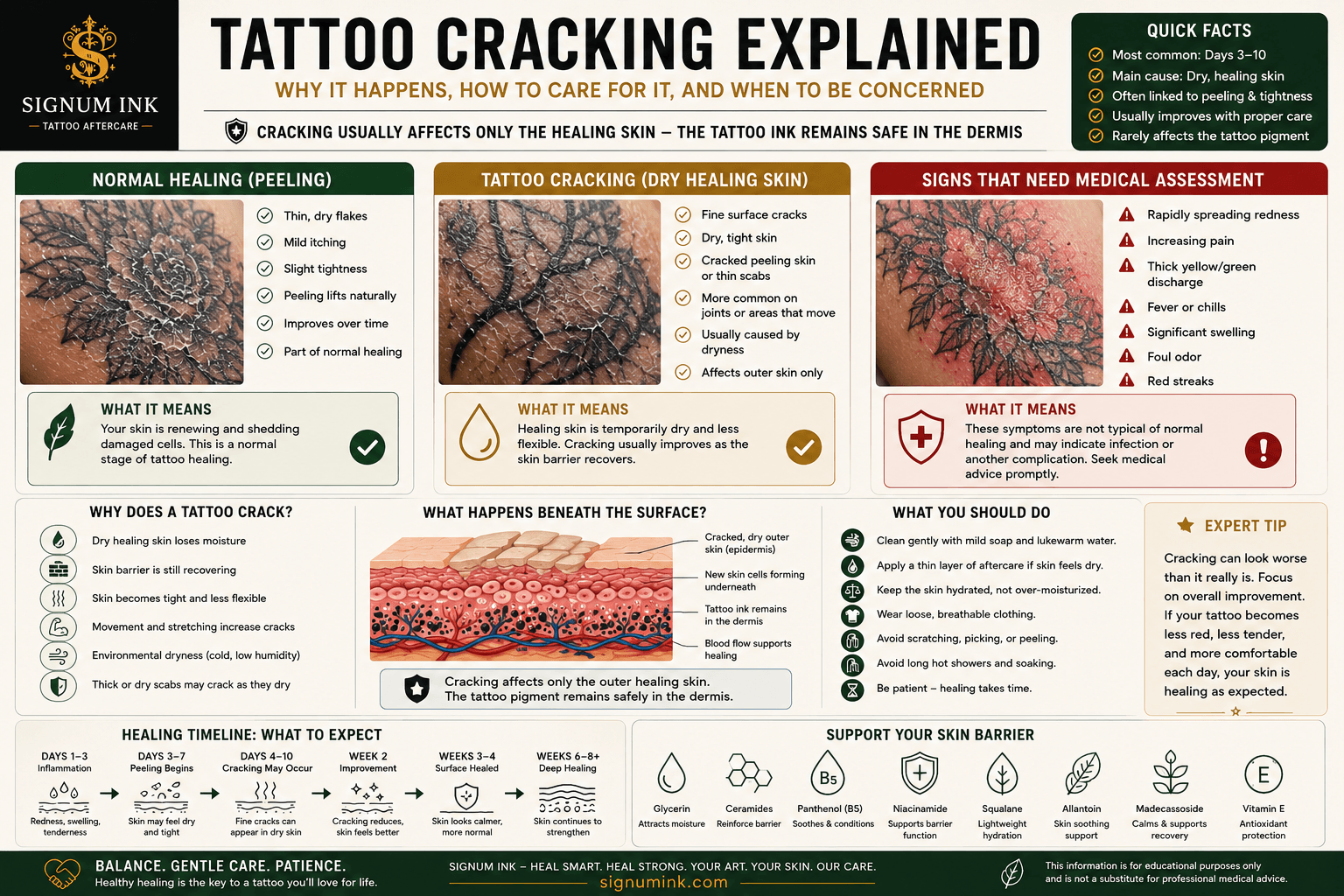
In most cases, tattoo cracking affects only the dry outer layer of healing skin rather than the tattoo pigment beneath it.
Understanding why tattoo cracking occurs—and how it differs from normal peeling, scabbing, or infection—can help you support healthy healing while avoiding unnecessary worry.
Quick Answer
Is tattoo cracking normal?
In many cases, yes.
As a healing tattoo becomes dry, the outer layer of skin may temporarily develop fine cracks or fissures within peeling or scabbing skin.
This often occurs during the first week of healing and usually improves as the skin barrier recovers.
However, if cracking is accompanied by increasing pain, rapidly spreading redness, thick yellow or green discharge, fever, or worsening swelling, prompt medical assessment is recommended.
Quick Facts
Most Common Time
Days 3–10
Most Common Cause
Dry healing skin.
Frequently Associated With
- Peeling.
- Mild itching.
- Tight skin.
- Thin scabs.
- Temporary dryness.
Usually Improves
As the skin barrier rebuilds.
What Is Tattoo Cracking?
Tattoo cracking refers to the appearance of small visible cracks in the healing surface of the skin.
These cracks usually develop because the epidermis has become temporarily dry and less flexible while new skin is forming underneath.
Rather than indicating that the tattoo ink is cracking, the changes are typically limited to the healing outer skin.
Depending on the stage of healing, tattoo cracking may appear as:
- Fine surface lines.
- Dry fissures.
- Cracked peeling skin.
- Small cracks within thin scabs.
- Tight, dry patches.
These changes are often most noticeable when the skin moves or stretches.
Why Does Tattoo Cracking Happen?
Tattooing temporarily disrupts the skin barrier.
As the epidermis repairs itself, it loses moisture more easily through transepidermal water loss (TEWL).
This temporary loss of moisture makes the skin:
- Less flexible.
- More prone to dryness.
- Slightly tighter.
- More likely to develop visible surface cracks.
These changes are usually temporary and improve as the barrier regains its normal function.
Common Causes of Tattoo Cracking
Several factors may contribute to cracking during healing.
Dry Healing Skin
The most common cause is simply dryness.
As damaged surface cells begin separating, the skin may temporarily lose flexibility and develop fine cracks.
Skin Tightness
Healing skin naturally feels tighter than healthy skin.
Areas that move frequently—such as elbows, knees, hands, fingers, ankles, and ribs—may show more visible cracking because the skin is repeatedly stretched.
Thick Scabs
Although thin scabs can be a normal part of healing for some tattoos, thicker scabs are less flexible.
As they dry, they may develop small cracks.
Frequent Movement
Tattoos placed over joints or highly mobile areas experience repeated bending and stretching throughout the day.
This constant movement can make temporary surface cracking more noticeable.
Environmental Dryness
Cold weather, low humidity, indoor heating, or prolonged exposure to dry air may increase skin dryness during healing.
What Does Tattoo Cracking Look Like?
Tattoo cracking can vary from person to person.
Common features include:
- Fine lines across peeling skin.
- Dry, rough patches.
- Small cracks within thin scabs.
- Skin that feels tight when moving.
- Mild flaking around the cracks.
Importantly, the tattoo pigment itself generally remains unaffected beneath the healing epidermis.
Does Tattoo Cracking Mean My Tattoo Is Damaged?
Usually, no.
The cracking almost always affects the outer healing skin—not the ink stored within the dermis.
The biggest risk comes from picking at cracked skin or pulling away loose scabs before they naturally separate.
Allowing the skin to heal at its own pace helps protect the final appearance of the tattoo.
Supporting Healthy Healing
The goal is not to eliminate cracking overnight, but to support the skin while it repairs itself.
Helpful habits include:
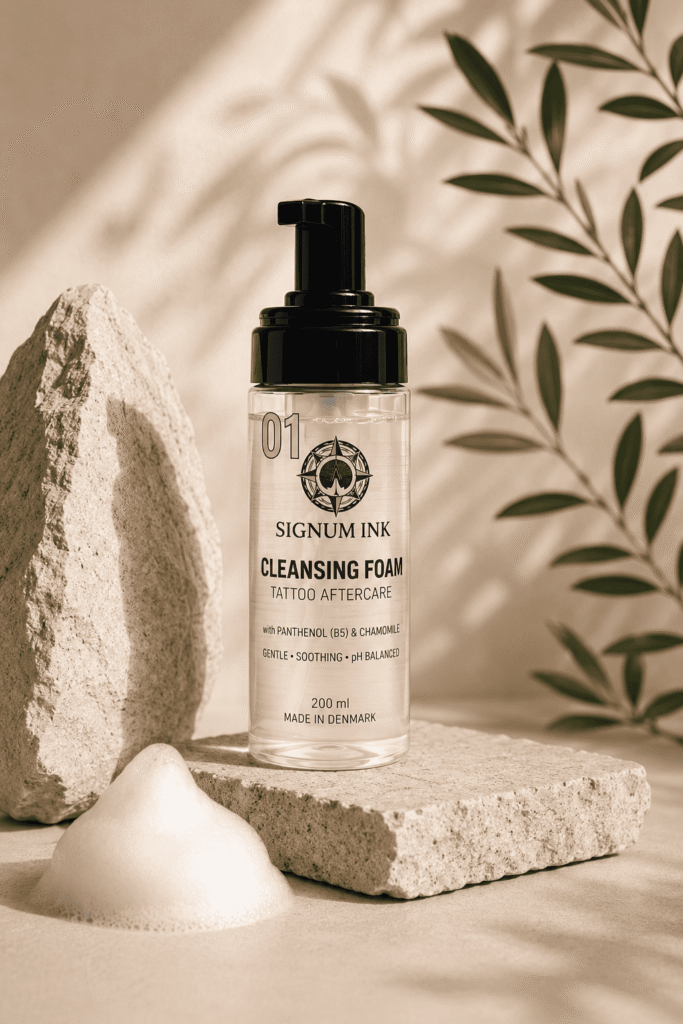
- Gently cleansing the tattoo with a mild cleanser.
- Applying a thin layer of recovery cream if the skin feels dry.
- Wearing loose, breathable clothing.
- Avoiding scratching or picking.
- Protecting the tattoo from unnecessary friction.
Balanced hydration helps the skin remain comfortable while the epidermis continues rebuilding.
Tattoo Cracking vs. Normal Peeling
Many people mistake tattoo cracking for a sign that something has gone wrong.
In reality, cracking often develops during the same stage as normal peeling.
The key difference is how dry and tight the outer layer of skin becomes.
Normal Peeling
Healthy peeling usually appears as:
- Thin, dry flakes.
- Mild itching.
- Slight tightness.
- Skin that gradually sheds naturally.
- Steady improvement over time.
This is a normal part of epidermal renewal.
Tattoo Cracking
Tattoo cracking typically involves:
- Fine surface fissures.
- Dry, tight skin.
- Small cracks in peeling skin or thin scabs.
- Skin that stretches less comfortably.
- More noticeable changes over joints or moving areas.
The cracking usually affects only the outer healing skin.
Tattoo Cracking vs. Scabbing
Although cracking and scabbing often occur together, they are not the same thing.
Cracking
Cracking develops when healing skin or thin scabs become dry and less flexible.
The surface develops small visible lines that resemble tiny fractures.
Scabbing
Scabs form when plasma, blood, and wound proteins dry on the skin’s surface.
Thin scabs may be a normal part of healing.
As they dry, they can sometimes develop superficial cracks.
The cracking is a feature of the scab, not necessarily a sign that healing has gone wrong.
Tattoo Cracking vs. Infection
One of the most common concerns is whether cracked skin means the tattoo is infected.
Fortunately, cracking alone is not usually a sign of infection.
Healthy cracking often:
- Occurs during the peeling stage.
- Is associated with dry skin.
- Gradually improves.
- Is not accompanied by severe pain.
Symptoms that require prompt medical assessment include:
- Rapidly spreading redness.
- Thick yellow or green discharge.
- Increasing pain.
- Fever or chills.
- Significant swelling.
- Red streaks extending away from the tattoo.
These findings are not typical of uncomplicated tattoo healing.
What Should You Do If Your Tattoo Cracks?
The goal is to support healing without interfering with the skin.
Keep the Skin Comfortably Hydrated
If the tattoo feels excessively dry, applying a thin layer of recovery cream may improve comfort.
Healthy healing depends on balance.
Too little moisture may increase tightness.
Too much may leave the skin overly saturated.
Avoid Picking Cracked Skin
Cracked skin or thin scabs should separate naturally.
Picking at them too early may expose fragile new skin underneath.
Reduce Friction
Healing skin becomes more fragile when repeatedly rubbed.
Whenever possible:
- Wear loose clothing.
- Avoid unnecessary rubbing.
- Protect tattoos over joints during repeated movement.
Wash Gently
Use lukewarm water and a mild cleanser.
Pat the tattoo dry with a clean towel rather than rubbing it.
Be Patient
Cracking often looks worse than it actually is.
As fresh epidermal cells replace damaged skin, flexibility gradually returns.
What Happens Beneath the Skin?
Although the surface appears cracked, healing continues underneath.
Several important biological processes remain active.
New Epidermis Forms
Fresh skin cells continue moving toward the surface.
Skin Barrier Recovery
The barrier gradually improves its ability to retain moisture.
Collagen Remodeling
Fibroblasts strengthen the dermis by reorganizing collagen fibers.
Tattoo Pigment Remains Stable
Tattoo ink stays safely stored within the dermis while only the outer healing skin is replaced.
What Does the Research Say?
Tattoo healing follows the same biological principles as other superficial skin injuries.
Research shows that temporary barrier disruption increases:
- Moisture loss.
- Skin tightness.
- Dryness.
- Surface fragility.
As the epidermis recovers, the skin gradually regains flexibility and moisture balance.
Visible cracking usually improves naturally during this process.
Common Mistakes That Make Cracking Worse
Several habits may increase surface cracking.
Using Harsh Soap
Strong cleansers may strip moisture from healing skin.
Taking Long Hot Showers
Hot water can temporarily increase dryness.
Picking Loose Skin
Removing peeling skin too early interrupts normal healing.
Wearing Tight Clothing
Constant friction may increase irritation.
Ignoring Dryness
Extremely dry skin may become less flexible and feel more uncomfortable.
Applying Thick Layers of Ointment
Heavy applications are not necessarily beneficial.
A thin, even layer is generally sufficient to support the skin barrier.
Research Snapshot
| Research Area | Evidence |
|---|---|
| Skin Barrier Recovery | ★★★★★ |
| Epidermal Regeneration | ★★★★★ |
| Wound Healing Biology | ★★★★★ |
| Moisture Balance | ★★★★★ |
| Tattoo Aftercare | ★★★★☆ |
| Tattoo Cracking Research | ★★★☆☆ |
Frequently Asked Questions About Tattoo Cracking
Is tattoo cracking normal?
In many cases, yes.
Tattoo cracking commonly occurs during the first week of healing when the outer layer of skin becomes dry and less flexible.
It usually affects only the healing epidermis and gradually improves as the skin barrier recovers.
Can tattoo cracking ruin my tattoo?
Usually not.
The visible cracks almost always occur in the healing surface skin—not in the tattoo pigment itself.
The greatest risk comes from picking at cracked skin or pulling away loose scabs before they naturally separate.
Should I moisturize a cracked tattoo?
If the skin feels dry or tight, applying a thin layer of recovery cream may improve comfort.
The goal is balanced hydration.
Very dry skin may crack more easily, while excessive product may leave the skin overly saturated.
Why does my tattoo crack when I move?
Healing skin temporarily loses some flexibility.
Areas over joints or frequently moving parts of the body—such as elbows, knees, fingers, ankles, and ribs—often show more noticeable cracking because the skin stretches repeatedly throughout the day.
Can cracked scabs pull out tattoo ink?
Small surface cracks in scabs do not normally remove tattoo pigment.
However, picking or pulling off scabs before they naturally detach may interfere with healing and increase the risk of affecting the final appearance.
How long does tattoo cracking last?
Most surface cracking gradually improves as peeling finishes.
For many people, this occurs within one to two weeks, although complete skin recovery continues for several more weeks beneath the surface.
Does tattoo cracking mean my tattoo is too dry?
Sometimes.
Temporary dryness is one of the most common reasons healing skin develops fine surface cracks.
Supporting the skin barrier with balanced aftercare often helps improve comfort while healing continues naturally.
Should I stop washing my tattoo if it cracks?
No.
Continue washing the tattoo gently with a mild cleanser and lukewarm water.
Clean skin supports healthy healing.
Avoid scrubbing or rubbing the cracked areas.
When should I seek medical advice?
Arrange prompt medical assessment if cracking is accompanied by:
- Rapidly spreading redness.
- Thick yellow or green discharge.
- Increasing pain.
- Fever or chills.
- Significant swelling.
- Red streaks extending away from the tattoo.
- A foul odor.
These symptoms are not typical of uncomplicated tattoo healing.
Common Myths About Tattoo Cracking
Myth 1: Cracks mean the tattoo ink is breaking apart.
Reality:
Tattoo pigment remains within the dermis.
The visible cracks usually affect only the healing surface skin.
Myth 2: Every cracked tattoo is infected.
Reality:
Most cases of tattoo cracking are caused by temporary dryness and reduced skin flexibility—not infection.
Myth 3: Thick layers of ointment prevent cracking.
Reality:
Healthy healing depends on moisture balance.
Applying excessive amounts of product does not necessarily improve healing and may create other problems.
Myth 4: Cracked skin should be peeled away.
Reality:
Healing skin should separate naturally.
Pulling away cracked skin or scabs too early may expose delicate new tissue.
Healing Timeline
| Time After Tattoo | What You May Notice |
|---|---|
| Days 1–3 | Redness, swelling, tenderness |
| Days 3–7 | Dryness and peeling begin |
| Days 4–10 | Fine surface cracking may appear |
| Week 2 | Cracking gradually improves |
| Weeks 3–4 | Surface healing complete |
| Weeks 6–8 | Deep skin remodeling continues |
Research Snapshot
| Research Area | Evidence |
|---|---|
| Skin Barrier Recovery | ★★★★★ |
| Epidermal Regeneration | ★★★★★ |
| Wound Healing Biology | ★★★★★ |
| Moisture Balance | ★★★★★ |
| Tattoo Aftercare | ★★★★☆ |
| Tattoo Cracking Research | ★★★☆☆ |
Expert Tip
A cracked tattoo often looks more dramatic than it really is.
During healing, the outer layer of skin temporarily becomes dry and less flexible. Fine surface cracks are often part of this process. What matters most is the overall direction of healing. If the tattoo becomes less red, less tender, and more comfortable over time, your skin is usually recovering as expected.
Signs That Cracking Is Part of Normal Healing
✅ Fine surface cracks only.
✅ Mild dryness.
✅ Peeling skin.
✅ Temporary tightness.
✅ Gradual improvement each day.
✅ No increasing pain.
✅ Healthy skin appearing underneath.
Signs That Need Medical Assessment
⚠️ Rapidly spreading redness.
⚠️ Thick yellow or green discharge.
⚠️ Increasing pain.
⚠️ Fever or chills.
⚠️ Significant swelling.
⚠️ A foul odor.
⚠️ Red streaks extending away from the tattoo.
These symptoms do not automatically indicate an infection, but they are not typical of uncomplicated tattoo healing and should be assessed promptly by a healthcare professional.
Why Maintaining the Skin Barrier Helps Prevent Cracking
Tattoo cracking is often linked to a temporary reduction in skin flexibility while the barrier is rebuilding.
Modern tattoo aftercare aims to support this natural process by maintaining hydration and reinforcing the skin’s protective function.
| Function | Example Ingredient |
|---|---|
| Attracts moisture | Glycerin |
| Supports hydration | Betaine |
| Reinforces barrier lipids | Ceramides |
| Supports barrier recovery | Niacinamide |
| Skin conditioning | Panthenol |
| Lightweight emollient | Squalane |
| Improves spreadability | Caprylic/Capric Triglyceride |
| Skin-soothing support | Allantoin |
| Botanical support | Madecassoside |
| Antioxidant protection | Vitamin E |
Together, these ingredients help improve skin comfort while supporting the natural rebuilding of the skin barrier.
Final Thoughts
Tattoo cracking is one of the more alarming changes that can occur during healing, but in most cases it is simply a reflection of temporary dryness and reduced flexibility in the outer layer of skin. Although the surface may appear cracked, the tattoo pigment remains protected much deeper within the dermis.
The best approach is to support your skin rather than trying to “fix” the cracks. Gentle cleansing, balanced hydration, breathable clothing, and patience allow the skin barrier to recover naturally. As new epidermal cells replace the dry surface layer, flexibility returns and the appearance of cracking gradually fades.
Remember that healthy tattoo healing is measured by steady improvement, not by having perfect-looking skin every day. If your tattoo becomes more comfortable and less inflamed over time, your body is usually doing exactly what it is designed to do.
Related Articles
Strengthen your understanding of tattoo healing with these guides:
- Tattoo Healing Timeline: What to Expect from Day 1 to Day 60
- How Long Does a Tattoo Take to Heal?
- Signs Your Tattoo Is Healing Properly
- Tattoo Peeling Explained
- Tattoo Flaking vs. Infection
- Tattoo Bubbling Explained
- Can I Scratch My Healing Tattoo?
- Why Is My Tattoo Itchy?
- Why Is My Tattoo Red?
- Over-Moisturized Tattoo: Can You Use Too Much Tattoo Cream?
- The Complete Science of Tattoo Healing
 English
  German