Introduction
Most tattoos heal without serious complications.
In fact, some redness, swelling, peeling and itching are all expected parts of the normal healing process.
However, not every symptom is completely harmless.
Many people become concerned when their tattoo looks different than expected, develops small bumps, feels unusually warm or simply doesn’t seem to be healing normally.
The challenge is knowing the difference between a normal part of healing and a genuine problem that may require attention.
This guide explains the most common tattoo problems, why they happen and what you should do if they occur.
Whether you’ve just had your first tattoo or you’re an experienced collector, understanding the warning signs can help you protect both your skin and your artwork.
Why Tattoo Problems Happen
A tattoo is created by placing pigment into the dermis using thousands of tiny needle punctures.
Although this process is performed under controlled conditions, it still creates a wound that your body must repair.
Most healing problems arise from one or more of the following:
- Poor aftercare
- Excessive friction
- Picking or scratching
- Prolonged moisture
- Bacterial contamination
- Allergic reactions
- Individual skin characteristics
Fortunately, many problems are preventable with proper tattoo aftercare.
Normal Healing vs. Actual Problems
One of the biggest reasons people panic is that normal healing often looks dramatic.
During the first few weeks it’s common to experience:
- Mild redness
- Slight swelling
- Tenderness
- Flaking skin
- Itching
- Tightness
These symptoms usually improve gradually.
A true problem often becomes noticeable because symptoms worsen instead of improving.
Examples include:
- Increasing pain
- Expanding redness
- Thick discharge
- Persistent swelling
- Fever
- Strong odor
When in doubt, it’s always safer to ask your tattoo artist or consult a healthcare professional.
The Most Common Tattoo Problems
Although every person’s skin heals differently, several issues appear more frequently than others.
Some are harmless and temporary.
Others may require medical attention.
Below is an overview of the conditions we’ll explore in detail throughout this guide.
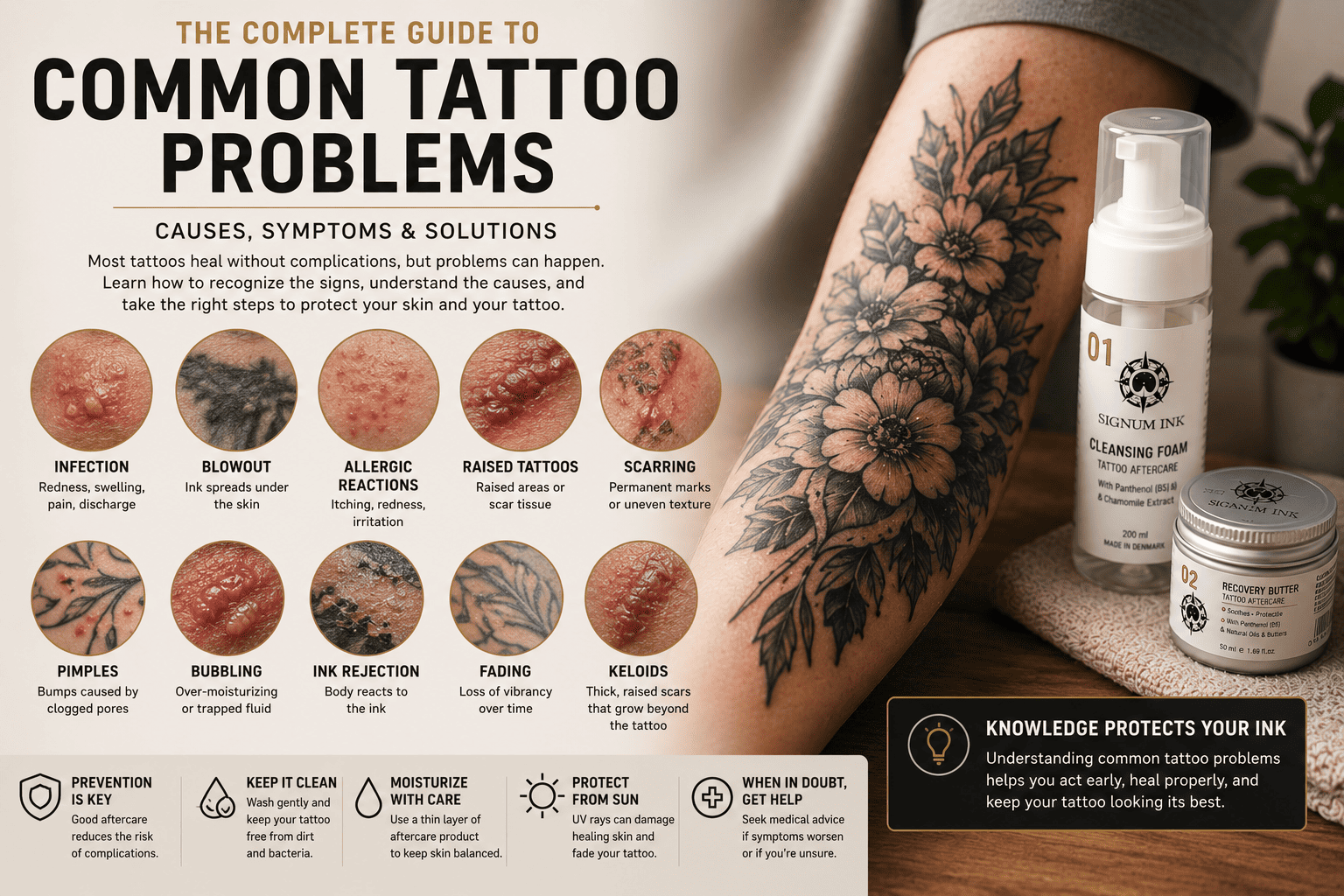
1. Tattoo Infection
An infection occurs when harmful microorganisms enter the healing tattoo.
Possible symptoms include:
- Increasing redness
- Swelling
- Pain that becomes worse
- Yellow or green discharge
- Fever
Prompt medical assessment is important if an infection is suspected.
2. Tattoo Blowout
A tattoo blowout happens when ink spreads beneath the skin, creating a blurred appearance around the tattoo lines.
Although it can affect the tattoo’s appearance, it’s generally a cosmetic issue rather than a medical emergency.
Several factors can contribute, including tattoo placement, skin characteristics and tattooing technique.
3. Allergic Reactions
Although uncommon, some people develop allergic reactions to tattoo pigments.
Symptoms may include:
- Persistent itching
- Raised areas
- Localized swelling
- Skin irritation
Some reactions occur shortly after tattooing, while others may appear months or even years later.
4. Raised Tattoos
Some tattoos temporarily become raised during healing.
In other cases, tattoos may become raised long after they’ve healed.
Possible contributing factors include:
- Scar tissue
- Weather changes
- Allergic responses
- Skin sensitivity
Raised tattoos are not always a sign of a serious problem.
5. Tattoo Scarring
Minor skin texture changes are normal while healing.
Permanent scarring is less common.
Scars may develop if:
- Healing skin is repeatedly damaged.
- Infection occurs.
- Scabs are picked.
- The tattoo is overworked.
Proper aftercare greatly reduces the risk.
Most Problems Have Solutions
Reading about possible complications can sound alarming.
Fortunately, the vast majority of tattoo concerns are manageable.
Many simply require:
- Time
- Consistent aftercare
- Avoiding irritation
- Monitoring symptoms
Understanding what’s happening beneath your skin makes it much easier to respond calmly and appropriately.
Prevention Is Always Better Than Treatment
Many tattoo problems begin before symptoms appear.
Simple habits such as:
- Washing your tattoo correctly
- Moisturizing appropriately
- Avoiding unnecessary touching
- Wearing clean clothing
- Following your artist’s advice
can significantly reduce the likelihood of complications.
Looking after your tattoo from day one is the best investment you can make in its long-term appearance.
6. Pimples on a Tattoo
Small pimples can occasionally appear on or around a healing tattoo.
Common causes include:
- Clogged pores.
- Trapped sweat.
- Shaving irritation.
- Heavy aftercare products.
- Friction from clothing.
In most cases, these bumps resolve on their own once the skin settles.
Avoid squeezing or picking at them, as this can irritate the healing skin and increase the risk of infection.
7. Tattoo Bubbling
Tattoo bubbling occurs when the healing skin becomes excessively wet or overhydrated.
It often appears as:
- Soft, swollen skin.
- Raised patches.
- A shiny or wrinkled surface.
Common causes include over-moisturizing, prolonged soaking or leaving a protective bandage on for too long.
Fortunately, tattoo bubbling is often reversible if addressed early by allowing the skin to dry naturally and following appropriate aftercare.
8. Ink Rejection
Some people worry that their body is “rejecting” tattoo ink.
In reality, true ink rejection is uncommon.
Most tattoo pigment remains permanently trapped within the dermis after healing.
What people often interpret as ink rejection is actually:
- Normal peeling.
- Flaking skin.
- Mild pigment loss during healing.
- Temporary cloudiness.
Persistent inflammation or allergic reactions should be evaluated by a healthcare professional.
9. Tattoo Fading
A tattoo naturally softens slightly as it heals.
This is completely normal.
However, premature fading may occur because of:
- Excessive UV exposure.
- Poor aftercare.
- Frequent friction.
- Certain skin characteristics.
- Natural aging.
Protecting your tattoo from the sun remains one of the best ways to preserve its appearance over time.
10. Keloids and Excessive Scarring
Most tattoos heal with little or no permanent scarring.
However, some people are genetically prone to developing keloids or raised scars.
Keloids extend beyond the original wound and may continue growing after healing has finished.
If you’ve developed keloids from previous injuries or piercings, discuss this with your tattoo artist before getting tattooed.
When Should You See a Healthcare Professional?
While many tattoo concerns improve with time and proper aftercare, some symptoms should never be ignored.
Seek medical advice if you experience:
- Increasing pain rather than gradual improvement.
- Rapidly spreading redness.
- Thick yellow or green discharge.
- Fever or chills.
- Red streaks extending away from the tattoo.
- Significant swelling that continues to worsen.
Prompt assessment helps ensure appropriate treatment if an infection or another complication is present.
How to Reduce Your Risk of Tattoo Problems
Although no tattoo is completely risk-free, you can significantly reduce your chances of complications by following a few simple habits.
These include:
- Choosing a reputable tattoo studio.
- Following your tattoo artist’s aftercare instructions.
- Washing your hands before touching your tattoo.
- Cleaning the tattoo gently.
- Moisturizing with a thin layer when needed.
- Avoiding scratching or picking.
- Wearing clean, breathable clothing.
- Staying out of swimming pools and hot tubs until the tattoo has healed.
- Protecting the tattoo from direct sunlight.
Good aftercare begins before problems ever develop.
Common Myths About Tattoo Problems
Myth 1: Every Red Tattoo Is Infected
False.
Some redness is expected during the first days after tattooing.
The concern is redness that becomes worse instead of gradually improving.
Myth 2: Raised Tattoos Always Mean Something Is Wrong
Not necessarily.
Some tattoos temporarily become raised during normal healing or in response to changes in temperature and humidity.
Myth 3: Tattoo Blowouts Are Dangerous
No.
A blowout affects the appearance of the tattoo but is not generally considered a medical problem.
Myth 4: Every Bump on a Tattoo Means an Allergy
False.
Many small bumps are caused by clogged pores, shaving irritation or mild inflammation rather than a true allergic reaction.
Frequently Asked Questions
What is the most common tattoo problem?
Minor itching, peeling and temporary redness are the most common concerns during healing and are usually part of the normal recovery process.
How do I know if my tattoo is healing normally?
Symptoms should gradually improve over time.
If pain, redness or swelling continue getting worse instead of better, further evaluation may be appropriate.
Can tattoo problems appear months later?
Yes.
Certain issues—such as allergic reactions, raised tattoos or pigment changes—can develop long after the initial healing period.
Can most tattoo problems be prevented?
Many can.
Choosing an experienced tattoo artist and following consistent aftercare greatly reduces the likelihood of complications.
Should I remove my bandage if something looks wrong?
Follow your tattoo artist’s instructions.
If you notice signs of infection or another concerning symptom, contact your tattoo artist or a healthcare professional rather than attempting to solve the problem yourself.
Conclusion
Most tattoo problems are far less serious than they first appear.
Temporary redness, peeling, itching and mild swelling are all expected parts of the healing journey.
The key is learning to recognize when your tattoo is following a normal healing pattern—and when it’s time to seek professional advice.
By combining good hygiene, consistent aftercare and realistic expectations, you give your tattoo the best chance to heal beautifully while minimizing the risk of complications.
Knowledge is one of the most valuable tools in tattoo aftercare.
 English
  German