Introduction
Getting a tattoo is only the first step.
How you care for your tattoo during the following days and weeks plays an important role in supporting your skin as it heals.
With so much advice available online, it’s easy to become overwhelmed.
Should you wash your tattoo more than once a day?
When should you start moisturizing?
Is peeling normal?
How long should you avoid swimming?
This guide brings everything together in one place.
You’ll learn what happens during each stage of healing, what your daily aftercare routine should look like and which mistakes are best avoided.
Whether this is your first tattoo or your tenth, following a simple, consistent routine gives your skin the best environment to recover.
Why Tattoo Aftercare Matters
A tattoo is created by placing pigment into the dermis through thousands of tiny needle punctures.
Although the pigment remains beneath the skin, the outer layers must still repair themselves.
Good aftercare helps support this natural healing process by:
- Keeping the tattoo clean.
- Reducing unnecessary irritation.
- Supporting the skin barrier.
- Helping the skin remain comfortably hydrated.
- Reducing the risk of avoidable complications.
Aftercare cannot change how deeply the tattoo was applied or guarantee a perfect result, but it provides the skin with favorable conditions for healthy recovery.
The Four Stages of Tattoo Healing
Understanding what happens beneath the surface makes aftercare much easier.
Most tattoos pass through four overlapping stages.
Stage 1 – Fresh Tattoo (Days 1–3)
During the first few days, your tattoo is essentially an open wound.
You may notice:
- Mild redness.
- Slight swelling.
- Warm skin.
- Clear fluid.
- Tenderness.
At this stage, your priorities are cleanliness and gentle handling.
Stage 2 – Peeling & Itching (Days 4–14)
As new skin forms, the outer damaged layer begins to dry.
Common changes include:
- Flaking.
- Peeling.
- Tight skin.
- Mild itching.
This is often the stage where people become worried, even though these symptoms are usually completely normal.
Stage 3 – The Milky Phase (Weeks 2–4)
Many people expect their tattoo to look perfect after peeling ends.
Instead, it may suddenly appear:
- Cloudy.
- Slightly dull.
- Less vibrant.
- Blurry.
This temporary phase occurs because a thin layer of immature skin still covers the tattoo.
Patience is important.
Stage 4 – Skin Remodeling (Weeks 4–8+)
Although the tattoo may appear healed on the surface, deeper layers of skin continue remodeling for several more weeks.
During this stage:
- Skin strength improves.
- Hydration gradually normalizes.
- The tattoo becomes clearer.
- The skin barrier continues recovering.
Complete skin recovery often takes longer than most people expect.
Your Daily Tattoo Aftercare Routine
A successful tattoo aftercare routine doesn’t require dozens of products.
Consistency matters far more than complexity.
For most people, the routine follows the same basic structure every day:
- Wash the tattoo gently.
- Pat it dry.
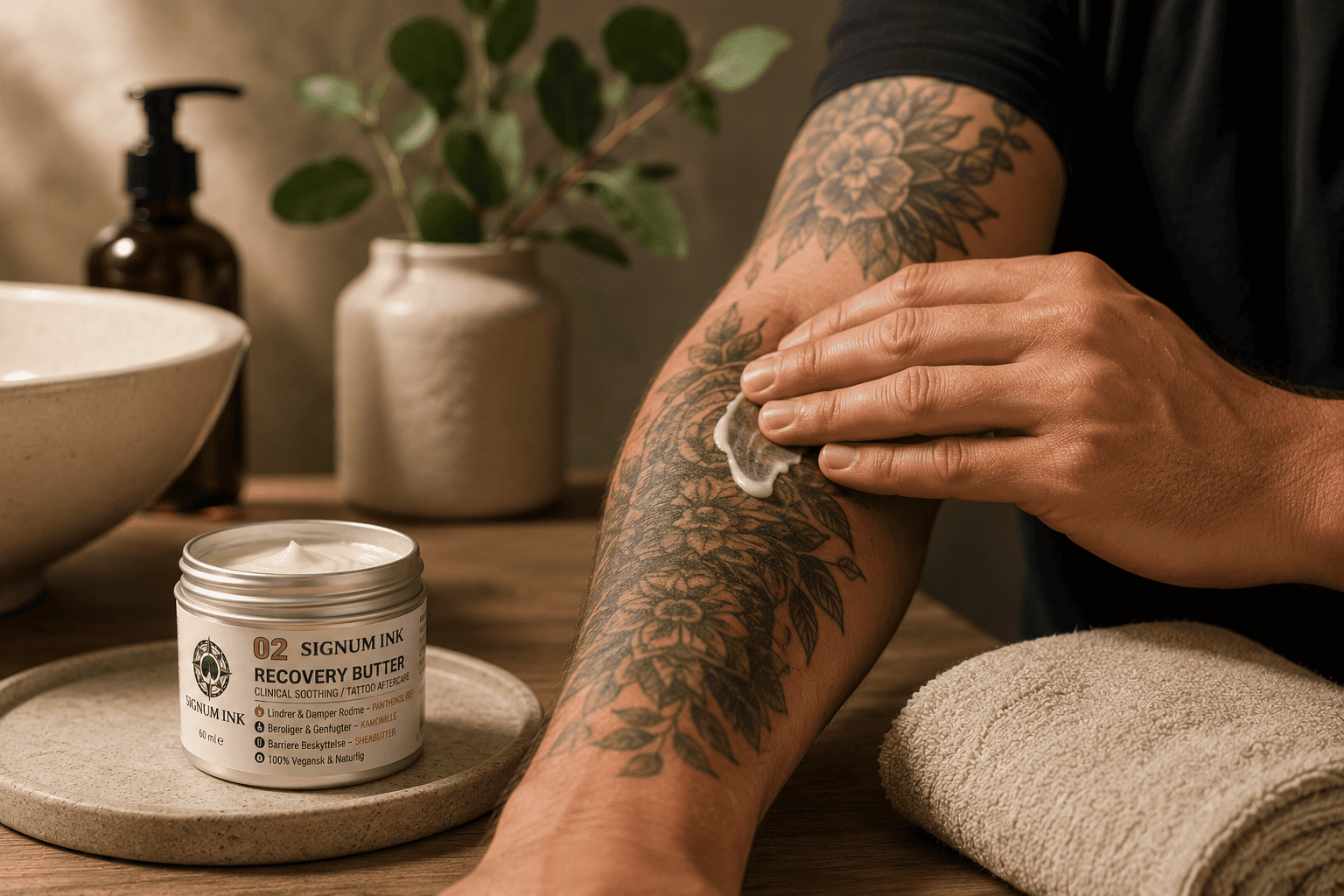
- Apply a thin layer of moisturizer if needed.
- Protect the tattoo from unnecessary irritation.
- Repeat as recommended throughout the healing period.
Small daily habits often have a bigger impact than occasional intensive care.
The First 24 Hours
The first day is often the most intimidating for people with a new tattoo.
Your tattoo artist may cover the tattoo with a protective dressing or specialized healing film.
Follow the instructions provided by your tattoo artist regarding when and how to remove it.
Once the dressing has been removed:
- Wash your hands first.
- Clean the tattoo gently.
- Pat dry using a clean towel.
- Allow the skin to breathe unless instructed otherwise.
Avoid touching the tattoo unnecessarily during these first hours.
Good Aftercare Is About Consistency
Many people search for miracle products or secret healing tricks.
In reality, successful tattoo aftercare usually comes down to doing a few simple things consistently every day.
Gentle cleansing, appropriate moisturizing and patience form the foundation of healthy healing.
How to Wash a New Tattoo
Washing your tattoo correctly is one of the most important parts of aftercare.
The goal is simple:
Remove sweat, excess ink, plasma and everyday bacteria without damaging the healing skin.
A good routine typically looks like this:
- Wash your hands thoroughly.
- Use lukewarm water.
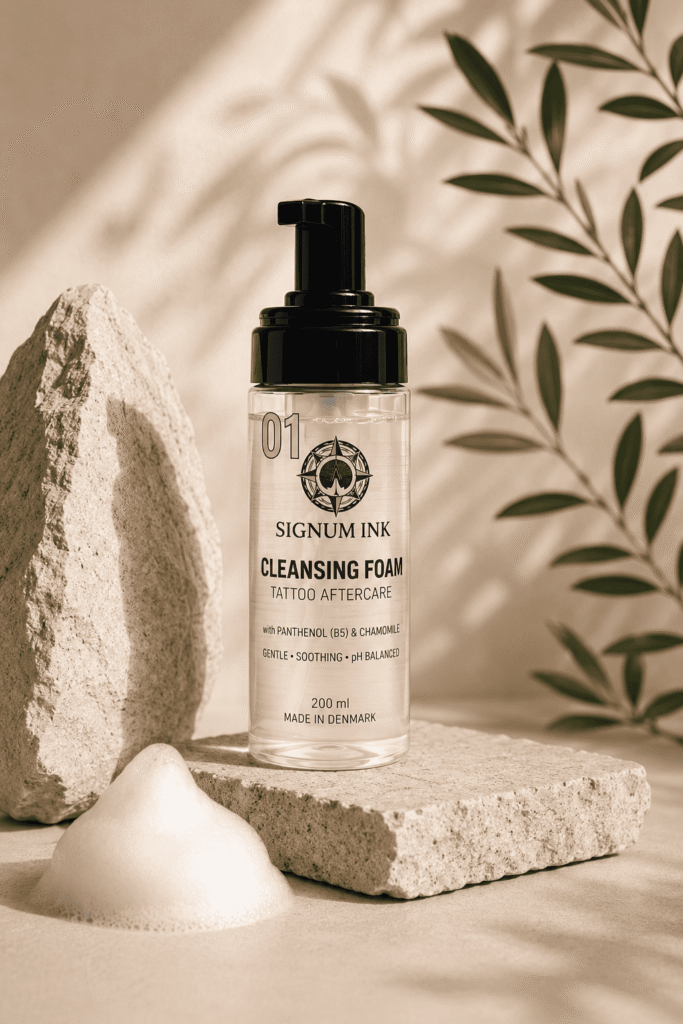
- Apply a mild, fragrance-free cleanser.
- Gently clean the tattoo using your fingertips.
- Rinse thoroughly.
- Pat dry with a clean towel or disposable paper towel.
Avoid rubbing the tattoo or using rough washcloths.
How Often Should You Wash Your Tattoo?
Most tattoo artists recommend washing a new tattoo 2–3 times per day, especially during the first week.
Additional cleansing may be helpful after:
- Heavy sweating.
- Exercise.
- Dusty environments.
- Accidental contamination.
Overwashing isn’t beneficial.
Cleaning too frequently may dry out the skin unnecessarily.
When Should You Start Moisturizing?
Moisturizer helps support the skin barrier and reduces feelings of tightness and dryness.
Most people begin moisturizing after the tattoo has been cleaned and the initial surface moisture has disappeared, following the guidance of their tattoo artist.
Apply:
- A thin layer.
- Only enough to lightly cover the skin.
- Whenever the tattoo feels dry.
More moisturizer does not mean faster healing.
How Often Should You Moisturize?
Every tattoo is different.
For many people, moisturizing 2–4 times daily is sufficient.
Instead of following the clock, pay attention to your skin.
If the tattoo feels:
- Tight
- Dry
- Slightly itchy
…a thin layer of moisturizer may help restore comfort.
If the tattoo already feels soft and comfortable, adding more product usually isn’t necessary.
Showering With a New Tattoo
Yes—you can shower.
In fact, regular gentle cleansing is encouraged.
However:
Avoid:
- Very hot water.
- Long showers.
- High-pressure water directly onto the tattoo.
- Scrubbing.
Short, lukewarm showers are generally best during healing.
Can You Take a Bath?
No—not while the tattoo is healing.
Avoid soaking the tattoo in:
- Bathtubs.
- Swimming pools.
- Lakes.
- Rivers.
- Hot tubs.
- The ocean.
Prolonged soaking softens healing skin and may increase the risk of irritation or contamination.
Wait until the skin has completely healed.
Sleeping With a New Tattoo
Sleep is when much of the body’s tissue repair takes place.
To help protect your tattoo:
- Wear clean clothing.
- Use freshly washed bed sheets.
- Avoid sleeping directly on the tattoo if possible.
- Prevent unnecessary friction.
If your tattoo sticks slightly to your bedding, dampen the fabric with clean lukewarm water before removing it.
Never pull it away forcefully.
What Clothes Should You Wear?
Loose, breathable clothing is usually the most comfortable option.
Choose fabrics that:
- Allow airflow.
- Minimize rubbing.
- Don’t trap excessive sweat.
Avoid tight clothing over freshly tattooed skin whenever possible.
Can You Exercise?
Light activity is often acceptable.
However, consider avoiding:
- Heavy weightlifting involving the tattooed area.
- Contact sports.
- Activities causing excessive friction.
- Prolonged heavy sweating during the first several days.
Listen to your body.
If movement causes significant discomfort, your skin may benefit from additional rest.
Sun Protection
Fresh tattoos are especially sensitive to ultraviolet (UV) radiation.
During healing:
- Keep the tattoo covered whenever practical.
- Avoid intentional sun exposure.
- Wait until the tattoo has healed before applying sunscreen unless advised otherwise by your tattoo artist or healthcare professional.
Long-term UV protection also helps preserve tattoo appearance over the years.
Common Tattoo Aftercare Mistakes
Many healing problems result from good intentions rather than bad care.
Common mistakes include:
- Over-moisturizing.
- Picking peeling skin.
- Scratching.
- Swimming too early.
- Using harsh soaps.
- Applying alcohol or hydrogen peroxide.
- Ignoring signs of infection.
- Wearing tight clothing.
- Exposing the tattoo to excessive sunlight.
Keeping your routine simple is often the best approach.
When Should You Contact a Healthcare Professional?
Although most tattoos heal normally, seek medical advice if you notice:
- Fever.
- Thick yellow or green discharge.
- Increasing redness after the first several days.
- Rapidly worsening swelling.
- Severe pain.
- Red streaks spreading away from the tattoo.
Prompt evaluation is important if symptoms continue worsening rather than improving.
Frequently Asked Questions
How long does tattoo aftercare last?
Surface healing often takes 2–4 weeks, but deeper skin remodeling continues for several additional weeks.
How often should I wash my tattoo?
For many people, 2–3 times daily during the first week is appropriate, unless your tattoo artist provides different instructions.
Can I over-moisturize a tattoo?
Yes.
Applying thick layers too frequently may leave the skin overly saturated.
A thin layer is generally sufficient.
When can I swim again?
Wait until the tattoo has fully healed before swimming in pools, lakes, rivers or the ocean.
Should I remove peeling skin?
No.
Allow peeling skin to detach naturally.
Picking may increase irritation and pigment loss.
Conclusion
Successful tattoo aftercare isn’t about expensive products or complicated routines.
It’s about consistency.
Gentle cleansing, balanced moisturizing, protecting the tattoo from unnecessary irritation and giving your skin time to heal are the foundations of healthy tattoo recovery.
Every tattoo heals at its own pace, but understanding what your skin is doing during each stage helps you make informed decisions instead of reacting to every temporary change.
When you support your skin with patience and proper care, you create the best conditions for both comfortable healing and a tattoo you’ll continue to enjoy for years to come.
 English
  German