Introduction
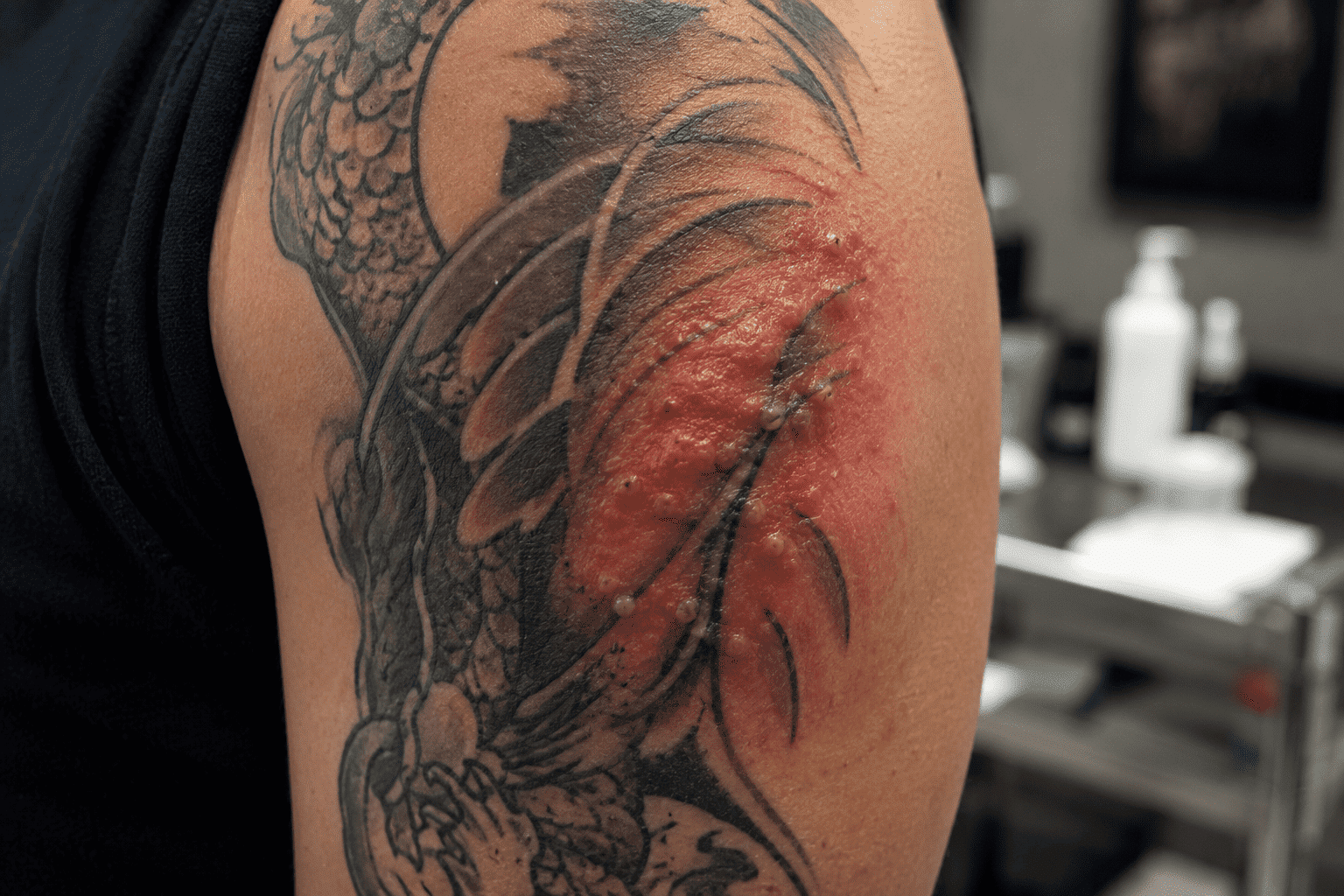
One of the most common questions people ask after getting a tattoo is:
“Is my tattoo infected—or is this just normal healing?”
The confusion is understandable.
A healing tattoo is naturally red, swollen, warm and sometimes painful during the first few days.
Those same symptoms can also appear during the early stages of an infection.
Knowing the difference can help you avoid unnecessary worry while also recognizing when it’s time to seek medical care.
This guide explains which symptoms are expected, which warning signs deserve attention and how to tell the difference between normal healing and a possible tattoo infection.
Why Every New Tattoo Looks Irritated
A tattoo is a controlled skin injury.
Thousands of tiny needle punctures trigger the body’s natural inflammatory response.
During the first several days it’s completely normal to experience:
- Mild redness.
- Slight swelling.
- Tenderness.
- Warm skin.
- Small amounts of clear fluid.
- Mild itching.
These are signs that your immune system is repairing the skin.
What Causes a Tattoo Infection?
A tattoo infection occurs when harmful microorganisms enter the damaged skin.
Although professional tattoo studios follow strict hygiene procedures, infections can occasionally occur.
Possible contributing factors include:
- Poor hygiene during tattooing.
- Touching the tattoo with unwashed hands.
- Picking scabs.
- Contaminated aftercare products.
- Swimming before the tattoo has healed.
- Excessive friction or skin damage during healing.
Fortunately, infections remain relatively uncommon when proper tattooing techniques and aftercare are followed.
Early Signs of a Tattoo Infection
Possible warning signs include:
- Redness that continues spreading.
- Swelling that worsens instead of improving.
- Increasing pain after the first few days.
- Thick yellow or green discharge.
- Bad odor.
- Fever.
- Chills.
- Red streaks extending away from the tattoo.
Unlike normal healing, these symptoms often become progressively worse.
Normal Healing vs. Infection
Normal Healing
Usually includes:
- Mild redness.
- Light swelling.
- Temporary tenderness.
- Peeling.
- Mild itching.
Symptoms gradually improve over time.
Possible Infection
Often includes:
- Worsening redness.
- Increasing swelling.
- Thick discharge.
- Severe pain.
- Fever.
- Symptoms that spread rather than improve.
The overall trend is usually the biggest clue.

Can an Infection Start Later?
Yes.
Although many infections develop within the first several days, some may become noticeable later if bacteria enter damaged skin during healing.
This is one reason it’s important to continue good hygiene until the skin has fully recovered.
Should You Wait and See?
Small amounts of redness during the first few days are expected.
However, symptoms that continue worsening instead of improving deserve medical attention.
Waiting too long can allow an infection to become more severe.
When in doubt, it’s safest to seek professional medical advice.
Most Healing Tattoos Are Not Infected
Fortunately, the vast majority of new tattoos heal without infection.
Because normal healing shares several symptoms with infection, many people become worried unnecessarily.
Understanding the normal stages of tattoo healing makes it much easier to recognize when something truly isn’t right.
What Should You Do If You Think Your Tattoo Is Infected?
If you suspect an infection, don’t ignore the symptoms.
The safest approach is to:
- Continue keeping the tattoo clean.
- Avoid scratching or picking the area.
- Avoid applying products that haven’t been recommended by a healthcare professional.
- Monitor whether symptoms improve or worsen.
- Contact a healthcare professional if warning signs develop.
Early medical assessment can prevent a minor infection from becoming more serious.
Should You Continue Your Normal Aftercare?
Yes—in most cases.
Continue washing the tattoo gently with lukewarm water and a mild cleanser, unless your healthcare professional advises otherwise.
Avoid:
- Scrubbing the tattoo.
- Covering it with airtight bandages unless instructed.
- Applying excessive amounts of ointment.
- Using home remedies that may irritate the skin.
Good hygiene remains one of the most important parts of tattoo aftercare.
When Should You Seek Medical Attention?
Seek medical advice immediately if you notice:
- Fever.
- Chills.
- Thick yellow or green discharge.
- Red streaks extending away from the tattoo.
- Rapidly worsening redness.
- Severe swelling.
- Increasing pain after the first several days.
- Skin that becomes increasingly hot and tender.
These symptoms deserve prompt professional evaluation.
What Should You Avoid?
If you think your tattoo may be infected, avoid:
- Picking scabs.
- Scratching the tattoo.
- Swimming.
- Hot tubs.
- Saunas.
- Heavy friction from tight clothing.
- Delaying medical advice if symptoms worsen.
Protecting the healing skin helps reduce additional irritation.

Can Tattoo Infections Be Prevented?
Although no method eliminates risk entirely, you can greatly reduce the likelihood by:
- Choosing a licensed, reputable tattoo artist.
- Following all aftercare instructions.
- Washing your hands before touching the tattoo.
- Keeping the tattoo clean.
- Avoiding swimming until healing is complete.
- Allowing scabs to fall off naturally.
Most tattoo infections are preventable with good hygiene and proper aftercare.
Common Myths About Tattoo Infections
Myth 1: Every Red Tattoo Is Infected
False.
Redness during the first few days is a normal part of healing.
The key is whether the redness improves—or continues spreading.
Myth 2: Tattoo Infections Always Produce Pus
False.
Some infections begin with increasing redness, swelling and pain before any discharge appears.
Myth 3: You Can Treat Every Infection at Home
False.
Some tattoo infections require prescription antibiotics.
Delaying treatment may allow the infection to worsen.
Myth 4: Good Aftercare Guarantees No Infection
False.
Proper aftercare greatly reduces the risk but cannot eliminate it completely.
Frequently Asked Questions
How do I know if my tattoo is infected?
Look for symptoms that become progressively worse rather than better, such as spreading redness, increasing swelling, severe pain, discharge or fever.
Is redness normal after getting a tattoo?
Yes.
Mild redness during the first several days is expected.
It should gradually improve rather than continue spreading.
Should I moisturize an infected tattoo?
Continue following the advice of your healthcare professional.
Avoid applying products that haven’t been recommended for your specific situation.
Can an infected tattoo heal without antibiotics?
Some minor skin irritations improve on their own, but a true bacterial infection may require prescription medication.
A healthcare professional can determine the appropriate treatment.
How long should I wait before seeing a doctor?
If symptoms are worsening rather than improving, or if you develop fever, spreading redness, severe pain or discharge, seek medical attention promptly.
Conclusion
Most new tattoos heal without infection.
Understanding what normal healing looks like—and how it differs from the warning signs of infection—helps you respond appropriately without unnecessary worry.
Temporary redness, mild swelling and itching are expected.
Progressively worsening pain, spreading redness, discharge or fever are not.
When in doubt, it’s always safer to have concerning symptoms assessed by a qualified healthcare professional.
Continue Learning
Want to understand every stage of tattoo healing so you know what’s normal from day one?
 English
 German
 Dutch
 Danish
 Swedish
 French
 Italian