Most people expect a healing tattoo to become slightly red, dry, flaky, or itchy.
But sometimes the skin develops something unexpected.
Instead of peeling normally, the tattoo begins to look soft, raised, wrinkled, or waterlogged.
The surface may appear glossy, swollen, or almost as if tiny bubbles are forming within the peeling skin.
This condition is commonly known as tattoo bubbling.
Although bubbling can look alarming, it is often related to excess moisture trapped in the outer layer of healing skin rather than a problem with the tattoo itself.
Understanding why tattoo bubbling happens—and how to respond appropriately—can help you support healthy healing while avoiding unnecessary irritation.
Quick Answer
What is tattoo bubbling?
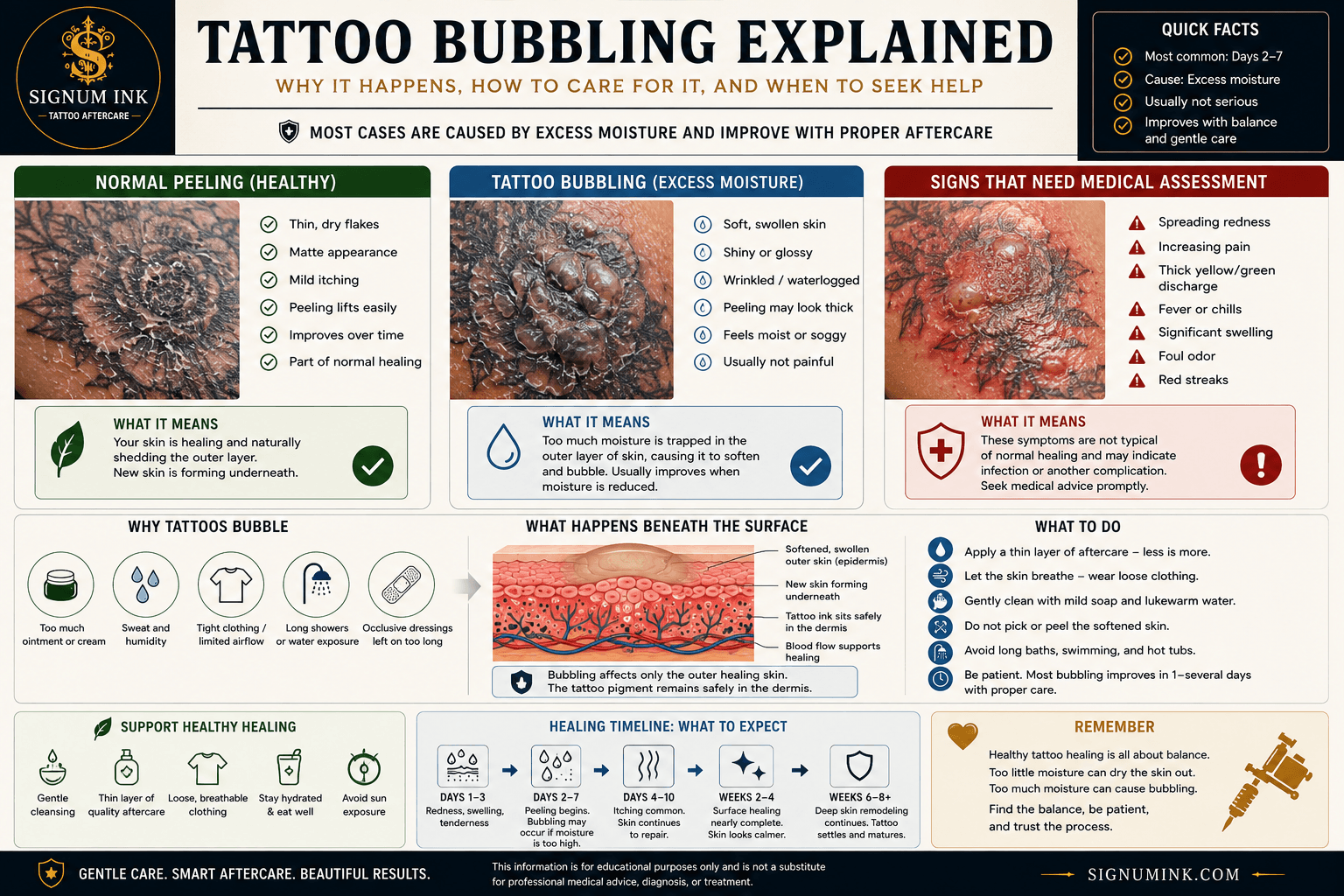
Tattoo bubbling occurs when healing skin becomes excessively moist, causing peeling skin to soften, swell, and lift away from the surface.
In many cases, bubbling improves once the skin is allowed to dry naturally and the underlying skin barrier continues recovering.
However, if bubbling is accompanied by increasing pain, spreading redness, fever, thick discharge, or a foul odor, prompt medical assessment is recommended.
Quick Facts
Most Common Cause
Excess moisture trapped in healing skin.
Usually Appears
Days 2–7.
Often Associated With
- Thick layers of ointment.
- Excess sweating.
- Occlusive dressings left on too long.
- High humidity.
- Water exposure.
Usually Improves
When excess moisture is reduced and healing continues normally.
What Is Tattoo Bubbling?
Tattoo bubbling is not a separate stage of healing.
Instead, it is a change in the appearance of peeling skin caused by excessive moisture.
Rather than remaining dry enough to separate naturally, the outer layer becomes overly hydrated.
As a result, the peeling skin may appear:
- Soft.
- Puffy.
- Wrinkled.
- Glossy.
- Raised.
- Slightly translucent.
Although the appearance can be surprising, the underlying tattoo pigment usually remains safely within the dermis.
Why Does Tattoo Bubbling Happen?
The most common reason is that healing skin stays too moist for too long.
Fresh tattoos naturally lose water while the skin barrier is rebuilding.
When additional moisture is trapped against the surface, the outer epidermis may absorb more water than it can comfortably manage.
Instead of drying and peeling normally, the skin softens and swells.
Common Causes of Tattoo Bubbling
Several factors can contribute.
Applying Too Much Ointment
One of the most common causes is using very thick layers of ointment or tattoo cream.
Heavy applications may trap moisture against the skin and reduce evaporation.
Modern aftercare generally works best with a thin, even layer rather than a thick coating.
Sweating
Heavy sweating can leave moisture sitting on the tattoo for extended periods.
This is why bubbling is sometimes seen after:
- Intense workouts.
- Hot weather.
- Long periods of physical activity.
Wearing Tight Clothing
Clothing that traps heat and moisture against the tattoo may increase the chance of bubbling.
Loose, breathable fabrics usually provide a better healing environment.
Water Exposure
Long showers, baths, swimming pools, hot tubs, or prolonged soaking may overhydrate healing skin.
Although normal showers are generally fine, extended water exposure is best avoided while the tattoo is still healing.
Occlusive Dressings Left on Too Long
Protective tattoo films can be extremely helpful during the first stage of healing.
However, if a dressing remains in place longer than recommended by the manufacturer or your tattoo artist, moisture may accumulate beneath the film and contribute to bubbling.
Always follow the aftercare instructions provided for the specific dressing you are using.
What Does Tattoo Bubbling Look Like?
People describe tattoo bubbling in different ways.
Common features include:
- Shiny skin.
- Soft peeling.
- Raised patches.
- Wrinkled flakes.
- Waterlogged appearance.
- Mild swelling of loose skin.
The bubbling usually affects only the outer healing layer—not the tattoo pigment beneath it.
Does Tattoo Bubbling Damage the Tattoo?
In many cases, no.
Tattoo bubbling itself does not usually damage the ink.
The greater concern is what happens if the softened skin is rubbed, scratched, or peeled away prematurely.
Allowing the skin to recover naturally helps protect the healing tattoo.
Supporting Healthy Healing
If your tattoo begins bubbling, the goal is not to aggressively dry it out.
Instead, focus on restoring a balanced healing environment.
Helpful habits include:
- Applying only a thin layer of aftercare cream.
- Wearing loose, breathable clothing.
- Avoiding prolonged water exposure.
- Gently cleansing the tattoo.
- Patting the area dry instead of rubbing.
Supporting the skin barrier allows the epidermis to resume its normal healing process.
Tattoo Bubbling vs. Normal Peeling
At first glance, bubbling and peeling can look similar.
Both usually occur during the first week of healing and both affect the outer layer of skin.
The key difference is how the peeling skin looks and feels.
Normal Peeling
Healthy peeling is usually:
- Thin and dry.
- Matte rather than shiny.
- Lightly flaky.
- Comfortable or only mildly itchy.
- Gradually improving.
The skin naturally sheds damaged surface cells while new epidermis forms underneath.
Tattoo Bubbling
Tattoo bubbling often appears as:
- Soft, swollen peeling skin.
- A glossy or wet appearance.
- Wrinkled or waterlogged flakes.
- Skin that feels overly moist.
- Raised patches within the peeling layer.
Rather than being too dry, the skin has become overhydrated.
Tattoo Bubbling vs. Infection
One of the biggest concerns is whether bubbling means the tattoo has become infected.
Fortunately, bubbling by itself does not usually indicate an infection.
Instead, it is commonly related to trapped moisture.
Healthy bubbling generally:
- Appears during the peeling phase.
- Is not associated with severe pain.
- Improves once excess moisture is reduced.
Symptoms that deserve prompt medical assessment include:
- Rapidly spreading redness.
- Thick yellow or green discharge.
- Increasing pain.
- Fever or chills.
- Significant swelling.
- A foul odor.
- Red streaks extending away from the tattoo.
These findings are not typical of uncomplicated tattoo healing and should be evaluated by a healthcare professional.
What Should You Do If Your Tattoo Is Bubbling?
The goal is to restore a balanced healing environment rather than trying to dry the tattoo aggressively.
Reduce Excess Moisture
If you have been applying thick layers of ointment, reduce the amount.
A thin, even layer is generally enough to support the healing skin.
Let the Skin Breathe
Whenever possible:
- Wear loose clothing.
- Reduce unnecessary friction.
- Allow normal airflow around the tattoo.
Breathable fabrics help excess moisture evaporate naturally.
Clean the Tattoo Gently
Wash the tattoo with a mild cleanser and lukewarm water.
Avoid scrubbing.
Pat the tattoo dry with a clean towel instead of rubbing.
Avoid Picking the Softened Skin
Bubbled skin can be tempting to peel away.
Resist the urge.
Allow softened skin to dry and separate naturally as healing continues.
Avoid Long Water Exposure
Until healing is complete, avoid:
- Baths.
- Swimming pools.
- Hot tubs.
- Lakes.
- Oceans.
Normal showers are generally acceptable, but prolonged soaking can make bubbling worse.
What Happens Beneath the Skin?
Although bubbling affects the surface, deeper healing continues normally.
Several important biological processes remain active.
Epidermal Renewal
Fresh skin cells continue replacing damaged epidermis.
Skin Barrier Recovery
The protective barrier gradually restores its ability to regulate moisture.
Collagen Remodeling
Fibroblasts continue strengthening the dermis by producing collagen.
Pigment Stabilization
Tattoo pigment remains within the dermis while the outer peeling skin naturally sheds.
Can Tattoo Bubbling Affect the Final Tattoo?
In most cases, no.
Bubbling itself rarely damages tattoo pigment.
The greater risk comes from:
- Scratching.
- Picking.
- Rubbing softened skin.
- Repeated friction.
Allowing the tattoo to heal naturally gives the best opportunity for a clean final result.
What Does the Research Say?
Although tattoo bubbling has not been studied as extensively as general wound healing, the underlying biology is well understood.
Scientific research shows that healthy healing depends on maintaining a balanced moisture environment.
Skin that becomes too dry may feel tighter and itchier.
Skin that remains too wet may develop maceration, where the outer epidermis becomes excessively softened by prolonged moisture exposure.
Modern wound care aims to avoid both extremes.
Common Mistakes That Can Make Bubbling Worse
Several habits may prolong bubbling.
Applying Too Much Product
More ointment is not necessarily better.
A thin layer is usually sufficient.
Covering the Tattoo for Too Long
Occlusive dressings should only be worn according to the manufacturer’s instructions or the guidance of your tattoo artist.
Heavy Exercise
Intense sweating may increase moisture trapped against healing skin.
Tight Clothing
Heat and friction may increase irritation.
Picking Soft Skin
Allow softened peeling skin to separate naturally.
Long Baths
Extended soaking may further overhydrate healing skin.
Research Snapshot
| Research Area | Evidence |
|---|---|
| Moist Wound Healing | ★★★★★ |
| Skin Barrier Recovery | ★★★★★ |
| Epidermal Regeneration | ★★★★★ |
| Tattoo Aftercare | ★★★★☆ |
| Tattoo Healing Research | ★★★★☆ |
| Tattoo Bubbling Studies | ★★★☆☆ |
Frequently Asked Questions About Tattoo Bubbling
Is tattoo bubbling normal?
Tattoo bubbling is not considered a normal stage of healing, but it is a relatively common issue that can occur during the first week.
It is most often caused by excess moisture trapped in the outer layer of healing skin.
In many cases, it improves once the skin is allowed to return to a balanced moisture level.
Can tattoo bubbling ruin my tattoo?
Usually, no.
Tattoo bubbling itself does not normally damage the tattoo pigment because the ink is stored much deeper within the dermis.
The greater risk comes from:
- Picking softened skin.
- Scratching.
- Excessive rubbing.
- Continued overhydration.
Allowing the skin to recover naturally gives the tattoo the best opportunity to heal well.
Should I stop using moisturizer if my tattoo is bubbling?
Not necessarily.
Rather than stopping completely, it is often helpful to:
- Apply a much thinner layer.
- Allow the skin to breathe between applications.
- Avoid repeatedly adding more product while the skin is still shiny or wet.
The goal is balanced hydration—not excessive moisture.
Can sweating cause tattoo bubbling?
Yes.
Heavy sweating may trap moisture against the healing skin, particularly when combined with tight clothing or prolonged activity.
If your tattoo becomes damp from sweat, gently clean it if needed and pat it dry before continuing your normal aftercare routine.
Can showering make bubbling worse?
Normal showers are generally fine.
However, prolonged exposure to water—such as long showers, baths, swimming, or hot tubs—can overhydrate the healing skin and contribute to bubbling.
Keep showers reasonably short and avoid soaking the tattoo until it has healed.
Is tattoo bubbling the same as an infection?
No.
Tattoo bubbling is usually related to moisture.
An infection involves a different process and may include symptoms such as:
- Rapidly spreading redness.
- Increasing pain.
- Thick yellow or green discharge.
- Fever or chills.
- Significant swelling.
These symptoms require prompt medical assessment.
How long does tattoo bubbling last?
If excess moisture is reduced and the skin is otherwise healing normally, bubbling often improves within one to several days.
The exact timeline varies depending on:
- The size of the tattoo.
- The degree of moisture exposure.
- Individual healing.
- Daily aftercare.
Should I remove bubbled skin?
No.
Allow softened skin to separate naturally.
Pulling it away too early may expose fragile new skin and increase irritation.
When should I seek medical advice?
Arrange prompt medical assessment if bubbling is accompanied by:
- Rapidly spreading redness.
- Increasing pain.
- Thick yellow or green discharge.
- Fever or chills.
- Significant swelling.
- A foul odor.
- Red streaks extending away from the tattoo.
These symptoms are not typical of uncomplicated tattoo healing.
Common Myths About Tattoo Bubbling
Myth 1: Bubbling means the tattoo is ruined.
Reality:
Most cases of tattoo bubbling resolve without affecting the final appearance of the tattoo.
Myth 2: The tattoo ink is bubbling out.
Reality:
The bubbling involves the outer healing skin—not the pigment stored within the dermis.
Myth 3: More ointment will fix bubbling.
Reality:
Applying additional product often traps even more moisture against the skin.
Balanced hydration is generally more beneficial than heavy application.
Myth 4: Bubbling always means infection.
Reality:
Most bubbling is caused by excess moisture rather than infection.
The overall pattern of healing is much more important than the bubbling itself.
Healing Timeline
| Time After Tattoo | What You May Notice |
|---|---|
| Days 1–3 | Redness, swelling, tenderness |
| Days 2–7 | Bubbling may occur if excess moisture is trapped |
| Days 3–10 | Peeling and itching begin |
| Week 2 | Bubbling usually resolved, surface healing continues |
| Weeks 3–4 | Surface healing largely complete |
| Weeks 6–8 | Deep skin remodeling continues |
Research Snapshot
| Research Area | Evidence |
|---|---|
| Moist Wound Healing | ★★★★★ |
| Skin Barrier Recovery | ★★★★★ |
| Epidermal Regeneration | ★★★★★ |
| Wound Maceration | ★★★★☆ |
| Tattoo Aftercare | ★★★★☆ |
| Tattoo Bubbling Research | ★★★☆☆ |
Expert Tip
Healthy tattoo healing depends on moisture balance—not maximum moisture.
Skin that becomes too dry may feel tight and itchy, while skin that stays too wet can soften and bubble. The goal is to support your skin with gentle cleansing, light hydration, and enough airflow for the outer layer to heal naturally.
Signs That Bubbling Is Improving
✅ The skin becomes less shiny.
✅ Soft peeling gradually dries.
✅ Swelling decreases.
✅ The tattoo feels more comfortable.
✅ Healthy new skin appears underneath.
✅ The tattoo continues improving overall.
Signs That Need Medical Assessment
⚠️ Rapidly spreading redness.
⚠️ Thick yellow or green discharge.
⚠️ Increasing pain.
⚠️ Fever or chills.
⚠️ Significant swelling.
⚠️ A foul odor.
⚠️ Red streaks extending away from the tattoo.
These symptoms do not automatically confirm an infection, but they are not typical of uncomplicated tattoo healing and should be assessed by a healthcare professional.
Why Maintaining the Skin Barrier Matters
Tattoo bubbling often develops because the skin barrier is temporarily unable to regulate moisture effectively.
Supporting this barrier with balanced aftercare helps the skin return to normal function.
| Function | Example Ingredient |
|---|---|
| Attracts moisture | Glycerin |
| Supports hydration | Betaine |
| Reinforces the barrier | Ceramides |
| Supports barrier function | Niacinamide |
| Skin conditioning | Panthenol |
| Lightweight emollient | Squalane |
| Smooth application | Caprylic/Capric Triglyceride |
| Skin-soothing support | Allantoin |
| Botanical support | Madecassoside |
| Antioxidant protection | Vitamin E |
Together, these ingredients help maintain an environment where the skin can recover without becoming excessively dry or overly saturated.
Final Thoughts
Tattoo bubbling can look alarming, especially if you’ve never experienced it before. In most cases, however, it is simply a sign that the outer layer of healing skin has absorbed too much moisture. While the appearance may be dramatic, the tattoo pigment itself usually remains protected beneath the surface.
The key to recovery is balance. Rather than trying to dry the skin out completely or applying more product in the hope of speeding up healing, focus on gentle cleansing, light hydration, breathable clothing, and allowing the skin to recover naturally.
Most importantly, pay attention to the overall direction of healing. If the tattoo becomes more comfortable and healthier over time, it is generally moving in the right direction. If symptoms worsen or are accompanied by signs such as fever, increasing pain, or thick discharge, seek medical assessment promptly.
Related Articles
Readers may also find these guides helpful:
- Over-Moisturized Tattoo: Can You Use Too Much Tattoo Cream?
- Tattoo Healing Timeline: What to Expect from Day 1 to Day 60
- How Long Does a Tattoo Take to Heal?
- Tattoo Peeling Explained
- Tattoo Flaking vs. Infection
- Why Is My Tattoo Itchy?
- Why Is My Tattoo Red?
- Signs Your Tattoo Is Healing Properly
- The Complete Science of Tattoo Healing
 English
  German